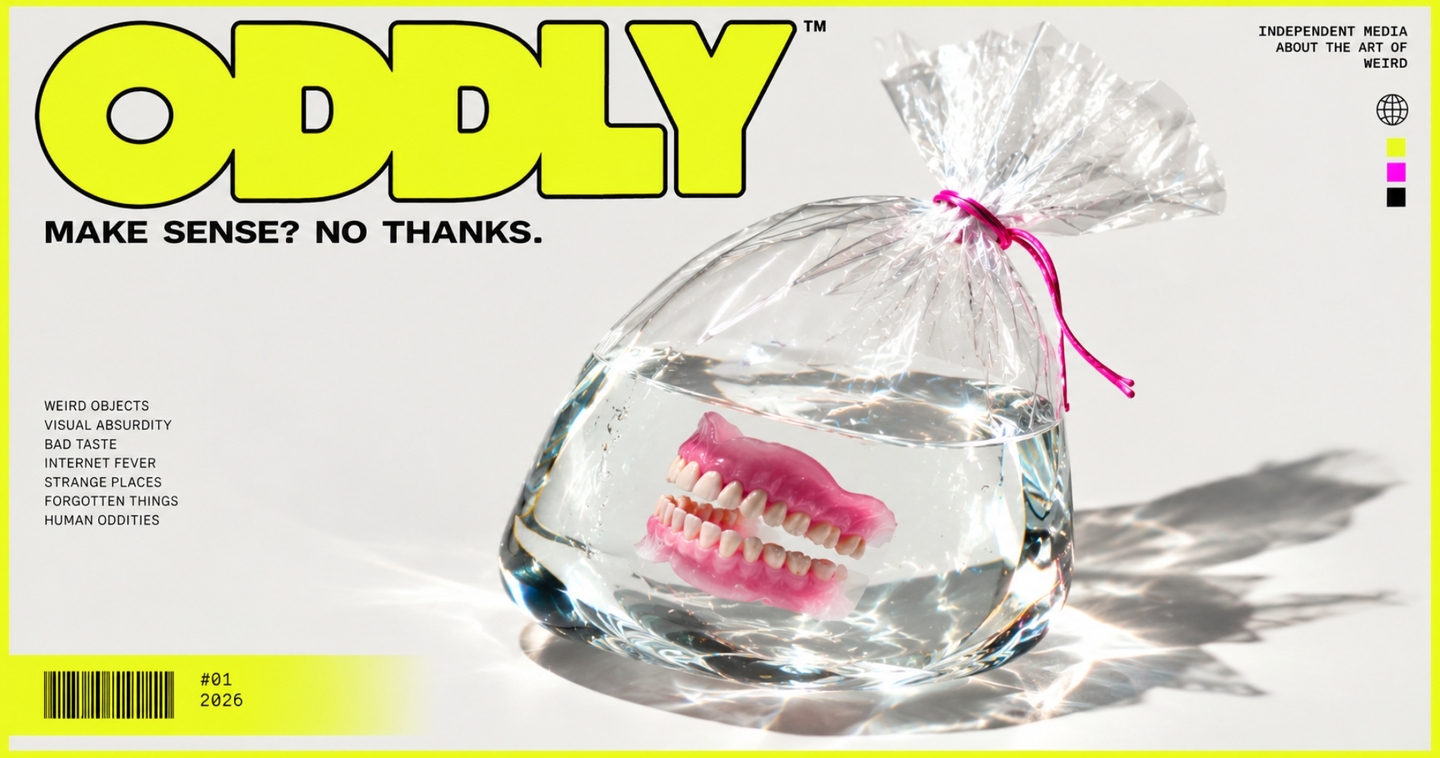
MAKE SENSE? NO THANKS.
ODDLY — an independent media platform exploring the strange, absurd, and unconventional sides of daily life.
We explore objects, visual oddities, peculiar design choices, forgotten phenomena, internet trends, and cultural anomalies. We are interested in what doesn’t fit the conventional notions of beauty, utility, or normality.ODDLY doesn’t just compile funny pictures and absurd items. We treat the strange as an independent aesthetic, a mode of creative thinking, and a source of inspiration. Through photography, articles, visual compilations, and short research pieces, we encourage a different perspective on the mundane.Our Idea: the unusual doesn’t need to be correct, beautiful, or useful to warrant attention.Our Mission: to cultivate curiosity and visual literacy, to find interest beyond conventional aesthetic norms, and to transform everyday absurdity into cultural observation.
SEMESTERLY THEMATIC PLAN
Instead of a random assortment of topics, ODDLY will have its own editorial logic: each month will be dedicated to a specific facet of the bizarre. The themes will evolve from objects and visual aesthetics to people, the internet, and broader cultural phenomena.
[01] The Object Is Wrong Theme: peculiar objects and absurd design. — The history of items that shouldn’t exist. — A collection of bizarre household inventions. — Why some things look wrong yet capture attention? — The visual series, «Normal Object, Abnormal Application.»
[02] Bad Taste Club Topic: kitsch, excess, and controversial beauty. — When poor taste becomes aesthetics. — The most unexpected combinations of colors and materials. — Why we are drawn to ugly things? — Visual experiment: intentionally flawed design.
[03] Internet Fever Topic: digital absurdity and strange internet culture. — How meaningless images go viral. — The aesthetics of bad memes. — The strangest visual trends. — Internet archaeology: digital phenomena that everyone has forgotten.
[04] Wrong Places Theme: strange architecture, interiors, and the urban environment. — Buildings that look like set pieces. — The most unexpected interiors. — Urban structures whose function is not immediately apparent. — A photographic journal of the city’s visual oddities.
[05] Human Glitches Theme: strange human habits and cultural paradoxes. — Why people collect the most unexpected things. — Unusual traditions from different countries. — Useless actions that have become part of daily life. — Interview: «What is the strangest thing you own?»
[06] The Art of Being Odd Theme: The strange as art and a source of inspiration. — Artists and designers working with absurdity. — How a random discovery transforms into a creative idea. — The editor’s best discoveries of the last six months. — Special issue ODDLY: «The Museum of the Abnormal.»
Publication Rhythm
To make the plan appear realistic, you can establish a regular cadence that the editorial team can maintain:
— Instagram*: 3 posts per week—a visual curation, editorial content, and short-form media.
— Telegram: 4–5 short insights per week.
— Website: 2 full-length articles per month—a research piece, interview, or thematic long-form story.
— Print Magazine: one thematic issue every six months.
In this way, the thematic plan evolves from a mere list of ideas into a complete editorial system: each month has a theme, and each channel has a distinct role.
(recognized as an extremist organization and banned in the Russian Federation)
CONTENT SAMPLES
[01] A Phone You Could Eat
Format: Instagram Carousel · 5 SlidesPost CopyImagine a world where objects no longer have to look the way we’re accustomed to. A phone becomes a banana, a vase transforms into a melted drop, and a simple mug loses its handle to gain three spouts.Design usually solves a problem: making an object convenient, understandable, and functional. But what happens when a designer starts playing with the very idea of the object?Perhaps a strange thing isn’t meant to be used. Sometimes, it’s enough just to make us look twice.ODDLY NOTE: utility is not the sole criterion for an object’s existence.[02] Case File No. 001: Who Even Invented This?
Format: Website Investigative Feature + Document ArchiveConcept: The editorial team selects a real, peculiar object and investigates its origin—who created it, why, who bought it, and why it looks the way it does.Example Topic: «Why Do Such Strange Alarm Clocks Exist in the World?»Material Structure: — Evidence #1 — A photograph of the object. — Evidence #2 — Its history of appearance. — Evidence #3 — Its original function. — Evidence #4 — What went wrong or why the object became unconventional. — Editorial Verdict — Is this truly a meaningless item? Special Feature: The article must be presented as a detective’s case file—complete with archival photos, marginal notes, stamps, and magnified details. Furthermore, all investigated items must be real objects with verifiable histories.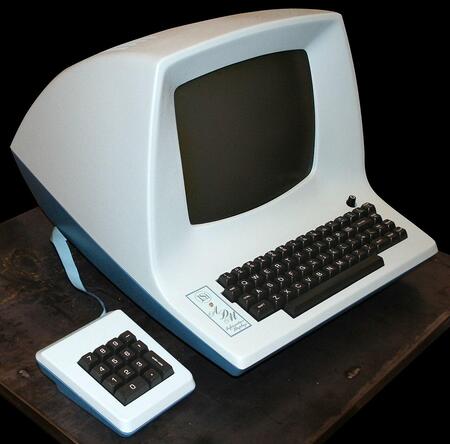
[03] The Future That Never Arrived
Format: Editorial Article · WebsitePublication TextOnce, every new device promised us a future. The more buttons, displays, indicators, and plastic components it had, the more convincing it looked.But technology ages faster than aesthetics. The device stops performing its function, yet its appearance remains with us—like a small capsule of time.Today, old electronic gadgets can seem simultaneously funny, touching, and incredibly beautiful. Their design reminds us of a time when the future was envisioned completely differently.ODDLY explores items that have lost practical value but have acquired a new one—a visual and cultural one.Visuals: close-ups of buttons, unusual displays, plastic casings, and parts that seem superfluous today.[04] Is This Normal?
Format: Interactive website quizConcept: Readers are presented with unusual situations, objects, or design solutions. They must choose: «normal, ” „strange, ” or „this is already art.“Sample Questions: — A chair that is impossible to sit on. — An expensive designer object that resembles trash. — A room where everything is the same color. — An object with one function but ten unnecessary buttons. At the end, the reader receives one of the following results: Certified Normal, Suspiciously Odd, or Beyond Explanation.Visual Style: An interface resembling an old computer—acidic buttons, pixelated indicators, and strange system messages.Objective: To transform media consumption into a game and compel the audience to contemplate where the line between normalcy and absurdity lies.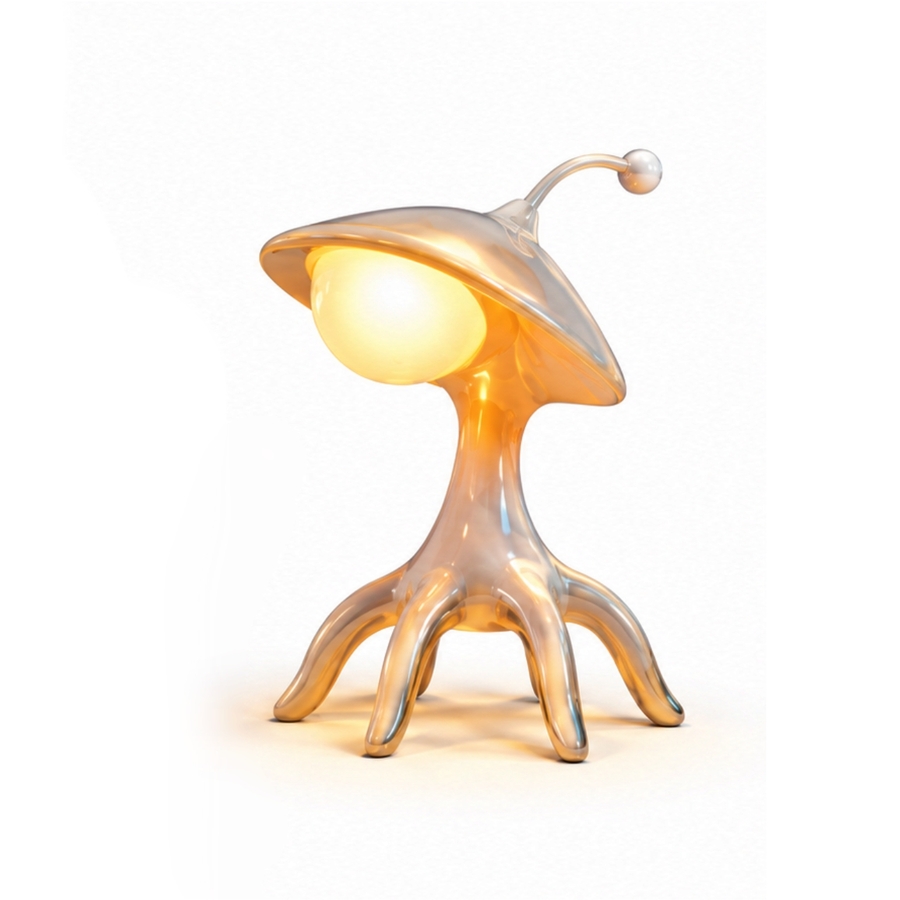
[05] What if extraterrestrials designed the furniture?
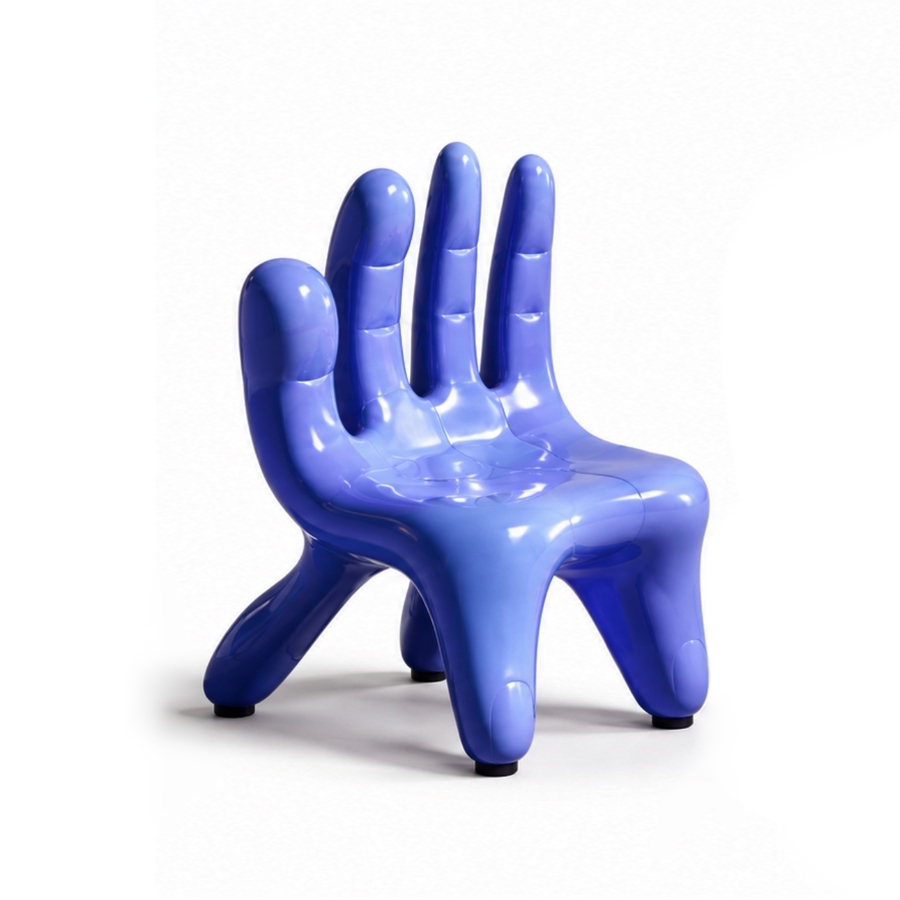
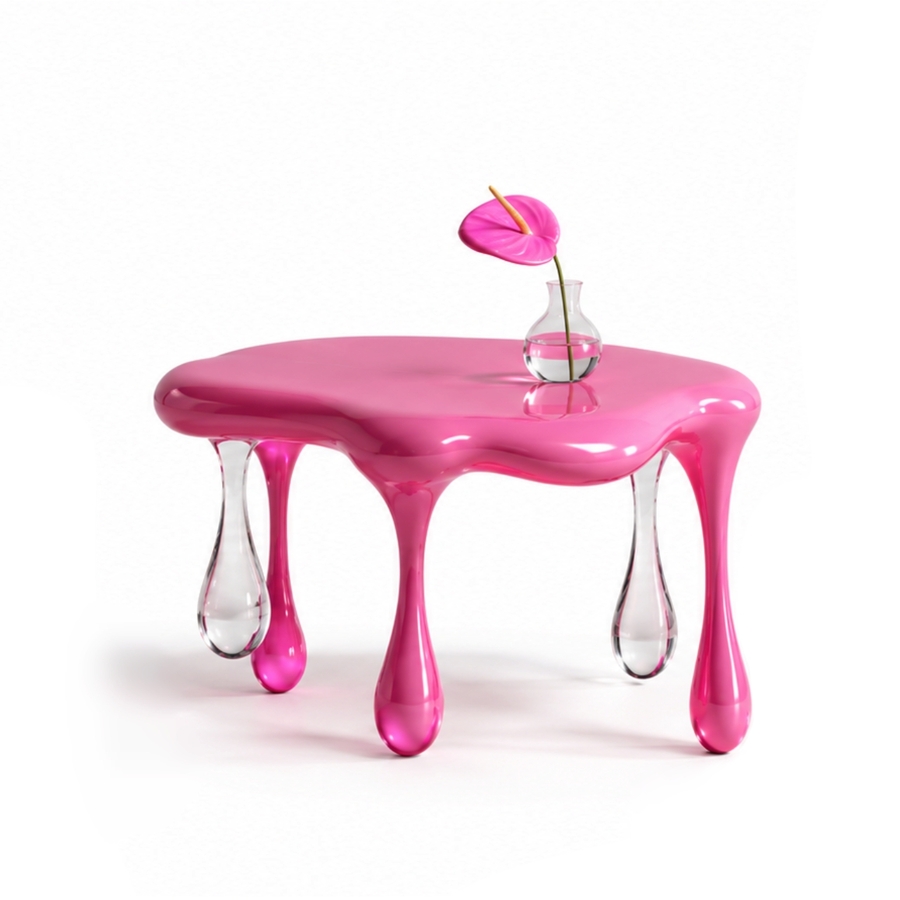
Format: original visual series · 3DWhat happens when we forget everything we know about conventional furniture? A chair might resemble a hand, a table a drop, and a lamp an unknown organism.For this series, ODDLY is creating a collection of imagined objects that balance functional design with absurdity.Captions for three objects: — HANDSOME — a chair that literally invites you to sit on its hand. — SOFT ERROR — a table that seems to have lost the ability to maintain its form. — NIGHT CREATURE — a lamp resembling a creature that only awakens after sunset. This is not a furniture catalog. It is an exercise in liberating the imagination.[06] The Museum of Your Room
Format: Open archive of reader findsConcept: We invite subscribers to send in photos of the strangest items they have at home.You don’t have to own unusual designer pieces. An exhibit can be an old souvenir, a perplexing kitchen appliance, a peculiar toy, or an object with a completely unexpected story.Each find receives: — an inventory number; — a title; — a photograph; — a short description from the owner; — a comment from the editorial team. Exhibit Card Example:Exhibit No. 018Title: «An object whose purpose everyone knows—except me.»Origin: Discovered in a kitchen drawer.Function: Officially undetermined.Status: Kept in storage.The highlight: Over time, the user stories will assemble a real digital museum, ODDLY.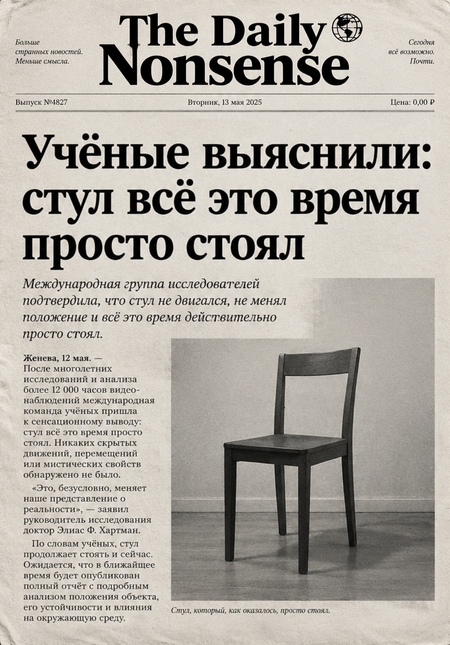
[07] The Daily Nonsense
Format: Fictional newspaper · digital post or printed insert. Satirical publication.Concept: To publish a single page of a fake newspaper featuring absurd headlines and ridiculous news from a fictional world.Headline examples: — «Scientists Discover: The Chair Was Just Standing All This Time.» — «Minimalists Declare War on the Last Decorative Pillow.» — «Local Man Purchases an Organizer for Items He Didn’t Plan to Organize.» — «The Vase Refuses to Comply with the Interior Design.» Materials are formatted like genuine news: a serious grid, a date, columns, bylines, photographs, and small footnotes.Important: This is strictly satire and artistic fiction, not real news.The Hook: The more serious the newspaper design looks, the more absurd the content.[08] The Internet Doesn’t Have to Make Sense
Format: Short Note · TelegramPublication Text
Sometimes the internet feels like a museum where someone has mixed up all the exhibits.
Perfectly retouched photos, images with inexplicable narratives, strange 3D objects, and memes that are impossible to understand unless you’ve seen the previous twenty memes—they all coexist here.
Why do we keep looking?
Perhaps because the internet doesn’t demand that every image be a work of art. It can be ridiculous, random, ugly, or completely meaningless—and still manage to evoke an emotion.
Today’s challenge: Find an image that cannot be explained, but cannot be forgotten.
[09] One Object, One Problem
Format: vertical video · 20–30 secondsConcept: take an ordinary object and devise the most absurd new use for it.Example: a spoon. — 00–05 sec. A spoon lies on a white background. Caption: «A spoon.» — 05–10 sec. The spoon is attached to the wall as a work of art. — 10–18 sec. A museum label appears: «Untitled, 2026. Stainless steel, questionable decisions.» — 18–24 sec. The camera pulls back to reveal a small queue in front of the spoon. — 24–30 sec. Final caption: «Would you buy it?» Technique: stop-motion, 2D animation, or 3D. Filming people is not required.Signature element: each episode uses one object, one absurd transformation, and one short joke.[10] Everyone Has a Peculiar Habit
Format: Mini-interview · Instagram Stories / WebsitePublication Concept
We often consider our own habits normal until we try to explain them to someone else.
ODDLY is launching a series of short interviews about small personal quirks—without judgment or the intent to diagnose. We are interested in which habits become part of daily life and why people assign significance to things that seem meaningless to others.
Questions for Participants:
- What is your most unusual daily habit?
- Is there an item you will never throw away?
- What do you do, even though you can’t explain why yourself?
- What small detail instantly lifts your mood?
Publication Finale: «A quirk is sometimes just a habit we haven’t had a chance to talk about yet.»