

INTRODUCTION
About the brand
P.Y.E is an independent Russian eyewear brand founded in Saint Petersburg in 2008. The company designs and manufactures frames and sunglasses under its own label, provides lens fitting services, and operates a network of offline optical stores in Saint Petersburg and Moscow. The company releases special collections twice a year, and once a year they collaborate with someone who is close to them in aesthetics and positioning.
Brand positioning
The brand positions itself as «modern optics» and builds communication in contrast to the traditional market, focusing on design, convenience of service and the quality of customer interaction. According to the company’s official position, this approach is determined not by the number of outlets, but by the user experience. Special attention is also paid to visual culture and the audience, for whom aesthetics are an important part of the lifestyle.
As a result, P.Y.E. forms not only the corporate identity of the product, but also a value system within which glasses become an element of everyday visual expression.
P.Y.E virtual try-on interface
Target audience
P.Y.E’s target audience is urban residents aged 20–40 who are interested in design, architecture, and contemporary art. This audience is characterized by attention to the visual design of goods, an interest in local and independent brands, as well as a willingness to invest in high-quality and durable products.
When choosing glasses, audience representatives consider the frame not only as a functional product, but also as an element of personal style. In this regard, brand communication focuses on product design, visual presentation and brand values, not just on the technical characteristics of the product.
Photographs of customers wearing P.Y.E eyewear featured on the official brand website
P.Y.E as a rethinking of the eyewear market
The traditional optics market relies primarily on medical discourse: vision diagnostics, eye health, lens technology, and professional experience. In this model, glasses are positioned as a functional medical device.
P.Y.E offers an alternative and transfers optics from a medical context to a cultural one. According to this logic, the product performs two functions simultaneously: utilitarian (vision correction) and symbolic (self-expression and participation in cultural life). This approach allows the brand to take a hybrid position at the intersection of optics, fashion and modern design, which becomes the basis of the brand’s communication strategy.
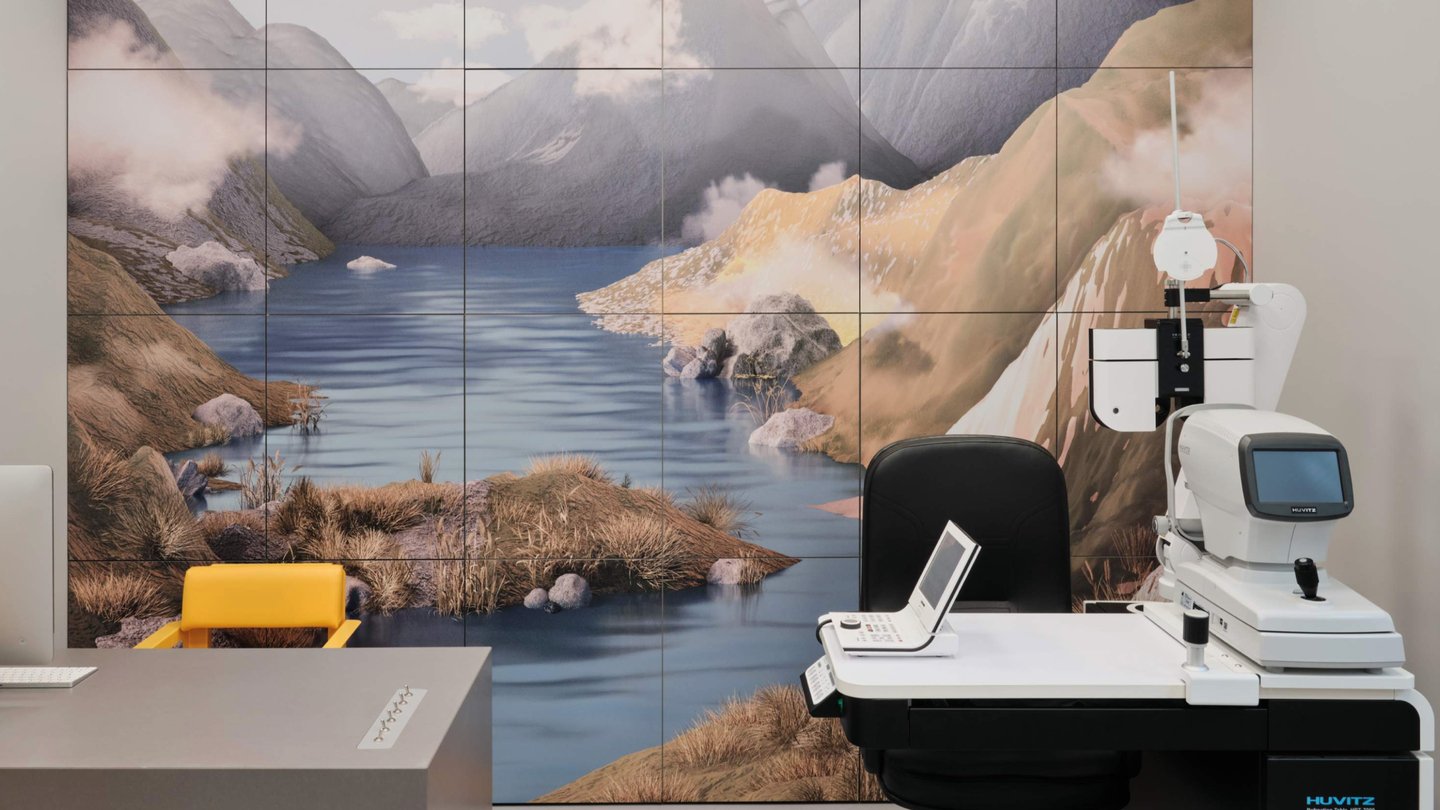

Visualization of the doctor’s office, created by P.Y.E, and photos of the real doctor’s office in the brand’s offline stores.
COMMUNICATION CHANNELS
P.Y.E official website
Communication ecosystem of the brand
P.Y.E uses an omnichannel communication model combining digital and physical touchpoints with the user. Key channels and their roles:
- Website — the central communication hub and archive of brand content, including collaborations and image-based materials
- Instagram — the primary channel for visual storytelling and brand aesthetics
- Telegram — a news and insider channel focused on a loyal audience
- VK — a supplementary platform for local reach and additional content distribution
- TikTok — an experimental platform for short-form content and visual testing
Despite the functional differences, all channels are united by a single visual language, which ensures the integrity of the communication strategy.
Screenshot of the P.Y.E official Instagram* account
*Meta Platforms Inc., which owns Instagram, is recognized as an extremist organization and is prohibited in the Russian Federation
Website as the central carrier of brand identity
The website functions as the main structural platform of the brand, combining commercial, information and image communication.
In addition to the product catalog, it includes sections such as «About us», «Care Instructions», «Lens Selection Materials», «Certificates», «Collection Descriptions», «Vacancies» and more. This turns the website into a source of comprehensive communication with the audience.
P.Y.E official website
Offline stores as a communication environment
Offline stores are developed in collaboration with architectural and design studios and expand the visual language of the brand, turning space into a part of its perception.
An example is the store in St. Petersburg, developed by EDXXKAT studio. The space combines futuristic shapes, natural materials (wood, green marble) and soft lighting.
All brand outlets function not only as a point of sale, but also as an immersive environment in which the user physically finds himself inside the brand’s visual system.




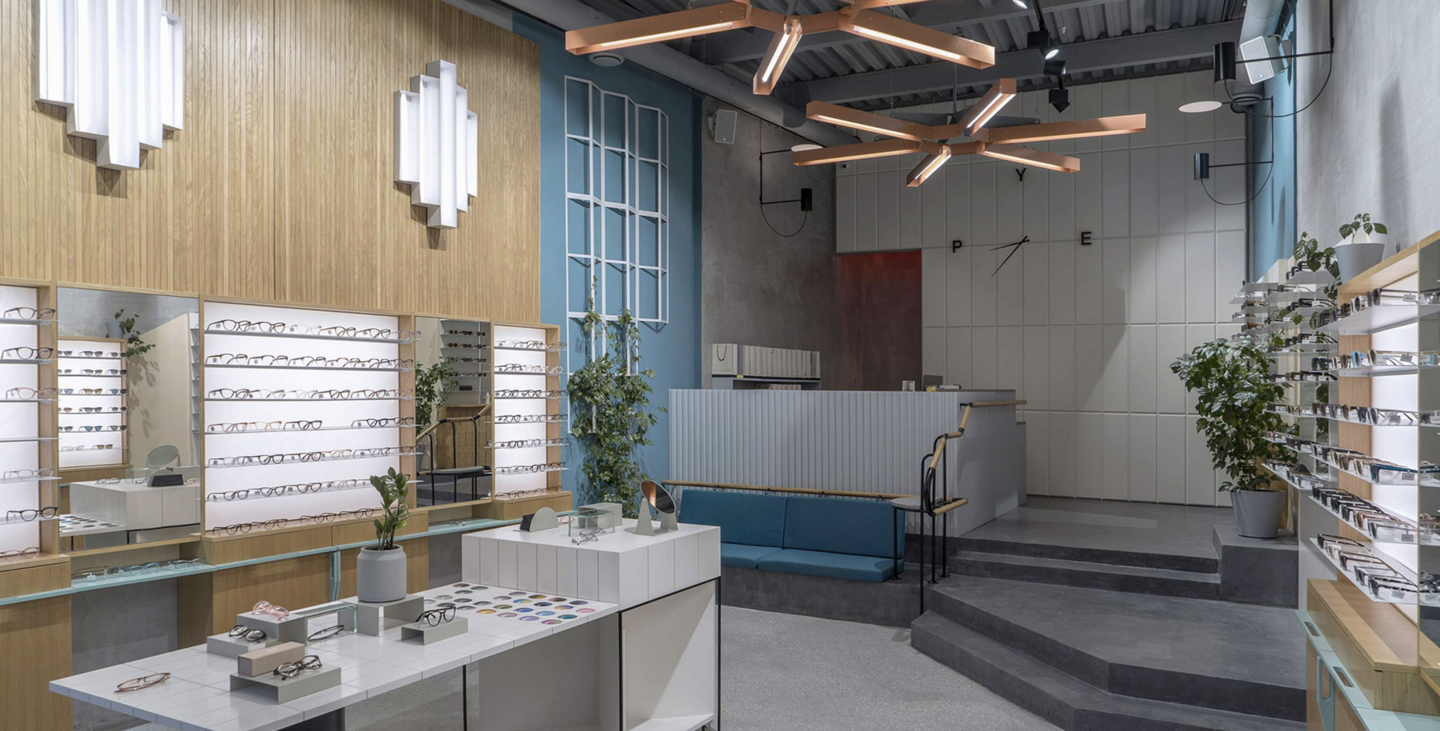
Offline stores in Moscow and St. Petersburg
Technological services as part of a PR strategy
A key element of the P.Y.E. ecosystem is the development of augmented reality digital services that are integrated into the brand’s app.
The application uses TrueDepth technology to create a 3D model of the user’s face and a virtual fitting of the frame. This allows users to interact with the product before physical contact. From the point of view of communication, the application performs a dual function.:
- utilitarian — reduces barriers to purchase and increases the accuracy of choice;
- Image-based — enhances the perception of the brand as technological and innovative, increases audience engagement, creates informational occasions and stimulates user content.

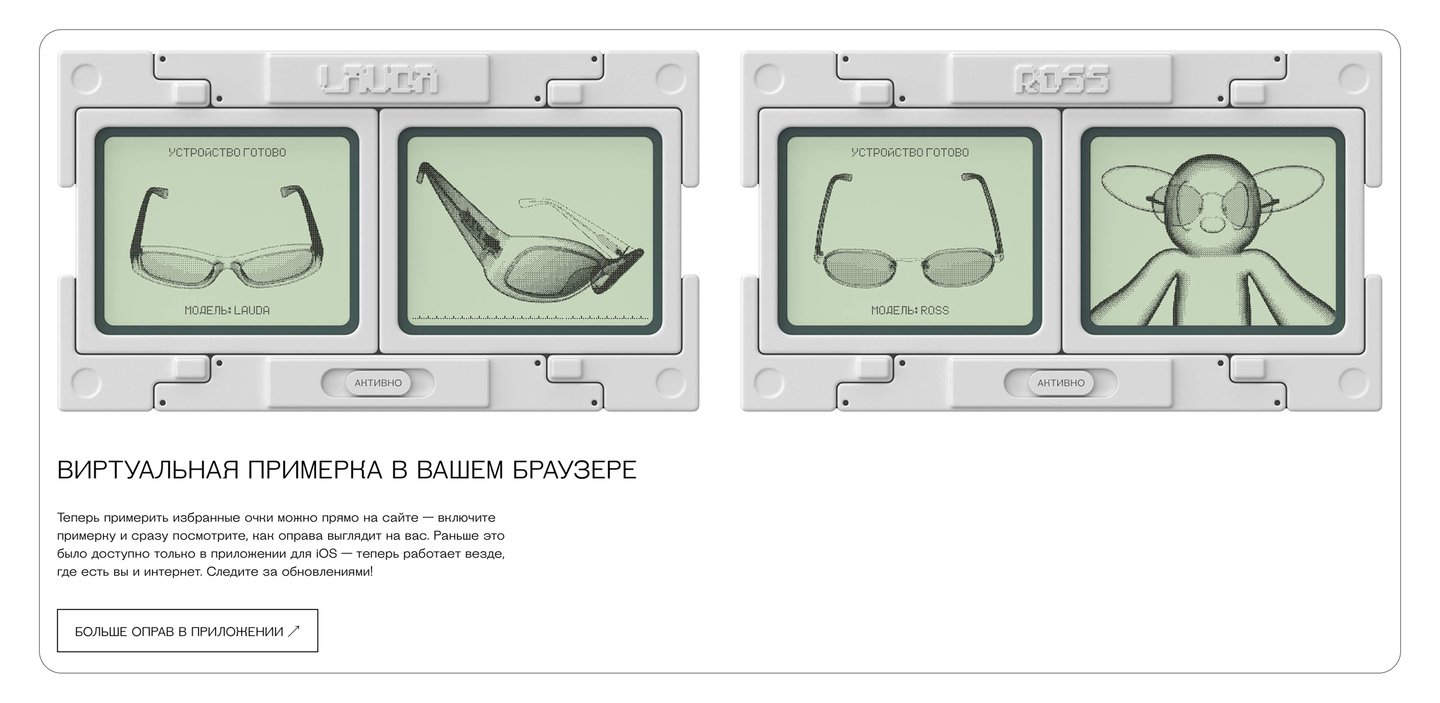
P.Y.E virtual try-on interface / mobile virtual try-on application
Collaborations as a PR communication tool
Collaborations are an important tool for developing the P.Y.E. brand. Joint projects with FAKOSHIMA, Avgvst and Sanrio allow the company to expand its audience, increase awareness and strengthen its position outside the optical industry. Unlike traditional advertising tools, the brand uses partner projects to promote through related fields such as fashion, design and art. This approach corresponds to the strategy of P.Y.E., focused on the formation of a sustainable brand with a distinct design identity.


P.Y.E collaboration with Avgvst / P.Y.E collaboration with FAKOSHIMA
THEORETICAL FRAMEWORK
Main analytical frameworks
When analyzing P.Y.E. communication, we relied on 2 theoretical frameworks:
Social Identity Theory (SIT) — analysis of the formation of social identity and group affiliation. With its help, one can explore how a person perceives himself not only as a separate person («I»), but also as a member of a certain community («We»), how people tend to associate themselves with groups that enhance their status, self-esteem and help express their desired identity.
Symbolic Convergence Theory (SCT) is an analysis of brand narrative and collective symbolic worlds. The theory explains how a common understanding of reality is formed within a group through stories, metaphors, jokes, stories, and other symbolic messages. When participants share the same images, plots, and ideas, there is a sense of community and collective consciousness.
Indirectly, we couldn’t help but touch on the Semiotic Tradition (one of the seven parts of Craig’s 7 Traditions in Communication Theory), as it analyzes the visual system of brand signs and codes, which is filled with P.Y.E.
ANALYSIS
Plum collection: visualization of social identity
The Plum collection is positioned as a statement piece outside seasonal trends, emphasizing form, character, and longevity. It first appeared in an experimental line and later became one of the brand’s core models. The communication focuses on creating a recognizable visual object that remains stable beyond seasonal fashion logic.
In observed communication, the product is not defined through functional attributes but through its symbolic role as a style marker. According to Social Identity Theory, individuals use brands to express group belonging and self-definition. In this case, Plum functions as a visual marker of the «in-group», uniting audiences for whom design and visual culture are part of identity.
The collection does not merely promote a product but reinforces the boundary between mass consumption and culturally engaged audiences, strengthening social differentiation.
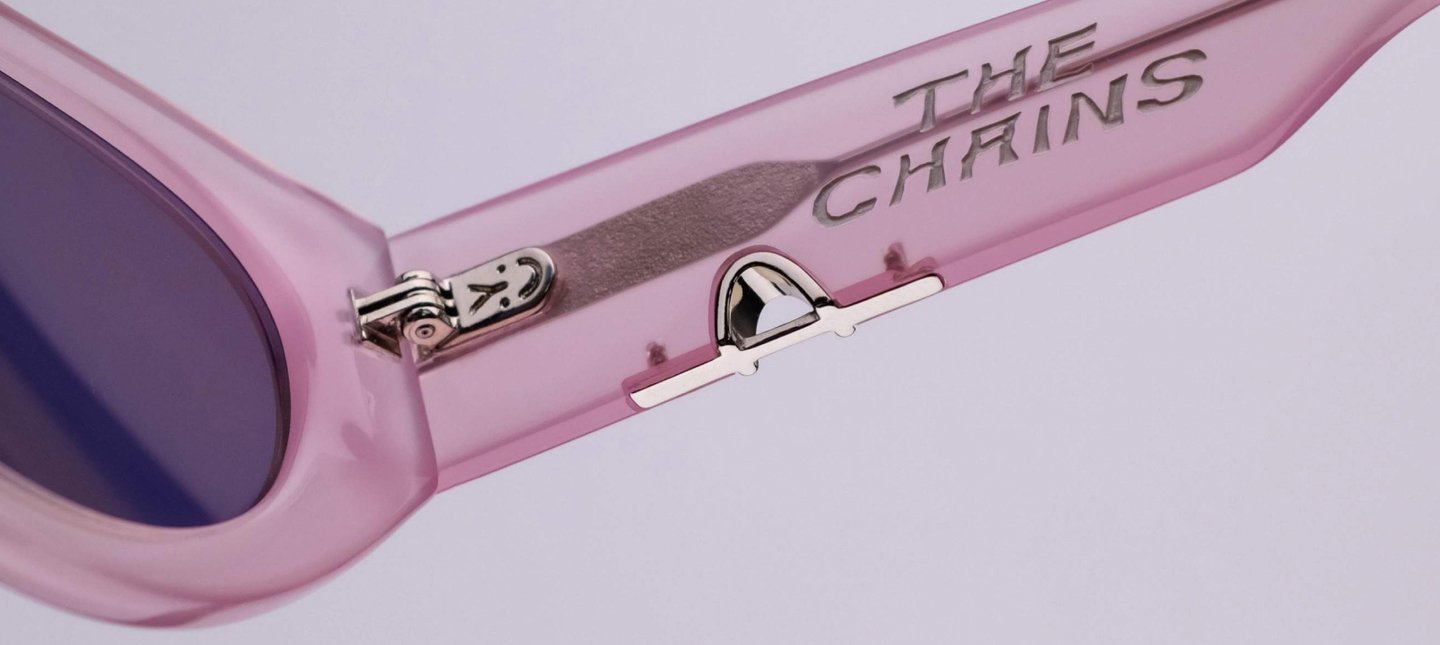
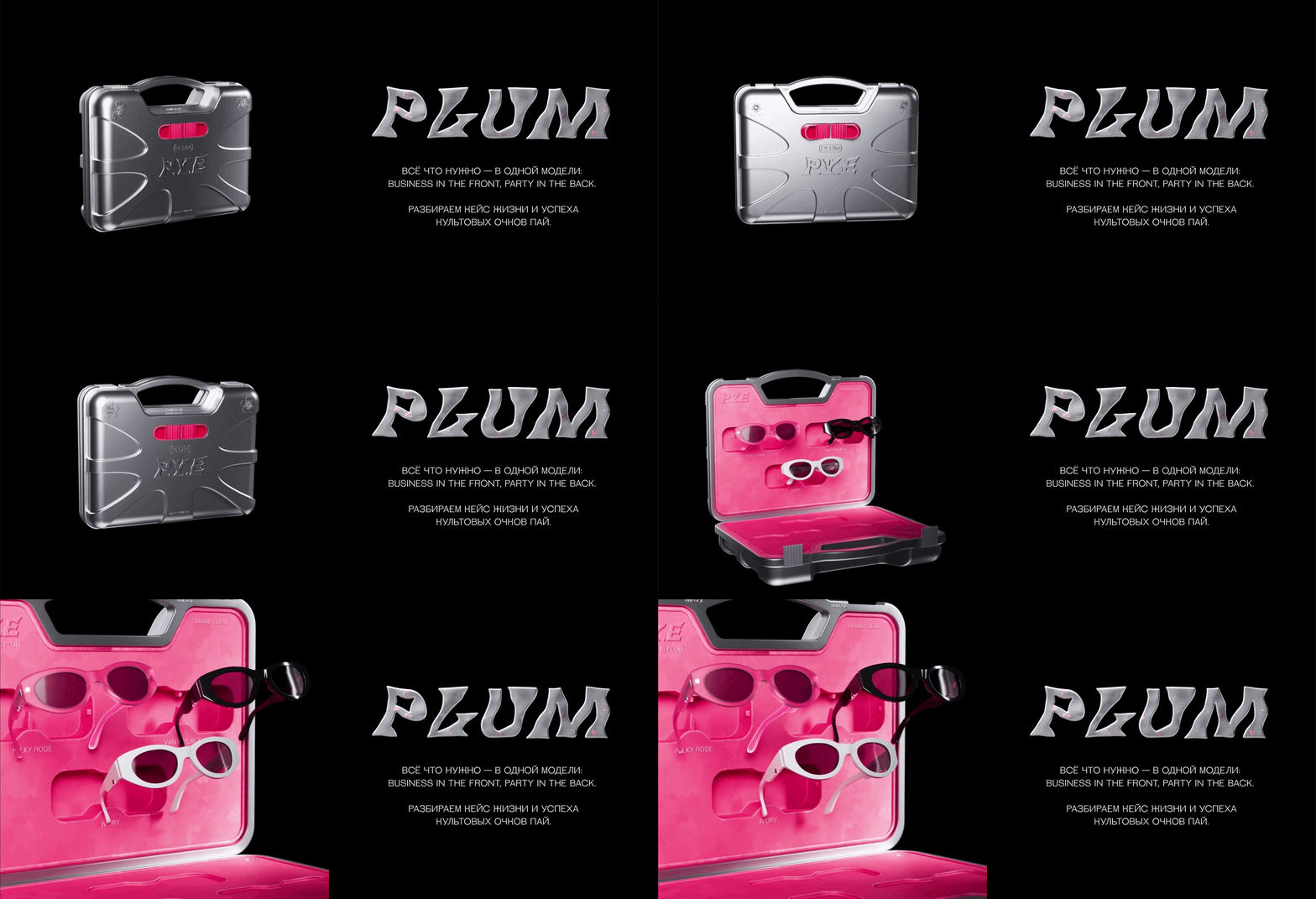
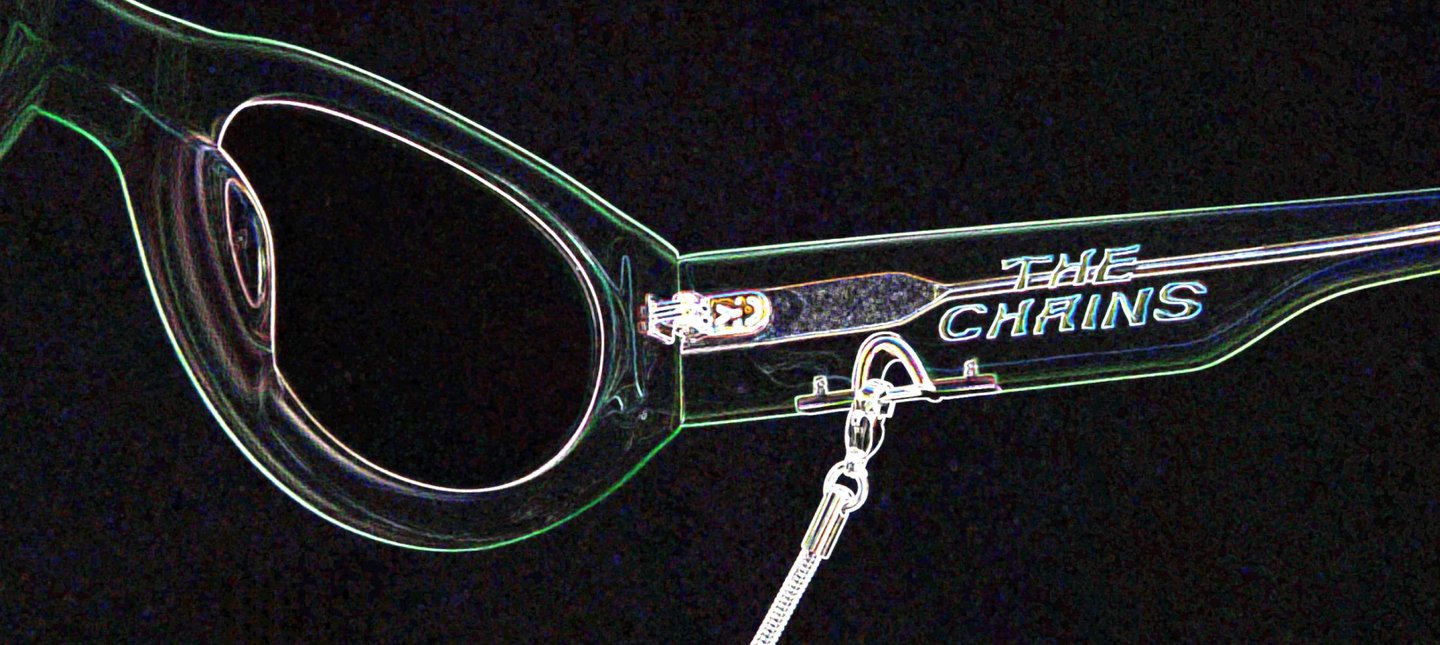

P.Y.E Plum eyewear collection from the official website
Home try-on and AR fitting: integration into everyday life
With P.Y.E’s home fitting and augmented reality services, brand interaction goes beyond the store and is embedded in the user’s daily digital environment. According to the theory of social identity, the repeated use of group symbols strengthens belonging and social identification.
Here, technology expands the boundaries of the group: the brand becomes a part of everyday life, turning product selection into a permanent confirmation of belonging to the cultural community of P.Y.E.
Fitting at home. Video from the app purchase page
SPOT: community as a cultural environment
The SPOT project shifts focus from the product to people, urban practices, and creative communities. Eyewear almost disappears from communication, replaced by lifestyle and cultural context.
In observed communication, P.Y.E acts as a mediator between the audience and urban culture rather than a product-driven brand. According to SIT, identity is formed through group participation and shared values.
SPOT strengthens belonging to an expanded community where the brand becomes part of the social environment. The resulting «we-group» is based not on the product, but on shared cultural practices and lifestyle.