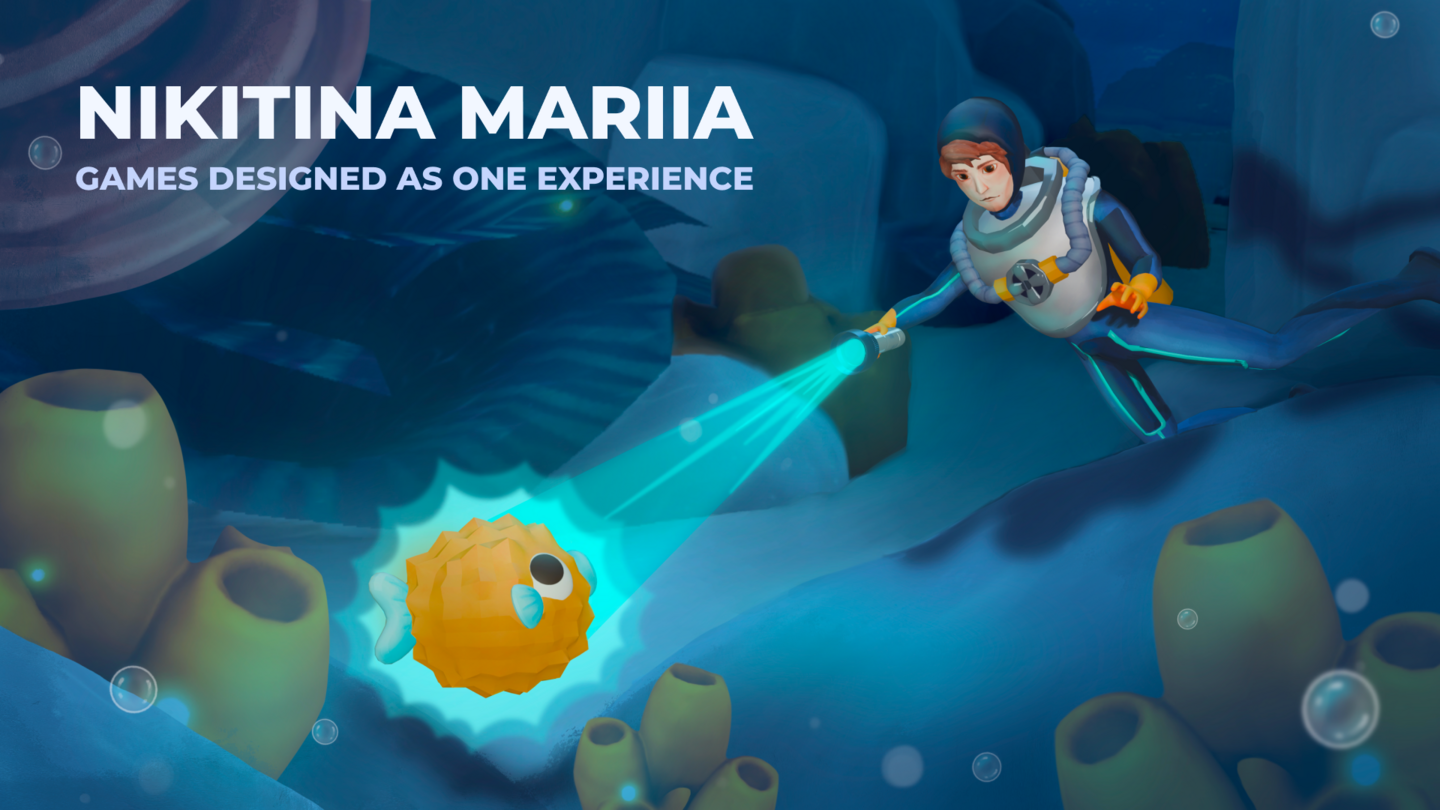
Hello, my name is Mariia!
Game Designer · Level Designer · Level ArtistI’m a Game Design student at HSE University. For the last two years I’ve been working on student non-profit team projects — from game design and level design to level art. I care about how a game reads: whether the player understands the rules from the space itself, whether the pacing holds, whether the systems and the level tell the same story.Based in Moscow · Open to new projects
Why do so many indie games feel broken — even when every part works?
The art is good. The mechanics are there. The levels are built. And still, players leave.The market is crowded: in 2025, almost half of all Steam releases received fewer than 10 reviews, and only 2,99% of indie projects reached 1,000 reviews. The reason is rarely ambition. It’s disconnection: the level doesn’t teach the mechanic, the mechanic doesn’t serve the space, and the player leaves before the game has a chance.
I design games as one system — where every mechanic has a spatial consequence, and every space has a mechanical purpose. Rules, pacing and attention work toward a single experience.
My approach is simple: I design backwards from the feeling.
Intent → Structure → Feel
It’s the same method for systems, levels and level art — which is exactly why they end up working together.
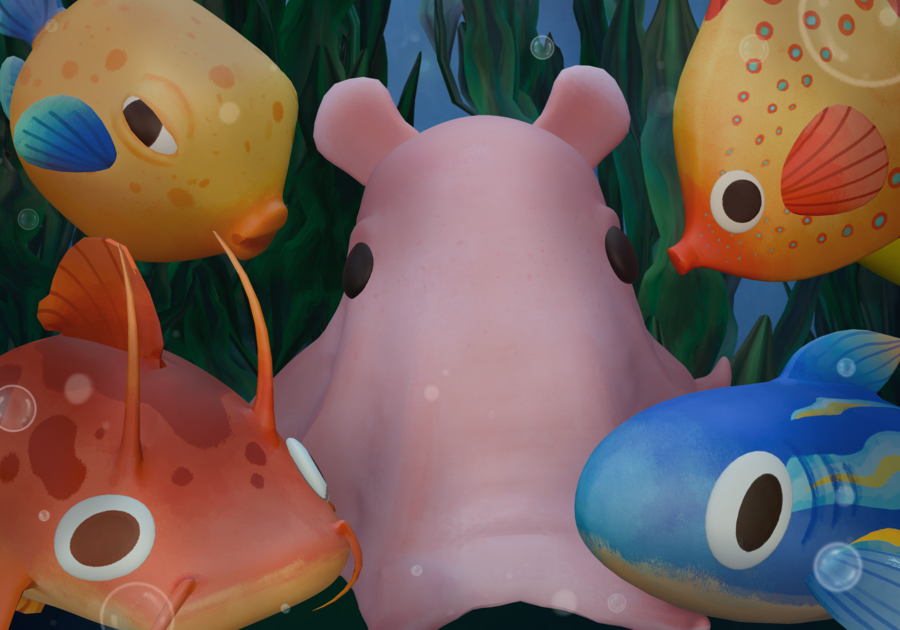
What does it mean?
• Intent: what should the player feel or decide here?• Structure: which mechanic and which space make that happen — blockout, zoning, rules, pacing.
• Feel: does it read on the player? Does it work as a whole?
Want to see how it works? Here’s what I’ve made!
THE ARCHITECTS
Year: 2025–2026 · Team: 6–9 people · Role: Game Designer, Level Designer
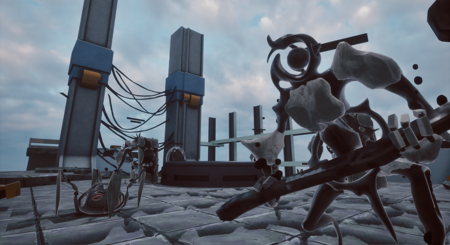
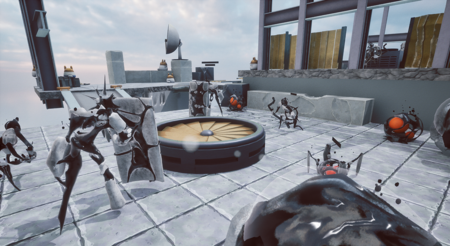
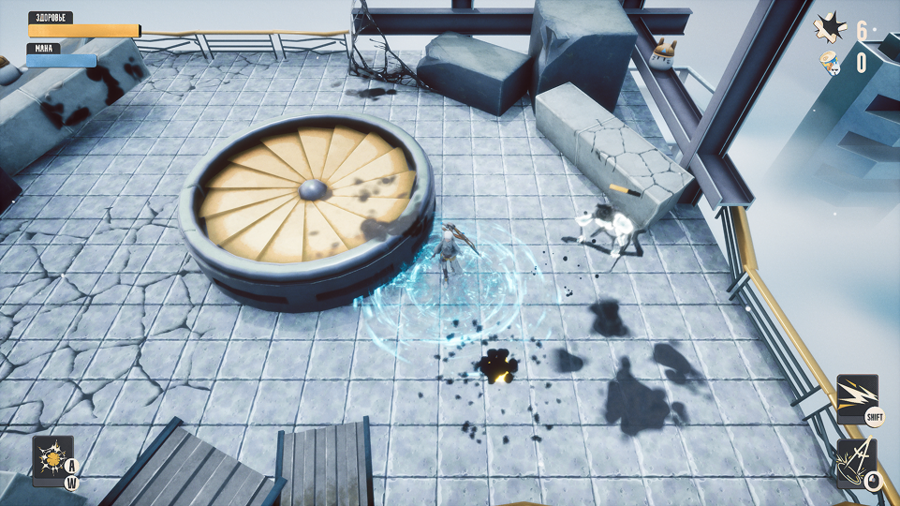
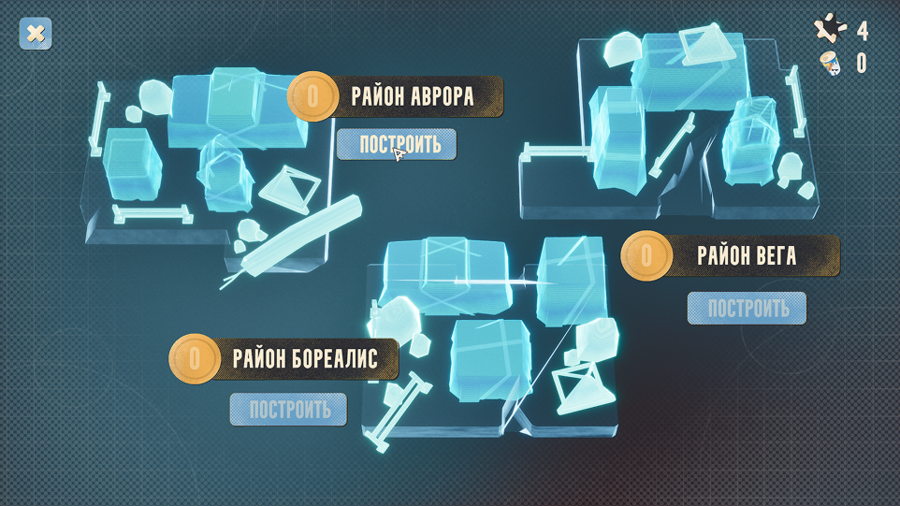
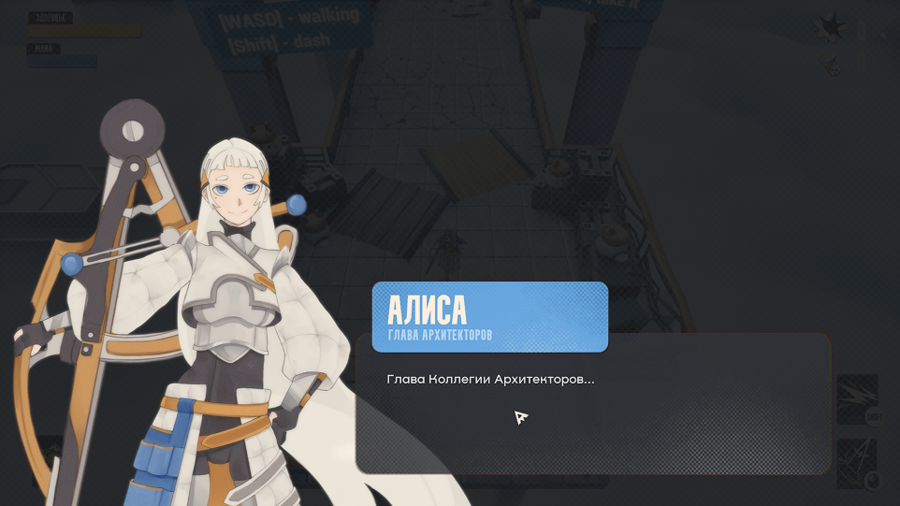
A 3D retro-futuristic action roguelike where combat runs and city restoration are two halves of one loop. Players fight through districts, collect a single resource and spend it to rebuild the city.
Design question: How do you make combat, resource economy and city restoration feel like one loop, not three separate activities?
Intent: The player should feel the tension between risk in combat and recovery in the hub.
What I made:
— Designed the two-phase loop: combat runs → hub restoration.
— Designed the resource economy: one resource earned in combat, spent on city progress.
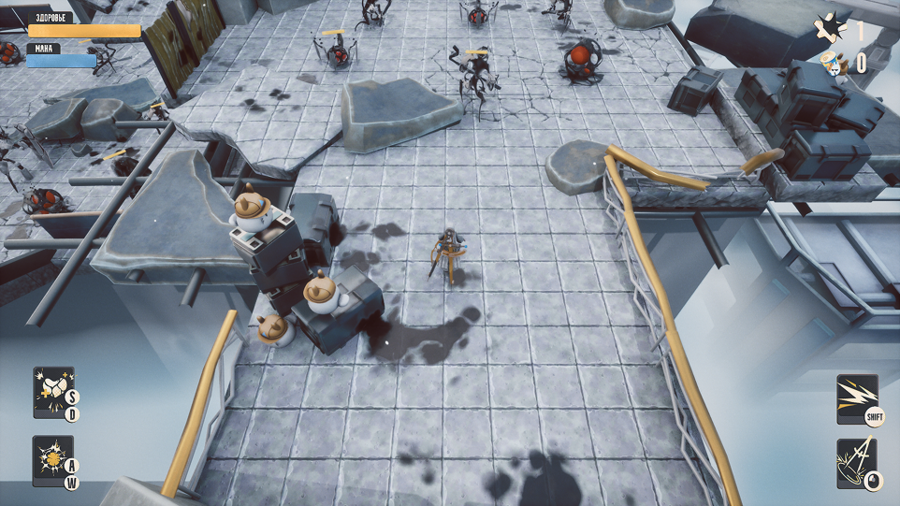
— Built the modular arena system from reusable components — arenas, transitions, obstacles.
— Placed enemies and points of interest, and set the difficulty progression from district to district.Experience & result: The space taught the economy, and district progression kept the goal in sight. Players felt the tension of risky runs and the relief of spending earned resources — the loop was read as a rhythm, not a rule.
TURTLE TROUBLE
Year: 2024 · Team: 2 people · Role: Game Designer, Level Designer
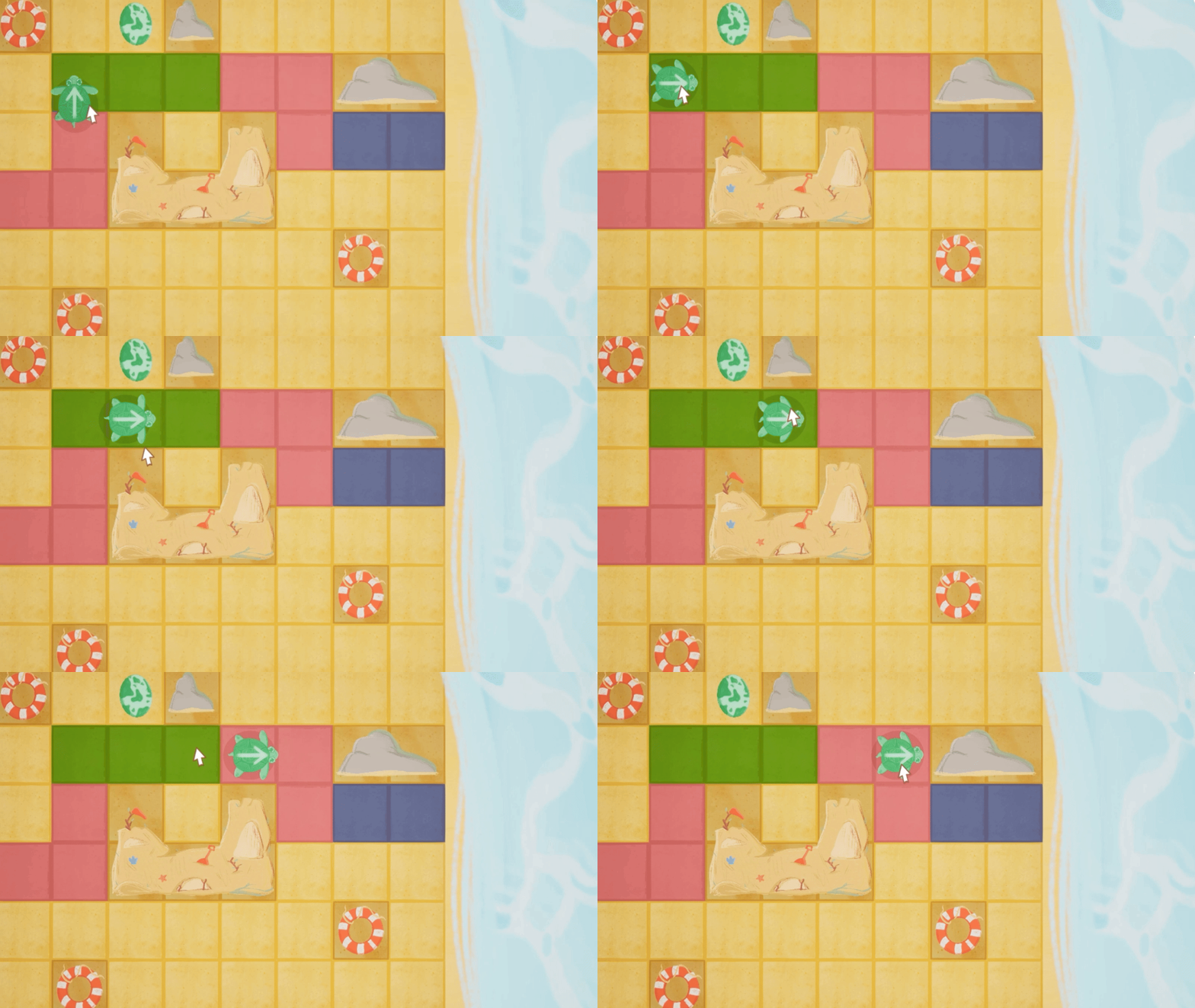
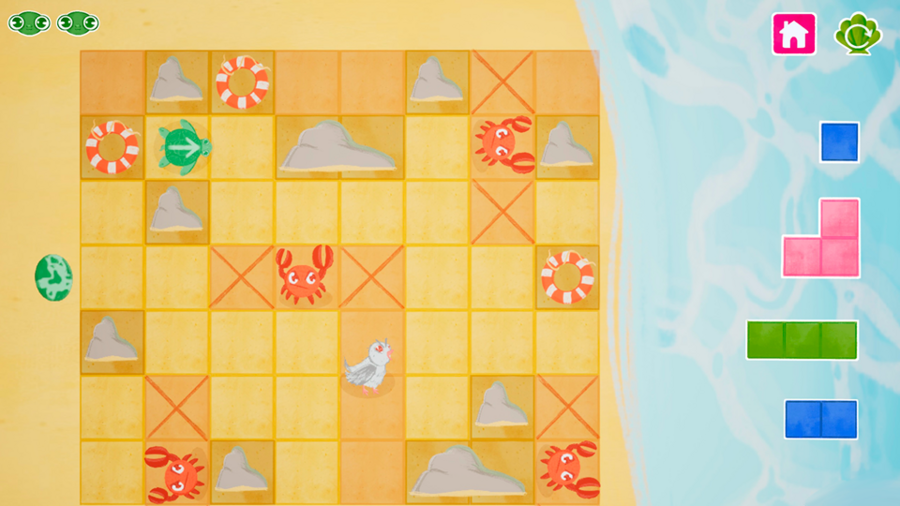
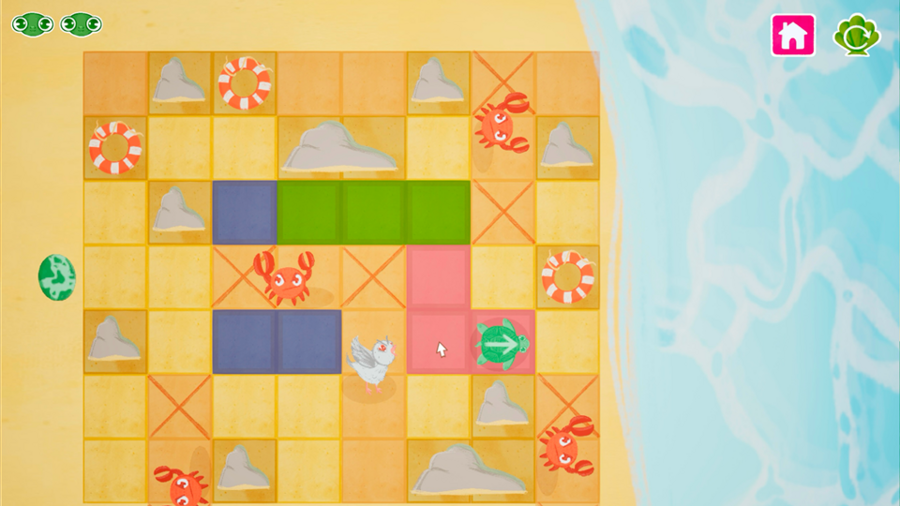
Top-down puzzle where the player builds a safe path for newborn turtles from the nest to the sea.
Design question: How do you make a simple path-building puzzle feel varied without adding new rules?
Intent: The player should feel the warmth of a small, gentle world — and the freedom to plan their own route, then re-plan when a threat forces adaptation.
What I made:
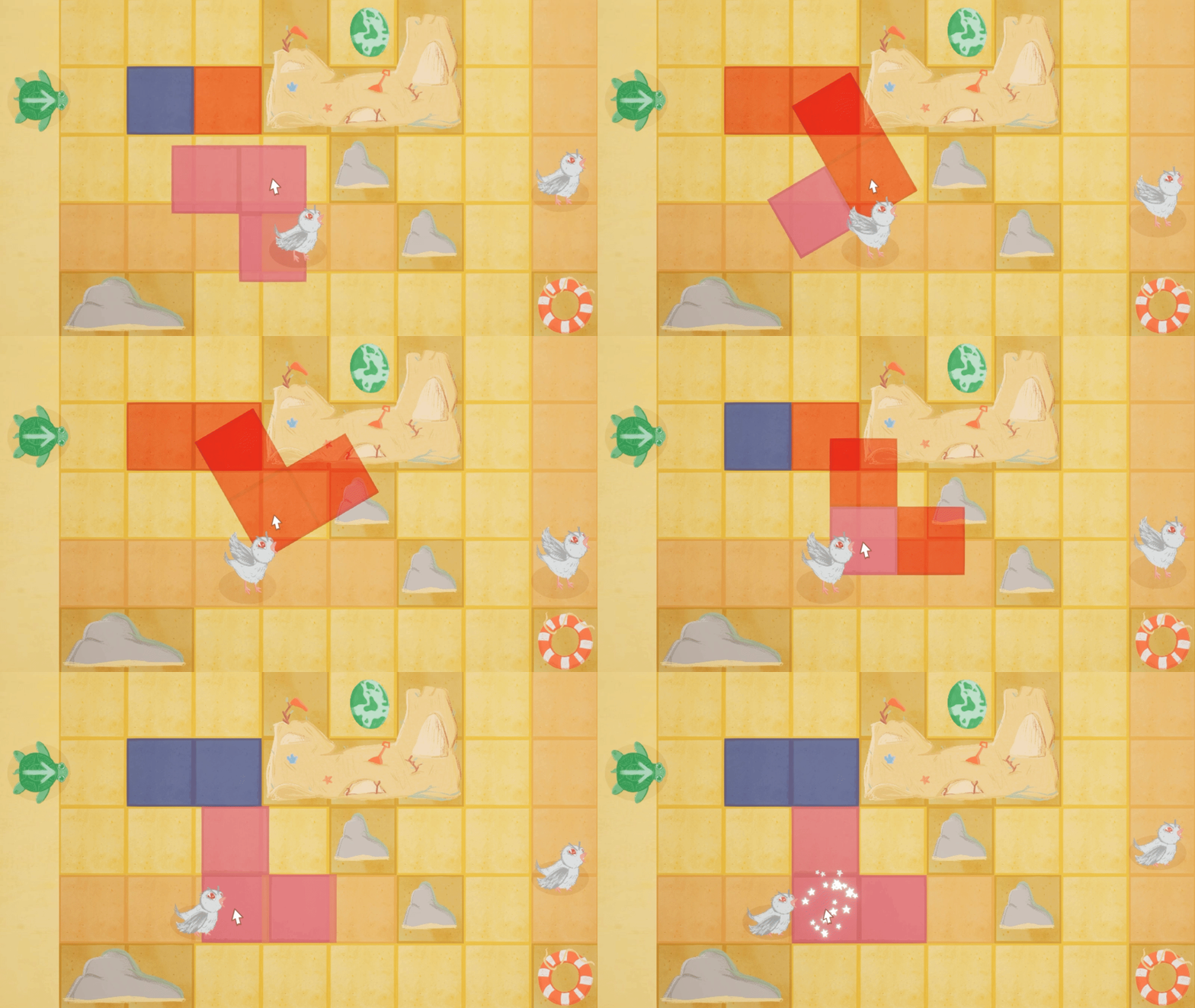
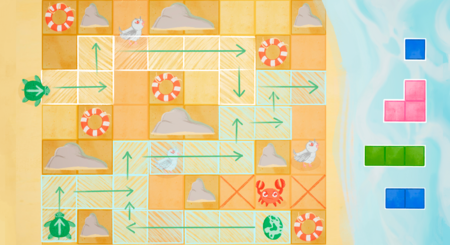
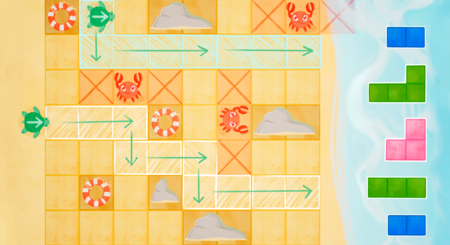
— Designed the core rule: a limited set of reusable blocks of different shapes and lengths.
— Made the rule spatial: blocks can be picked up and moved until the turtles start walking, so the route is constantly rebuilt.
— Designed patterned threats: gulls on fixed routes, crabs attacking around themselves.
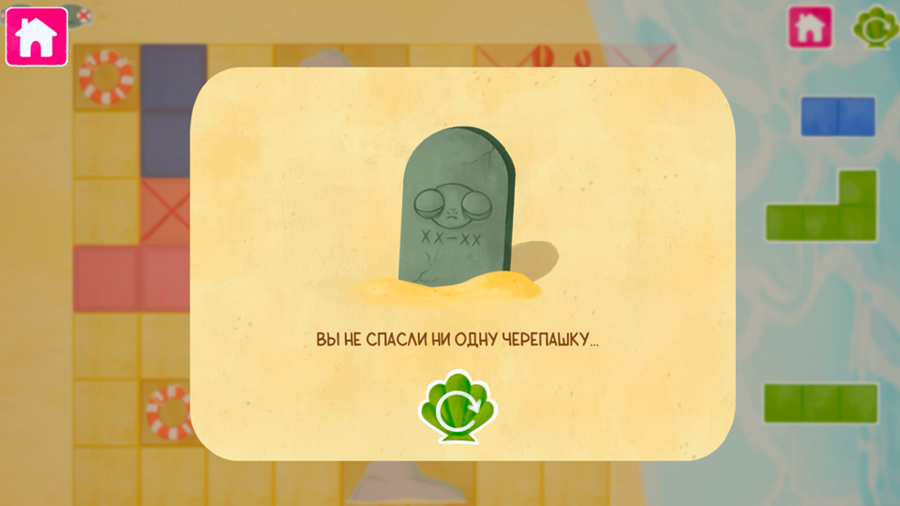
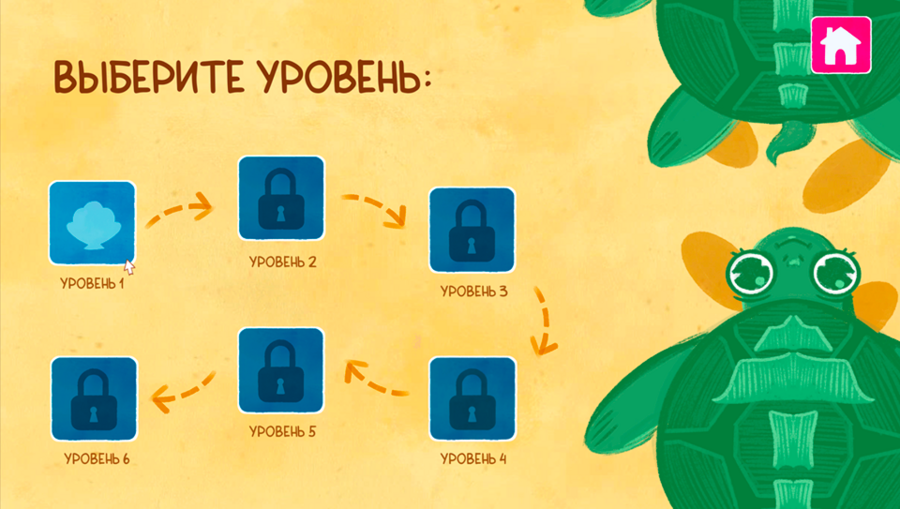
— Built all six levels and the difficulty progression: from one turtle and simple routes to multiple turtles and dense obstacle combinations.Experience & result: Every level has several solutions, and failure teaches the next attempt. Players learned the rules through geometry, not text — the space itself explained what was safe, what was risky, and what could be rebuilt.
DEEPER & SALTIER
Year: 2025 · Team: 2 people · Role: Game Designer, Level Designer, Level Artist
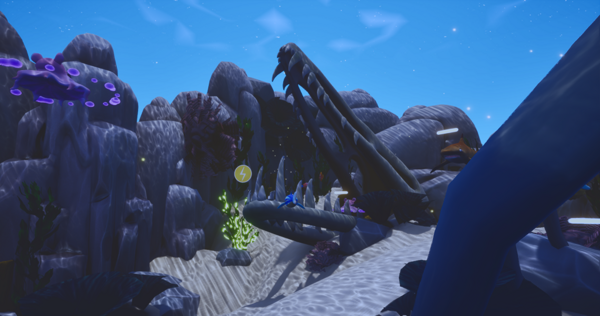
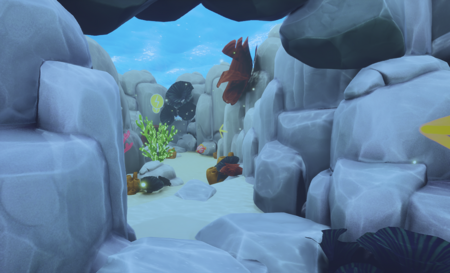
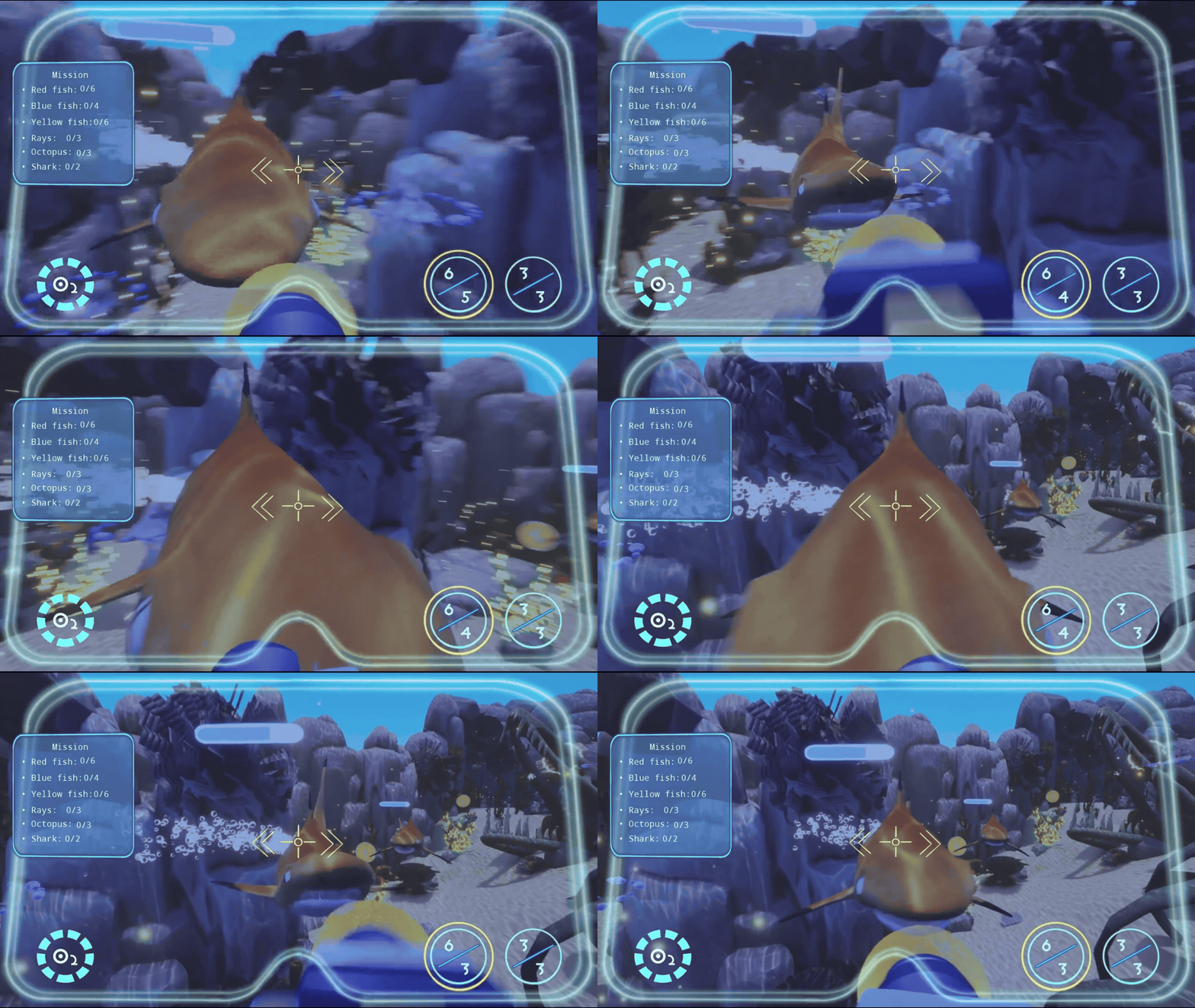
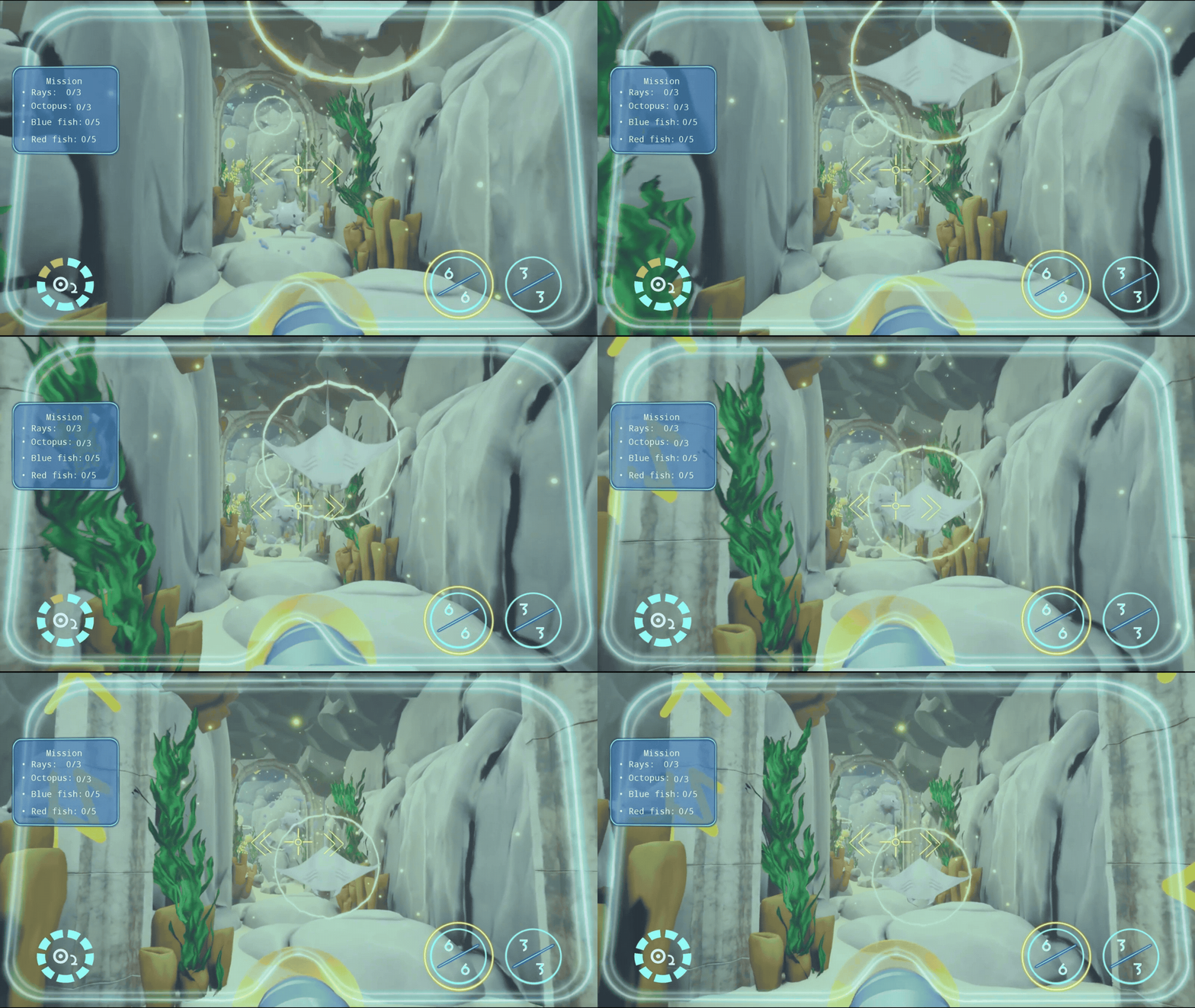
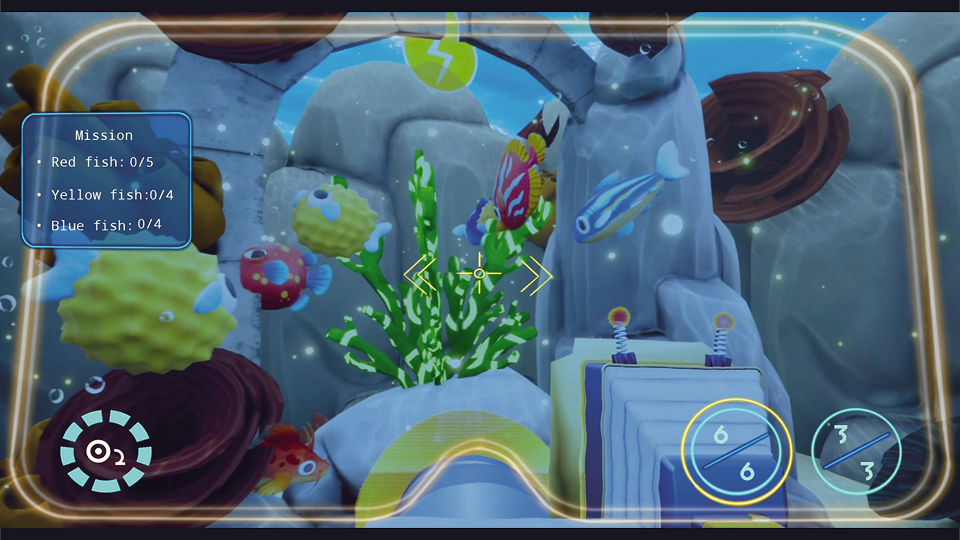
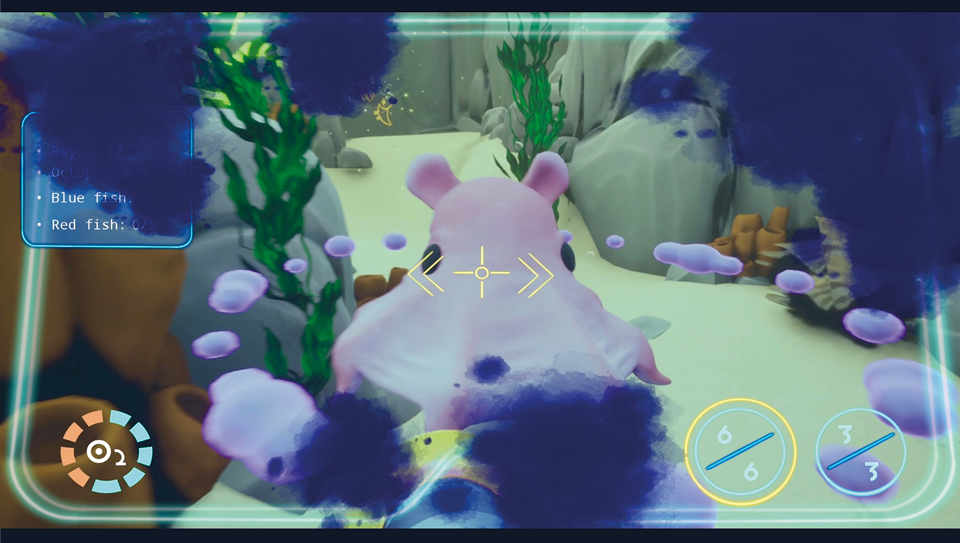
First-person tactical shooter about underwater photography. A diver-photographer takes assignment shots of sea creatures — without scaring the small fish and without becoming food.
Design question: How do you teach the toolkit step by step and still make every level feel like a different body of water?
Intent: Curiosity first, caution second. Each level introduces something new, yet stays calm enough to observe and plan.
What I made:
— Designed the teaching level structure: lenses and ammo → practice → coral behaviour → free practice on safe targets.
— Designed the enemy progression: small fish first, then rays and octopuses, then sharks.
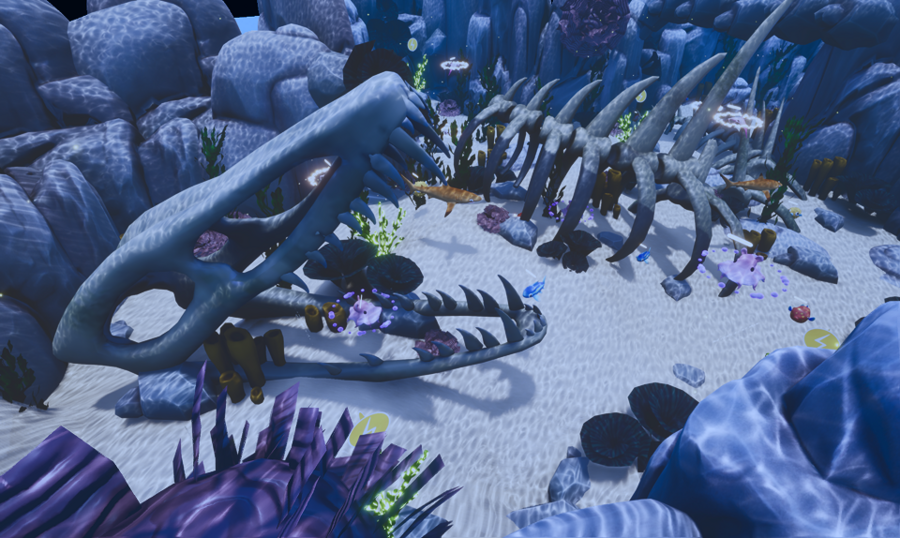
— Designed zones with different focus: obstacle avoidance, luring fish to corals, free experimentation.
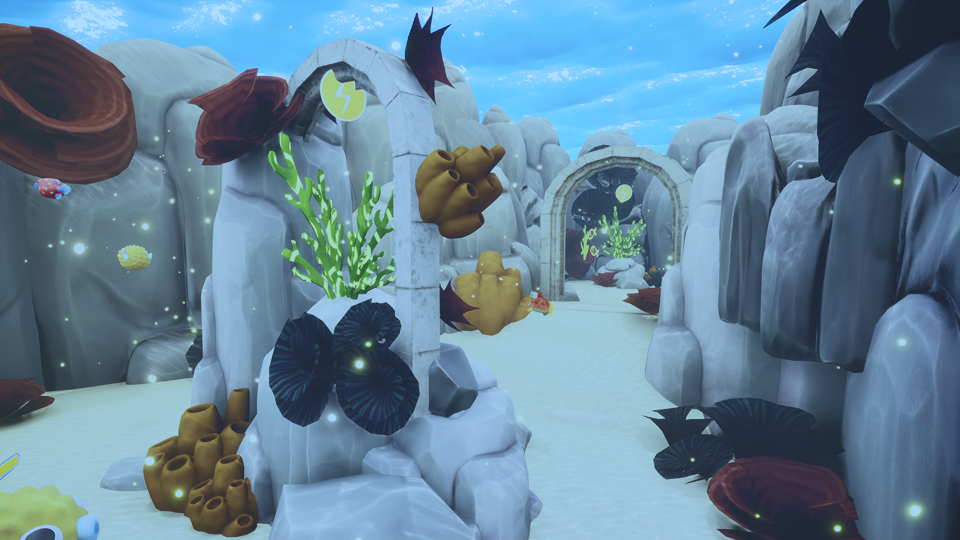
— Built the level layouts and placed the creature zones and cover.
— Worked on lighting and atmosphere of the underwater spaces.Experience & result: Players learned by doing, not by reading — the level taught the whole toolkit before the first real threat. The zone logic kept attention switching between caution and curiosity, so the space guided the player.
THE WAY HOME
Year: 2024 · Team: solo project · Role: Game Designer, Level Designer, Level Artist
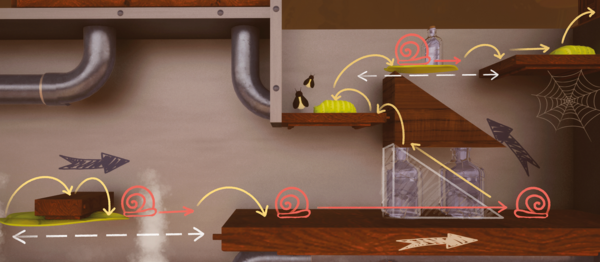
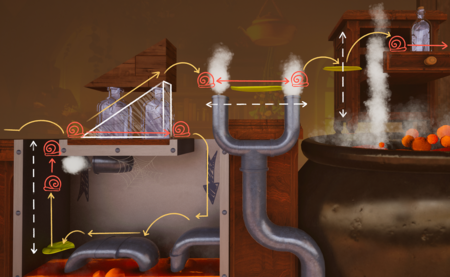
3D puzzle-platformer about a small snail, that switches between two forms to get past traps, platforms and hot surfaces to escape a witch’s house.
Design question: How do you make one long level feel varied without new mechanics? And how do you make both states equally worth choosing?
Intent: The player should constantly switch between planning and reaction, while the level asks for faster decisions and tighter timing — the challenge grows without new rules.
What I made:
— Designed the two-state system: shell (speed, steam protection, almost no jump) and no shell (jumping, climbing, vulnerable).
— Zoned the level by focus: plan the sequence → react on the move → combine both.
— Built the platform and hazard logic so every state change is justified by the environment.
— Set the pacing: tension → safe pause → new challenge.
— Worked on lighting, post-processing and the visual atmosphere of the level.Experience & result: Switching states became the core skill, not a side mechanic. The zoning held attention across the whole level — the rhythm of planning and reaction kept a solo-made space from becoming repetitive.