Pedro Almodóvar’s film posters are art in themselves—and they are also a creative extension of the stories in his films.
From Pedro Almodóvar’s very first film—"Pepi, Luci, Bom, and Other Girls» (1980)—his cinema exists beyond the screen. His vibrant, provocative visual aesthetic continues to live on in his posters, many of which resemble small pieces of pop art in themselves.
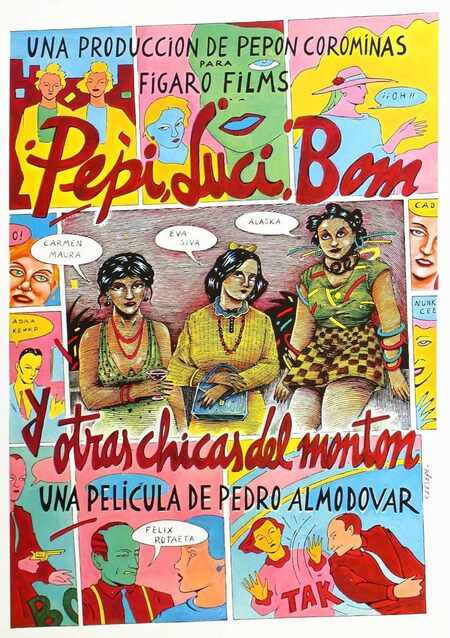
The poster for «Pepí, Lucy, Bom» resembles a comic book—and that is entirely fitting: the film originated from the comic «General Erections, ” which Almodóvar drew in 1978. Its creator, a cartoonist from the underground scene of Sisepe, transformed the poster into something resembling a magazine cover: the caricatured graphics, neon colors, and exaggerated characters perfectly capture the spirit of the Madrid counterculture that the director brings to the screen.
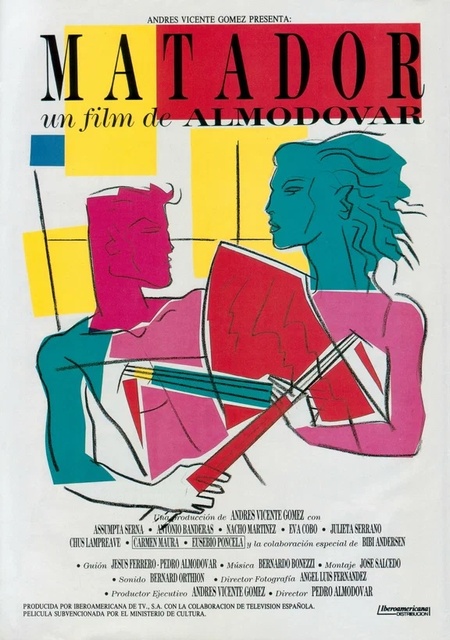
For «Matador» (1986), the artist, painter, and pop musician Carlos Berlang amplified this color palette—adding even more soft pink and sunny yellow—but set them within a much darker context. At the heart of this erotic thriller is an obsession with death, sex, and violence, and the poster transforms this idea into a dazzling image of mutual destruction.
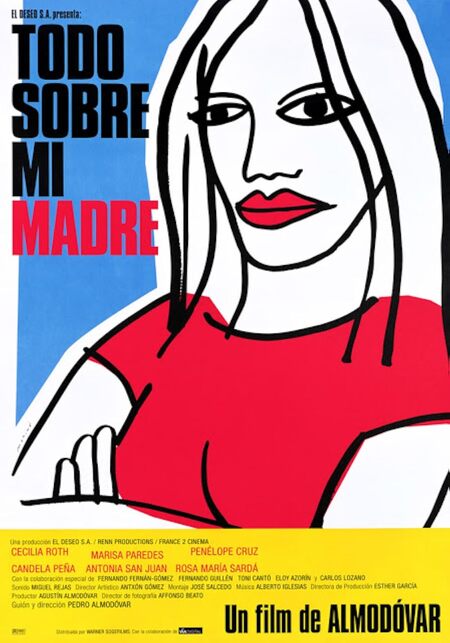
The poster «All About My Mother» (1999), created by Madrid illustrator Oscar Marine, is structured differently. Thick black brushstrokes coalesce into the portrait of a woman who gazes fearlessly directly at the viewer. Within her, one can see any of the film’s archetypes—mothers, actresses, saints, and sinners—who constantly change their roles and identities.
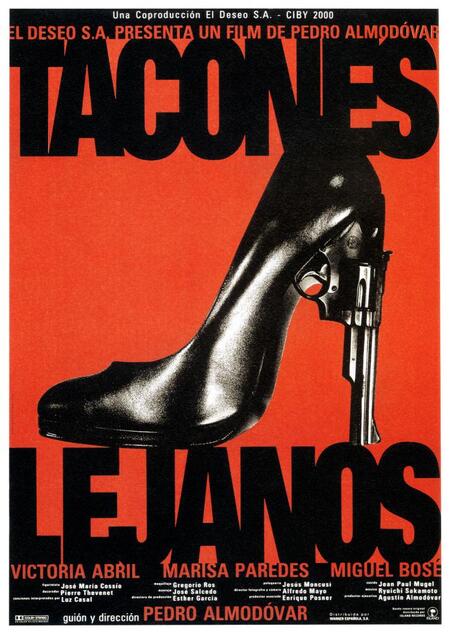
However, the Argentine designer Juan Gatti became a regular visual architect for Almodóvar. He not only worked on the director’s posters multiple times but also contributed to the title sequences, including those for Women on the Verge of a Nervous Breakdown (1988). For High Heels (1991), Gatti transformed a stiletto into a pistol and set it against a backdrop of blazing red. Several of Almodóvar’s signature themes converge here—passion, danger, sexuality, and death. It is no surprise that red is considered the director’s favorite color.
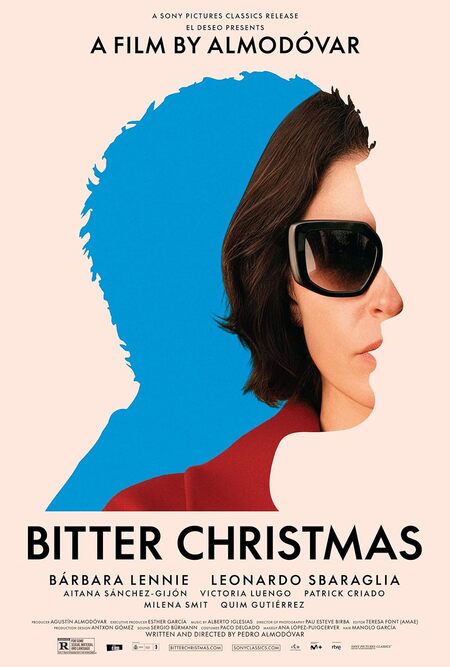
And finally, this tradition has reached Eldarov’s new film, «Gorky Christmas» (2026). On its first poster, the characters’ faces virtually dissolve into one another: a large portrait is assembled from countless pairs of eyes, causing one character to simultaneously become several. This functions both as an optical effect and a fairly precise metaphor for a film built on doppelgangers, memory, and the blurring of reality and fiction. Eldarov no longer needs a pin gun or comic book graphics; a single face is enough to create another small visual puzzle.
This is the distinctive quality of Almodóvar’s posters: they don’t just advertise films; they continue the films' language outside the cinema. Bright colors, eroticism, grotesque, melodrama, death, and pop culture—everything that makes Almodóvar’s films instantly recognizable is already embedded in their posters.