Topics:
1. Introduction
2. Sign System
3. Juxtaposition
4. Composition
5. Conclusion
6. Bibliography and Image Sources
Introduction
Concept
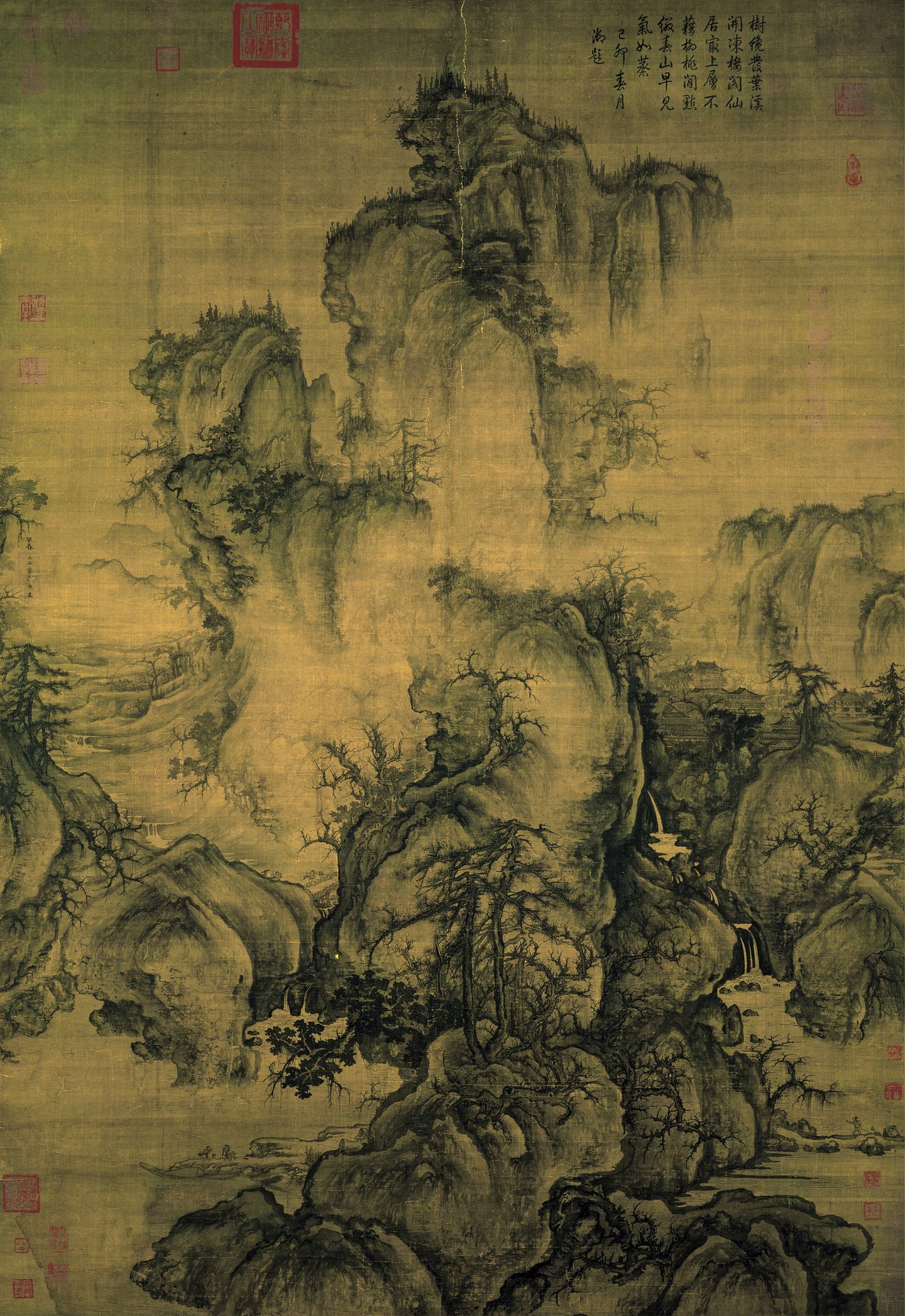
Yin and Yang is traditionally associated with the recognizable symbol—a circle with black and white «fish.» However, it is more than just a sign; it is a philosophy that developed in the mid-first millennium BCE (approximately the 5th–3rd centuries BCE), while the symbol itself was only fully formalized in the 16th century. In this study, I aim to analyze how different countries (China, Japan, and Korea) expressed the Yin and Yang philosophy in their painting during the Middle Ages.
Key Question
How is the philosophy of Yin and Yang expressed in the painting of medieval China, Japan, and Korea in the absence of symbols?
Hypothesis
In China, the principle is embedded in the very language of composition, whereas in Japan and Korea, ready-made symbols (cardinal directions, sun and moon, paired imagery) are first borrowed, and the principle of emptiness and pause is mastered only later. If it turns out that Japan and Korea engaged with compositional principles as early as China, the hypothesis will be adjusted.
Material Selection Principle
The study only includes works where yin and yang manifest as an interconnected pair, rather than merely two independent objects. Three types of manifestation have been identified: cosmological pairing and a system of various signs (sun and moon, cardinal directions, etc.), opposition, and composition (mass and void, movement and stillness). Furthermore, this study examines only painting, including murals in tombs and temples.
Signage System
Yin and Yang as a cipher. Directions, animals, the sun, and the moon. The cipher originated in Chinese cosmology. We examine how it lives in China, Korea, and Japan.
China
Here, the concept of yin and yang is expressed through four guardians: the Tortoise with the Serpent, the Blue Dragon, the Red Phoenix, and the White Tiger. The second and third symbolize yang, while the first and fourth symbolize yin.
Unknown artist. Scenes of everyday life, «Figures Under Trees,» guardian spirits, and mythical beasts. Painting on a brick tomb in Taiyuan (Shanxi Province, China). Tang Dynasty, 736.
Korea
Korea uses the same symbols as China
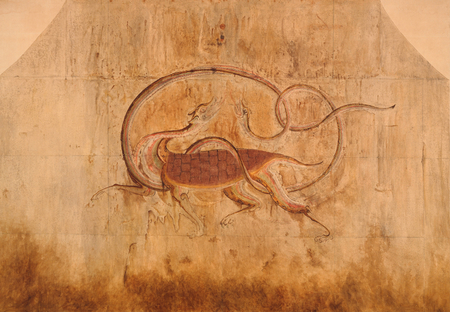
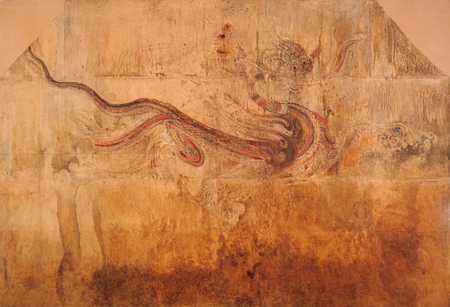
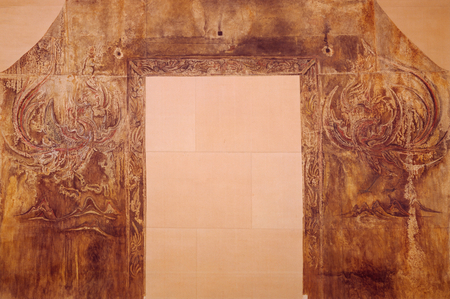
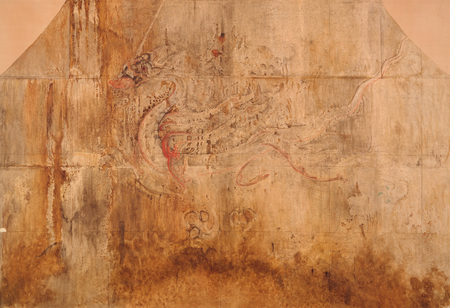
Unknown Artist. The Four Guardians: White Tiger, Blue Dragon, Red Phoenix, Black Tortoise, and Serpent. Reproduction of the mural from the Sam-ri Great Tomb. Original: Goguryeo, late 6th — early 7th century. Reproduction circa 1930.
Japan
In Japan, we see both familiar symbols and new ideas. The Takamatsu-dzuuka burial chamber is designed according to the philosophy of Yin and Yang. On opposite walls, we can see the sun and the moon—the masculine and feminine principles—and the symbols we already know: the White Tiger, the Blue Dragon, and the Turtle with the Serpent (the Phoenix is not visible as the wall it was on was destroyed).
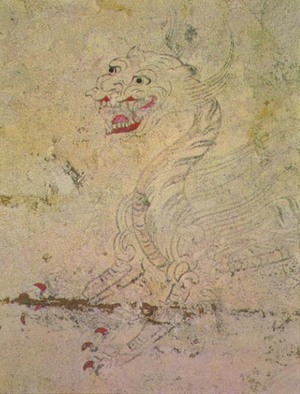
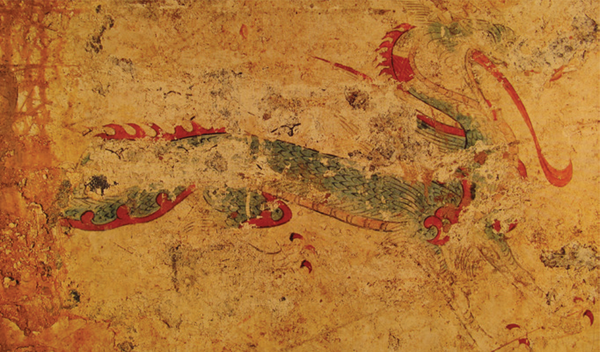
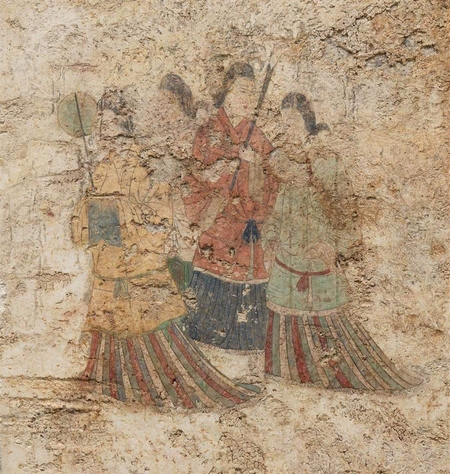
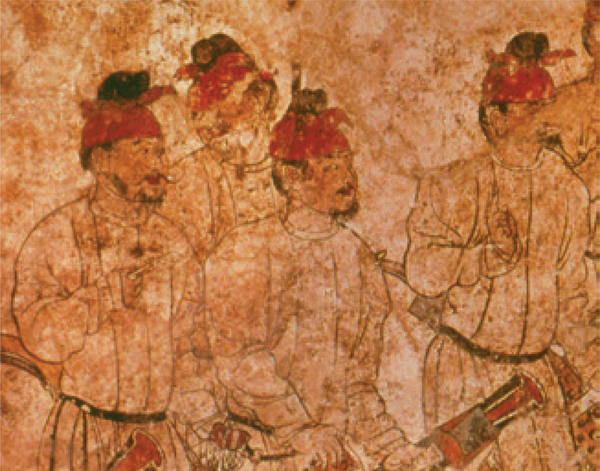
Unknown artist. Painting of a stone chamber in the Takamatsu-zuka burial mound. Late 7th — early 8th century. Asuka, Nara Prefecture.
Contrast
China