Navigation
— Concept — Historical Context — Visual Language Characteristics — Archetypes and Female Imagery — Conclusion
Concept
Manga is incredibly diverse, and like Western comics or literature, it encompasses numerous genres. However, unlike Western media, manga is distinctly categorized by gender. The two most prevalent manga genres are Shonen and Shojo—the meaning of these terms is inherent in their names.
Shonen (Japanese: 少年 — «youth») is intended for young men, while Shojo (Japanese: 少女 — «girl») is intended for young women. These genres differ not only in their target audience but also in the themes they explore, narrative pacing, dynamics, and overall style.
The representation of women in media is a relevant and vital topic today, including in Japan, where women gained the right to publish manga under their own names less than a century ago. Today, Japanese creators draw both shonen and shojo. However, shonen is still largely created by men for men, and female characters often remain secondary or become objects for fanservice. Shojo, on the other hand, as a genre predominantly created by women for women, becomes a space where authors can address personal experiences, feelings, and issues relevant to their target audience. In this genre, the female protagonist often takes center stage so that female readers can identify with her, which consequently creates significant potential for exploring the female experience. My hypothesis is that shojo mangaka were best positioned to explore female figures with the greatest depth and nuance, because in shojo, women are typically the focus of the story.
Visual material was selected based on research into manga, reader experience, and the popularity of works from their release to the present day—highly niche titles were excluded because the study aimed to understand the general trend of opinion and interest. The material for the «Historical Context» section was primarily sourced from the academic resource Google Arts & Culture, while other images were preserved from manga reading sites like MangaLib. Textual sources were located according to the theme and verified for relevance and reliability. An article from the Google Arts & Culture portal was used as the foundation for the «Historical Context» portion, and a thesis on gender studies in shōjo was utilized to analyze the genre, understand character archetypes, and examine their interpretation methods. The structure was organized sequentially to ensure a more logical presentation of the material: first, it was essential to examine the history of manga and the shōjo genre to understand how the genre evolved into what it is today; next, visual characteristics distinguishing shōjo from shōnen were highlighted—for example—and finally, the concluding section addressed the heroine archetypes identifiable within shōjo.
Historical Context
Rakuten Kitazawa, Jiji Manga, Jiji Shinpo, 1929 issue
The history of manga in its modern form is generally traced back to the appearance of Jidzi Manga—the word «manga» appears in its conventional sense in this name, which was one of the first to use it. Jidzi Manga was inspired by American comics and was published in the journal Jidzi Shinpo starting in 1902. Rakuten Kitazawa is considered the founder of the genre and, arguably, of Japanese comics in their modern form. Jidzi Manga primarily featured social, satirical vignettes.
«Shonen Club,» magazine cover, April 1929
«Shōjo no Tomo,» magazine cover, September 1913
Soon, manga magazines began to divide into the genres characteristic of them to this day: shōnen and shōjo. The Shōjo no Tomo, a magazine for girls—which will be particularly interesting to us now—and the Shōnen Club, a magazine for boys, appeared.
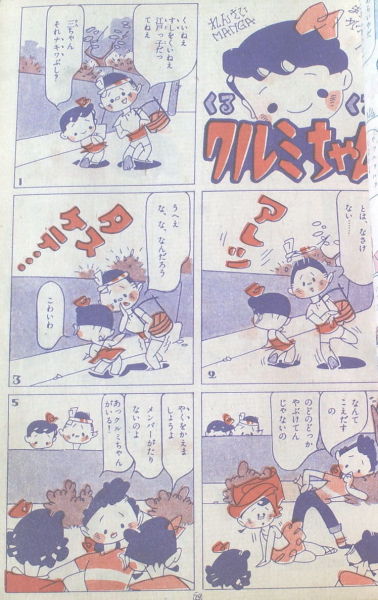
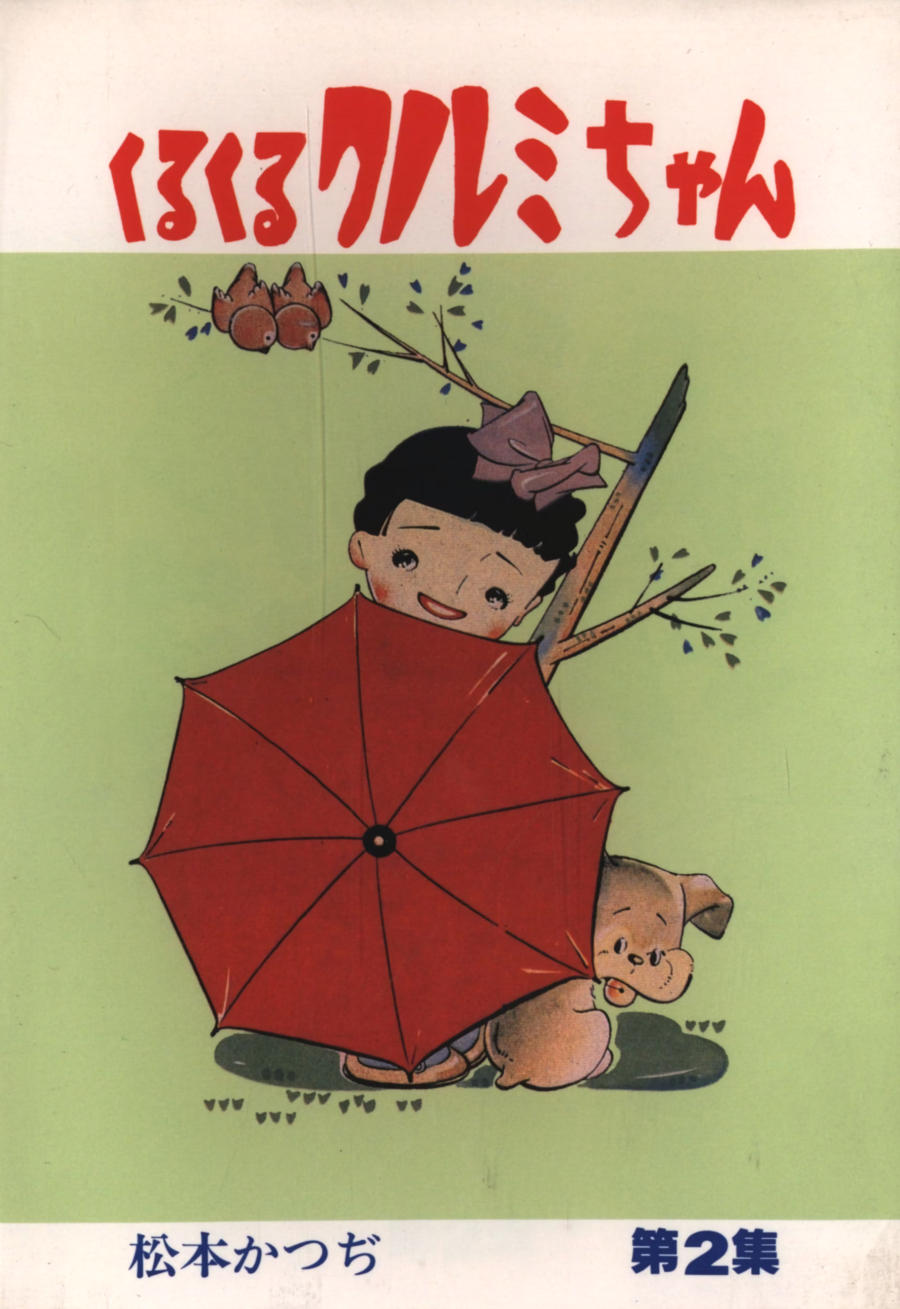
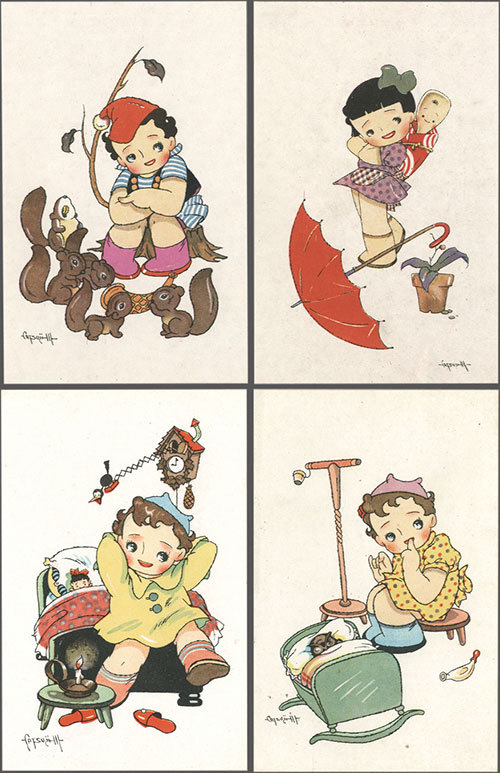
Katsuji Matsumoto, «Kurukuru Kurumi-chan»
Initially, manga for girls was created by adult men. Through everyday situations involving young girls, it formed role models for young female readers. Katsuji Matsumoto was one of the key authors at the beginning of the sёдзё manga’s development.
Kazushi Matsumoto, «The Mysterious Clover,» cover of «Shojo no Tomo,» April 1934
Kazuji Matsumoto, «The Mysterious Clover,» fragment, 1934
Drawing inspiration from Western superhero narratives, Katsuji Matsumoto creates the image of a mysterious, masked hero who helps people in The Mysterious Clover. In dynamic frames that diverge from typical shojo conventions, this hero is portrayed by a young girl. Matsumoto was among the first to establish the archetype of the «otenkai"—the fighting girl.
Osamu Tezuka, «Ribon no Kishi» («The Ribbon Knight»), magazine cover, Shojo Club, 1953–1956
Eisuke Ishida, «The Canary Prince, ” fragment, Shōjo Salon magazine, 1951
In the early 1950s, the image of otenkai, as well as girls dressing in men’s attire («crossdressing»), particularly captivated shojo manga artists.
Matico Hasegawa, «Sazae-san,» cover, 1946
Yoko Imamura, «Chako-chan no Nikki» («Chako-chan’s Diary»), fragment, 1959–1970
Mangaka women bring a different, more profound, and personal perspective to the heroines in manga. Drawing upon their own life experiences, they create stories that genuinely resonate with their audience—whether it’s the realism of circumstances or of emotions. The romantic subplot in shōjo is beginning to gain significance.
Mitsuteru Yokoyama, «Sally the Witch,» cover, 1966
Shojo gradually begins to become more complex, giving rise to subgenres, such as maho-shojo.
Miyako Maki, «Maki no Kuchibue,» 1960–1963
Moto Hagio, «Iguana’s Daughter,» 1994
Yamagishi Ryoko, «Our White Room,» 1971
With the growing number of women among manga creators, there are more and more sensual and relatable works for female readers. For example, one of the key themes in shōjo manga, especially in earlier works, is the relationship with the mother.