Concept
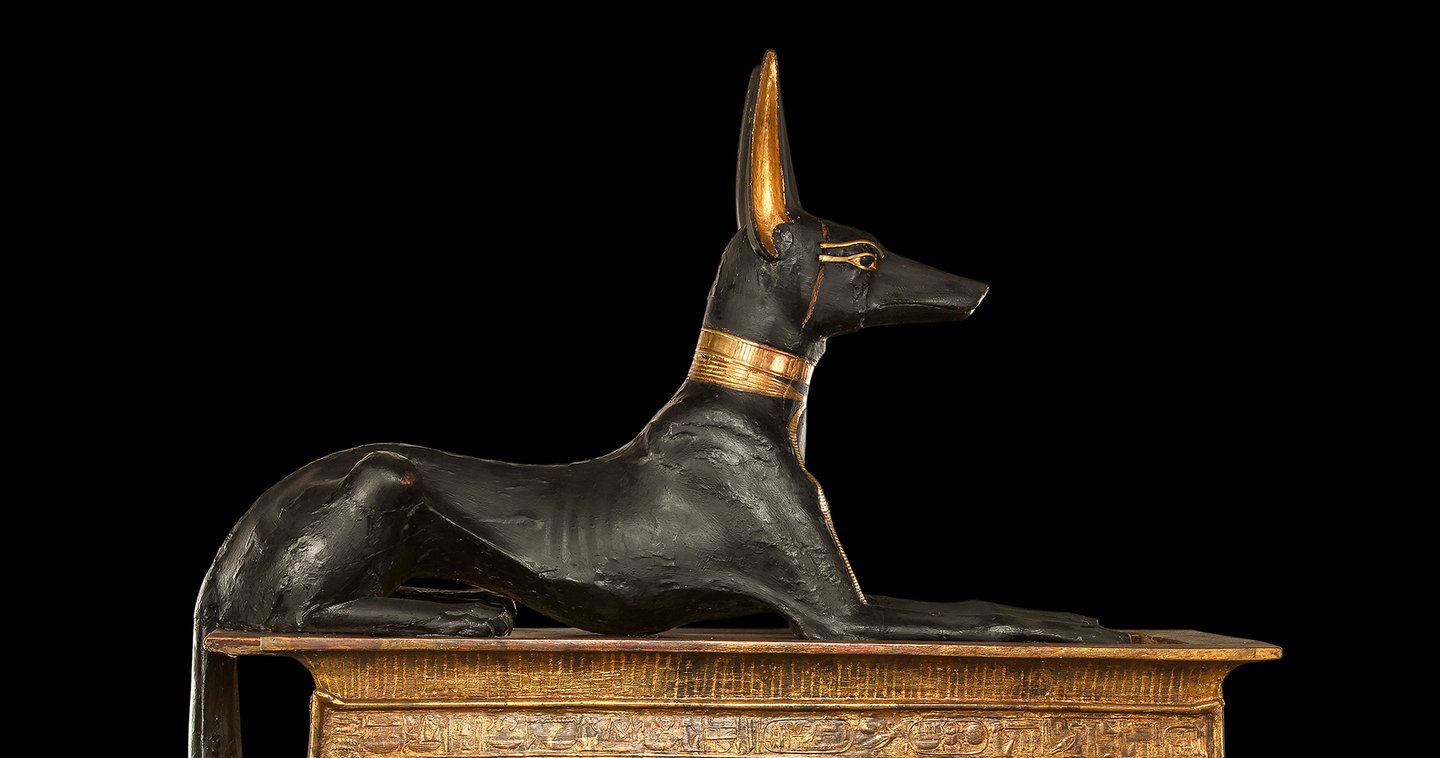
The image of Anubis (Egyptian Inpu) holds a significant place in ancient Egyptian funerary art. The deity was traditionally depicted as a human figure with the head of a jackal or a recumbent black animal and was associated with embalming, the protection of the deceased, and concepts of passage to the afterlife. His representations can be found on tomb walls, funerary stelae, sarcophagi, amulets, ritual objects, and papyri. Despite its recognizability, the image of Anubis is not static—his appearance, placement within a composition, and interaction with other figures depend on the object’s function and the nature of the ritual depicted.
The topic allows for an examination of how ancient Egyptian masters used visual elements to convey the functions and symbolic meaning of Anubis in funerary art.
The primary focus is on the funerary art of the New Kingdom, mainly monuments from the 18th–20th Dynasties (c. 1550–1070 BCE). The selection of this period is due to the large number of preserved monuments on which Anubis is depicted in various pieces of funerary art. The visual repertoire includes tomb murals, stelae, sarcophagi, amulets, ritual objects, and images on papyri. All these monuments allow us to view the image of Anubis not only as a recognizable symbol but also as part of a specific system of religious and artistic representation.
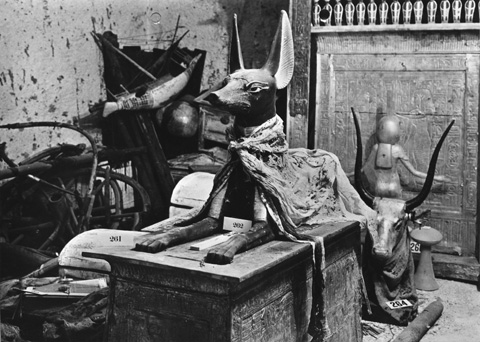
Harry Burton. Statue of Anubis as a reclining jackal on the sanctuary of Tutankhamun’s tomb. 1920s.
The study incorporates works from the collections of the Louvre, the British Museum, the Egyptian Museum in Turin, as well as other museum and archival collections. When selecting materials, consideration was given to the ability to examine specific visual characteristics: body form, proportions, head position, silhouette character, color scheme, and attributes. Important criteria also included Anubis’s gestures, his positioning relative to the deceased and other deities, and the character’s role within the overall composition. The research structure follows a progression from the deity’s external appearance to the exploration of its functions within funerary art. First, the primary ways Anubis is depicted are examined, followed by attention to color and attributes, and then the body positioning and gestures within the composition are analyzed. Museum catalogs and scholarly publications on the history and art of Ancient Egypt, along with studies of ancient Egyptian religion and funerary rituals, are used to reveal Anubis’s religious functions and the significance of funerary imagery.
The core research question is how visual elements shape the image of Anubis in New Kingdom funerary art, and how the characteristics of his depiction relate to the deity’s functions.
Navigation
- Concept
- Image and Basic Forms
- Color and Attributes
- Anubis in Ritual Scenes
- Conclusion
Image and Main Forms
One of the most characteristic features of Anubis is the combination of human and animal traits.
In ancient Egyptian art, Anubis could be depicted as an animal—a recumbent jackal—or in an anthropomorphic form with a human body and a jackal’s head. Both variations represent different visual manifestations of the same figure. The zoomorphic depiction of Anubis is often shown in a resting posture, maintaining a sense of stillness and composure. This form is particularly effective for use on small objects and amulets, where the silhouette becomes the primary means of recognizing the character.
Scarabaeus inscribed with the name of the pharaoh Amenhoteprenre (Thutmose II). New Kingdom, 18th Dynasty, circa 1492–1479 BCE.
Another example is the mask of Anubis, where the animal form becomes an independent part of the ritual object. The black head with an elongated snout and pointed ears conveys the divine figure’s characteristic features. Unlike the small depictions on amulets, the mask allows the image to be viewed in a more volumetric and tangible form.
Mask of the god Anubis. New Kingdom, 18th–20th Dynasties, c. 1550–1070 BCE.
In the same form, one can find works of art that include Anubis in a composition with other deities and humans. Anubis could be depicted beside or directly behind the person he accompanied and protected. This compositional choice underscores one of the deity’s main functions in funerary art—the protection of the deceased and his patronage on the journey to the afterlife.
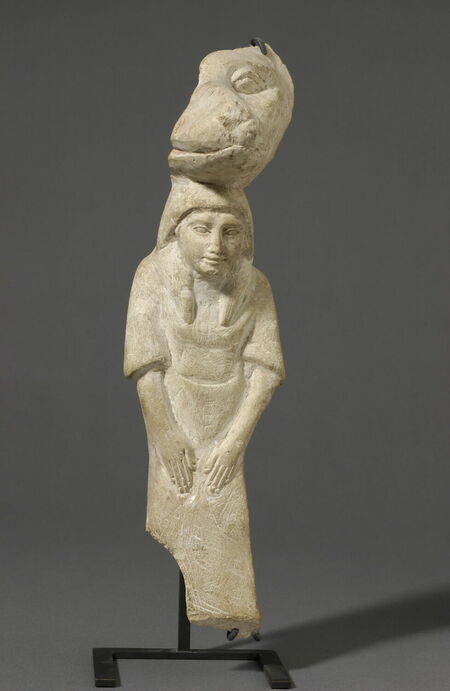
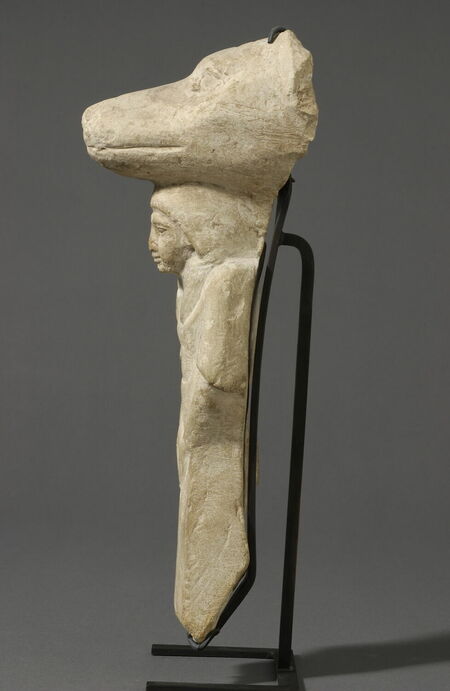
Fragment of a sculptural group depicting Anubis protecting a human. Ramesside Period, c. 1295–1069 BCE // Fragment of a sculptural group depicting Anubis protecting a human. Ramesside Period, c. 1295–1069 BCE (different angle)
The anthropomorphic form is built upon the combination of the human body and the jackal’s head. Unlike an animalistic representation, this depiction of Anubis allows him to be shown as an active deity, integrated into a religious composition, and interacting with humans.
Relief depicting a priest and a woman worshipping Anubis. New Kingdom, 18th Dynasty, c. 1396–1386 BCE.
Color and Attributes
In ancient Egyptian culture, the color black was associated with earth, fertility, and rebirth, and in a funerary context, it could also be perceived as a symbol of connection to death and renewal.
One of the most recognizable attributes of a deity is the black coloration of its body or head. However, in some instances, a more unusual solution involving blue is found. In funerary contexts, this color may have held additional significance, relating to beliefs about eternal life and renewal.
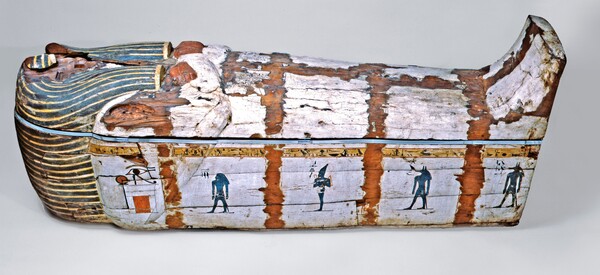
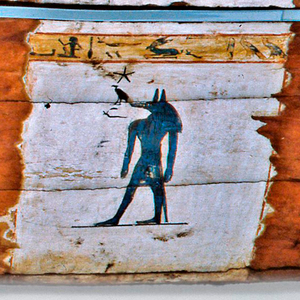
Anthropoid Sarcophagus of Pui. New Kingdom, 18th Dynasty, 1500–1450 BCE
The attributes and accompanying symbols play a special role in the depictions of Anubis. They help establish the character’s position within a ritual or religious composition. Alongside Anubis, one might encounter symbols related to ancient Egyptian concepts of protection, rebirth, and eternal life: the Eye of Udjat, the Djed Pillar, and the Isis Knot. Anubis’s presence in the composition unifies these symbols with the theme of guardianship over the deceased and the protection of the burial place.
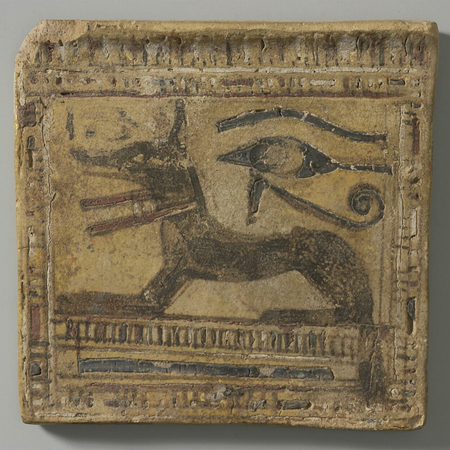
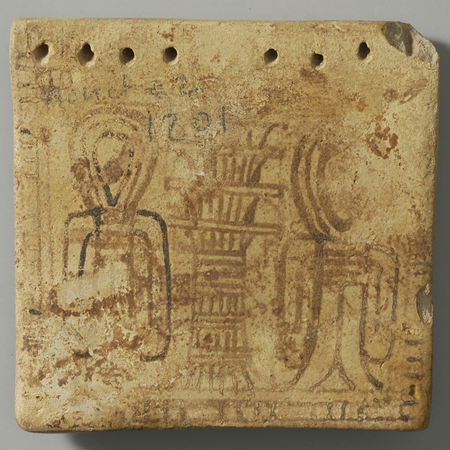
Pectoral with a depiction of reclining Anubis. Ancient Egypt, New Kingdom—c. 1539–1069 BCE // Pectoral with a depiction of reclining Anubis. Ancient Egypt, New Kingdom—c. 1539–1069 BCE (reverse side)
Anubis was also depicted alongside other deities associated with ancient Egyptian concepts of death and the afterlife. His image was complemented by characteristic attributes—a necklace, a whip, and a staff. Despite retaining its zoomorphic form, the posture of the figure, its setting, and the surrounding symbols emphasized the deity’s unique sacred status.
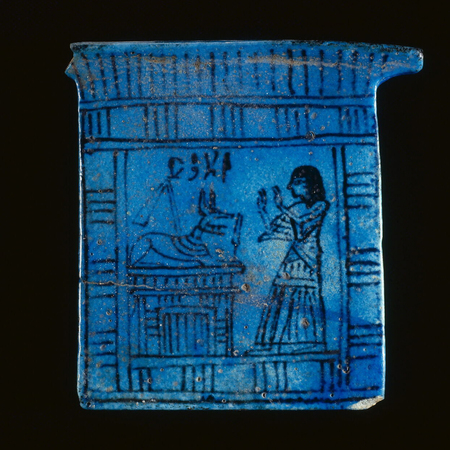
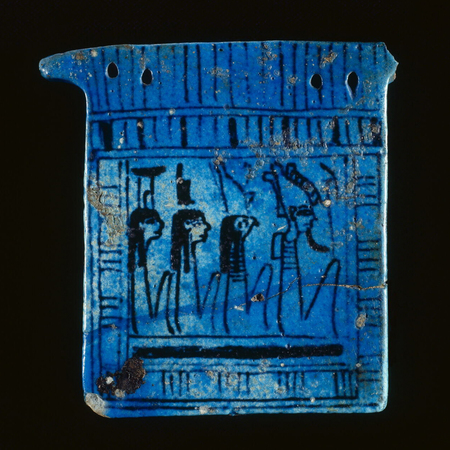
Pectoral depicting worship of Anubis. Ancient Egypt, New Kingdom — circa 1539–1069 BCE // Pectoral depicting worship of Anubis. Ancient Egypt, New Kingdom — circa 1539–1069 BCE (reverse side)
The deity may also have appeared in the form of small decorative elements, directly incorporated into the design of the sarcophagus and mummies. Despite its small size, the characteristic contours of the head and the jackal muzzle allow for the deity to be recognized without error.
Insert with an image of Anubis’s profile head. Ancient Egypt, New Kingdom — circa 1539–1075 BCE.