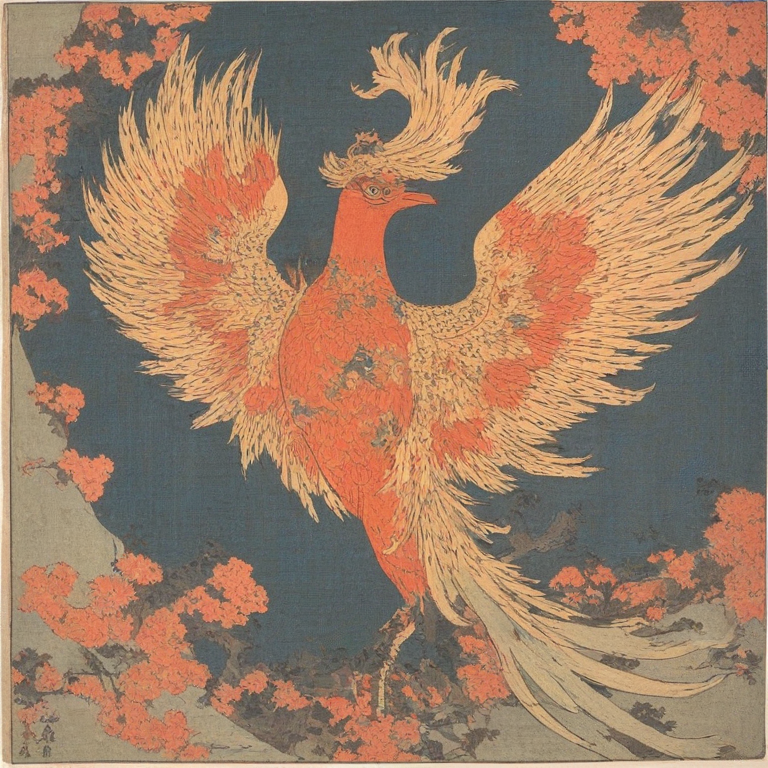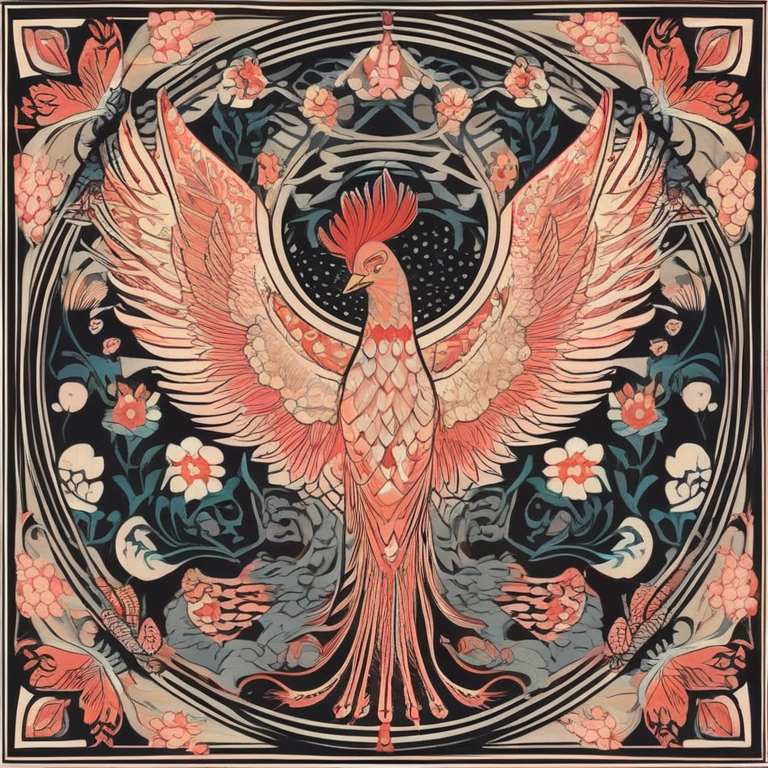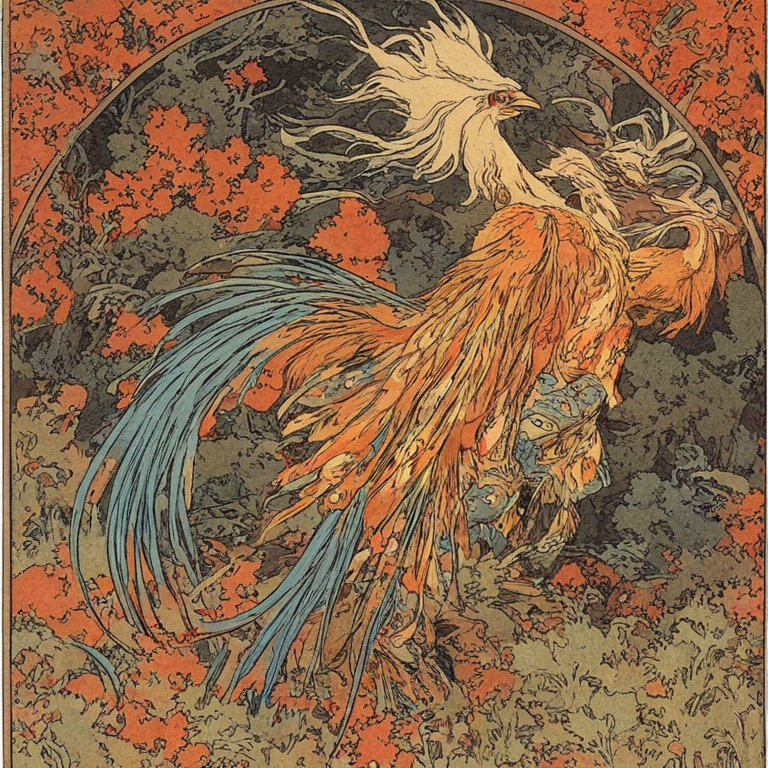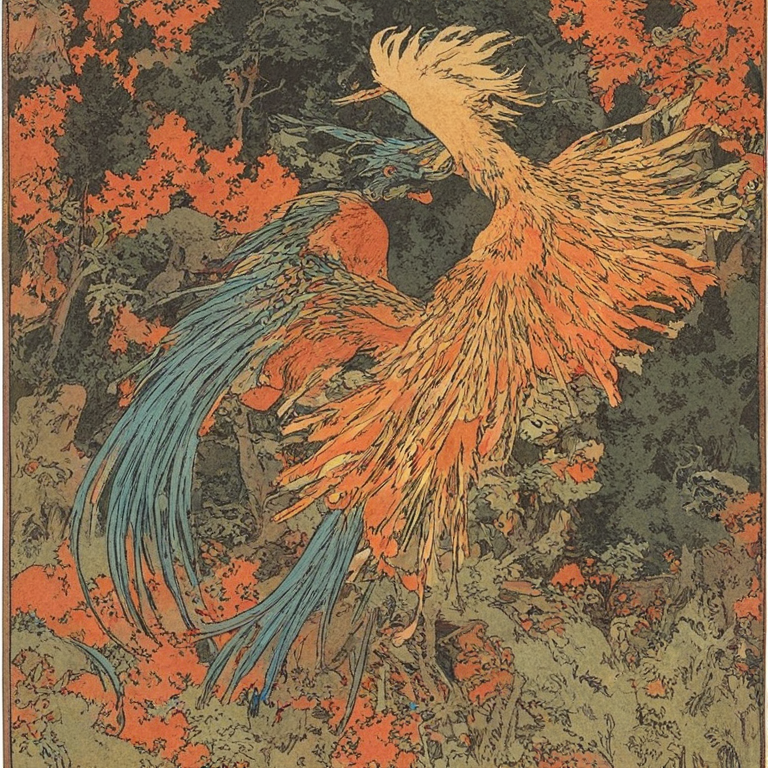
Concept
Ivan Bilibin depicted the image of Russian folklore we remember from childhood: the firebird, Baba Yaga, the bogatyrs, and ornate log houses. Few people know that Bilibin was interested in Japanese Ukiyo-e prints. The wave he illustrated in «The Tale of Tsar Saltan» is often compared to Hokusai’s «The Great Wave.» The sharp contour, flat color, and ornamentation—these two traditions share a great deal in common.
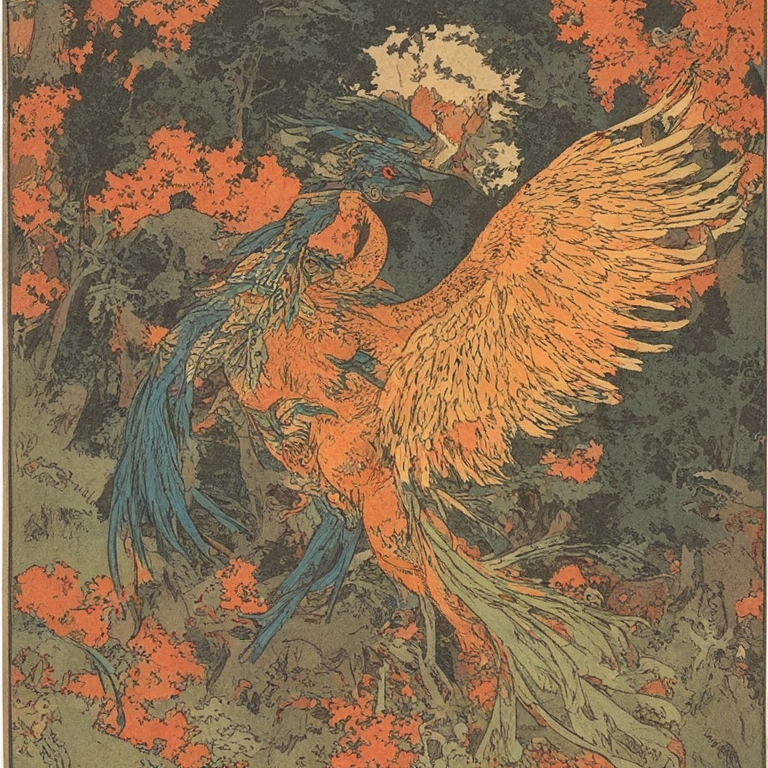
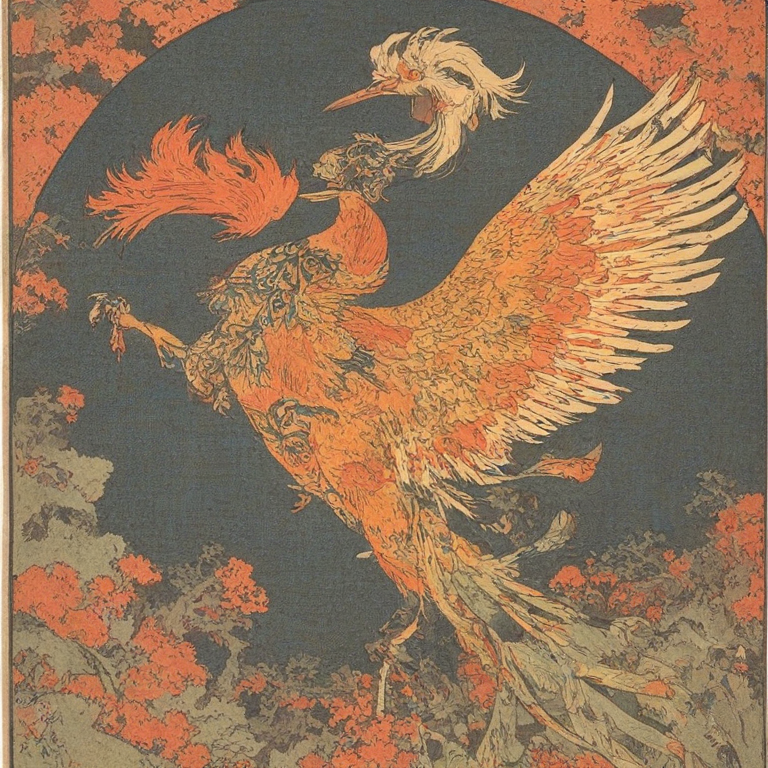
I decided to test what would happen if I combined them: what would the firebird look like in the style of Hokusai, the hut of Baba Yaga in the style of Hiroshige, and what would emerge right in the middle.
Source Images
For each style, I compiled 30 real works:
1. Japanese Woodblock Prints: Hokusai, Hiroshige, and Kuniyoshi from the Metropolitan Museum’s open collection (CC0 license);
2. Bilibin: illustrations for fairy tales and epic tales from Wikimedia Commons (public domain works).
From the 85 prints and 45 illustrations, I selected the best pieces. I excluded pages with text, black-and-white drawings, sketches, and duplicates. I cropped all images into a square format.
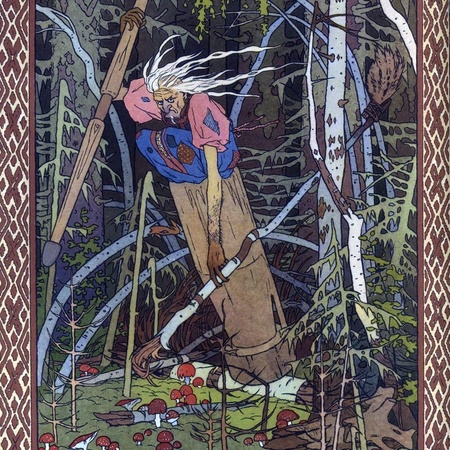
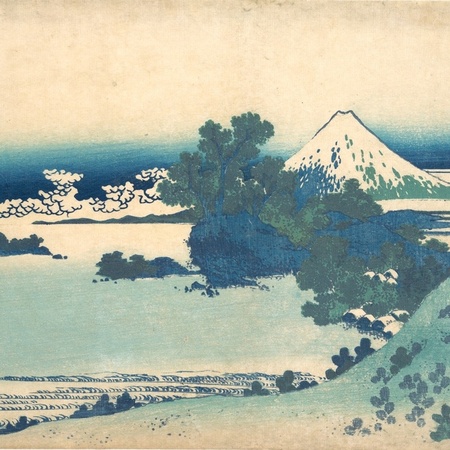
Examples of source images
I wrote a caption for every image. Each caption includes a special token word (SKAZKA for Bilibin, UKIYO for engravings) and only describes what is depicted: «gray wolf in a dark forest under the moon, ” „large wave with boats and a mountain.“ There are no words about the style in the captions, so the model associates the entire artist’s style with the token.
Learning
I trained two LoRAs—small «add-ons» to the SDXL model, one for each style. Training was conducted on a GTX 1080 Ti video card, taking about 45 minutes for each LoRA. Afterward, these two LoRAs can be enabled simultaneously, and you can assign a specific weight to each one.
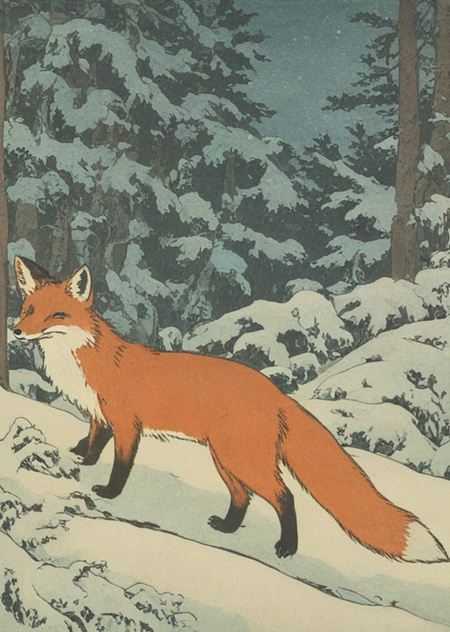
Resulting Images
The same prompt, «firebird,» and the same random seed. Only the style proportions change.