Способы показать власть
One of the objectives was to illustrate the significance of visual forms in embodying, demonstrating, and conceptualizing royal power—forms that likely spoke more eloquently to many people than text.
Table of Contents
1. Concept
2. Power as Hierarchy of Body and Status
3. Power as Victory, Law, and the Right to Punish
4. Power as Ritual and Sacral Justification
5. Conclusion
6. Bibliography
Concept
How has power been represented previously?
It was possible simply to depict the ruler as a statue, some kind of relief, or a painting. But is the monarch the only way to show the audience this exalted image?
Certainly not.
Showing the king is a straightforward way to represent power, but it is far from the only way.
The goal of this visual study is to examine artworks through the lens of power representation, and to determine how scale, posture, attributes, inscriptions, and ritual context made power accessible to visual understanding.
I noted several ways of depicting power during art history lectures and seminars. Later, I came across a video detailing how Assyrian kings utilized palace reliefs to demonstrate their authority. This sparked my curiosity about how the visual perception of a particular artwork helps us conclude that it relates to power. This realization prompted me to delve into this topic more deeply.
What do a royal statue, a coin, and temple gates have in common?
They can convey power, even if the ruler himself is not depicted. Specific elements within the artwork can suggest to the viewer who holds a position of prominence and upon what authority that position is founded.
Anthropologist Alfred Gell suggests viewing art not merely as a system of signs, but as an action capable of altering relationships between people. This idea helps us see in works of art not just representations of power, but objects that participated in its validation. For instance, they might have been seen in a temple, used in a ritual, carried as personal emblems, or displayed as signs of status.
Ishtar Gate, c. 575 BCE
To understand how power becomes visible, the visual investigation is divided into three sections: body and status, victory, ritual, and sacred authority. Each section examines different techniques—from posture to coinage and architecture.
Power as a Hierarchy of Body and Status
Power often becomes apparent through how the ruler’s body is depicted and the place it occupies within the composition. The scale of a monarch in a work, their posture, and their attributes help to denote their status both individually and collectively.
The Main Focal Point of the Composition
Relief depicting Ashurbanipal and his consort in a garden, 645–635 BCE.
In works of art, the viewer is often directed toward where and whom to look. For example, a royal figure might be larger or taller than others, or it might occupy the center of the composition. This means their status can be understood even before the details or inscriptions are fully visible.
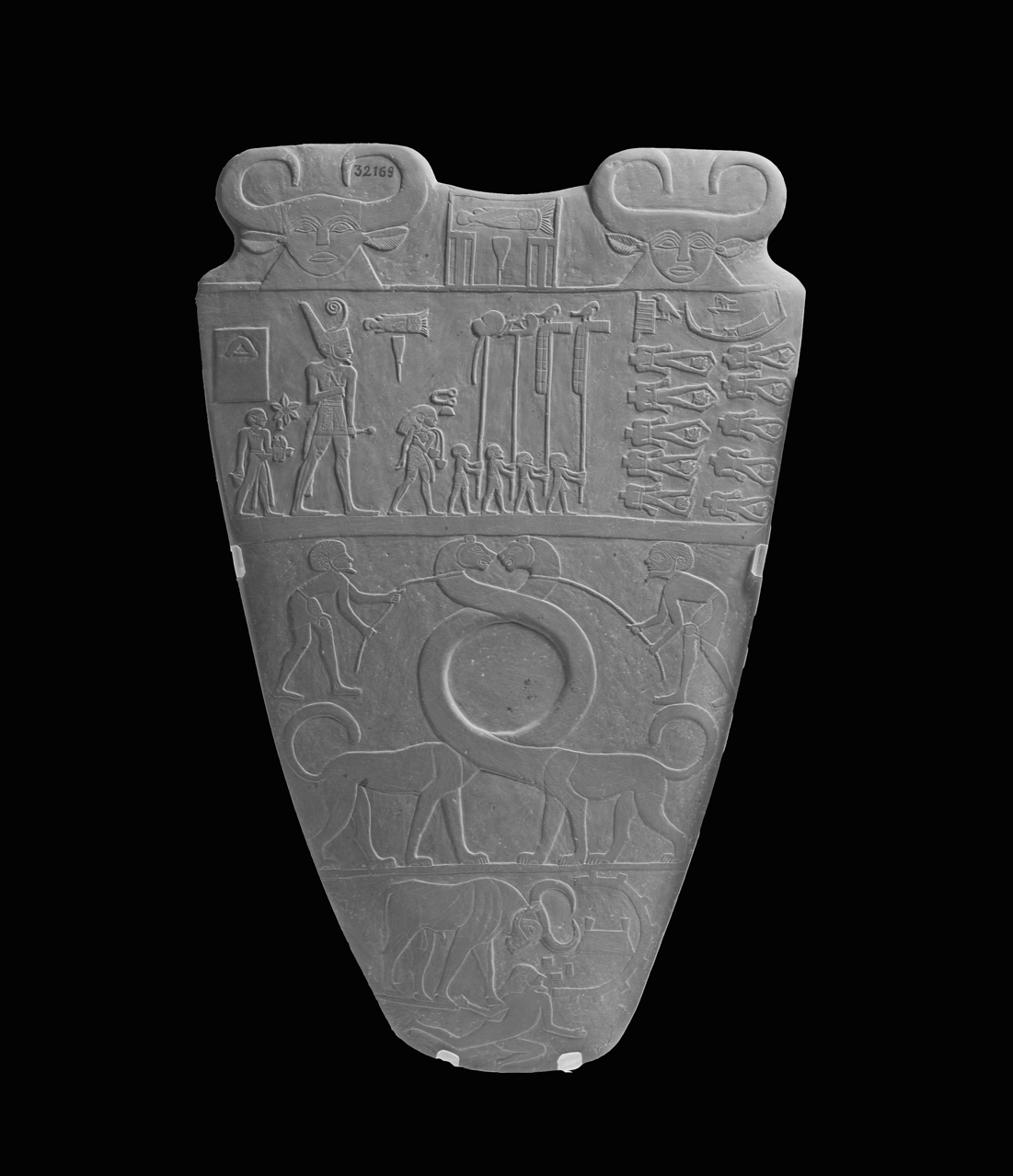
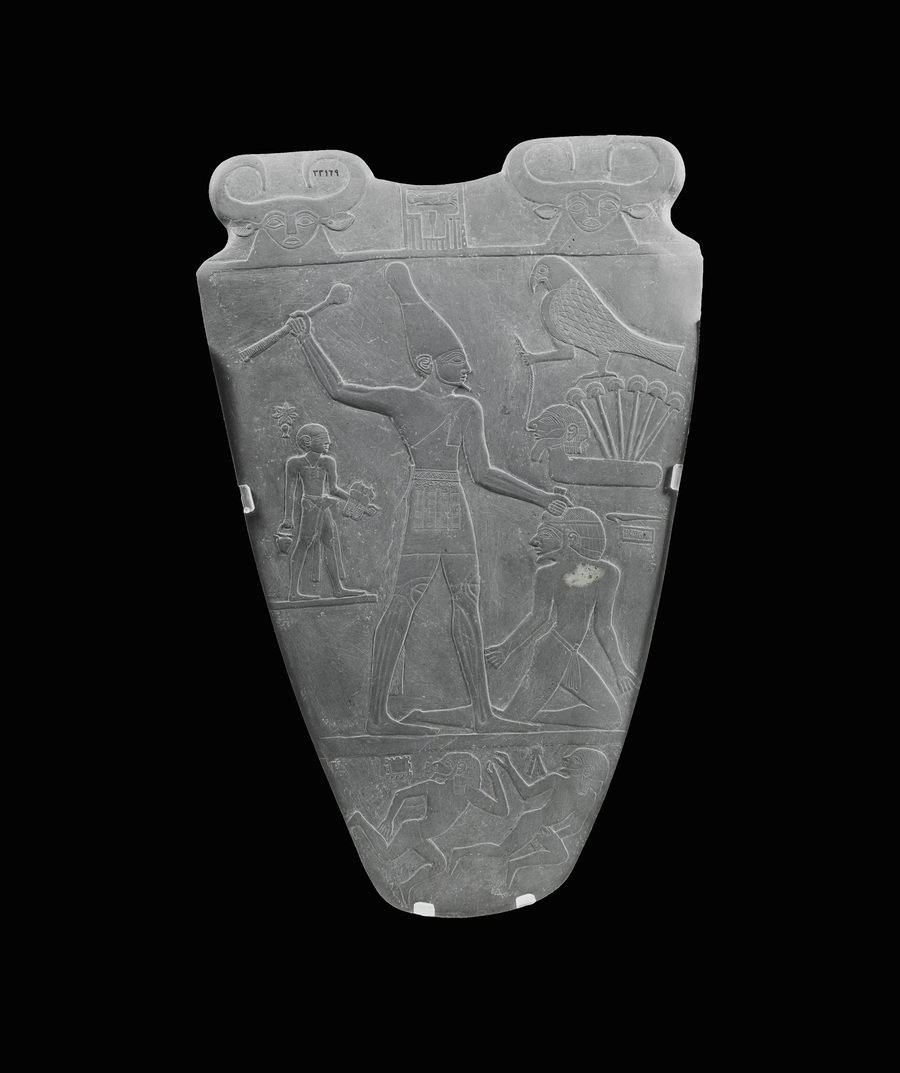
Narmer Palette, circa 3100 BCE
On Narmer’s Palette and on the Assyrian relief, rulers are positioned at the center of the composition. In the first case, the pharaoh stands triumphant over a defeated enemy, while in the second, Ashurbanipal and his consort are surrounded by attendants. These surrounding figures and elements of power visually establish their status and position.
Recognizable Elements
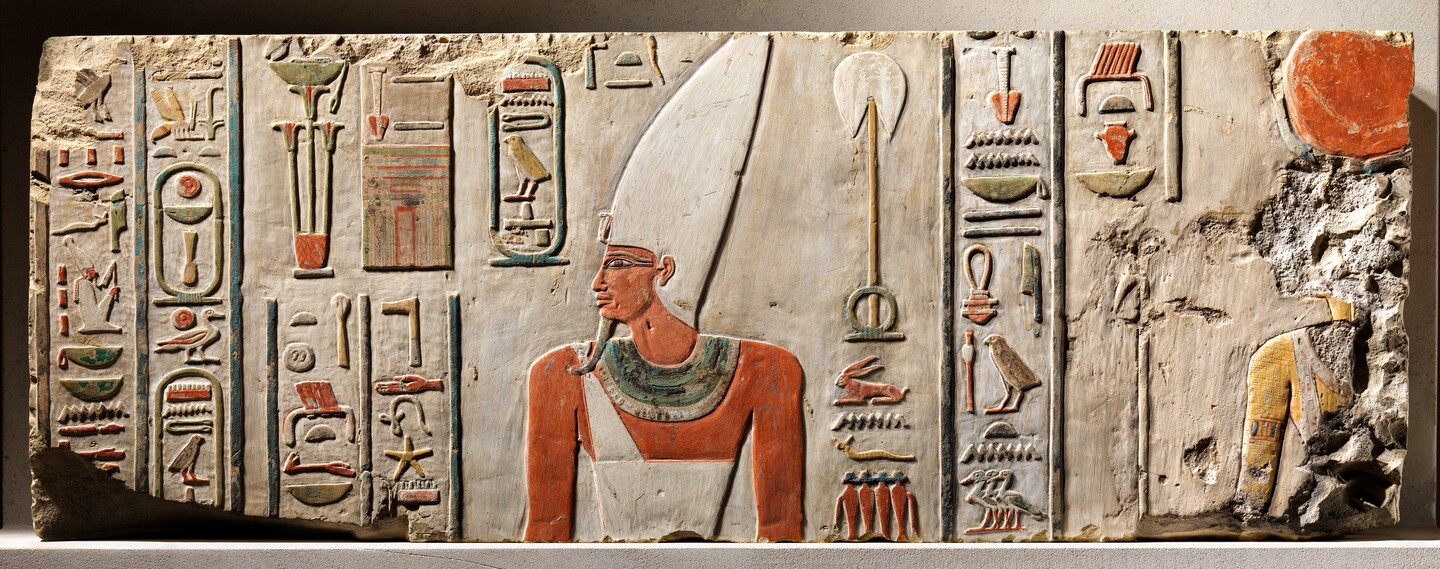
Sometimes, to understand who is depicted before the viewer, a recognizable symbol is enough. For example, crowns or regal attire. These attributes transform the figure into a specific ruler, thereby helping to convey their special status.
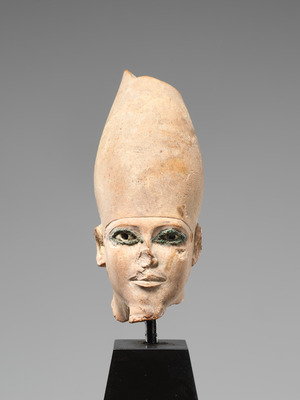
Голова царя, вероятно, Хафре, около 2520–2494 гг. до н. э.
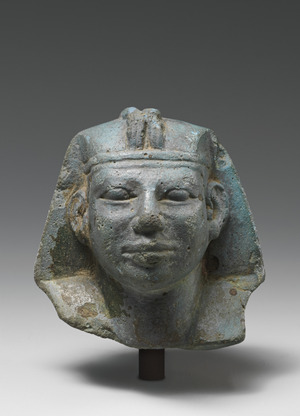
Глава кушитского короля, около 721–664 гг. до н. э.
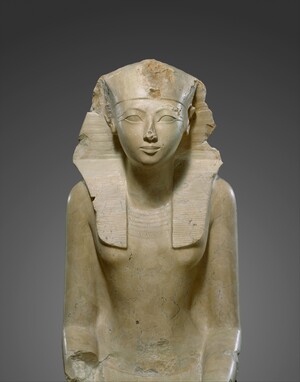
Сидящая статуя Хатшепсут, около 1473–1458 гг. до н. э.
The headwear of the pharaoh, the Kushite king, and Hatshepsut differs in shape, but it serves a similar purpose—to help identify a specific ruler in the depicted figure. Even when the individual shown cannot always be identified (for example, the pharaoh is likely Hafre), a royal attribute like the crown retains the clarity of the image: the viewer is presented with a figure endowed with a specific social and political status.
Body
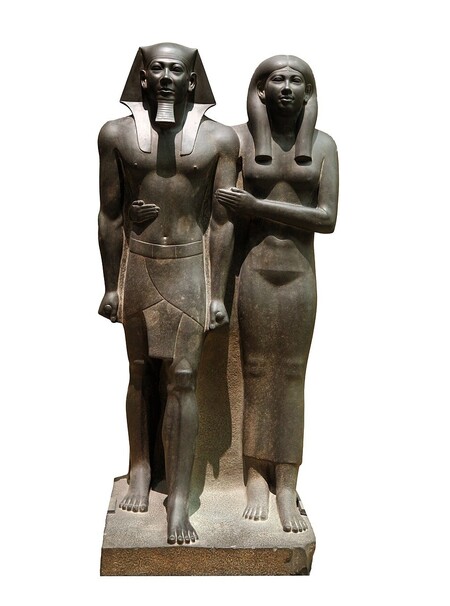
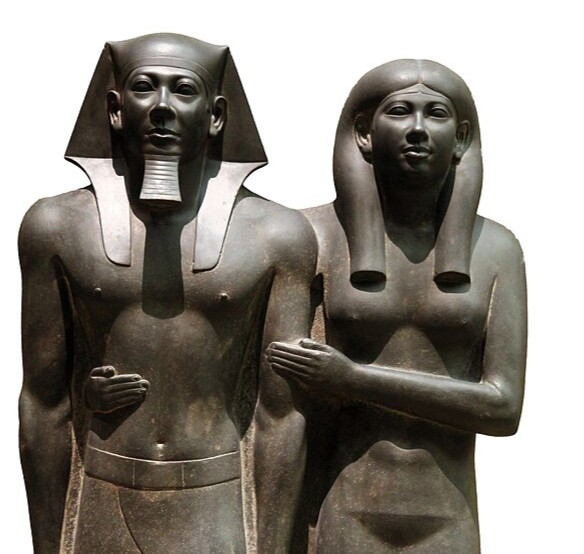
King Menkaure and his queen, between 2490 and 2472 BCE.
Power can also be conveyed through the body itself: immobile, strong, and heroic. A royal figure can also be presented alongside another figure that reinforces their status. These images do not always aim for exact likeness; their main goal is to depict how a true ruler should appear.
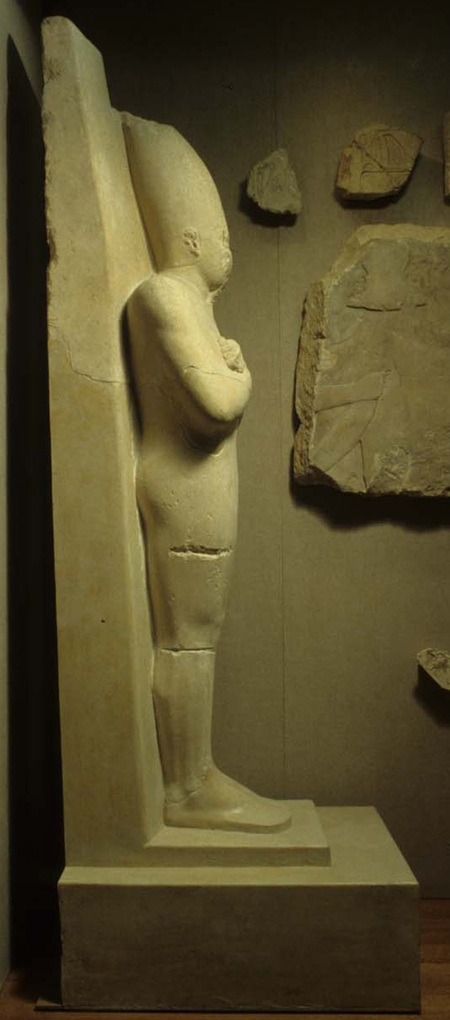
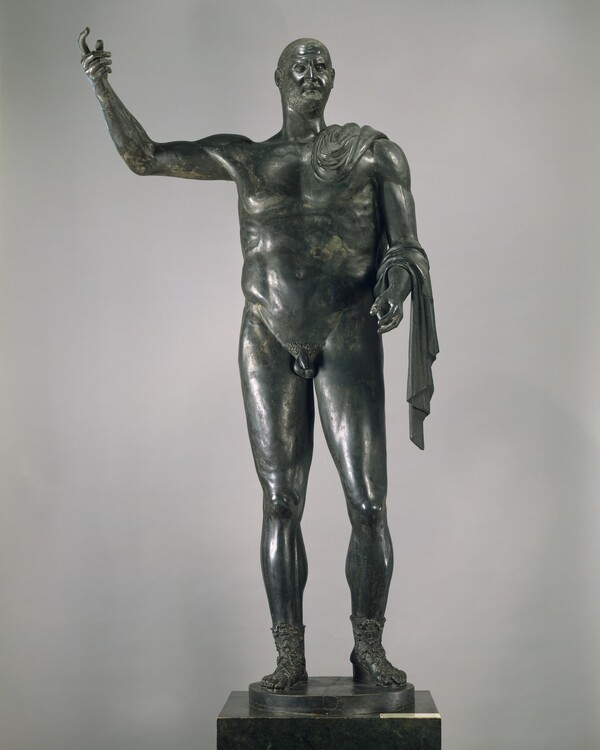
Osiridian Statue of Senwsreth I, circa 1961–1917 BCE // Bronze Statue of Emperor Trebonian Gallus, 251–253 CE
The statue of Menkaure and his consort emphasizes the stability of power through frontal poses and the close connection between the figures: the queen stands beside the pharaoh, supporting him with her hand, forming a single, balanced composition with him. In Trebonian Gallus’s piece, power is conveyed differently—the nude, muscular body and energetic pose lend the emperor a heroic presence. As for the Osirian statue of Senuseret I, it shows the king not so much in his everyday guise as it incorporates him into the image of Osiris: the arms crossed over his chest and the ritual attributes link him to divine order and rebirth.
Power as Victory, Law, and the Right to Punish
Power can be represented as an action: a ruler defeats an enemy, accepts tribute, or presides over a judgment. Such scenes directly demonstrate who holds authority. In other works, power is manifested not in the event itself, but in a sustained symbol—for example, in a law, an inscription, or a coin featuring the ruler’s image.