Navigation
- The Body in Ritual
- Body Deformation
- Ecstasy and Liberation
- Obsessive Movement
- The Body at its Limit
Concept
The core of this study is the human body at the moment it transcends conventional behavior. In a state of trance or its artistic representation, movement acquires peculiar qualities: it becomes compulsive, cyclical, slowed, spasmodic, or intensely vigorous. Familiar gestures lose their mundane meaning and transform into an independent plastic language.
The research examines the actor’s body as a vehicle for emotional expression and as a space where changes in rhythm, muscular tension, coordination, and the perception of time occur.
Particular attention is given to repetition as one of the key principles in organizing trance plasticity. The multiple reiteration of a single movement can create an impression of automatism, gradually alter its expressiveness, and cultivate a feeling of moving beyond conscious control.
By comparing ritualistic practices, experimental theater, contemporary dance, and works of art, this study traces how trance and ecstasy gain visual embodiment across different cultural contexts.
Research Objective
To identify and systematize the visual techniques used in theater, dance, and visual arts to convey trance, ecstasy, and altered states of the body.Research Question
How do repetition, rhythm, deformation, and physical intensity of movement create a visual image of the body that transcends conventional control?Principle of Visual Study Construction
The study progresses from ritualized movement to experimental acting plasticity. Each section explores a distinct method of bodily transformation: through rotation, deformation, ecstasy, automatism, or physical exhaustion. Consequently, the works are organized not by chronology or art form, but by the nature of the corporeal movement and the method of representing an altered state. This allows for a comparison of works from different eras and cultures, revealing shared plastic principles while simultaneously preserving the differences between their artistic and ritualistic contexts.The Body in Ritual
Ritual movement is built upon repetition, rhythm, and a set sequence of actions. Rotation and synchronization transform the body’s habitual plasticity, turning individual gestures into a continuous kinetic process.
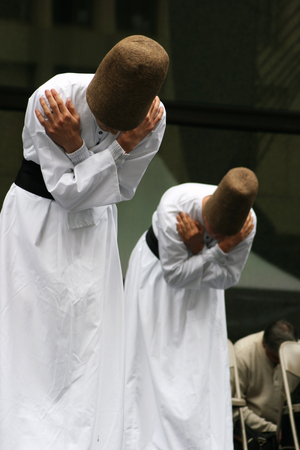
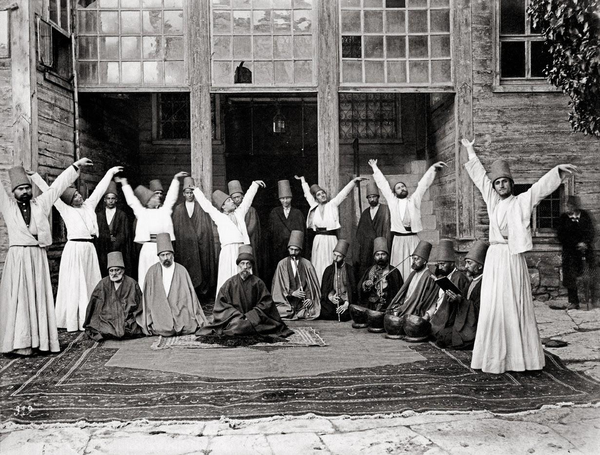
Quinn Dombrowski, 2009. Chicago Turkish Festival / Whirling Dervishes of the Mevlevi Order, captured in a photograph by Pascal Seba (Istanbul, 1870).
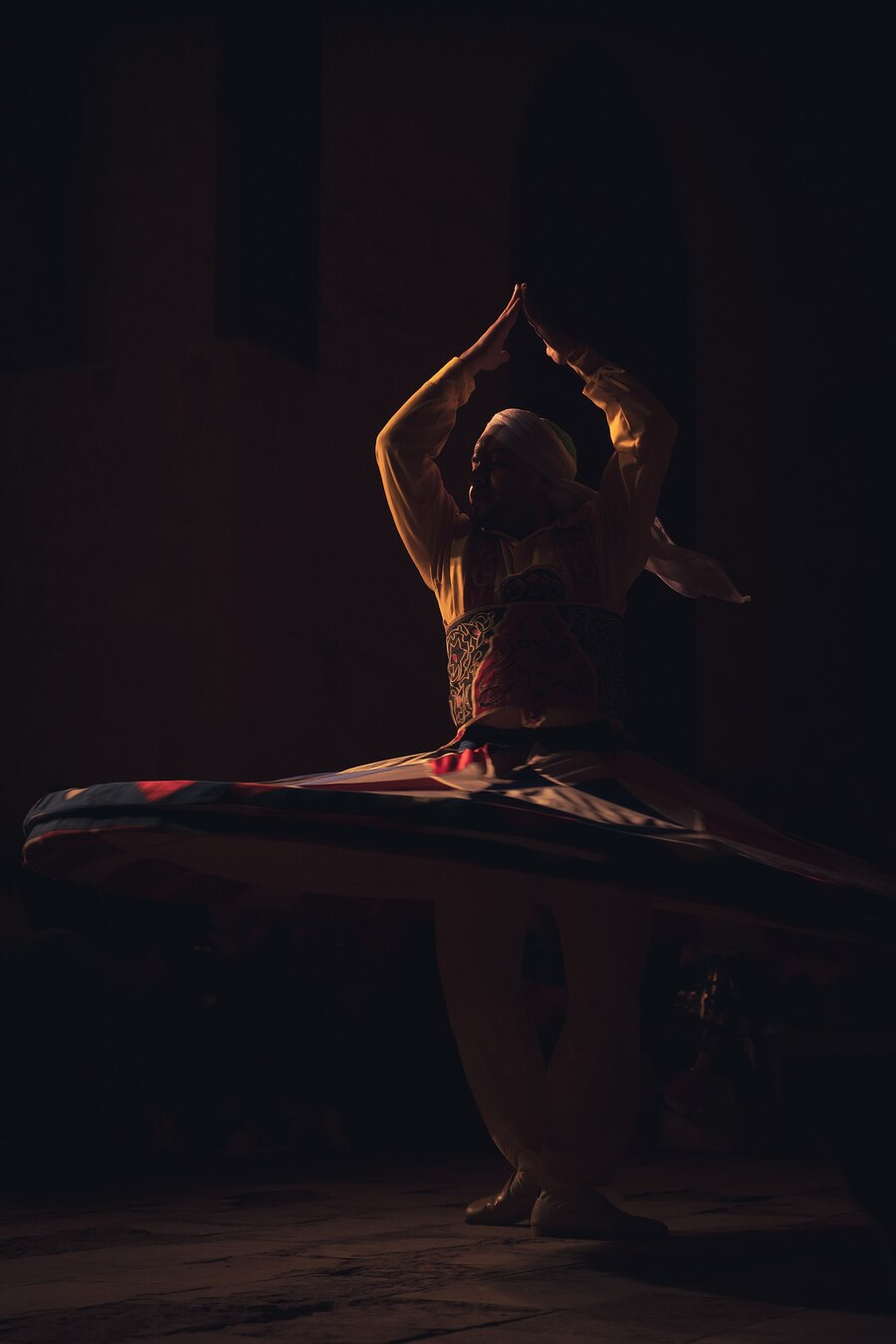
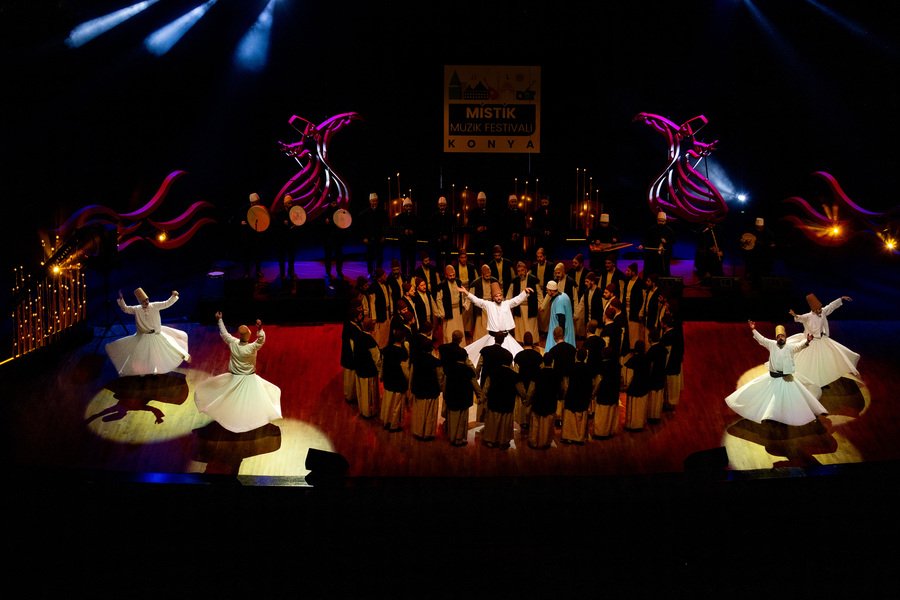
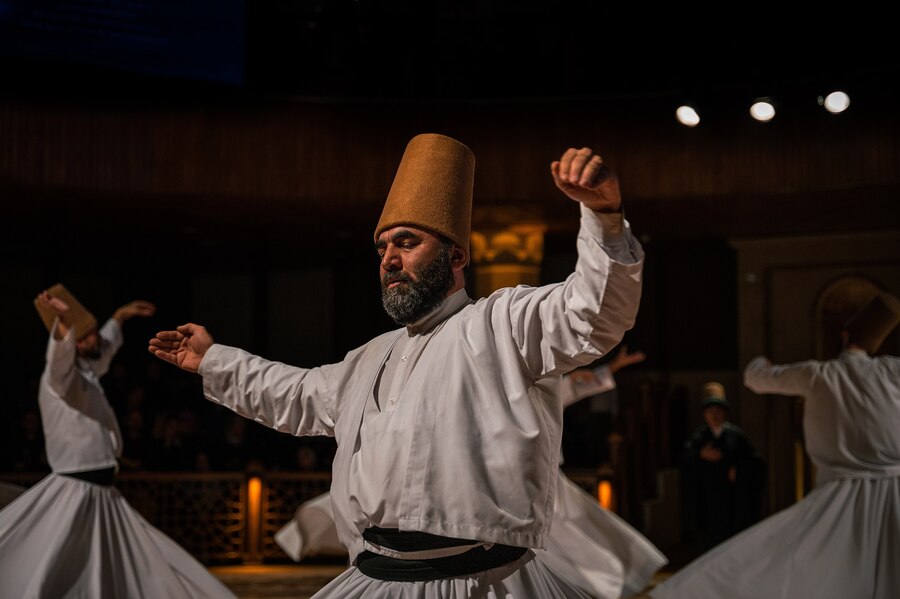
«The Whirling Dervish. Sufi Sema Ritual, ” Turkey, 2022. Photographer: Muhammet Özen / Sufi dervishes performing the Sema ceremony in Konya, Turkey / Whirling dervish in Cairo, Egypt