In Barcelona, a street lamp lights up when someone appears underneath it and dims when the person leaves. This system saves thirty percent on the city’s electricity bill, and the pole itself collects data on air and noise, effectively serving as a weather station. There is no science fiction here—it’s just an ordinary lamp with an added sensor and connectivity.
The Idea is Sixty Years Old
The concept of «quantifying» a city predates the internet by many years. In the 1960s, the Bureau of Community Analysis worked in Los Angeles, attempting to describe urban life through data, and this was arguably the first attempt of this nature. In the 1980s, Singapore established the National Computer Council, from which its entire digital policy later grew. The phrase «smart city» itself gained traction in the mid-1990s when Amsterdam unveiled a virtual «digital city”—a naive project by today’s standards, where citizens corresponded in a shared network.
The topic really gained momentum in the second half of the 2000s: sensors became cheaper, and mobile networks learned how to service them. An idea that had been on paper for forty years suddenly became less expensive than construction.
Barcelona Took the Initiative
The city embraced technology in the early 2000s as it worked its way out of an economic slump, and today, there are over a hundred such projects. Trash bins notify the dispatcher when they are full, so the truck drives to a completely full bin and doesn’t skip empty ones according to the paper schedule. Sensors monitor rain and humidity to determine how much water parks need—in a city where water is seriously conserved in the summer, this is no small thing. Seventy thousand elderly residents and people with disabilities are connected to a municipal telehealth service that proactively contacts them to ensure everything is alright.
All these streams converge onto a single platform, receiving data from sensor networks, urban information systems, and even social media. The goal is to make visible a problem that was previously unresolved, existing between three different departments. Many countries are pursuing similar initiatives: Singapore manages transportation through an integrated network of traffic lights and cameras; London adapts its lighting to real-time conditions; and Dublin has deployed sensors for air quality and water levels.
Why This is Necessary
Cities are growing, and the pipes and wires within them are aging. Currently, 55% of the planet’s population lives in urban areas; by 2050, that number will rise to 68%, and all of that burden falls on infrastructure designed for different loads. No city in the world has the funding for a complete overhaul.
Technology offers an alternative. Instead of replacing a pipe, a sensor is attached to it, allowing for preventative maintenance before a failure occurs. Instead of widening a road, traffic light patterns are reprogrammed. The result is a solution that is cheaper, faster, and requires almost no construction—meaning no blocked streets or angry residents.
Furthermore, smart lighting pays for itself within a few years without subsidies. Precision irrigation conserves water where it is scarce. Waste removal is no longer dictated by the schedules established in the last decade.
Why Everything is Taking Longer Than Promised
According to McKinsey, about seventy percent of smart city projects face delays, and the technology is not the reason. Departments operate in silos, data resides in disparate systems, and no single entity is responsible for the whole.The second obstacle is funding: a sensor might cost pennies, but replacing an entire lighting network runs into the hundreds of millions. The third is people—for a system to be beneficial, someone must interpret its data and make decisions based on it, and there are few such employees in municipal governments. The fourth is security: a sensor controlling a traffic light is an entry point into the city’s system, and the denser the network, the more of these entry points there are.
What This Means for the Resident
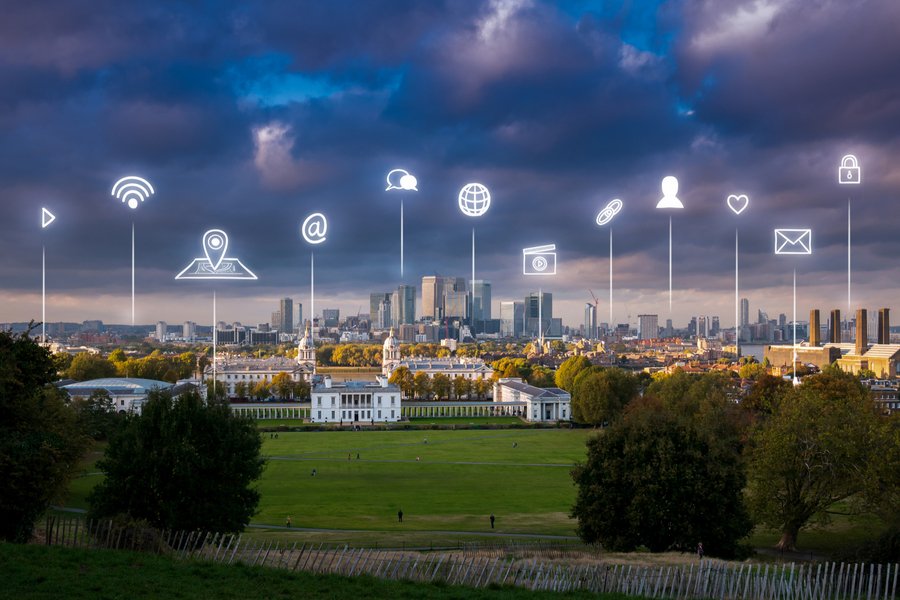
A smart city, in reality, doesn’t look as impressive as it does in futuristic films. It looks like a streetlight that turned on on time, a bus that arrived according to schedule, or a trash can that didn’t overflow by the weekend. Renderings with holograms over avenues are irrelevant to the matter.
However, there is a flip side. The denser the network of sensors, the more detailed the city knows where you are and where you are going: a camera counting pedestrian traffic is technically capable of seeing and remembering a specific pedestrian. The discussion about who owns this data, how long it is stored, and who has access to it has not taken place anywhere yet—and the infrastructure is being put in place right now.