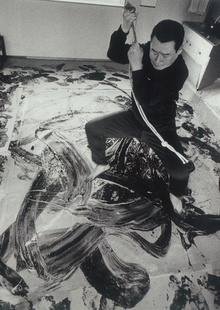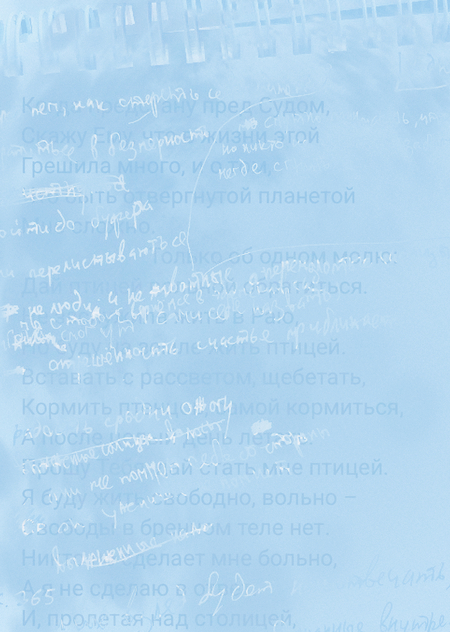
Contemporary poetic writing exists within conditions of constant visibility. Every text, every word typed in notes, has the potential to become public. Social media, blogs, and digital platforms transform private entries into forms of self-presentation, and the act of writing—into a public performance. As a result, the boundary between the private and the public blurs: the diary becomes a statement, and the statement becomes part of a network web where the author loses control over their own text.
The question arises: How is the digital environment transforming the author’s relationship to privacy and publicness in poetic writing, and how does this impact their identity and the very concept of the text?
This research addresses the current state of poetic writing. Its goal is to describe and measure how interfaces and modes of visibility reconfigure poetic writing and authorial subjectivity: where the comfortable zone of privacy lies, how the tone shifts when the audience expands, and what mechanisms increase the probability of publication. The study seeks to demonstrate that contemporary poetic writing is not an isolated act of creativity, but a complex chain of interactions between the author, the interface, and the audience. In the digital age, writing transitions from a closed act of self-expression to a processual, networked practice, acquires a performative character, and the boundary between private and public becomes fluid. Text becomes a space of constant becoming, where privacy and publicity constitute not opposites, but a continuous spectrum of states.
On the one hand, the digital environment democratizes writing and makes it accessible; on the other hand, it alters former forms of intimacy by making the personal «transparent.» The line between the intimate and the public is no longer a clear boundary, but a gradient regulated by social platforms, algorithms, and the author’s self-censorship. Digital writing generates new forms of interaction between the human, the text, and the technology. It demands a reassessment of familiar concepts such as author, sincerity, privacy, and text.
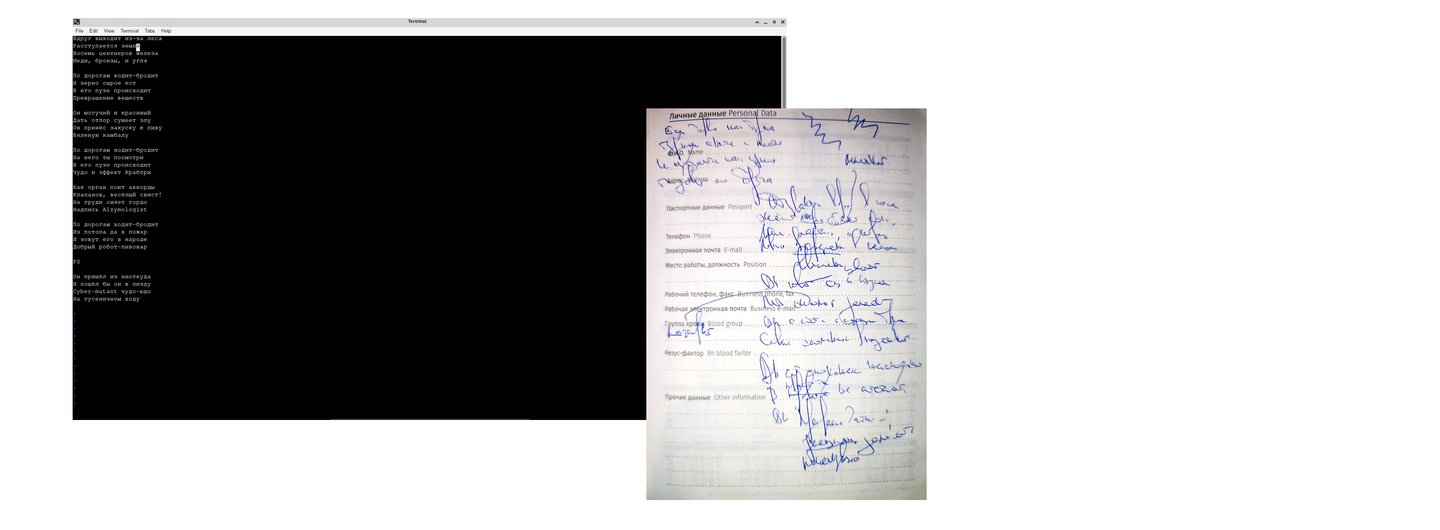
The research will address three aspects:
- Historical Context
In antiquity, the author was not perceived as an independent creator but as a conduit for a divine or collective voice. The Renaissance affirmed the figure of the genius author, possessing unique creative individuality. Modernism transforms writing into a space for self-reflection and doubt. Post-structuralism shifts the paradigm: philosophers argue that the author ceases to be the source of truth, becoming a function of writing, and view the «author figure» as a construct dependent on institutions, genres, and power. The digital age reintroduces the author figure, but in a different configuration: the author becomes a node in a network of relationships between texts, interfaces, algorithms, and readers. Here, the author no longer «possesses» the text; rather, they co-create its formation, a process that continues within social media algorithms. Writing becomes a collective process of meaning production, distributed between humans and the machine.
- Cultural Dynamics
Digital culture makes writing fluid and manifold: it moves easily between formats and visibility levels, balancing vulnerability against distance, and sincerity against the awareness of public presence. Digital writing is public intimacy, where the moment of self-expression is already woven into the structure of visibility. At this point, poetic writing becomes a performative act rather than merely an expression of the inner self.
- Philosophy of the Text
If Merleau-Ponty viewed writing as an extension of the body, and Foucault as a «practice of the self, ” then in posthumanist approaches, the text ceases to be solely a human utterance. It becomes an object with its own agency, participating in the creation of reality. The text no longer belongs to the author; it lives its own life, interacting with algorithms and the network environment. Thus, writing in the digital age is not simply communication, but an interaction between human, medium, and technology. It creates new forms of subjectivity, in which human and technology co-produce meaning.
The contemporary author exists in a «fragmented mode»: texts are distributed across notes, files, social media, and stories. The history of writing dissolves, and the process is lost. This leads to a disconnect from the act of creativity itself—a feeling of alienation from one’s own writing.
It can be posited that under conditions of excessive public exposure, a new form of loneliness emerges—not due to a lack of audience, but precisely because of its constant presence. When every text is potentially open to the gaze of others, the zone of silence and privacy, where the draft used to take shape, disappears, and writing transforms into an act of self-disclosure. «Loneliness in Public Life» becomes not just a metaphor, but a concept denoting the contradiction between the visibility and the inner isolation of the contemporary author.
The service being developed directly addresses this need—it creates a private space for working with text, where users can save, review, and reflect upon the writing process. This is not a publishing platform; it is a digital notebook that restores autonomy to the poet and the ability to work at their own pace. The service captures «writing as an event”—with all its versions, artifacts, and rhythms—helping to reconnect the internal with the external, the thought with the text.
In this sense, the project is not merely a utilitarian tool but also a response to the cultural situation of our era, where attention is gradually shifting from the external outcome to the internal process—from demonstration to contemplation, from constant presence to conscious silence.
The visual research accompanying the project aims to explore the gradient of publicity as an aesthetic and philosophical phenomenon: how text moves from the intimate to the public, from the unformed to the published, and how this transition affects the form, rhythm, and intonation of writing.
Bibliography:
Barthes, Roland. The Death of the Author. — Moscow: Ad Marginem, 1994.
Eco, Umberto. The Open Work. — St. Petersburg: Symposium, 2006.
Merleau-Ponty, Maurice. Phenomenology of Perception. — St. Petersburg: Nauka, 1999.
Barad, Karen. Agency and Realism: How Matter Becomes Significant. — Moscow: Ad Marginem Press, 2022.
Haraway, Donna. A Cyborg Manifesto: Science, Technology, and Socialist Feminism in the Late Twentieth Century. — Moscow: Ad Marginem Press, 2020.
Latour, Bruno. Reassembling the Social: An Introduction to Actor-Network-Theory. — Moscow: Higher School of Economics Publishing, 2014.
Latour, Bruno. On Actor-Network-Theory: Some Notes on the Ongoing Debates. — Moscow: Gaidar Institute Publishing, 2017.
Harman, Graham. Object-Oriented Ontology: The New Philosophy. — Moscow: Strelka Press, 2017.
Harman, Graham. Object-Oriented Ontology: New Theory of Everything. — Moscow: Strelka Press, 2020.
Bryant, Levi R. The Democracy of Objects. — Moscow: Strelka Press, 2018.
Mednikova, A. Morton’s Hyposubject as a New Image of Humanity. — In: Philosophical Journal, No. 4 (2020).
Vakhshtayn, Viktor. The Sociology of Things. — Moscow: Higher School of Economics Publishing, 2018.
Logos. After Algorithms. — Moscow: Logos Publishing, 2023.