i. Media Concept
you do you — media about fashion as a space for self-discovery and self-expression. It helps explore personal preferences and shape a unique style through understanding fashion, reflection, and creative experiments with clothing.At the core of you do you — is freedom from a single formula for a «correct» wardrobe. The main value of the media is the ability to independently form a personal style and express oneself through clothing.
ii. six-month thematic plan
The «You Do You» thematic plan is built around five consistent categories that alternate and complement each other.Three publications per week connect the context of fashion, self-discovery, and practice: from idea analysis to experimenting with one’s own wardrobe and sharing experiences within the community.
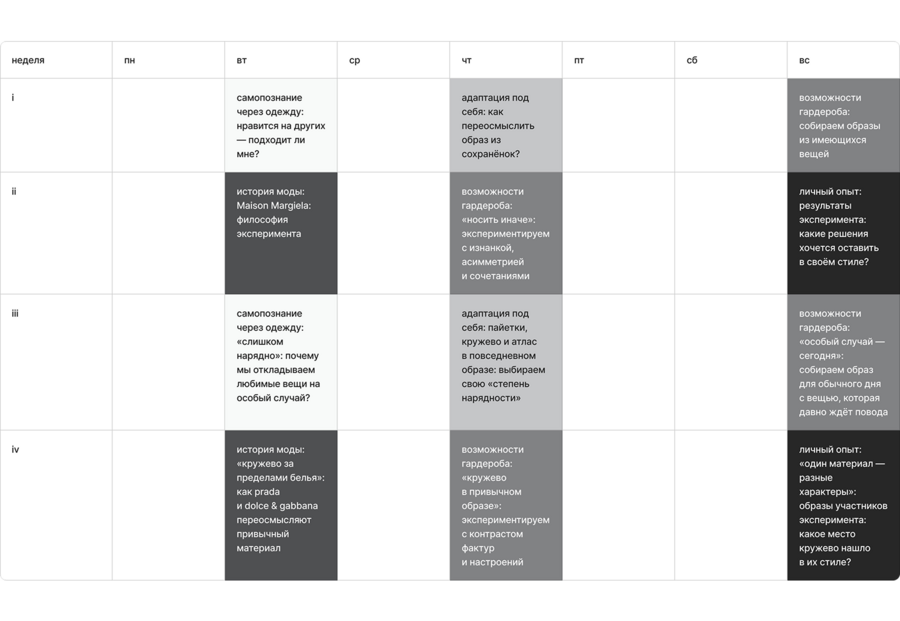
Example monthly content plan
Within six months, 72 publications will be released according to the plan across five permanent sections:
i. Self-Discovery Through Clothing — an exploration of personal preferences, habits, and sensations, seeking the connection between style and lifestyle.
ii. Fashion History — the philosophy of fashion houses, the origins of trends, and the cultural context of stylistic techniques.
iii. Personal Adaptation — methods for reinterpreting favored looks and trends based on one’s personality, comfort, and daily needs.
iv. Wardrobe Potential — creating new combinations from existing items, styling experiments, customization, and upcycling.
v. Personal Journeys — stories of style discovery, experimental results, and diverse interpretations of fashion ideas by community members.
iii. Content Examples
Example monthly content plan: 2 posts for each of the 5 categories.
Category i. Self-Discovery Through Clothing
Section II. Personal Adaptation
Section III. Wardrobe Possibilities
Category IV. Fashion History
Maison Margiela: The Philosophy of Anonymity
In 1988, Martin Margiela founded the fashion house Maison Martin Margiela. Before this, the designer worked as an assistant to Jean-Paul Gaultier, and in his own house, he began to re-evaluate conventional ideas about what clothing could look like.
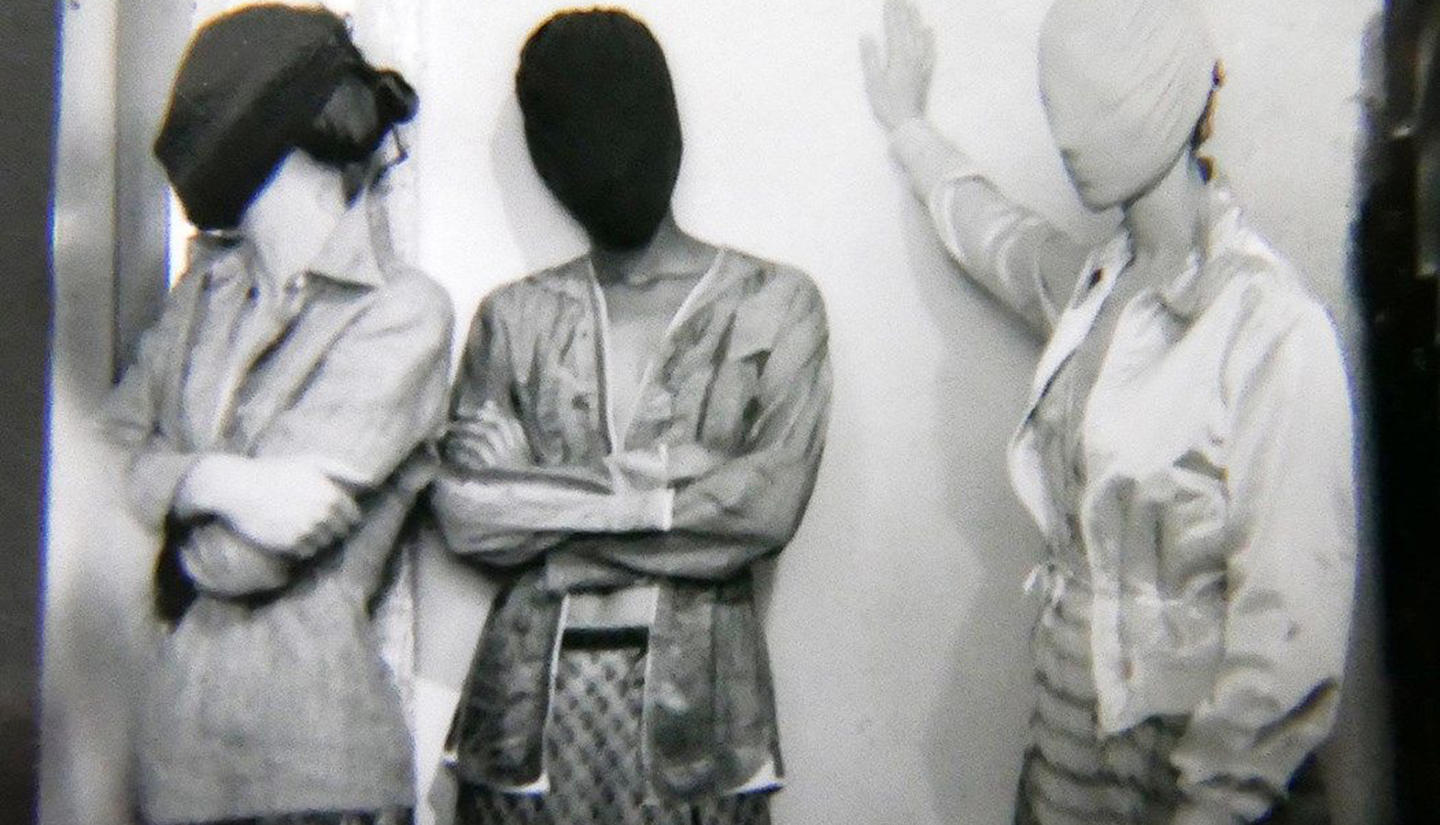
Anonymity became a core part of the brand’s philosophy. Margiela shunned public visibility, and his garments featured a white label devoid of a name, secured with four stitches. This approach shifted the focus entirely to the clothing itself—its shape, material, and details.
Margiela exposed elements that are usually concealed within a garment: seams, lining, raw edges, and signs of construction. This approach is known as deconstruction—a rethinking of clothing’s conventional structure. The item might appear unfinished, but it was precisely this openness that allowed viewers to see how it was made.
His experiments also touched upon proportions. The designer would enlarge clothing by up to 200% of its original size, including pockets, collars, and other details. A familiar item would acquire an unusual scale and sit on the body in a completely different way.
In the artisanal direction, vintage clothing and found materials were manually transformed into new pieces. Their previous life became a part of the new concept, and their value derived from the idea, the material’s transformation, and the handcraftsmanship.
Margiela’s history demonstrates how consistent experimentation can evolve into a personal language. Anonymity, exposed construction, and unusual proportions coalesce into an approach that encourages viewers to look closer at clothing and notice possibilities beyond its customary form.
Personal Experience
Style it Differently: What Elements Do You Want to Keep in Your Signature Look? This week, we experimented with changing the familiar look of things: turning pieces inside out, creating asymmetry, adjusting closures, and mixing garments in new ways. Now, the interesting part is figuring out which discoveries you want to repeat.Look at photos of your looks. Which variation felt good not just in front of the mirror, but throughout the entire day? What did you find yourself constantly adjusting? Perhaps an unexpected combination proved comfortable, while that striking way of tying a shirt was just for the camera. That’s valuable feedback too—it helps you understand what truly suits you.Share your photos and impressions in the comments: what did you change, how did you feel, and what do you want to wear again? We are curious to see both the successful discoveries and the looks that didn’t quite stick.
One material—diverse personalities: lace
We explored lace on the runway and then experimented with integrating it into familiar silhouettes. Now, we want to see your interpretations: what role did this material play in your personal style? Some might leave only a delicate trim under a sweater, others might make a sheer skirt the main focal point, and still others might combine the lacework with leather or athletic wear. Even the same lace will be perceived differently depending on the pairing and the person wearing it.
Show us your look and tell us how the concept began. Did you aim to preserve the lace’s delicacy or introduce contrast? How comfortable was the sheer fabric? Did you have to make any adjustments after trying it on?
Share your photos and impressions in the comments.