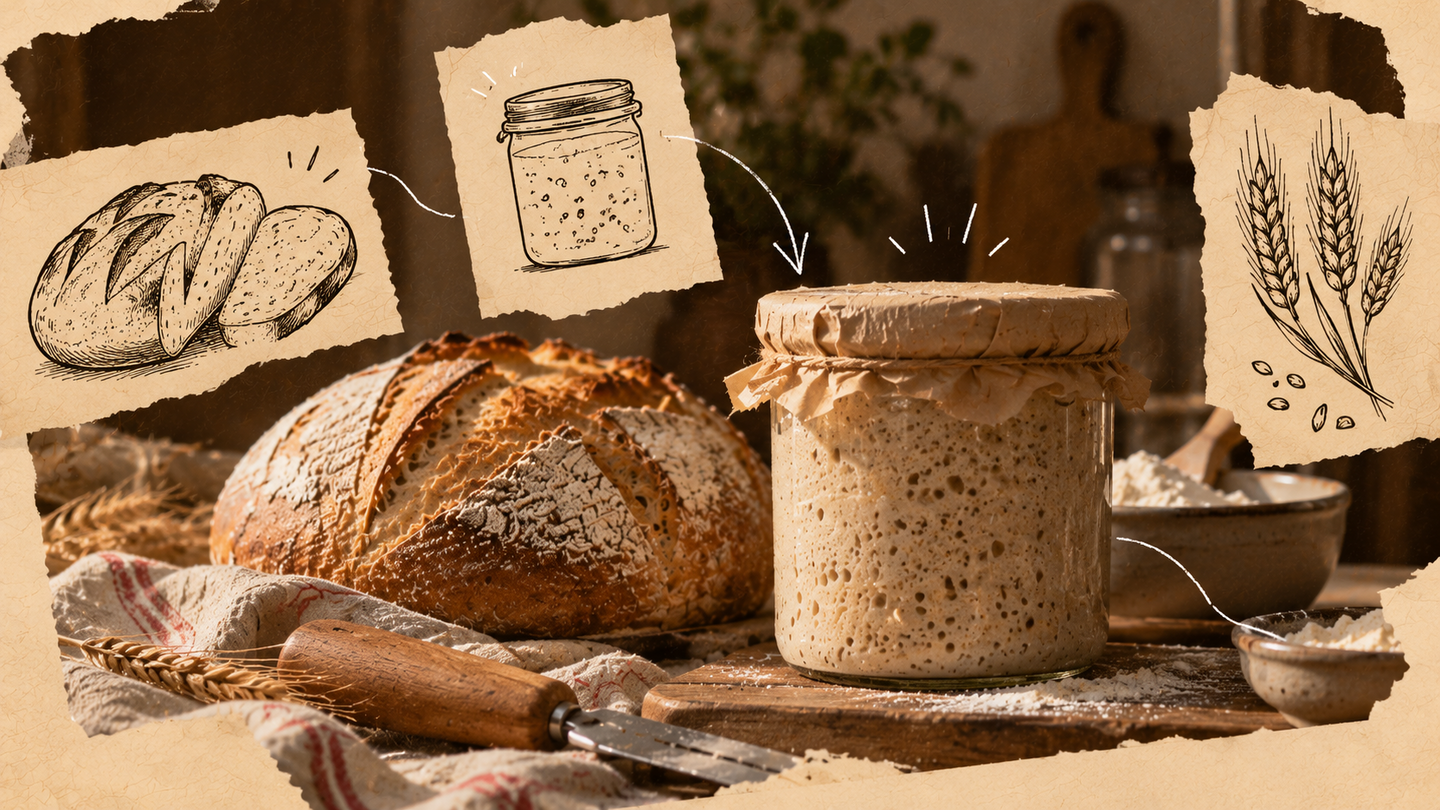
«Living Starter» is an educational media platform for those who want to learn how to bake homemade bread using natural sourdough starter from scratch.
Home baking requires an understanding of the processes that occur during fermentation. Beginners often find it difficult to assess the condition of sourdough starter or diagnose the causes of failed bakes. Ready-made recipes often assume the baker is already familiar with the fundamental principles of working with dough. Therefore, even if the instructions are followed precisely, the result may differ from what is expected.The «Living Sourdough» project guides you through the progression of baking via practical exercises. Each material is dedicated to a specific stage of preparation and is accompanied by visual examples. Readers will gradually become familiar with the characteristics of sourdough and learn to evaluate changes independently.
Main platform: Telegram.
Secondary platform: Pinterest.
Target audience: individuals aged 20–45 who are interested in home baking and wish to learn how to make sourdough bread without prior specialized training.
Goal: to help beginners master home bread baking through sequential instructions and practical explanations.
Starting with the Fundamentals The learning process builds from simple actions to more complex ones. Initially, students learn how to cultivate and maintain a starter’s activity. Subsequently, the materials gradually progress to dough preparation and bread baking. This sequence helps demystify the entire process without requiring readers to search for external explanations.Observing the Changes Baking sourdough bread is dependent on fermentation conditions. Therefore, the project materials place particular emphasis on the starter’s appearance and the dough’s condition. Photographs from various stages will help readers compare their own results against examples and determine the next steps.Learning from Mistakes Failed baking is often linked to specific fermentation characteristics or an inaccurate assessment of dough readiness. This project will dissect such scenarios and explain the underlying causes. Readers will gradually learn to adjust the preparation process based on their own experience.
Half-Yearmatic Plan
The six-month «Live Starter» series will introduce readers to the process of making homemade bread. The thematic plan follows the progression of a novice baker. The first stage is dedicated to becoming acquainted with natural sourdough starter. Readers will then learn how to maintain its activity before moving on to working with dough. After mastering the basic techniques, the first loaf of bread will be baked. The final months will focus on analyzing the results and organizing regular baking sessions.
Frequency: 3 posts per week.
Main Platform: Telegram.
Formats: Text instructions accompanied by photographs. Short tutorial videos will demonstrate actions that are difficult to explain with words. Illustrated cards and diagrams will be provided to compare results.
Publication Schedule for the Week
Monday. «Starter Under Observation» This section is dedicated to the processes that occur while baking bread. Each article examines a single change in the starter or dough. Readers will learn why that change happens and how it affects subsequent steps.Wednesday. «Baking Step-by-Step» Practical posts with detailed instructions. Each issue focuses on a separate action that you can repeat yourself. Photos will accompany the main stages of preparation.Friday. «What Went Wrong?» An analysis of common difficulties faced by beginner bakers. The articles will explain possible causes of a failed outcome and suggest ways to correct errors for the next attempt.
Publication Distribution for 6 Months
Month 1. Introduction to Sourdough
Topic: «Where Bread Begins»
The first month is dedicated to the fundamentals of natural bread making. Readers will learn what a sourdough starter is and the role it plays in bread preparation. We will examine the differences between wheat and rye flour. We will explain why sourdough starters require regular feedings and what conditions are suitable for their development. A separate piece will be dedicated to preparing the first mixture.
The main goal of the month is to introduce the reader to this new process and help them begin cultivating their own starter independently.
Month 2. Cultivation and Care Topic: «Life Inside a Jar»
The second month is dedicated to the changes that occur in the starter during cultivation. Its development doesn’t always follow a precise schedule, so it’s crucial for beginners to learn how to observe the culture’s condition. We will examine the appearance of the first bubbles and the reasons for temporary decreases in activity. Readers will learn how to determine when the starter is ready for baking and why the proofing time may vary. Photos of different stages will help you compare the condition of your own starter with examples.
Month 3. Working with Clay
Topic: «Learning to Feel the Clay»
The third month focuses on the initial stages of preparing bread dough. After cultivating an active sourdough starter, readers will move on to studying the processes that determine the structure of the final bread. We will explain why the dough needs time to rest and how folding affects its elasticity. We will also dedicate special attention to fermentation and determining the optimal moment for shaping. The materials will be accompanied by photographs of the dough at various stages of preparation.
Month 4. Baking our first loaf
Theme: «From Dough to Loaf»
The fourth month is dedicated to completing the bread-making process. Readers will learn about shaping the dough and preparing it for baking. We will explore why bread surfaces are scored before going into the oven and the role steam plays. We will also explain how to properly cool a finished loaf before slicing.
By the end of the month, readers will be able to independently complete the entire sourdough bread-making process.
Month 5. Fixing Errors
Topic: «Why didn’t the bread turn out right?»
The fifth month is dedicated to analyzing common issues. Even when following the recipe, bread can turn out dense or fail to rise sufficiently. Such results are often linked to the dough’s condition during earlier stages. We will examine the causes of poor rise and excessive stickiness. In the photographs, we will compare different crumb structures and explain how to infer potential mistakes from them.The main goal of this month is to develop the skill of self-assessing the final result.
Month 6. Baking in Everyday Life
Topic: «Bread on Your Schedule»
The final month is dedicated to regular home baking. After mastering the basic recipe, readers will learn how to maintain their sourdough starter without baking bread every day. We will discuss how to store the culture in the refrigerator and prepare it after a long break. We will explain how to use sourdough scraps in other recipes and how to keep finished bread fresh. These materials will help integrate baking into your daily routine.
Content Samples
Sample No. 1
Example of a potential publication
Month: Introduction to Sourdough Starters Section: «Sourdough Under Observation» Topic: «What is a Sourdough Starter and Why Does It Grow?» Format: Telegram post with photos of an active starter and an illustrated fermentation diagram.If you mix flour with water and leave the mixture in appropriate conditions, changes will begin to occur within it after some time. Bubbles will appear on the surface, and the mass itself will gradually acquire a slightly sour aroma. This is how the cultivation of a natural bread starter begins. But why does a regular flour and water mixture become suitable for baking bread over time? The flour contains microorganisms that begin to develop actively under specific conditions. Gradually, a community of yeast and lactic acid bacteria forms inside the mixture. Yeast participates in the production of carbon dioxide. This creates bubbles inside the starter and helps increase its volume. Lactic acid bacteria produce acids that influence the characteristic flavor of the future bread. To maintain the activity of the culture, the starter is fed regularly. To do this, a portion of the old mixture is removed and fresh flour and water are added. Over time, the starter becomes more stable. After feeding, it begins to predictably increase in volume, which indicates the development of an active culture. It turns out that bread making begins long before the dough is mixed. First, you must cultivate a living culture that will participate in its fermentation.
Sample No. 2
Example of a potential publication
Month: Introduction to Sourdough Starter Category: «Baking Step-by-Step» Topic: «Which Flour to Choose for Your First Starter?» Format: Telegram post featuring photos of various flours and a comparison of their properties.To cultivate a sourdough starter, you will need flour and water. Choosing ingredients seems straightforward, but because recipes offer diverse recommendations, beginners can find it difficult to decide.Wheat Flour Standard bread flour works well for cultivating a starter. However, the culture may develop more slowly in the first few days when using white flour.Whole Grain Flour This type retains more of the grain’s components. Because of this, it often promotes more active microorganism development in the initial stages.Rye Flour It is also frequently used for growing sourdough starters. Rye flour has a composition that is favorable for the development of the microbial culture.For your first attempt, it is easiest to select one option and stick with it for several days. This will make it simpler to observe the changes in the mixture. Furthermore, expensive, specialized flour is not necessary. It is more important to use a quality product and maintain a consistent feeding schedule. You can start with a small amount of ingredients. Gradually, you will learn to notice how the chosen flour affects the starter’s behavior.
Sample No. 3