Navigation Menu
Concept i. Observing the Mundane ii. Social Roles, Comedy, and Absurdity iii. Avant-Garde Techniques Conclusion
Concept
The Czechoslovak New Wave emerged during a period of political and cultural liberalization in Czechoslovakia. At that time, it served as an alternative to the exemplary cinema of Socialist Realism, where the depiction of reality was subservient to ideological dogma.Young directors focused on everyday life, personal experiences, random events, and the contradictions of the surrounding world. Their films chronicled young people who were unsure of what they wanted from life—failed relationships, family conflicts, work, celebrations, and ordinary conversations. In their work, these filmmakers employed documentary-style filming techniques, cast non-professional actors, and did not always adhere to the rules of dramaturgy. Beneath the apparent simplicity of these stories often lay more complex reflections on human nature, social norms, and the structure of society.
In this period, Czechoslovakian culture focused its attention on existential problems of man, and the question, «What is a human being?!» became the common denominator. [2]
A notable characteristic of the Czechoslovak New Wave is the coexistence of two artistic approaches that appear contradictory at first glance. Some directors sought to directly observe life, while others deliberately undermined traditional cinematic form by employing non-linear editing, unconventional angles, color experiments, and surreal imagery.
These approaches did not exist in isolation. The realistic depiction of everyday life gradually revealed the absurdity of the surrounding world, while avant-garde techniques allowed for the expression of contradictions that could not be conveyed solely through traditional means.
The hypothesis of this study is that, despite their differences, both artistic methods developed while united by a common goal—the exploration of humanity’s existential questions. The work examines the techniques and characteristics of the visual language of Czechoslovak New Wave directors. For the sake of analytical consistency, the paper is divided into chapters: observation of daily life; social roles, comedy, and absurdity; and avant-garde techniques.
To research this topic, the work examines films by Stefan Uger, Miloš Forman, Ivan Passer, Jan Němec, Vera Khitilova, Jiří Menzel, and Juraj Herz. Their works allow for tracing a wide spectrum of visual approaches. When selecting textual sources, priority was given to studies on the history of Czechoslovak cinema. A key starting point was Peter Heim’s book, «The Czechoslovak New Wave.» For a more detailed analysis, articles and books focusing on documentary realism and surrealist tendencies in Czechoslovak cinema were utilized.
Observation of the Everyday
Frame from the film «Sun in the Network» (dir. Stefan Uger, 1963)
Attention of young filmmakers to everyday reality stemmed from their rejection of the conventions of early studio cinema. Directors utilized real interiors and urban spaces, natural lighting, and spontaneous, unscripted dialogue. For instance, in the film «Sun in the Net, ” Stefan Uger reveals an entire world of feelings, doubts, and unexpressed emotions against the backdrop of daily life. The love story of two teens is told through observations of the city from a rooftop, chance encounters, and glances. The reality portrayed by the director offers food for thought on growing up, independence, and the impossibility of fully understanding another person.
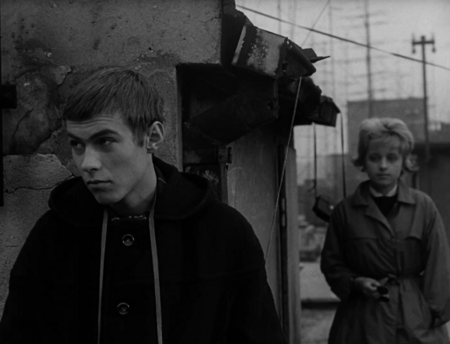
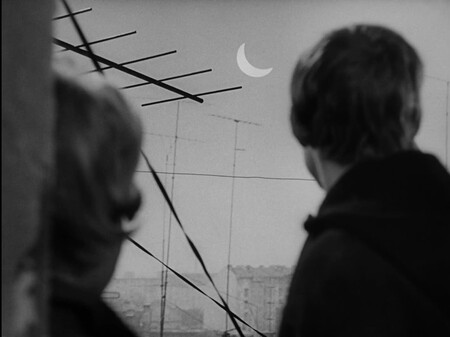
Stills from the film «Sun in the Net» (directed by Stefan Uger, 1963)
Stills from the film «Sun in the Net» (directed by Stefan Uger, 1963)
The film’s visual motifs are unified by the theme of observation and the attempt to see reality as it is. It is no coincidence that the protagonist, Fayolo, is fascinated by photography. He constantly observes his surroundings—photographing people, individual parts of their bodies, objects, and random details. Roger’s directorial approach is also evident in this fascination. The director seems to invite the viewer to see the world through the eyes of his protagonist, to notice what usually goes unnoticed.
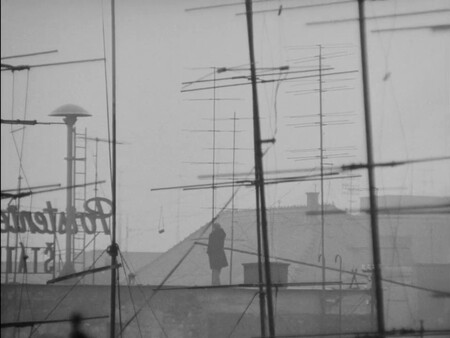
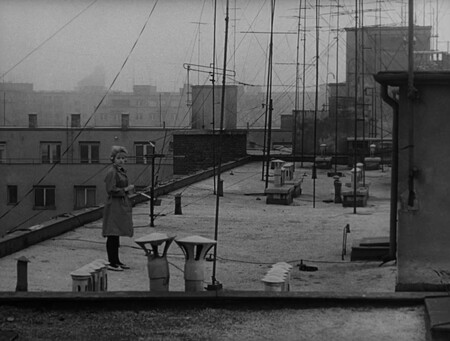
Stills from the film «Sun in the Net» (dir. Stefan Uger, 1963)
The film’s title also carries several meanings. The image of the sun caught in a net is primarily associated with the urban landscape, where numerous antennas and wires form a kind of trap for light. However, this image can also be viewed as a metaphor for human life. The characters yearn for freedom, closeness, and independence, yet they are constrained by circumstances, family, and their own fears.
A still from the film «Sun in the Net» (directed by Stephan Uger, 1963)
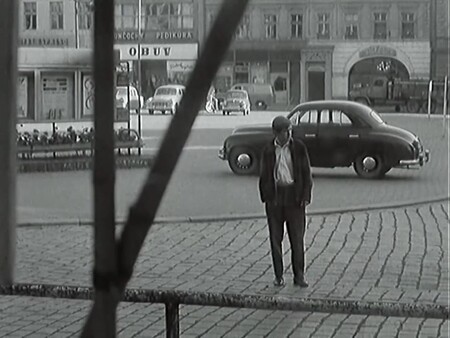
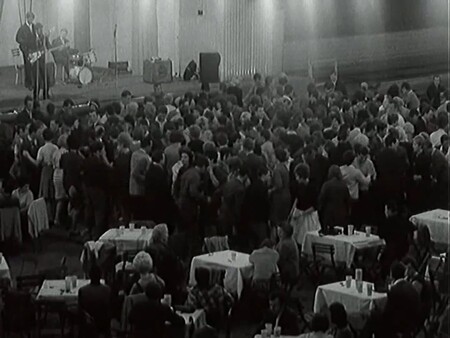
Stills from the film «Black Peter» (dir. Miloš Forman, 1963)
Stills from the film «Love Adventures of a Blonde» (directed by Miloš Forman, 1965)
In the films «Black Peter» and «Blonde’s Love Adventures,» Miloš Forman employs an observational style of filmmaking. In these movies, the camera captures ordinary interiors, workplaces, dormitories, dance halls, and urban spaces. The films are also similar in that behind the story of a young man and a woman lies a portrait of an entire generation striving for freedom and independence, yet still existing within a fairly confined society. At the same time, the director does not judge the characters nor does he try to dramatize the events. He simply observes the people, allowing the comedy of everyday life to gradually reveal its melancholic side.
Stills from the film «Intimate Lighting» (directed by Ivan Passer, 1965)
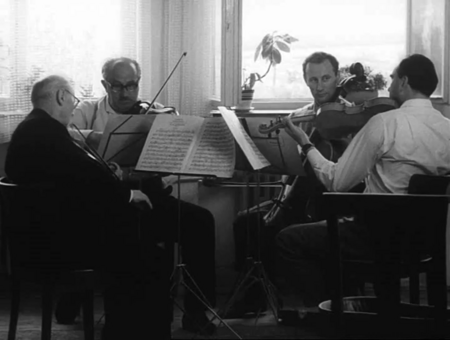
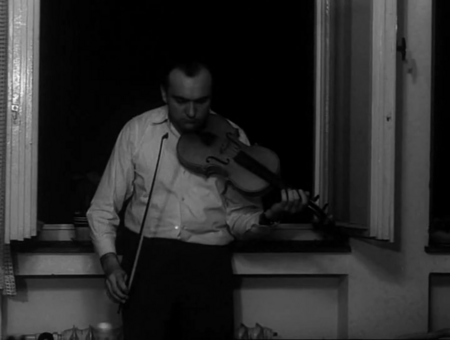
Stills from the film «Intimate Lighting» (dir. Ivan Passer, 1965)
In Ivan Passer’s film «Intimate Lighting, ” daily life unfolds through slow observation of a home setting, relationships, and everyday routines. Beneath the depiction of ordinary events lies a rather profound reflection on time, human connection, and unfulfilled dreams. The director does not strive to tell an extraordinary story or lead the characters to a significant life revelation. Instead, he invites the viewer to spend time with a typical family, observing their conversations, domestic activities, musical rehearsals, and chance encounters.
Social Roles, Comedy, and Absurdity
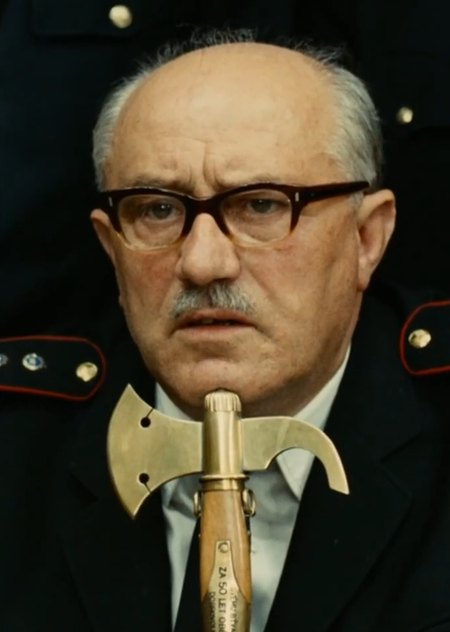
A still from the film «The Firemen’s Ball» (dir. Miloš Forman, 1967)
Stills from the film «The Firemen’s Ball» (directed by Miloš Forman, 1967)
In the film «Firemen’s Ball,» Miloš Forman turns to social satire. The director continues to employ his signature techniques: amateur actors, attention to the details of daily life, and natural dialogue. However, compared to his previous films, his tone has become more sarcastic. The action unfolds in a provincial hall where the firefighters attempt to host a celebratory event that includes a beauty pageant and a lottery. The film’s humor is built on the clash between expectation and reality. The celebration was intended to demonstrate the unity of these firefighters, yet the audience watches the opposite unfold on screen. The more the characters strive to maintain order, the deeper they sink into chaos. The scenes from the beauty pageant are particularly absurd.
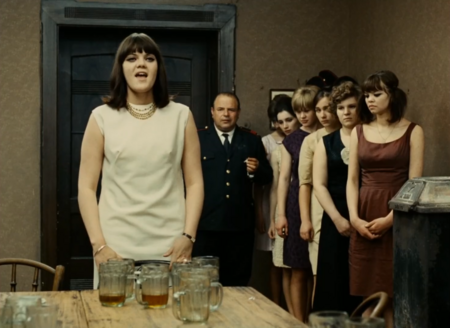
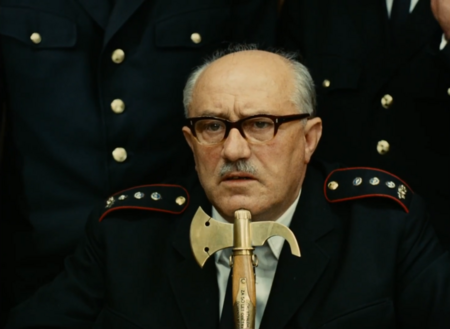
Stills from the film «The Firemen’s Ball» (directed by Miloš Forman, 1967)
A still from the film «Trains Under Surveillance» (dir. Jiří Menzel, 1966)