Research Question:
How does human identity exist in a digital environment, and how do artists engage with it?
Research Thesis:
In the digital environment, identity becomes fluid and mutable: artists create, conceal, and recontextualize it using profiles, avatars, masks, and virtual spaces.
1. Social Media as Performance
With the rise of public social media platforms such as TikTok, YouTube, and Instagram, a personal page has evolved beyond being a mere questionnaire filled with dry facts. It has transformed into a virtual stage where an individual simultaneously acts as the director, actor, and set designer of their own life. While in the 1990s the internet was perceived as a place where people tried to maintain anonymity, the 2010s saw a counter-trend toward hyper-publicness. The personal profile became a design product: the grid of posts, the color palette, and the carefully crafted captions assemble a meticulously curated persona that often bears little resemblance to the author’s actual daily life.
Net artists were the first to notice this shift and began using personal accounts not to promote their work, but as the artwork itself.
Amelia Ullman:
Amalia Ullman’s «Excellences & Perfections, ” a project by the Argentinian artist, stands as one of the most prominent and canonical explorations of networked identity in 2014. Over five months, Ullman operated her personal Instagram account as a meticulously scripted performance, staged in real time before hundreds of thousands of unsuspecting followers. She structured the narrative into three acts, embodying popular visual archetypes of the modern woman.
Act 1. «Cute Girl»: Posts featuring pastel tones, pink interiors, soft lighting, tea, and charming outfits.
Act 2. «Sugar Baby / Baddie»: A sharp shift in style—provocative lingerie, posts from upscale hotels, hints of cosmetic surgery, tears, and financial distress.
Act 3. «Life-cleanse / Wellness»: Apologies to the audience, healthy eating, yoga, a wholesome lifestyle, matcha cups, and beige, aesthetic interiors.
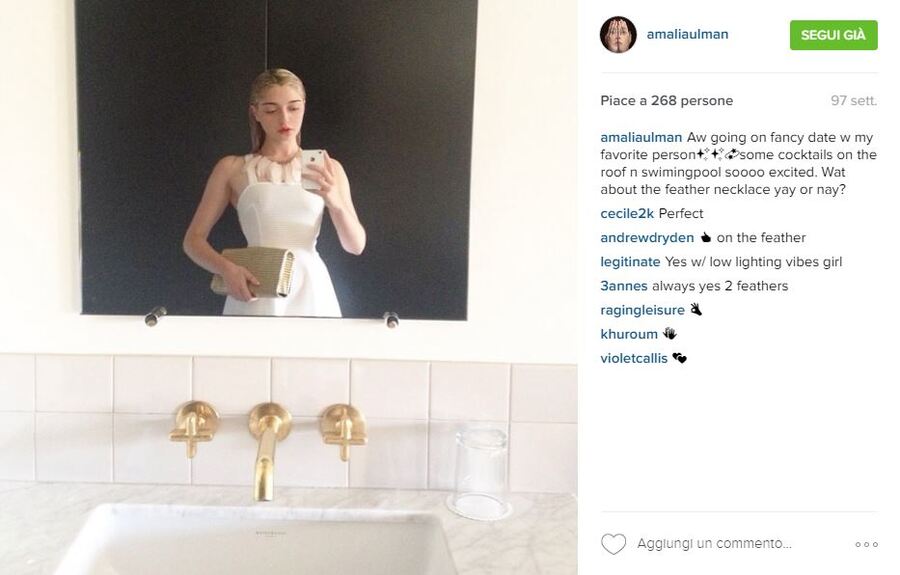
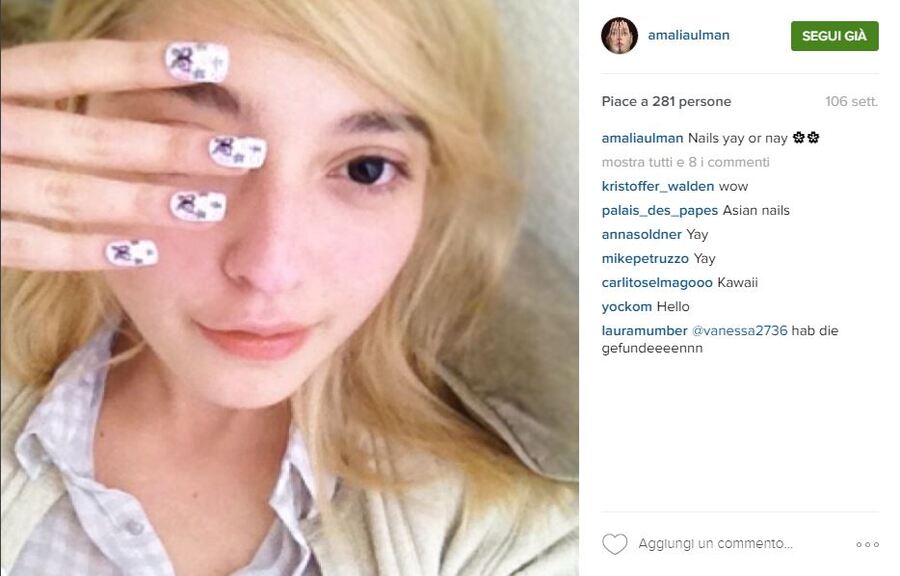
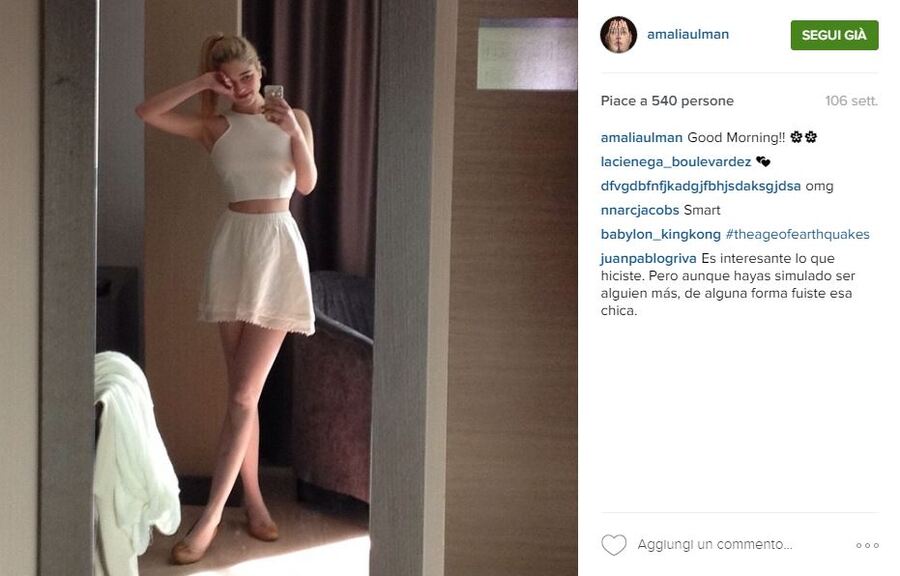
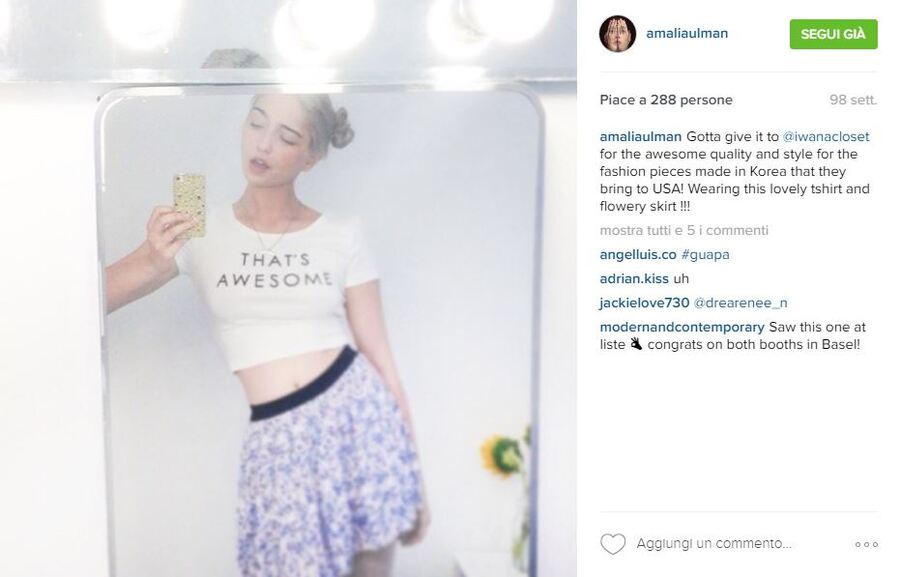
Websites, media, and followers genuinely believed in this image, leaving thousands of sympathetic or critical comments. At the end of the performance, Ulman posted a photo with the caption, «This was an Art project.»
She proved that in the age of algorithms, visual code dictates truth. If a frame is constructed according to the laws of a specific aesthetic, the audience reads it as fact. Ullman showed that female identity on social media is a product assembled from pre-existing visual templates. In 2016, this series of screenshots was officially exhibited at the Tate Modern gallery in London.
Petra Cortright:
Petra Cortright initially worked with raw, domestic spaces in her early YouTube videos.
In her early work, Cortright films herself using a standard, inexpensive laptop webcam in her own bedroom.
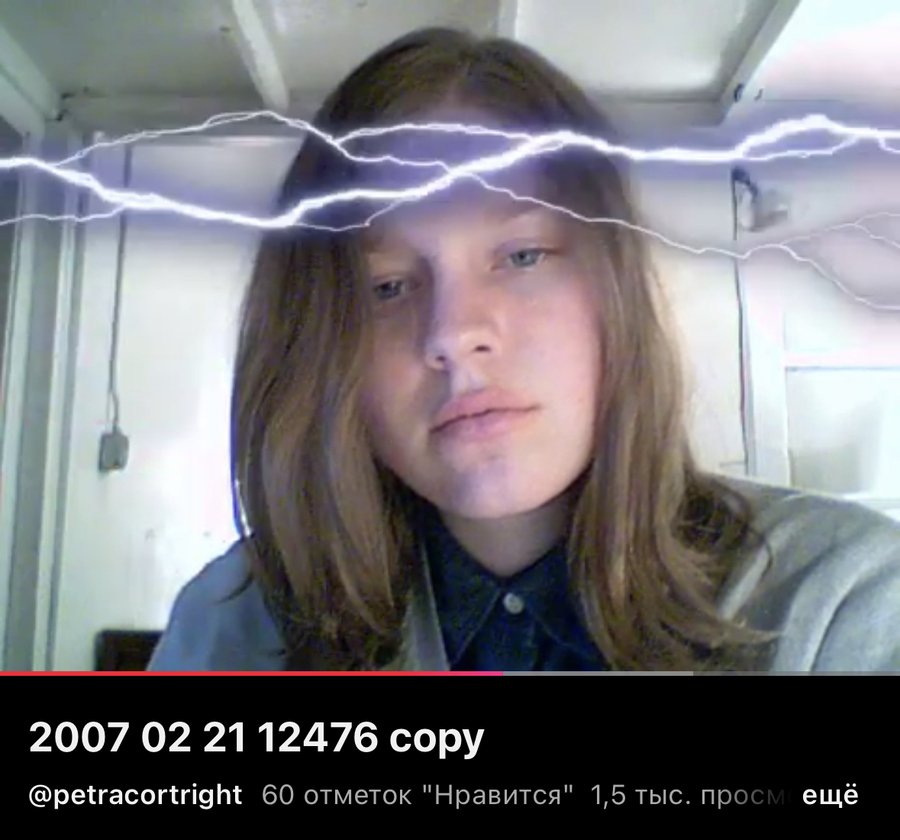
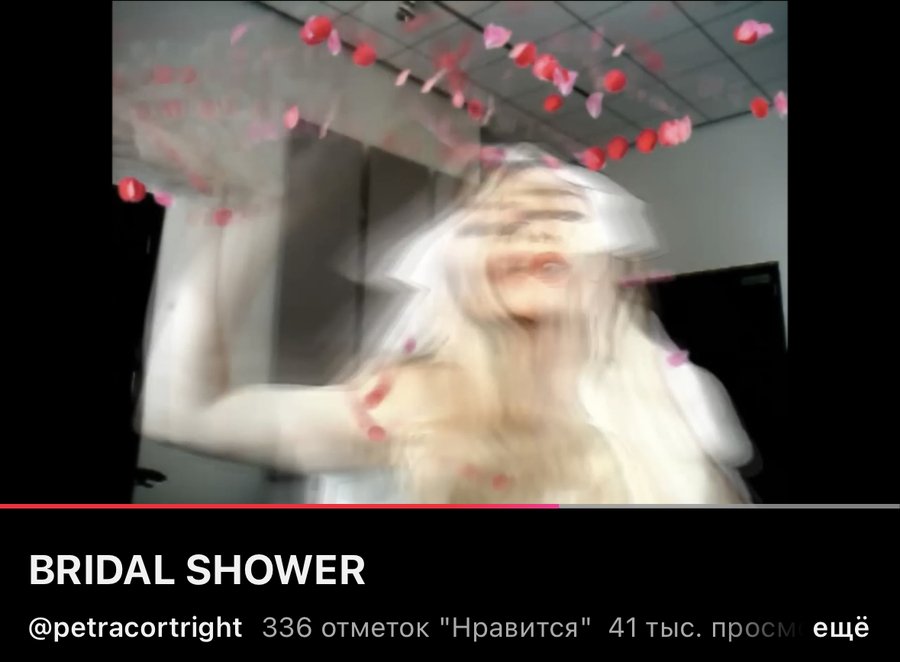
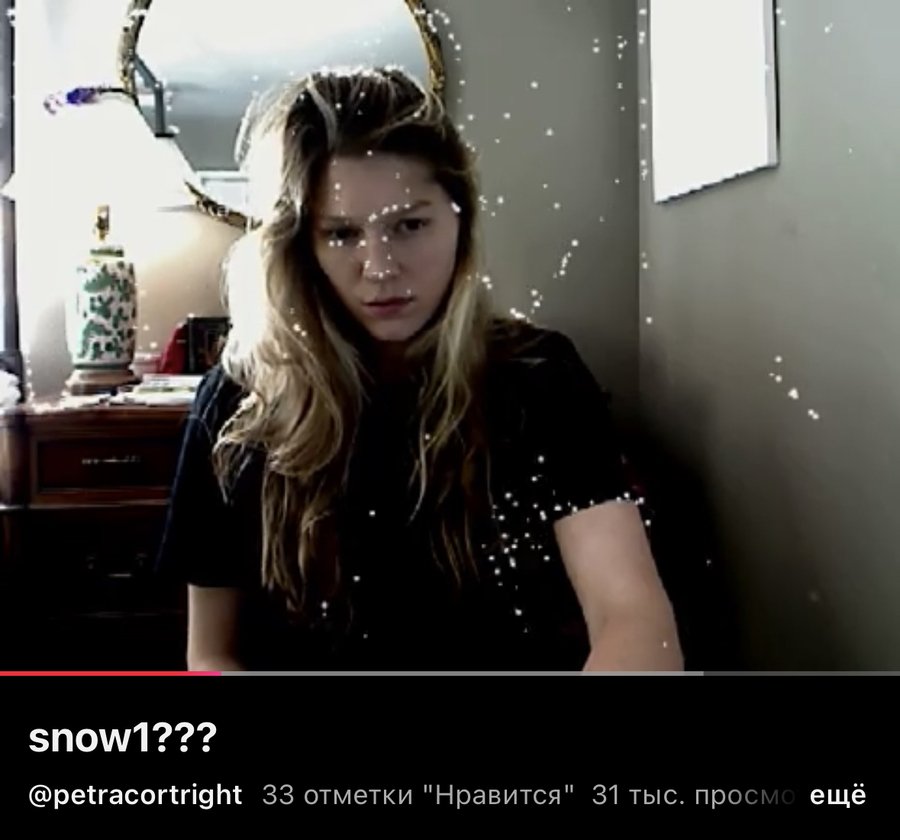
What is happening in the frame: She is simply sitting in front of a screen while various video effects available at the time spin around her image: floating glittery GIFs, flames, blur, roses, neon butterflies, or pixelated snow.
Cortright explores the phenomenon of amateur home video put on public display. She merges the intimate atmosphere of a private room with cold, standardized digital filters.
Her work asks: where does sincerity end and posing for the camera begin? The webcam transforms into a mirror in which the artist looks not for themselves, but for millions of unseen viewers online.
Performances by Amalia Ulmann and Petra Cortright illustrate the defining shift of the digital age: social media has stripped us of our authentic identity.
Online, we don’t just have the option to be ourselves—we can choose a visual persona and augment our everyday image. The personal profile transforms into an infinite exhibition, where every post is a deliberate artistic gesture, and followers become the audience in a virtual gallery, steering our behavior through likes and comments.
2. The Avatar as Author
If the first block explored how real people edit their image on social media, the second completely abandons the physical body. In virtual spaces, 3D editors, and online games, humans have, for the first time in history, been able to construct themselves or an entirely new persona from scratch. The laws of biology do not apply here: age, gender, race, height, and social status are no longer given at birth; they are chosen in the character settings menu. The avatar in networked art has transformed into an independent entity—it creates works, participates in exhibitions, and conducts its own artistic practice, entirely separate from its living creator.
LaTurbo Avedon:
The most uncompromising example of this concept is LaTurbo Avedon—a virtual artist and curator who has existed exclusively as a 3D avatar since 2008.
LaTurbo has no physical human prototype that one could meet on the street. Its entire biochemistry consists of polygons, textures, and light maps. It does not reveal the gender, age, or nationality of the person sitting behind the monitor and controlling its model.
Laturbo’s Art Practice Features:
She creates digital galleries within video games, where she displays her own 3D sculptures and the work of other digital artists.
Laturbo constantly updates her rendering: her body is composed of mirrored chrome, glass facets, shimmering pixels, or iridescent textures.
She officially participates in biennials, gives interviews to global art publications, and signs contracts, but at every opening, she is present only as a projection, a chat avatar, or a video installation.
LaTurbo Avedon — Materia, ongoing
LaTurbo Avedon — The Polygonal Garden, 2026
John Raffman:
Canadian artist John Rafman explores the raw, chaotic culture of mass avatars in his project, «Kool-Aid Man in Second Life,» 2008–2011. Rafman acted as a digital anthropologist and guide through the Second Life metaverse—the largest online platform of the 2000s, where millions created their alternative lives.
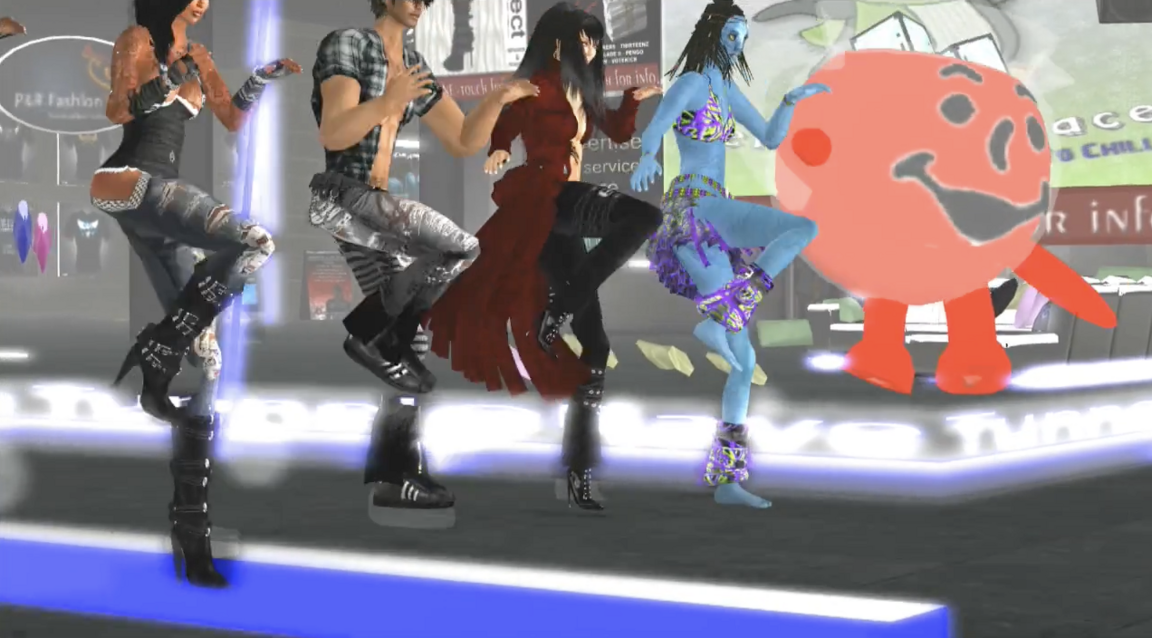
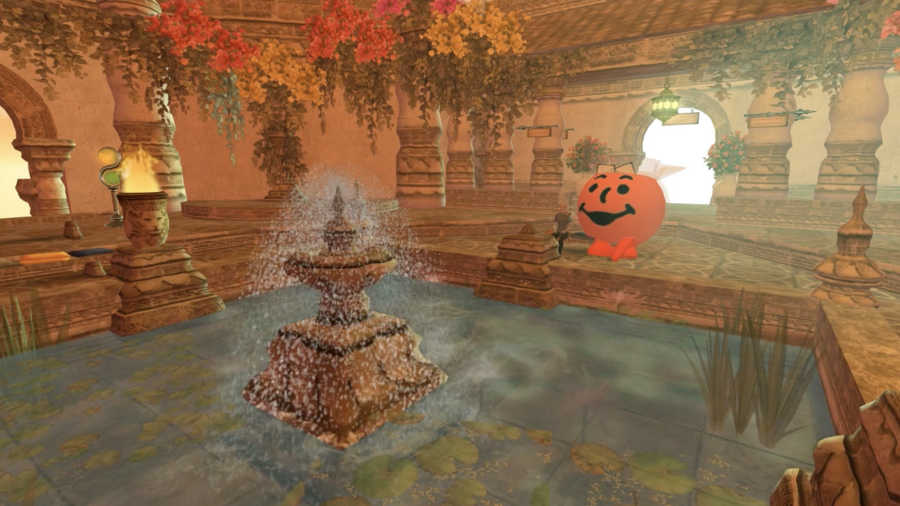
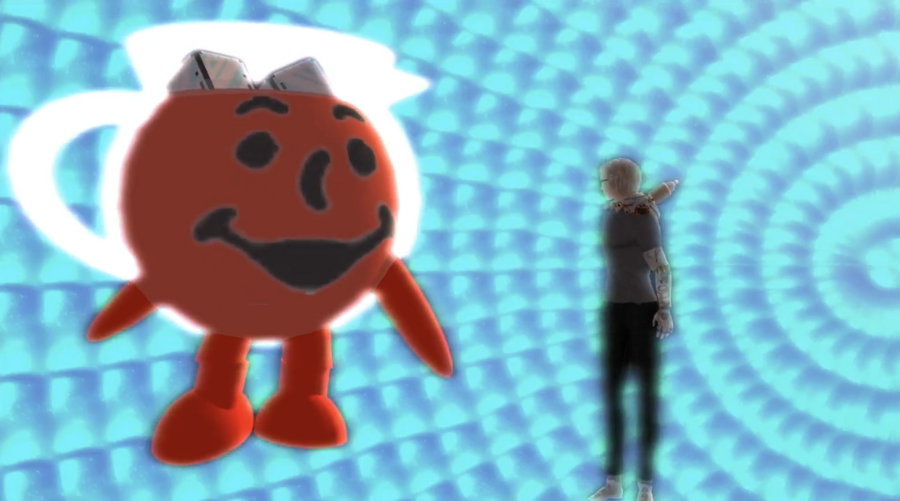
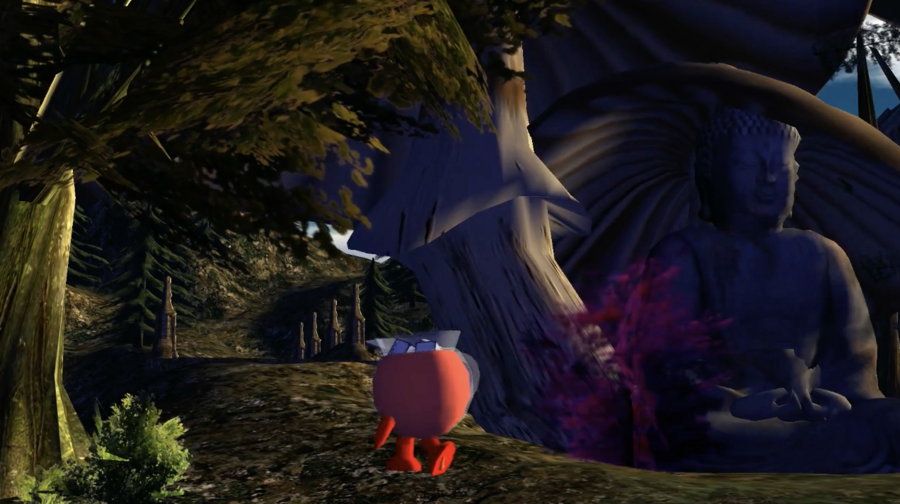
Jon Rafman — Kool Aid Man In Second Life, 2008–2011