Newspapers as a Medium of Visual Storytelling in 1930s American Cinema
This visual study examines the role of newspapers in 1930s Hollywood film. Using five films as case studies, it explores how newspaper headlines, typography, editorial layouts, and reading scenes become integral to cinematic language. Special attention is paid to how printed information organizes the frame’s composition, connects characters, and influences plot development. The research demonstrates the evolution of the newspaper from a mere prop into an independent instrument of visual storytelling.
From Concept to Frame

Work at a newspaper printing house. Stills from the film «Accused,» directed by Jack Conway, 1936.
Newspaper as a Medium of Visual Narrative in 1930s American Cinema
Visual Research Outline «The Newspaper as a Medium of Visual Storytelling in 1930s American Cinema»01. The Newspaper Becomes a ScreenNewspaper layout, typography, and photography as elements of the cinematic frame composition. An analysis of the opening titles of the film The First Page (1931).02. The Art of the HeadlineThe visual hierarchy of the newspaper page, sensational headlines, and methods of highlighting information. Five Last Stars (1931) and The Blessed Event (1932).03. From Editorial Desk to ReaderThe space of the editorial office, typewriters, telephones, and the news-creation process. The transition from information production to perception. The Platinum Blonde (1931).04. When Publication Becomes an EventThe newspaper error, the dissemination of information, and its consequences for the characters. The Accused (1936), Five Last Stars (1931), and The Blessed Event (1932).05. From Print Page to Moving ImageClose-ups of newspapers, turning pages, montage transitions, and the interaction between text and image. A comparative analysis of all five films.06. The Newspaper as the Language of CinemaResearch conclusions: how graphic print transforms into a tool for screen composition and cinematic narrative.
Introduction. From Subject to Narrative
In 1930s American cinema, the newspaper becomes one of the most recognizable elements of urban life. It appears in characters’ hands, on desks, in newsrooms, on the streets, and in public spaces. However, its presence is not limited to creating a historically evocative setting. The newspaper page can convey important information to the viewer, establish conflict, connect different spaces, and alter the narrative direction.
The visual form of the newspaper holds particular interest. Large headlines, dense text columns, photographs, typographic fonts, and the printing process form an independent graphic language. Cinema utilizes this language alongside editing, shot size, and camera movement. At times, the newspaper page occupies almost the entire screen, transforming from an object within the frame into an image directly addressed to the viewer.
The research hypothesis is that in 1930s American films, the newspaper serves not only an informational function but also a compositional and narrative one. Its visual structure helps organize the screen space, and the publication acts as a connective link between individual characters and events.
To test this hypothesis, five films are examined: «The First Stripe» (1931), «Five Last Stars» (1931), «Platinum Blonde» (1931), «Blessed Event» (1932), and «The Slandered» (1936).
They share the common theme of newspapers, but utilize it in different ways: as a graphic system, a professional environment, a source of public information, or the cause of narrative conflict.
Research is built upon comparing specific visual techniques:
- the image of a newspaper layout
- the layout of the editorial office
- print production
- scenes of reading and reaction to published information.This approach allows tracing how printed text becomes part of cinematic action.
01. The Newspaper Becomes a Screen
1.1. The Newspaper Page as Composition In Louis Milestone’s film The First Page (1931), newspaper aesthetics appear even before the main action begins. The opening title sequence is designed like a newspaper spread, integrating information about the film’s creators into the familiar structure of a printed publication.This decision shifts the traditional perception of credits. Instead of discrete text overlaid on a neutral background, the viewer sees a complex graphic composition reminiscent of an open newspaper. Images of the actors, headlines, captions, and text blocks are unified into a singular system.The newspaper page here ceases to be an object a character can hold. Instead, it becomes the screen space itself, dictating the placement of text and imagery.
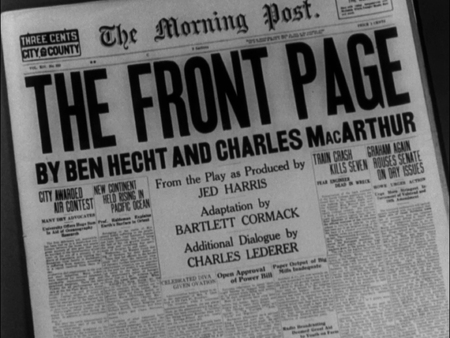
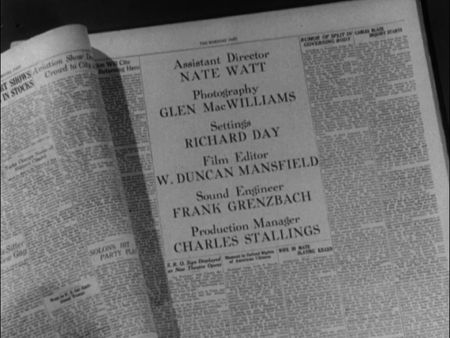
Stills from the film «First Line,» directed by Lewis Milestone, 1931.
In both frames, the newspaper layout organizes the entire composition. The variation in font sizes establishes an information hierarchy, and the division of the page into blocks directs the sequence of viewing.
1.2. The Portrait as Part of a Newspaper Page In the following titles, actor portraits are integrated into the structure of the printed strip. The photograph does not exist separately from the text; it is accompanied by a caption and perceived as an illustration of the newspaper material.This creates an intermediary form between the cinematic title card and the newspaper publication. The viewer becomes familiar with the film’s participants through a visual system that simultaneously denotes its main theme.The principle of repetition is particularly important. Each subsequent page retains a recognizable compositional structure but replaces individual elements. Thanks to this, the static newspaper layout transforms into a sequence of cinematic images.
Sequence of opening credits for the film «First Stripe,» 1931.
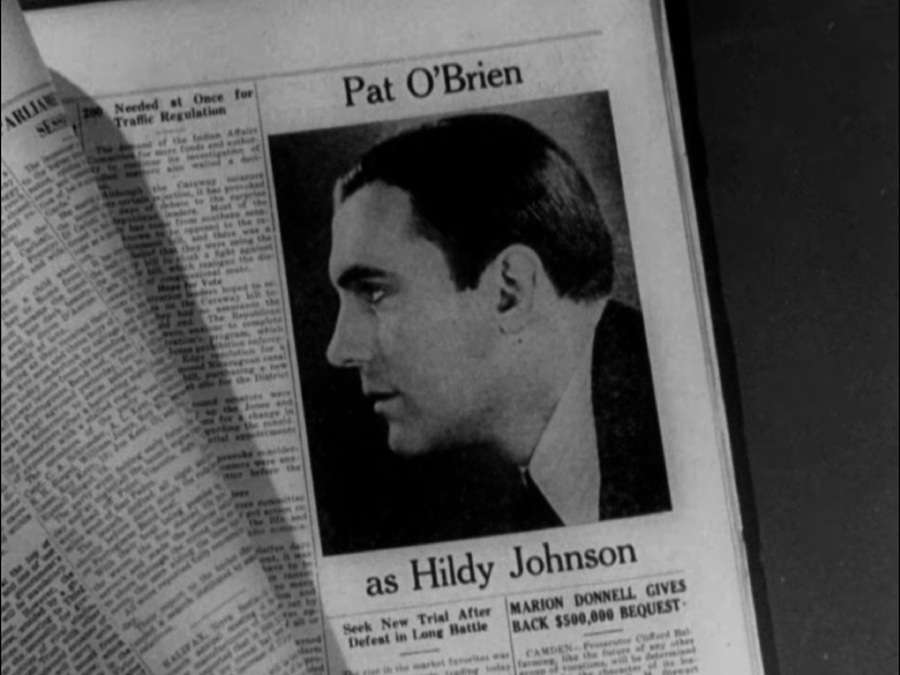
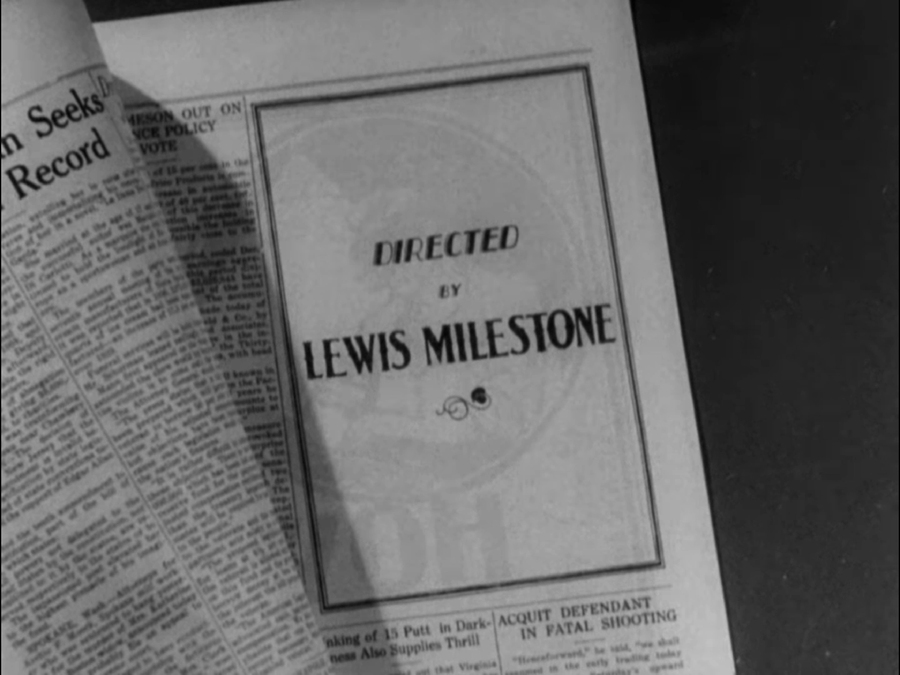
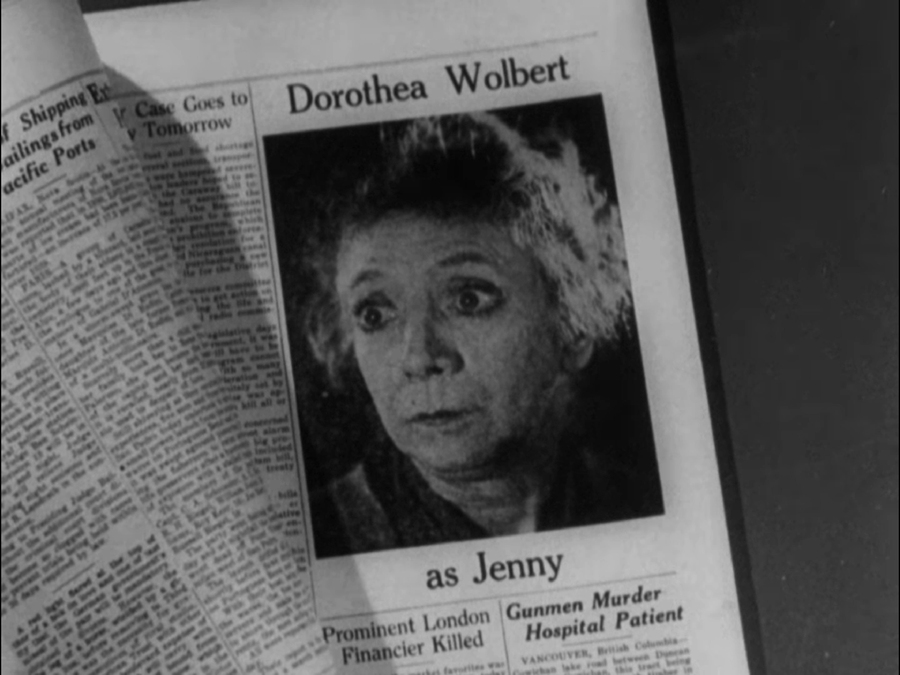
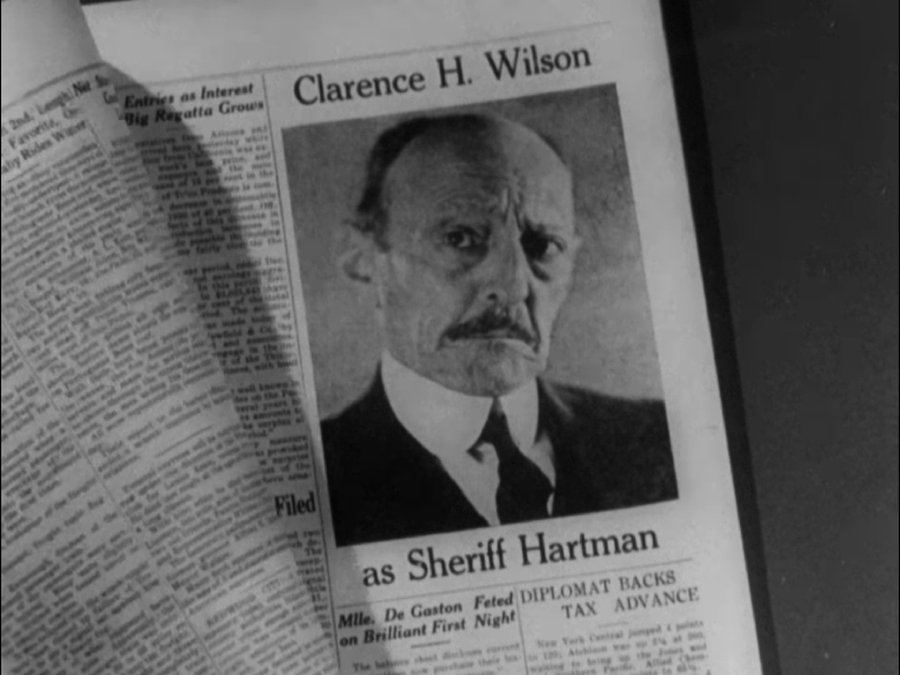
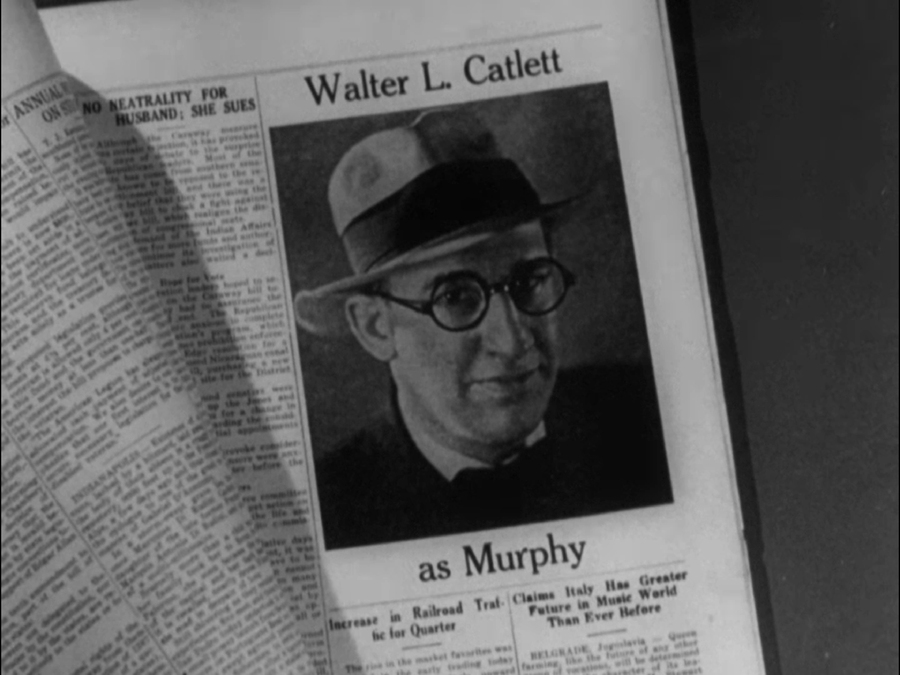
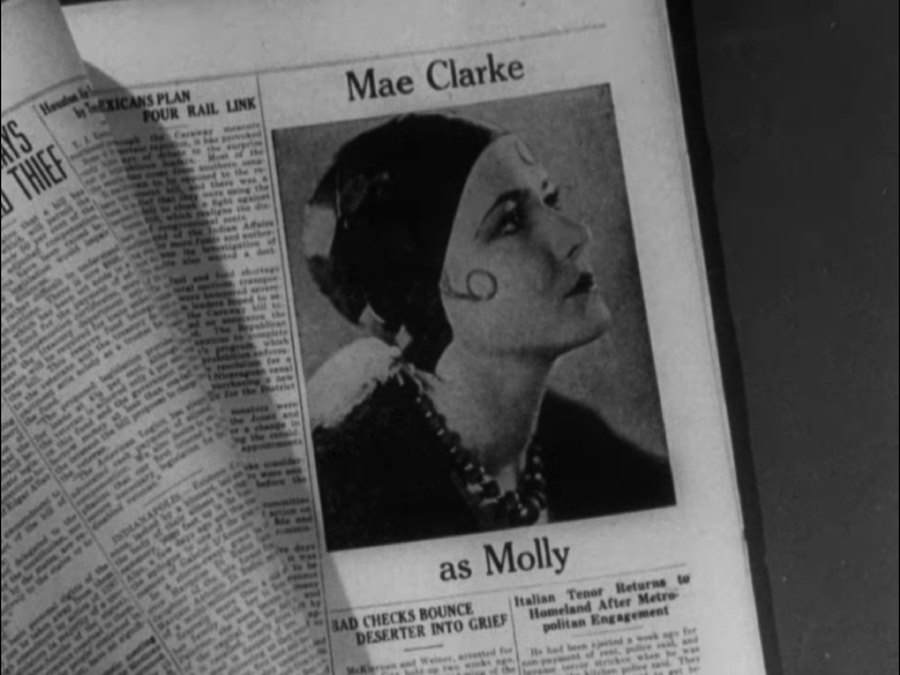
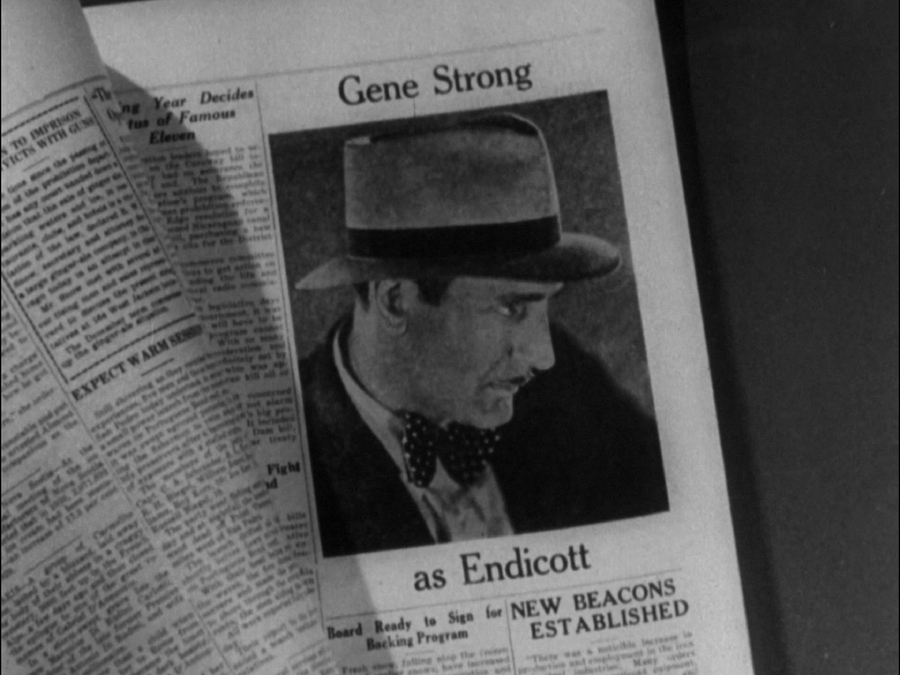
Opening credits sequence from the film «The First Stripe,» 1931.
As the newspaper pages appear sequentially, it becomes evident that the movement originates not within a single strip, but through the change of images. Cinema employs the principle of newspaper layout, but adds a temporal dimension to it.
1.3. From Print Page to Screen Time A newspaper and a film organize the perception of information in different ways. A reader can independently move their gaze across a page, return to a headline, or examine a photograph. In film, the sequence of images is dictated by editing.The opening credits of «The Front Page» combine these two principles. The newspaper composition preserves the spatial layout of information, but its pages change over time. The viewer does not flip through the newspaper themselves—the reading sequence becomes part of the director’s vision.
Thus, the film illustrates one way of transforming printmaking into a cinematic form.
02. The Title as a Carrier of Information
2.1. The Newspaper and Sensational Framing of Events
In the film «Five Last Stars» (1931), Mervyn LeRoy explores the function of journalism through the lens of sensationalism. The editorial staff strives to capture readers' attention by transforming private life events into material suitable for a mass audience.What matters here is not merely the fact of publication, but also the manner in which the information is presented. The headline isolates a specific event from the mundane, lending it particular significance and offering the reader a defined interpretation.The newspaper acts as a mediator between an event and society. However, its message is not a neutral reflection of reality: the choice of topic, the phrasing of the headline, and the editorial decision all influence how an event is perceived by the public.Newspaper office space. A still from the film «The Five Last Stars,» directed by Merwin LeRoy, USA, 1931.
Unlike «The Front Page,» where newspaper graphics directly form the screen image, here the process of editorial decision-making takes primary importance. The visual identity of the journalist is tied to the responsibility for the publication’s content.
2.2. Headline as a Standalone Image
In «The Blessed Event» (1932), Roy DeLute’s newspaper graphics assume a more direct visual role.In one segment of the film, a close-up shot features the «Dishing the Dirt» column, associated with journalist Elvin Roberts. The column title stands out against the main body text, establishing a clear hierarchy on the newspaper page.In another image, the viewer sees an advertisement constructed through the contrast between a large headline and smaller body text. This arrangement of the strip allows the core message of the publication to be quickly communicated, even during a brief on-screen appearance.The newspaper typography here performs the same function as a close-up subject: it concentrates the viewer’s attention on specific information.Newspaper Advertisement and Column by Elvin Roberts. «Blessed Event,» dir. Roy Delrut, 1932.
Large headings and dense newspaper layouts create a contrast between the main message and the surrounding text. The camera allows the viewer to read key words, transforming the print layout into a source of narrative information.
2.3. Newspaper Information as Public Communication
Edwin Roberts’s work involves publishing social news and gossip. His column transforms private circumstances into subjects for public discussion.A crucial role is played by the combination of various methods of information delivery. Newspaper strips alternate with images of a person at a microphone and the caption «If It’s News, He Gets It!». The visual array links journalistic activity with the image of constant seeking and dissemination of news.Here, the newspaper exists not only as a separate page. It becomes part of a broader system of public communication, where information rapidly moves between the editorial team and the audience.Stills from the film «The Blessed Event,» 1932.
The sequence connects the image of a speaking person with the graphic message. The transition between frames demonstrates that information can exist simultaneously as spoken dialogue, printed text, and on-screen imagery.
03. A Note from the Editors