The Evolution of Biocore Horror Techniques in Contemporary Cinema
преподаватель: Надежда Маркалова
автор: Алиса Чеботарева
группа: М26Д305
Navigation
- Concept;
- Bio-horror — Definition;
- Timeline of Reviewed Material;
- Something 1982;
- Something 2011;
- Abode of Evil 2026;
- Backrooms 2026;
- Sources;
Concept
Biohorror (also known as body horror) has always presented filmmakers with a contradictory challenge: the need to depict a subject who obviously falls outside the realm of «normality» while simultaneously maintaining an element of plausibility and groundedness despite all the grotesque elements.
Of course, the world of special effects is full of artificial subjects presented as reality. Simulating reality is one of the core goals of practical and computer graphics. However, if the main objective when creating a fictional talking lion is to overcome humanity’s natural aversion to seeing something that violates the subject’s habitual visual and physical behavior—then the task of bio-horror is the opposite: to push that aversion so far that it generates disgust in the viewer. It is this very need to realistically portray something maximally distant from reality that makes bio-horror an interesting subject for analysis.
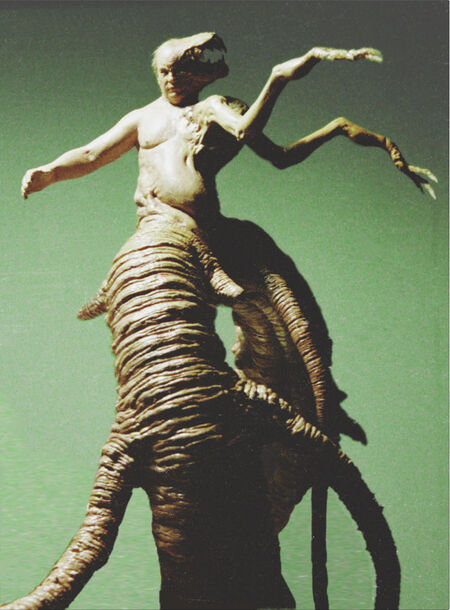
Something (1982)
The key difficulty in this task lies in the uncanny valley phenomenon—specifically, the fact that the human psyche is attuned to noticing visually aberrant elements in other living beings. Creating truly horrifying body horror requires realism, yet as graphic detail increases, so too does the risk of breaking the viewer’s immersion.
This problem has been discussed numerous times in the context of computer graphics. For instance, in 2004, Richard Wages, Stefan M. Grunwogel, and Benno Grutzmacher published the article «How realistic is realism? Considerations on the aesthetics of computer games, ” in which they address the so-called realism paradox—the fact that with increased graphic detail, it becomes easier for the audience to detect even the smallest inconsistencies, which, as previously noted, can critically undermine the viewer’s ability to believe what they are seeing.
In this context, working with biothriller genres, which focus on the detailed depiction of body metamorphosis, requires special care and serves as an excellent example of the demands and approaches to realism in 20th and 21st-century cinema.
Biohorror — Definition
Bio-horror, also known as body horror, is a horror subgenre characterized by a specific focus on the human body (or the body of another creature) and its transformations. Referencing Stephen King’s classification of horror from his essay Dance Macabre, a key element in such works is the depiction of the nauseating and physically aberrant.
Timeline of the material overview.
In this study, I will analyze the techniques of working with bio-horror across four films from different periods of contemporary cinema: The Thing (1982) as an epochal starting point, The Thing (2011) as a debatable, more modern visual interpretation of the early 2010s, and Resident Evil (2026) alongside Backrooms (2026) as the most relevant examples of special effects work in the genre.
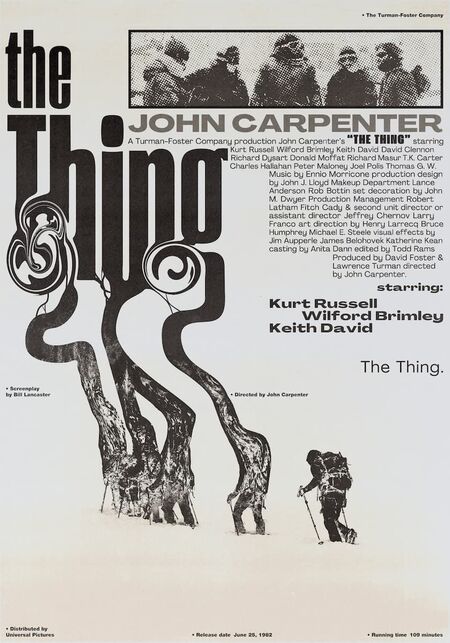
SOMETHING (1982)
режиссер: Джон Карпентер
супервайзер по созданию визуальных эффектов: Роб Боттин
The VFX team’s approach in working with body horror can be divided into two categories:
1) Simulating organic matter using analog materials 2) Using actual organic matter
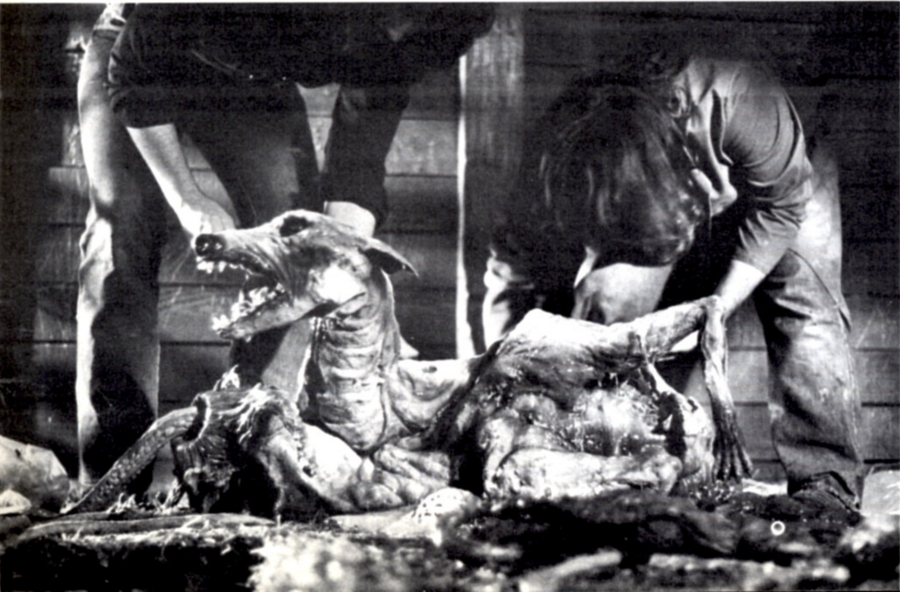
The first approach predominated in the film. The Thing (1982) relied on animatronics rather than using actors in costumes. Moreover, almost all the creatures shown in the film were filmed after the actors had finished their work on set.
For the most part, actors were responding to creatures that had not only not been built but had not even been conceived.
In most instances, the actors reacted to creatures that were not only not created at the time of filming but, for the most part, had not even been conceived.
In addition to animatronic creation being the most time-consuming part of the film’s production, this decision was also driven by Rob Botkin’s personal working psychology—the lead figure on visual effects for The Thing.
I don’t think anyone should ever do the effects while shooting live action; it’s disruptive, and there are many paid actors standing around waiting for you to get your gooey boogers right.
Translation:«I don’t think anyone should be handling special effects during shoots with actors. It disrupts the workflow, and you have a lot of paid actors standing around waiting for you to figure out what your slick bastards are doing.»
This solution was visually concealed through skillful staging, editing, and the use of doubles.
Simulating organic forms using analog materials
Despite the wide variety of techniques used to create the models, they all followed a similar workflow pipeline. According to Rob Botkin, the team first sculpted the creatures' initial forms using plasticine, and subsequently made molds from that plasticine using latex and foam. After that, mechanisms for movement were inserted into the final constructs. These were standard processes for the industry at the time. Unconventional solutions can be seen when reviewing the supplementary materials. Bio-horror demands a focus on the body—specifically, blurring the boundaries between the external and internal of a living organism—which set a challenge for the team: realistically simulating numerous bodily substances.To imitate liquid organic matter, the team had to use melted chewing gum, gelatin, mayonnaise, creamed corn, melted wax crayons, and several other substances.
A scene clearly depicting the use of jelly.
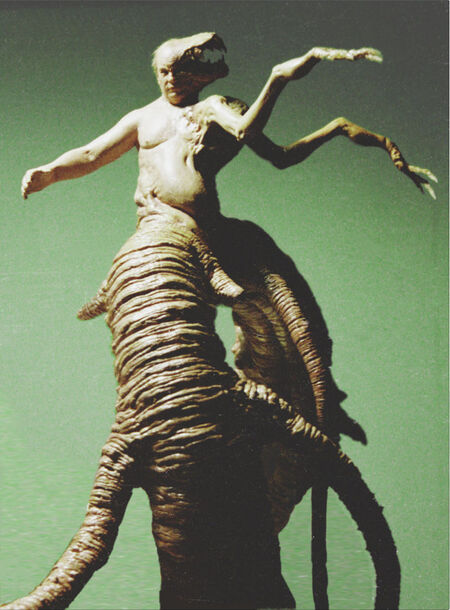
Only one final form of the Thing required the team to pour 136 liters of rubber.
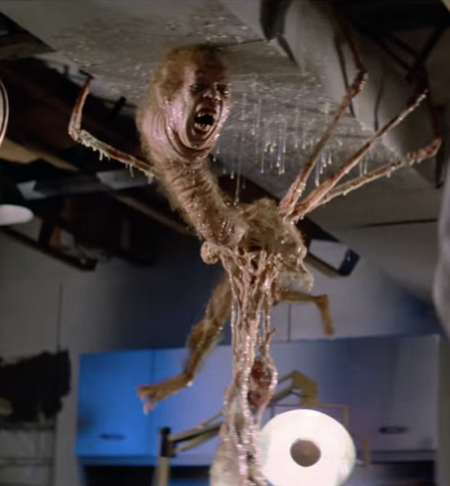
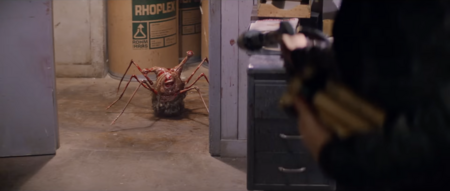
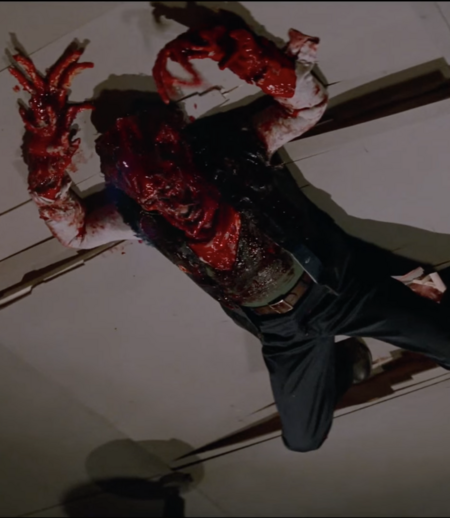
According to Eric Jensen, one of the visual effects specialists working on the film, almost every scene featuring the Creature demanded a unique technical solution from the team. For instance, the Spider-Guy segment utilized at least four different stunts and required six separate heads, each with a distinct emotional spectrum.The monster’s movement in the scene where it is suspended from the ceiling was achieved through an opening in the Creature’s head. This is why we never see the creature’s head—not including the ventilation shaft positioned above it—until it transforms.
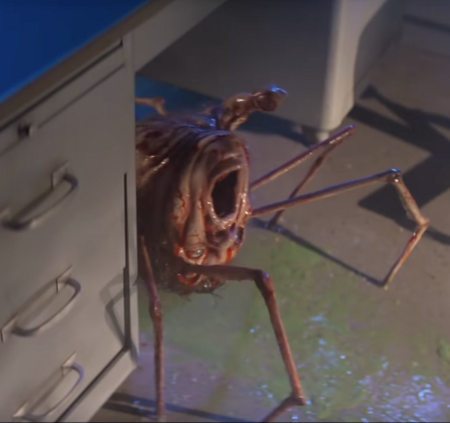
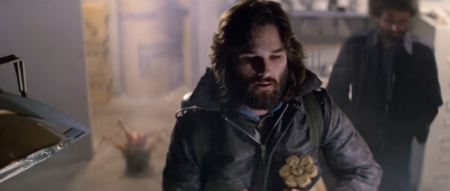
In the scene where the Spider-Thing is on the ground, a remote-controlled vehicle was placed beneath the animatronic, with the creature’s legs directly interacting with its wheels. As the vehicle moved, the legs also began to move. Was such walking realistic? Not entirely, but the film crew managed to strategically focus the audience’s attention on the character in the shot. In the scene entirely focused on demonstrating this form of the Thing—the creature is under the table making small forward and backward movements. This was enough to simulate a living being without disrupting the viewer’s immersion. Later, when the Thing moves behind the heroes, the focus is on the people in the frame, and white smoke is pumped behind Macready, obscuring visibility and thereby hiding any potential visual flaws. The next and final time we see the Spider-Thing without additional distortion, it is in a static position.