Navigation
[1] Concept [2] Tanuki Shapeshifter: Folklore Context [3] Visual Representations of Transformation [4] Movement and Gesture Before and After Shifting [5] Unveiling and Return to Original Form [6] Conclusion [7] Bibliography [8] Image Sources
[1] Concept
This study examines the metamorphoses of the Tanuki in Japanese animation from 1933–1934. The focus is on the connection between a character’s physical transformation, its movement, and its role within the narrative. The topic was chosen due to an interest in how animation renders transformation visible: whether it depicts the shift between forms frame-by-frame, obscures it, or allows the viewer to recognize the character in their new guise independently.The research is based on «Rascal Racoon» by Yasuji Murata (1933), «Moving Pictures: The Duel of the Fox and Tanuki» (Ugokie Kori no Tatehiki) by Ikue Oishi (1933), and «Teapot Dance» (Chagama Ondo) by Kenzo Masaoki (1934). These materials are united by the presence of the Tanuki and situations where the change in appearance affects character interaction. This limited corpus allows for a detailed comparison of specific episodes without generalizing the findings to all of Japanese animation.
Yasuji Murata. «Rascal Racoon» (Manga Kamishibai Itazuratanuki no maki), 1933 version. Sequence of frames.
The central research question is: how does the transformation of the tanuki alter its relationships with its surroundings, and through what visual means is deception revealed and unmasked? It is hypothesized that the borrowed appearance temporarily endows the protagonist with the abilities of the object or character into which it has transformed. The believability of this new role depends not only on appearance but also on behavior—posture, gesture, and the rhythm of movement can either maintain the disguise or betray the incongruity between the façade and the being hidden beneath it.
Yasuji Murata. «Rascal Racoon» («Manga Kamishibai Itazuratanuki no maki»), 1933 version. Animation excerpt.
The work will analyze transformation sequences: the initial state, the transition, the action in its new form, and the return to the original shape, if depicted. For the visual material, shot sequences are selected to illustrate changes in silhouette, proportions, posture, and movement. Stills are supplemented with video clips or GIFs.
The research structure moves from a brief folkloric context to the methods of depicting transformations and their functions. Subsequently, movements and gestures before and after the change of form, as well as methods of revelation, are compared.
Textual sources are selected based on their scholarly relevance and connection to the topic. Michael Dylan Foster’s works are used to study folklore, Paul Wells’s for analyzing animation form, and Zheyue Hu’s for historical context. Authorship and dates are verified using film archive catalogs.
[2] Tanuki Shapeshifter: Folkloric Context
In Japanese folklore, the tanuki—a raccoon dog—is believed to have the ability to shapeshift into a human or object. In various versions of the tales of «Bunboku-tagama» (a translator’s note: «a kettle overflowing with happiness»), the transformation is connected to escaping danger, showing gratitude to someone, or existing in the guise of a monk.
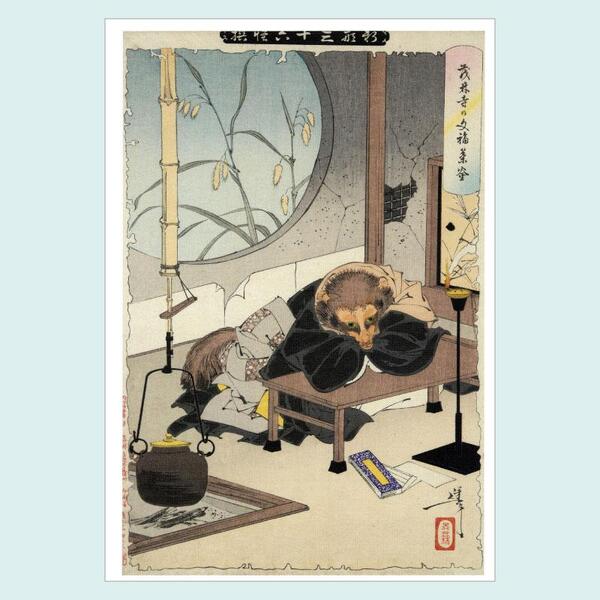
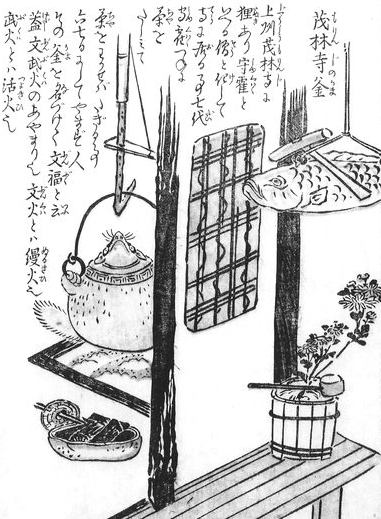
Yukitoshi Tsukiyoka. «The Happy Tea Kettle of Morinji Temple» (Morinji no bunbuku chagama), 1892 / Sekien Toriyama. «The Kettle of Morinji Temple» (Morinji no kama), 1781.
— Ugh! Ugh! It’s so hot! — the kettle cried in a human voice. — It looks like I’m boiling! Y-yes, I am boiling! The kettle leaped out of the fire and rushed toward the door on its short badger legs.
[3] Visual Methods of Transformation
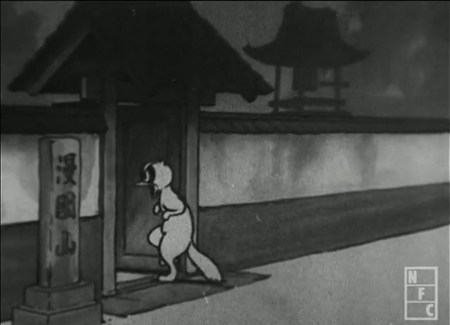
In «Rascal Racoon, ” the metamorphosis is primarily depicted through the sharp transformation from one figure to another. At the beginning of the film, the tanuki turns into a tree to hide from the dog.
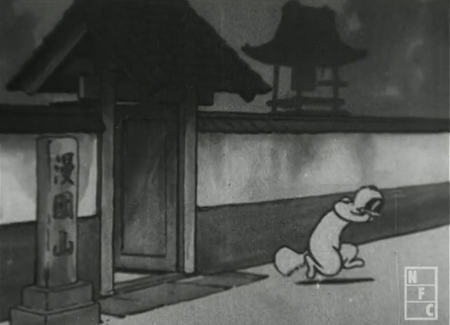
Yasuji Murata. «Rascal Racoon» («Manga Kamishibai Itazuratanuki no maki»), 1933 version. Sequence of frames.
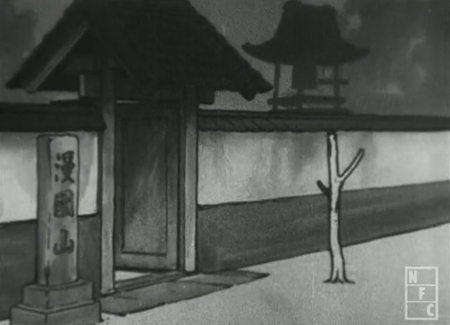
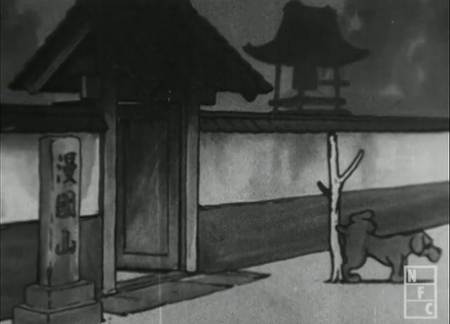
Yasuji Murata. «Rascal Racoon» (Manga Kamishibai Itazuratanuki no maki), 1933 version. Sequence of frames.
The tanuki doesn’t hide behind a tree—it becomes the tree. Unlike traditional concealment behind an inadequate barrier, here the character remains visible but assumes the form of an environmental element.
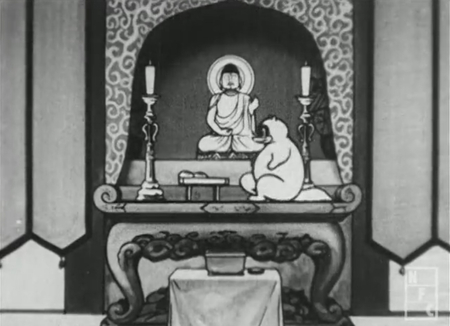
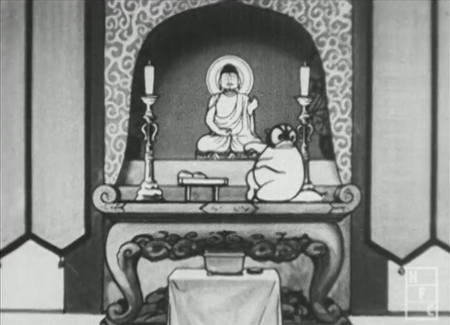
Yasuji Murata. «Rascal Raccoon» («Manga Kamishibai Itazuratanuki no maki»), 1933 version. Frame sequence.
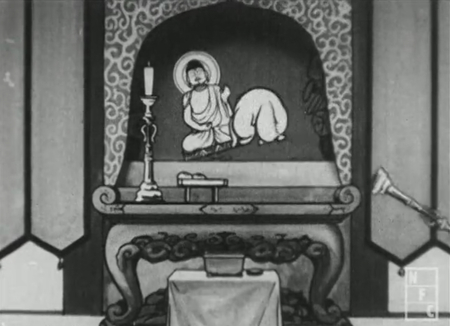
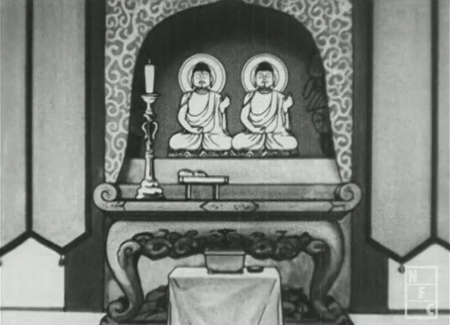
Yasuji Murata. «Rascal Racoon» («Manga Kamishibai Itazuratanuki no maki»), 1933 version. Sequence of frames.
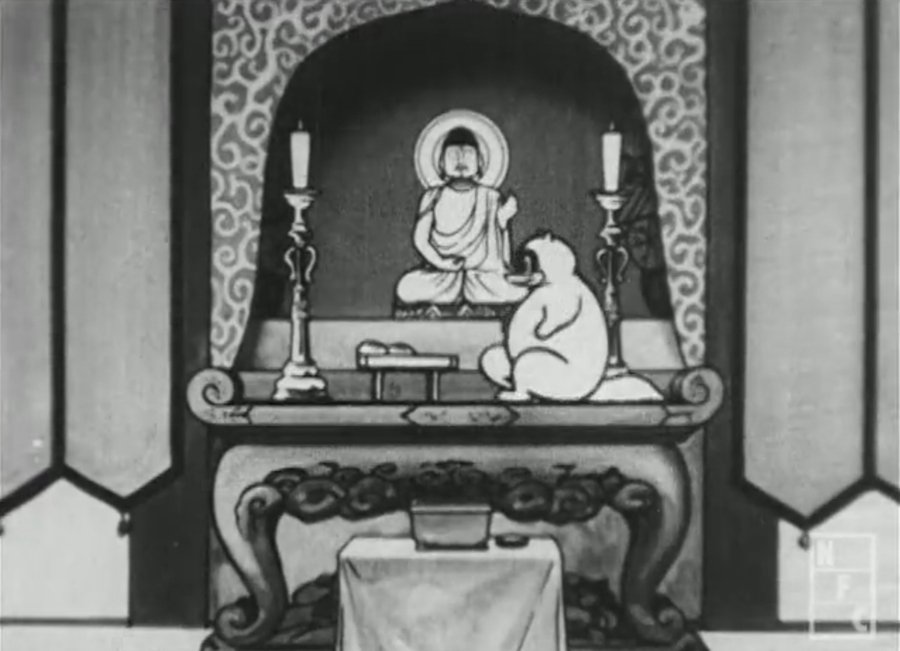
The Tanuki crouches and leaps, at which point its form abruptly transforms into a Buddha statue. The neighboring statue allows for immediate recognition of the result.
Yasuji Murata. «Rascal Racoon» («Manga Kamishibai Itazuratanuki no maki»), 1933 version. Sequence of frames.
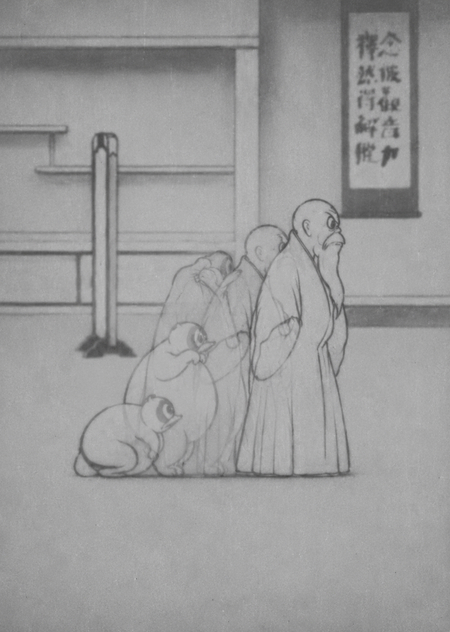
The round body of the tanuki rises and elongates, taking on the silhouette of a priest. Unlike a sharp shift in forms, this piece shows the viewer the intermediate states of the silhouette.
Let’s move on to the next film, «Chagama Ondo» by Kenzō Masaoki. At the beginning, the tanuki selects a hand from a box (a pun: in Japanese, «Tebako» (手箱) means «keepsake box»; it is composed of two kanji: 手 (te) — «hand» and 箱 (hako) — «box/chest»).
After the selection, smoke envelops the hero’s body: the viewer sees the preparation and the result, but the transformation itself remains hidden. Meanwhile, the smoke helps to «soften» the abrupt transition between frames.
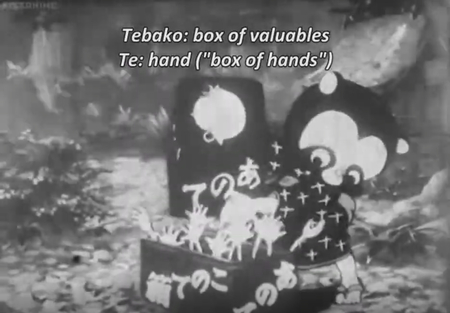
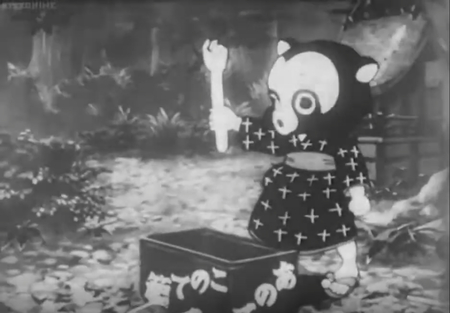
Kenzō Masaoki. «Chagama Ondo,» 1934. Sequence of frames
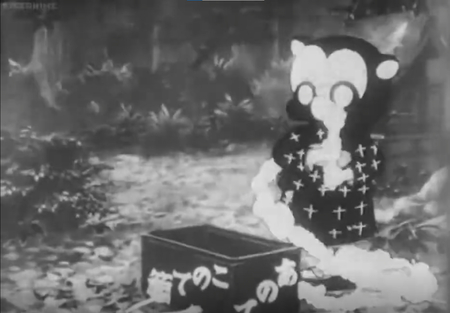
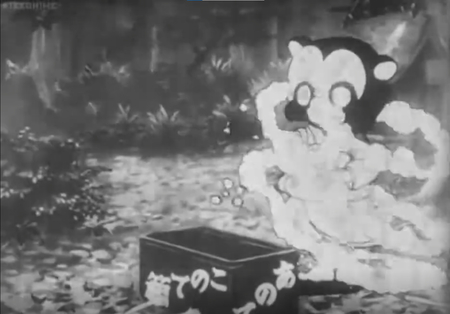
Kenzō Masaoki. «Chagama Ondo, ” 1934. Sequence of frames.
Kenzō Masaoki. «Chagama Ondo,» 1934. Animation excerpt.
During the final stage of transformation, the creator can afford to sharply «pull back» the shot because the smoke signals to the viewer that the character is about to appear in a new form. However, in «Rascal Raccoon, ” the scene framing during the transformation is absent due to the lack of visible magic.
Kenzō Masaoki. «Chagama Ondo, ” 1934. Animation Fragment.
In another scene, the tanuki stands on its hind legs, and its raised legs extend to form a ladder. Its head and arms remain visible—the character simultaneously retains its animal form while acquiring the function of an object. Unlike the tree in «Rascal Racoon,» the original body does not disappear entirely here.
Ikue Oishi. «Moving Pictures: The Battle of the Fox and the Tanuki» («Ugokie Kori no Tatehiki»), 1933. Animation fragment.