The Evolution of Creature Creation Technologies in the Alien Franchise: Practical Effects vs. CG
CHAPTER 1. INTRODUCTION
1.1. Research Premises
Creating fantastic creatures is one of the complex challenges in the field of visual effects. To achieve a realistic depiction, various methods are employed: practical effects, mechanical constructions, animatronics, prosthetic makeup, computer modeling, and digital animation.
The «Alien» franchise is of interest for research due to the diversity of technologies used to create extraterrestrial beings. Comparing the films Alien (1979), Prometheus (2012), and Alien: Covenant (2017) allows us to trace the evolution in the formation of exterior appearance, the rendition of surface texture, and the depiction of creature movement.
This research aims to study the influence of technological development on the visual realization of fantastic organisms in cinema.
1.2. Research Object and Subject
The research object is the technology used to create fantastical creatures in the «Alien» franchise.
The research subject comprises the practical and computer technologies applied to developing the external appearance and visual movement of alien creatures in the films Alien (1979), Prometheus (2012), and Alien: Covenant (2017).
The study is limited to the depiction of the creatures themselves. Primary focus is given to the following aspects:
1. Formation of anatomy and external morphology; 2. Creation of surface, skin, and organic textures; 3. Use of mechanical constructions and animatronics; 4. Application of computer modeling, digital animation, and compositing; 5. Visual interplay between practical and digital elements.
1.3. Research Goals and Objectives
The goal of this research is to identify the specific characteristics and trace the evolution of practical and digital technologies used to create fantastic creatures, using three films from the «Alien» franchise as case studies.
To achieve this goal, the following objectives must be met:
1. To study the creature-creation technologies utilized in the film Alien (1979). 2. To examine the practical and digital methods of creature creation in the film Prometheus (2012). 3. To analyze the creature creation technologies in the film Alien: Covenant (2017). 4. To compare the approaches to forming the anatomy, surface, and movement of the creatures across the three films. 5. To determine the specificities of integrating practical and computer effects and evaluate their impact on the visual believability of the imagery.
1.4. Selection of Films for Study
Three films from the Alien franchise were selected for this study: Alien (1979), Prometheus (2012), and Alien: Covenant (2017).
This selection was motivated by the opportunity to examine different stages in the development of alien creature creation technology within a single film franchise. The films share a common science fiction theme and a visual tradition for depicting extraterrestrial organisms, but they were created during different periods of cinematic technological evolution.
Comparing these projects allows us to observe how the methods for creating the creatures' form, surface, and movement have changed, and how practical effects interact with computer graphics during the filmmaking process.
1.5. Research Methods and Comparison Criteria
Research Methods
1. Visual Analysis — Studying film footage to identify the specific characteristics of creature appearances and movements. 2. Comparative Analysis — Juxtaposing practical and digital methods used to create analogous visual elements. 3. Production Material Analysis — Reviewing expert interviews, materials on visual effects creation, VFX Breakdowns, and supplementary film documentation. 4. Technical Solution Analysis — Determining the methodologies employed for modeling, animatronics, prosthetics, computer graphics, and digital animation.
Comparison Criteria
1. Form and Anatomy — methods for creating volume, proportions, and anatomical details.
2. Surface and Texture — methods for conveying skin, organic structures, and fine details.
3. Mechanics and Movement — principles of physical motion, the operation of mechanical constructs, and digital animation.
4. Integration with Imagery — the interaction of practical and digital elements within the frame.
5. Visual Conviction — the degree of image realism and the perceptual qualities of the created creature.
CHAPTER 2. «ALIEN» (1979): CREATING A PHYSICAL ENTITY

The adult Xenomorph in the film Alien (1979) is presented primarily through a creature suit and a mechanical head. This chapter examines the actor’s work, the head’s mechanism, and the surface materials separately, followed by their combined effect in the final image.
The special effects supervisors for the film were Brian Johnson and Nick Allder; the designer of the Xenomorph was H. R. Giger. The credits list Carlo Rambaldi and Clinton Cavers as the creators of the head effects.
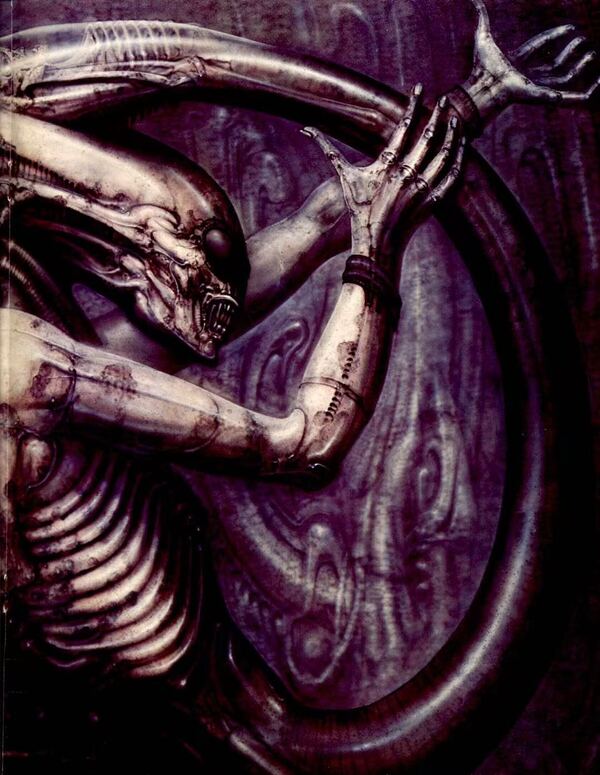
Physical form of the adult Xenomorph. «Alien, ” 1979. Creature design: H. R. Giger. Official photo: 20th Century Studios.
2.1. From Drawing to the Xenomorph’s Physical FormHiggens conceived the adult Alien as a synthesis of organic structures and mechanical forms. In a 1979 interview, he described the fabrication process: the foundation was a cast of the performer’s body, while details were sculpted from modeling clay using bones, tubes, and other elements, after which a rubber suit was constructed.Thus, the biomechanical image evolved beyond a mere drawing; it became a surface possessing actual depth, indentations, and overlapping components. The relief on the chest and neck was established through the volume of the structure, not just its coloring.
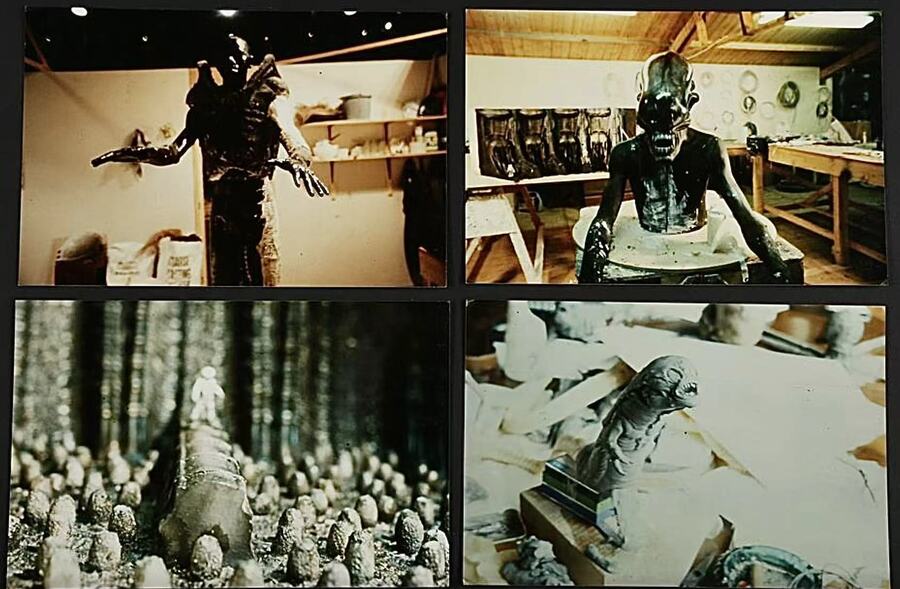
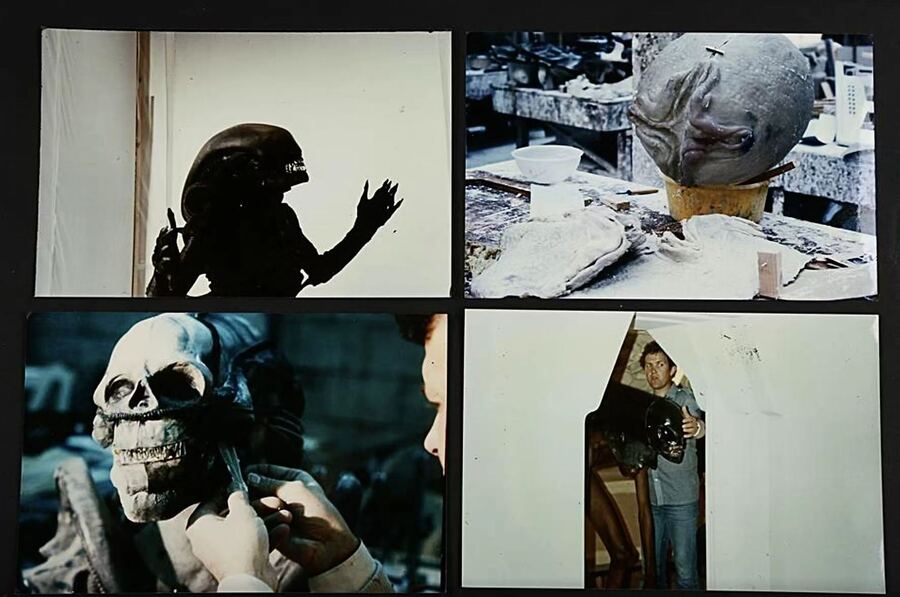
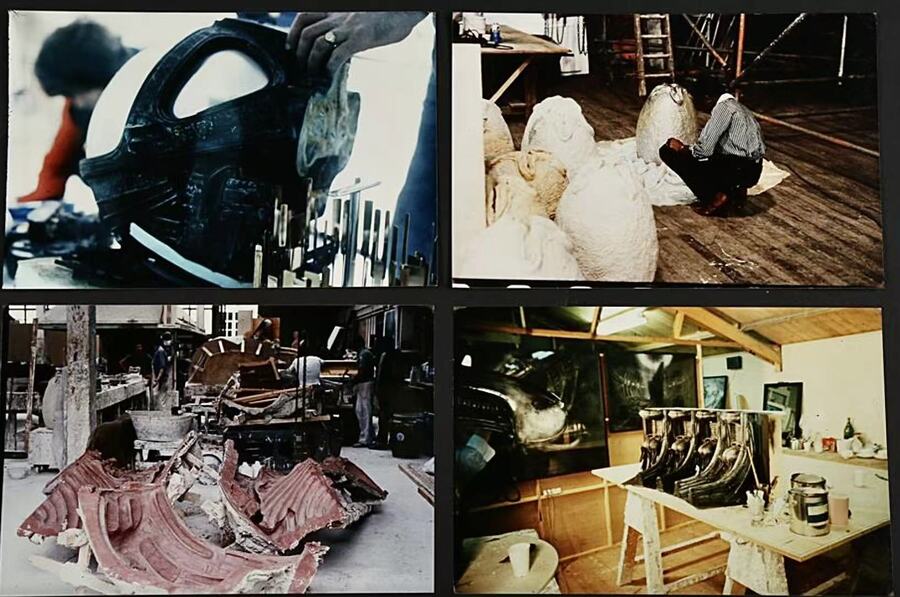
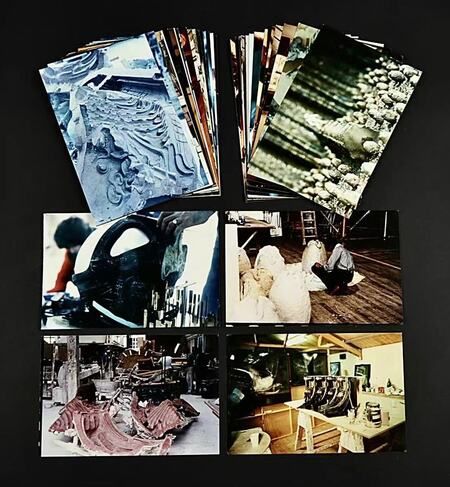
Prop construction for the movie Alien (1979). Photographer unknown. Source: Propstore, Behind the Scenes Photos of the Workshops.
2.2. Body Construction and Performer Interaction Body Construction and Performer Coordination Bolaji Badejo performed the movements of the adult Chimpanzee. According to his 1979 interview, the costume consisted of several pieces worn over a black, tight-fitting jumpsuit. The ribcage, limb elements, hands, and head were attached separately.
This construction merged a non-human appearance with a human body. The elongated head and additional elements altered the silhouette, yet the posture of the torso, shoulders, and arms remained connected to the performer. Therefore, it is crucial to consider both the masking of human anatomy and its retention within the creature’s poses.
2.3. Mechanical Head and Mouth Apparatus
Carlo Rambaldi’s mechanical head separated the portrayal of the mouth from the performer’s facial movements. According to his description in an interview with Cinefex, the moving parts were connected to manual control levers via flexible cables, and the inner jaw extended along rails, allowing the operator to combine various movements.
Thus, the alien on screen was not simply «a person wearing a costume body.» The body posture and the mechanical face constituted a joint performance: the former provided the overall stance, while the latter formed the localized changes of the lips, jaw, and inner jaw. This division of labor was particularly suited for close-up shots that displayed non-human oral structures.
Carlo Rambaldi’s mechanical head allowed the movements of the mouth apparatus to be separated from the actor’s facial expressions. In the Cinefex interview, he explained that the movable components were connected to manual control levers with flexible cords, and the inner jaw extended along guide rails. Operators could combine different motions.
Therefore, the alien on screen was not just a human in a suit. The body positioning and the mechanical expression formed a combined performance: the first set the general pose, and the second provided the changes to the lips, jaw, and inner jaw. This separation made it possible to display the non-human oral structure in close-up.
2.4. Materials and Surface Relief
Different parts of the Other are made from different materials. The description of the mechanical head in Cinefantastique specifies a fiberglass base, a flexible polyurethane coating, teeth made of polished steel, and a smooth plastic dome. These materials served functions of support, deformation, reflection, and external coating.
In the frame, the continuous surface of the dome contrasts with the dense, tubular relief of the neck. Thin, membranous elements connect the upper and lower jaws, allowing both the hard teeth and the flexible tissues to be seen simultaneously. The believability is created not by a single «skin texture, ” but by the variation in surfaces.