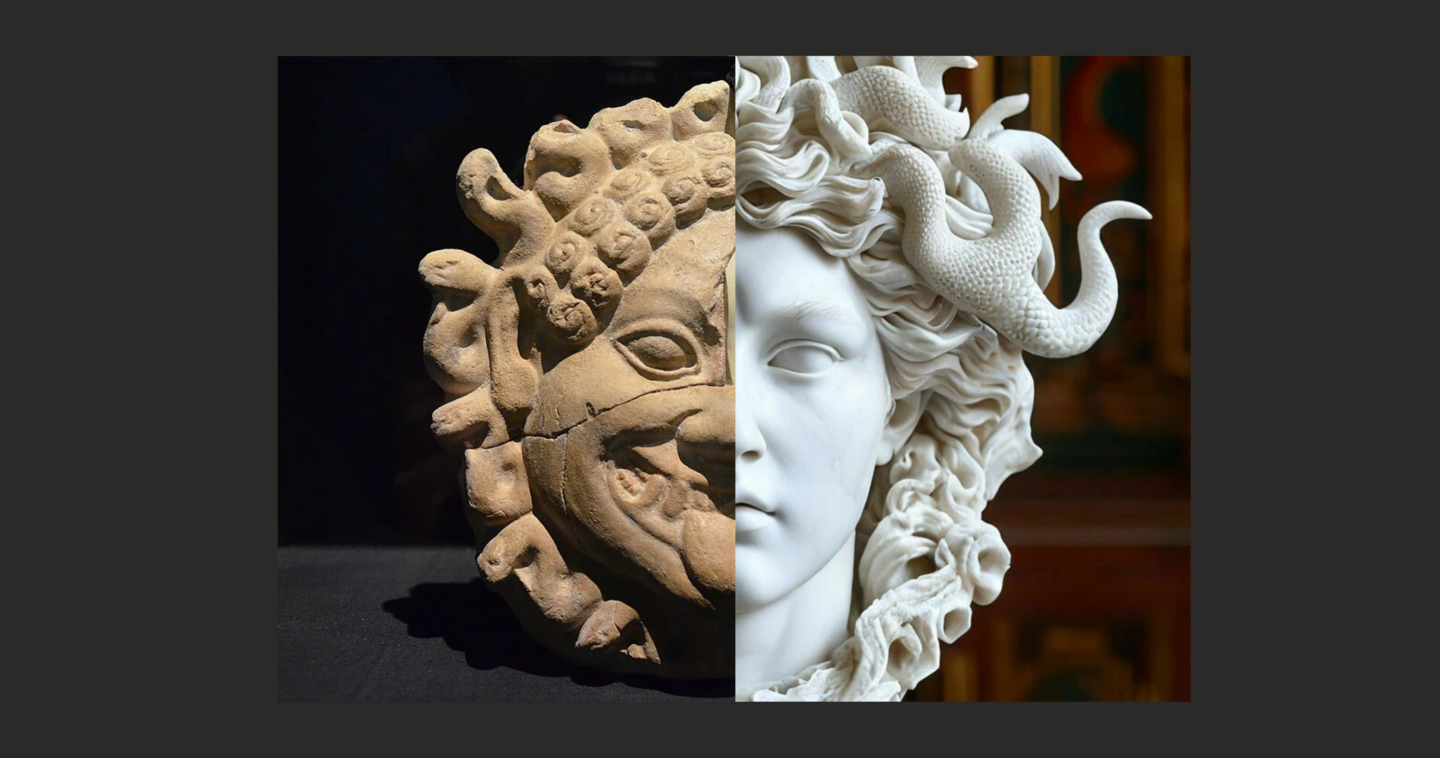
Concept
Medusa Gorgon is one of the most recognizable figures in ancient Greek mythology. She embodies both danger and feminine beauty. In classical art, the Gorgon’s head was utilized as a protective symbol, adorning temples, shields, and various objects.In early depictions, she appeared monstrous, but later versions incorporated more human and harmonious features. The snakes in place of hair, along with her distinctive gaze, remained consistent.Her image balances the exquisite with the terrifying.
How were mythological figures reflected in ancient Greek art?
In ancient Greek art, mythological characters became a way to convey people’s perceptions of the world, their fears, divine powers, and human nature. Their depiction and artistic embodiment evolved alongside the development of culture and conceptions of ideal beauty.
What artistic techniques did the sculptors use to convey the combination of her femininity with danger and formidable power?
Medusa the Gorgon possesses beautiful feminine features interwoven with frightening details: serpents instead of hair, a menacing gaze, and a fierce expression. In classical depictions, she appears simultaneously as an alluring woman and a perilous mythological creature. However, she was initially portrayed as a vile, caricatured monster with strikingly gruesome features, showing no hint of grace. Over time, the facial silhouette became softer and more natural, although some terrifying elements persisted.
My key research question: How and for what reasons did the image of Medusa the Gorgon change in ancient sculpture?
In early ancient sculpture, Medusa was depicted as a terrifying monster with a snarl, large eyes, and snakes for hair. Over time, her image acquired a feminine quality. This was primarily due to changing perceptions of beauty and trends in the development of sculptural art. Most importantly—even in later depictions, recognizable details remained that reminded viewers of Medusa’s dangerous nature. Although her visual appearance changed dramatically, the image’s recognizability endured.
The Role of Sculpture in Ancient Greek Culture
Sculpture held a significant place in ancient Greek culture. It was used to decorate temples and public spaces, to glorify gods and heroes, and to convey mythological narratives. Through sculptural forms, the ancient Greeks expressed their concepts of the world, beauty, fear, and the divine. Thus, sculpture in Ancient Greece was not merely a means of artistic expression but also a vital tool for transmitting the cultural, religious, and mythological understanding of their time.
Chapter 1. The Origin of the Gorgon Medusa’s Image. Archaic Greece—7th–6th Centuries BCE.
The Gorgon Medusa first appeared in ancient Greek mythology, where she was one of the three Gorgon sisters, the only mortal among them. According to one version, Medusa was a beautiful girl, but the goddess Athena punished her for becoming close to Poseidon in the goddess’s temple and turned her hair into snakes.
Her gaze held lethal power: anyone who met it would turn to stone. According to myth, the hero Perseus was able to defeat Medusa by using a reflection in his shield to avoid her direct stare and cut off her head. This very narrative became one of the most prevalent themes in ancient Greek art.
Early sculptural representations. Image of the monster
In early depictions, Medusa resembled a genuine monster—with enormous, bulging eyes, a wide-open mouth, an protruding tongue, and sharp fangs. Instead of hair, she had snakes for a head, and her facial features were intentionally distorted to evoke fear and disgust. This imagery was meant to ward off evil forces, protecting people and buildings.
Pediment of the Temple of Artemis on the island of Corfu, circa 580 BCE.
The earliest sculptural representations date back to the 6th century BCE. For instance, the sculpture on the western pediment of the Temple of Artemis on the island of Corfu was created around 580 BCE. Its intimidating face was used as a talisman against evil. It was believed that it could protect people and buildings.
The pediment of the Temple of Artemis on the island of Corfu, circa 580 BCE.
This is one of the oldest examples of Greek sculpture. At the center of the composition is a colossal winged Gorgon. Panthers flank her, emphasizing her power and dangerous nature.
Medusa Gorgon. Sculpture from the Pediment of Hecatompedon (Acropolis of Athens)
Parts of the Medusa’s head and body. The head was discovered in 1888 southwest of the Parthenon.
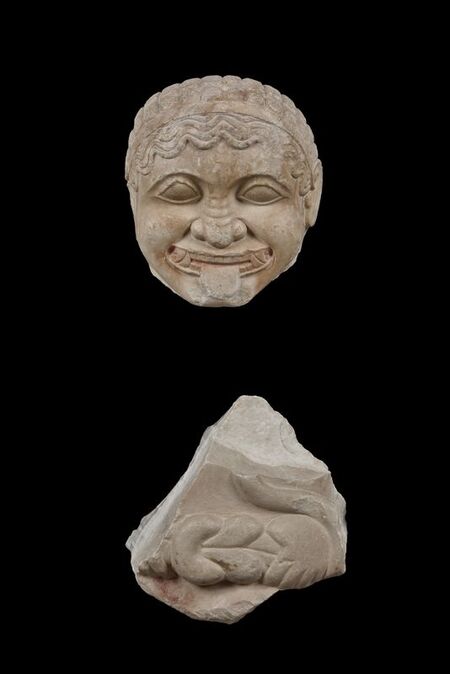
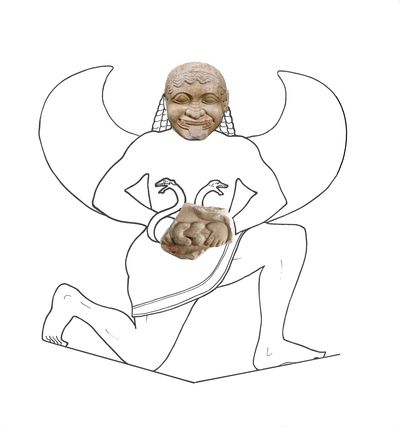
Medusa Gorgon. Sculpture from the pediment of the Hecatompedon (Acropolis of Athens)
Medusa’s face, round and flat, features a wrinkled nose and an open mouth from which a wide tongue and large fangs protrude. Traces of red pigment remain. Only her arms are left from her body, gripping a knot of snakes that wrap around her waist. It is highly probable that this statue served as a central acroterion on the roof of Hecatompedon. In other words, it also «protected» the building.
Perseus beheading Medusa — metope of Temple C, Selinunte, circa 540–510 BCE.
In the following image, Perseus beheads Medusa in the presence of Athena. A winged horse, Pegasus, emerges from the Gorgon’s body.
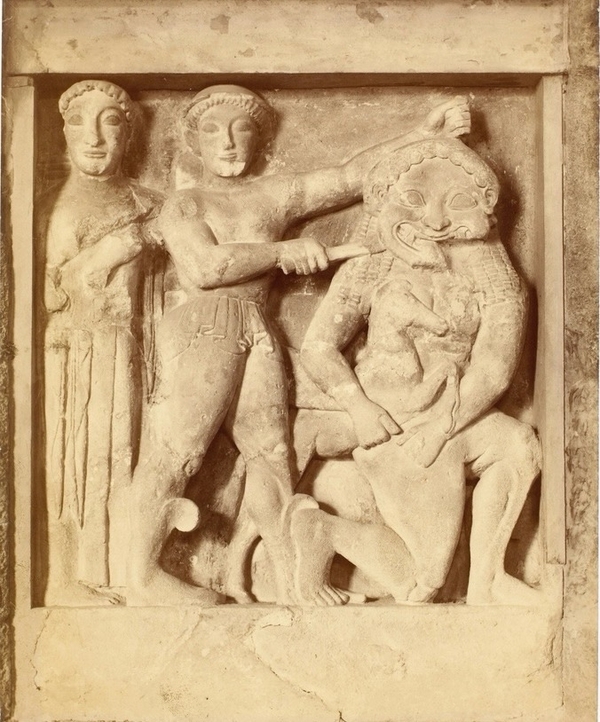
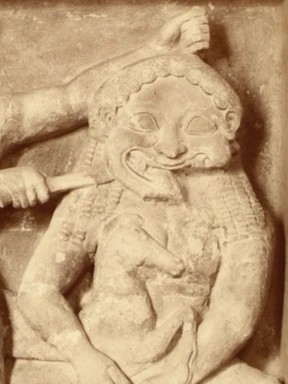
Perseus decapitates Medusa — metope of Temple C, Selinunt, circa 540–510 BCE.
This image depicts Perseus decapitating Medusa. The Gorgon is in a crouched, unnaturally constrained pose; her body appears tense and angular. The face draws particular attention: wide-open eyes, a large mouth with a protruding tongue, and a characteristic grimace create a grotesque, menacing image. Her facial features are intentionally exaggerated, and the figure itself lacks natural plasticity or femininity.
Thus, in archaic sculpture, Medusa retains the characteristics of a mythological monster. Her image is built upon the deliberate distortion of human features and exaggerated facial expressions. The primary function of such an image is to serve as a protective symbol capable of warding off evil forces.
Chapter 2. Classical Greece — 5th–4th Centuries BCE