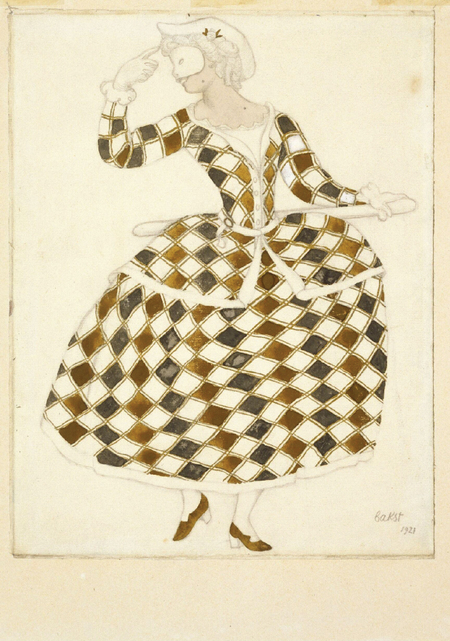
How does Léon Bakst convey movement through costume design? Bakst’s sketches and costumes are compared with the works of artists from other eras based on three criteria: figure silhouette, fold direction, and ornament placement.
Navigation
1. Topic Selection 2. Hypothesis 3. Interpreting Posture 4. How Patterns Alter Volume 5. How Costume Assigns Roles 6. How the Viewer Completes a Gesture 7. From Sketch to Sewn Costume 8. Conclusion 9. Bibliography 10. Image Sources
Topic Selection
I chose the topic of stage costume design by Léon Bakst because I am interested in how an artist conveys a dancer’s movement in a sketch. I wanted to understand how the folds of the fabric and the direction of the pattern can define a character’s pose. Comparing this to the works of artists from other eras allowed me to trace how they solved the same problem in painting and graphics.
Hypothesis
What means does Bakst use to evoke movement while the performer remains still? I suggest that the connection between the clothing and the body plays a crucial role: the line changes direction at the wrist, the pattern compresses at the knee, and a strip descends from the waist, which the eye follows downward. This means Bakst must be able to convey a pose almost without a pattern.
How to read a pose?
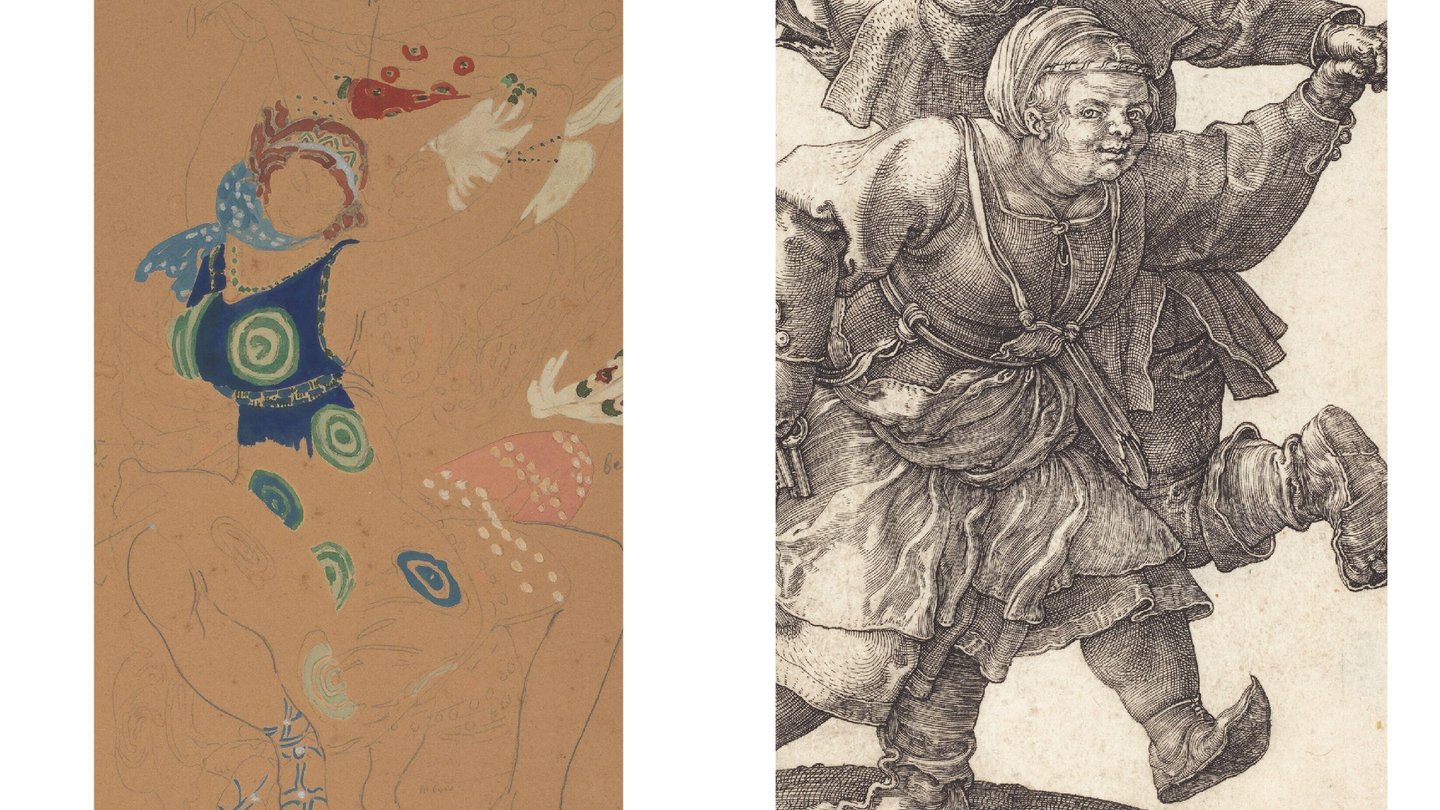
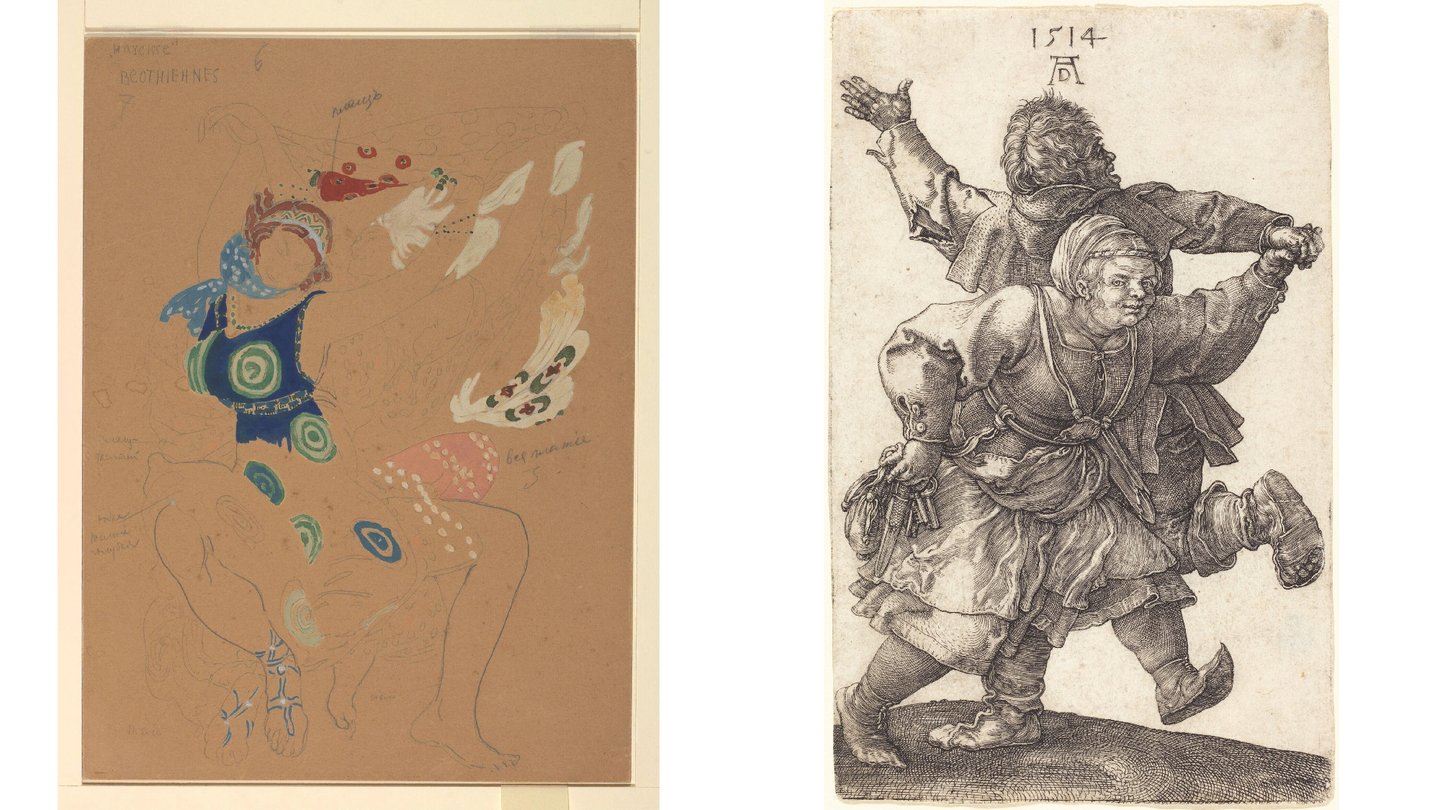
Leon Bakst. Preliminary sketch for the ballet «Narcissus.» c. 1912. Albrecht Dürer. Dancing peasant couple. 1514.
In my sketch for «Narcissus,» I first see a blue swirl, then I notice it is draped over a moving person. In Dürer’s work, however, a dancing couple is immediately visible, and only then—how far the clothing has flown from the body. From this difference, I begin my investigation: at what point does the costume begin to convey movement on its own?
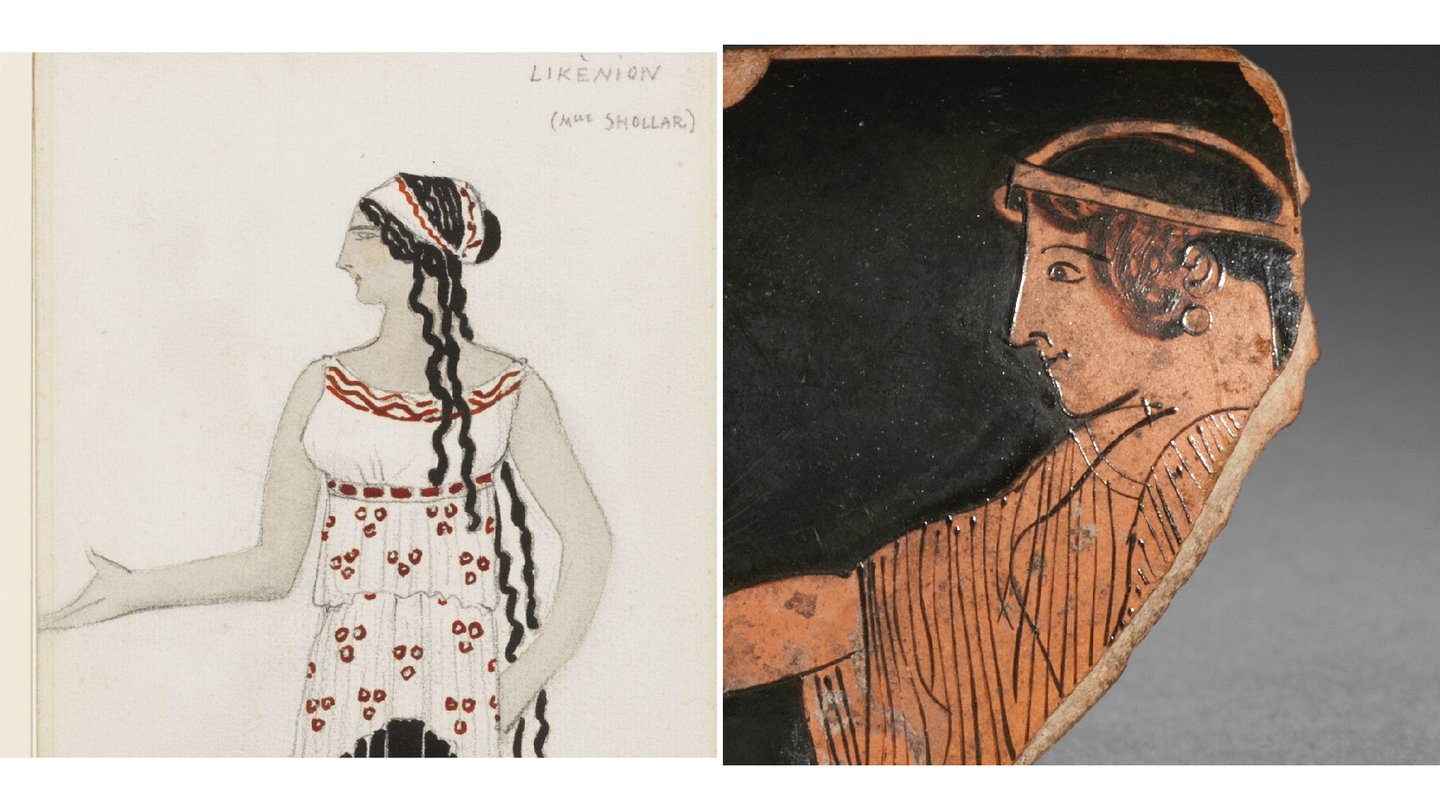
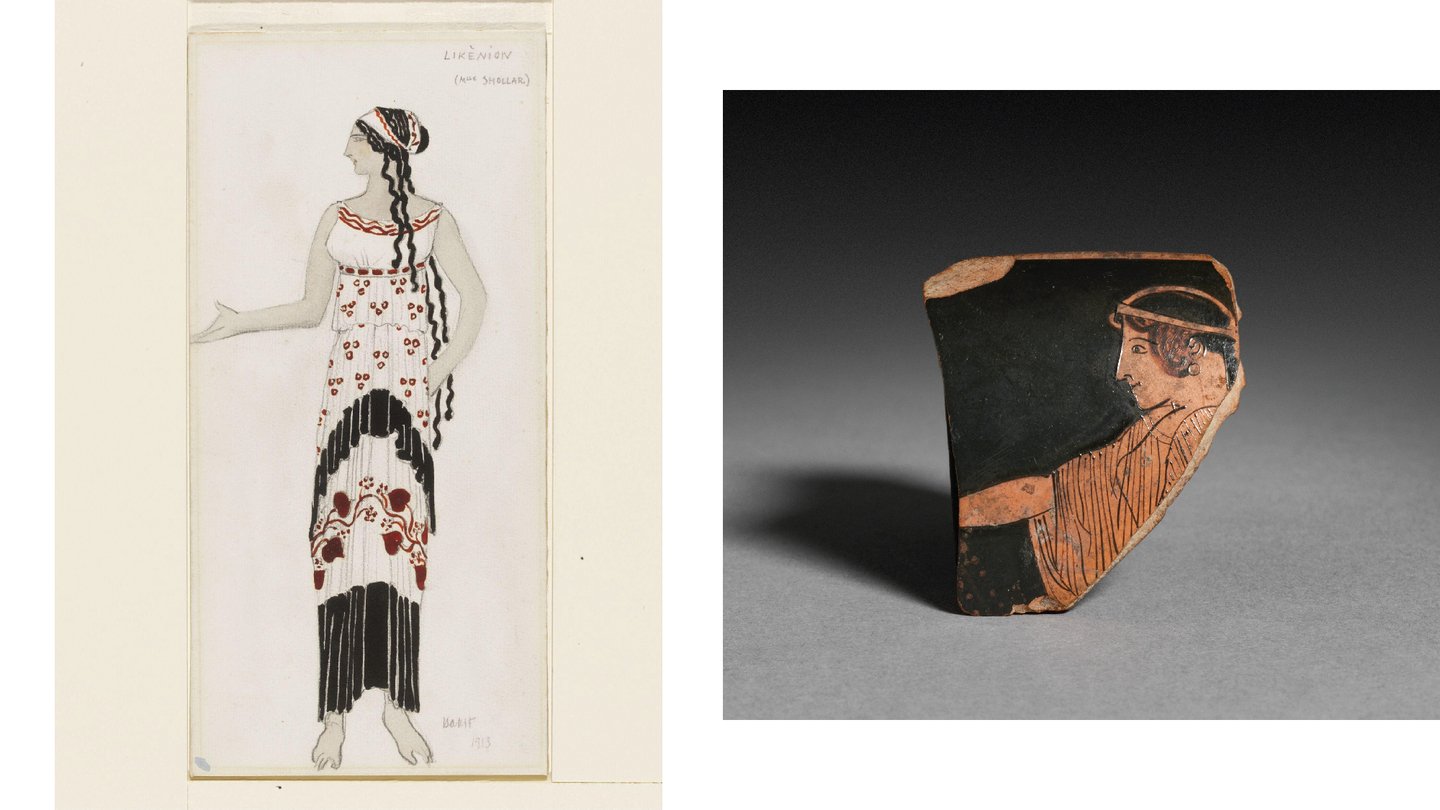
Léon Bakst. Lichenion. Costume for the new production of «Daphnis and Chloe.» 1913. Attic vase painter, close to the master Telephus. Woman. Fragment of a red-figure cup. c. 470–460 BCE.
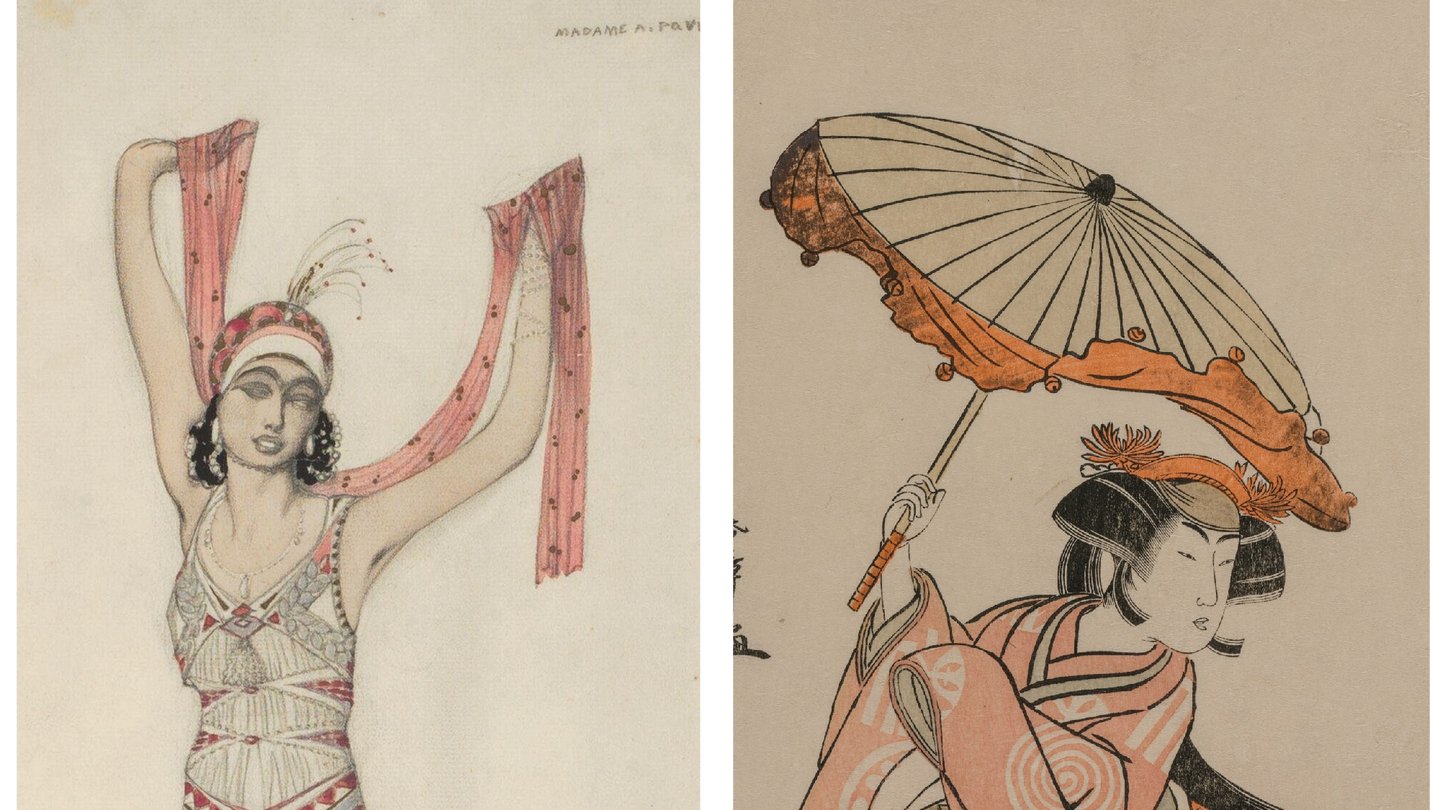
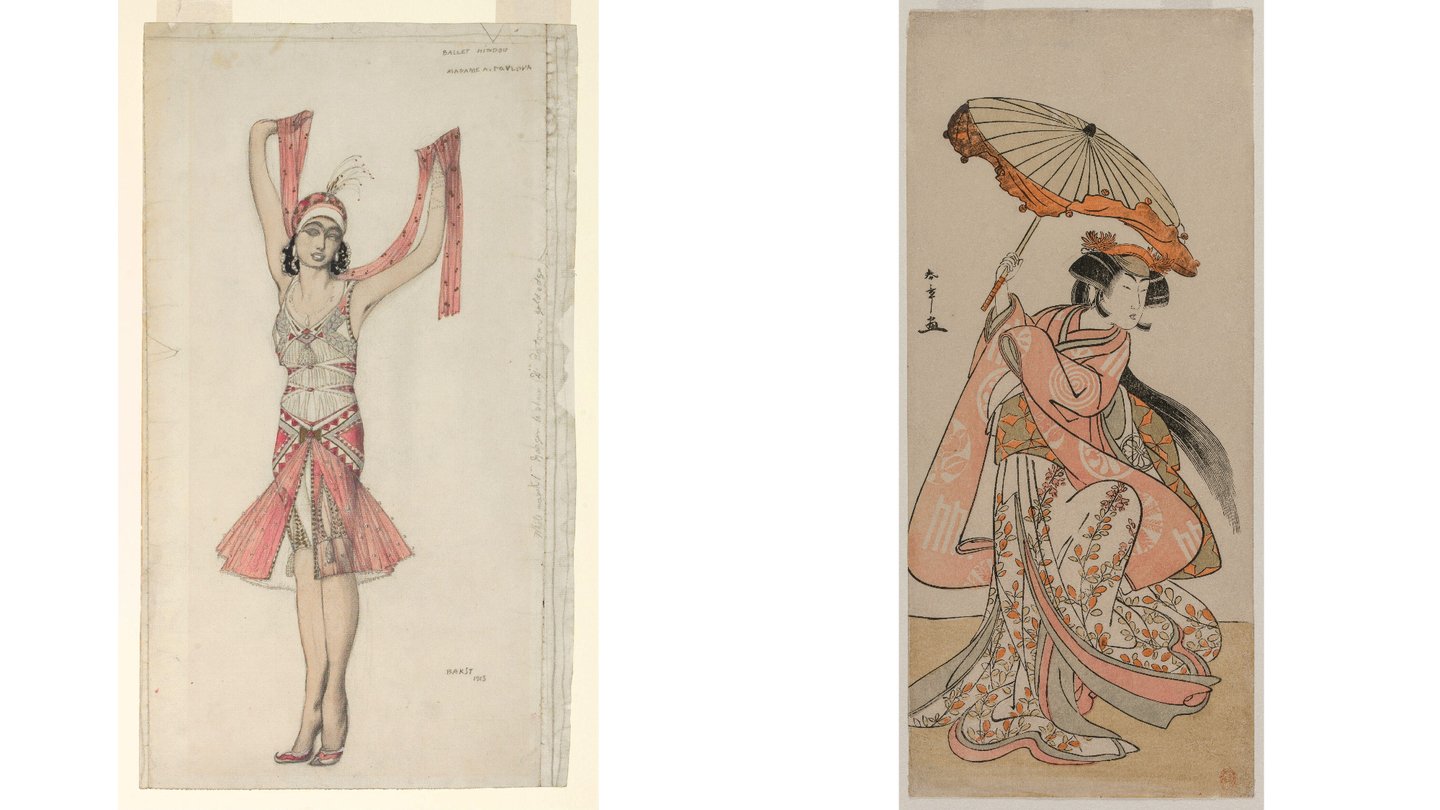
Leon Bakst. Costume for Anna Pavlova, likely for «Oriental Fantasy.» 1913. Katsukawa Shunsō. Actor Sagawa Kikunojō II dancing with an umbrella. Late 1770s.
Bakst’s eye can trace a single blue line and precisely find where it turns. Ando’s requires extracting a movement from several layered fabric edges. Both the fine line and the seemingly heavy sleeve allow the gesture to be perceived beyond the arm itself.
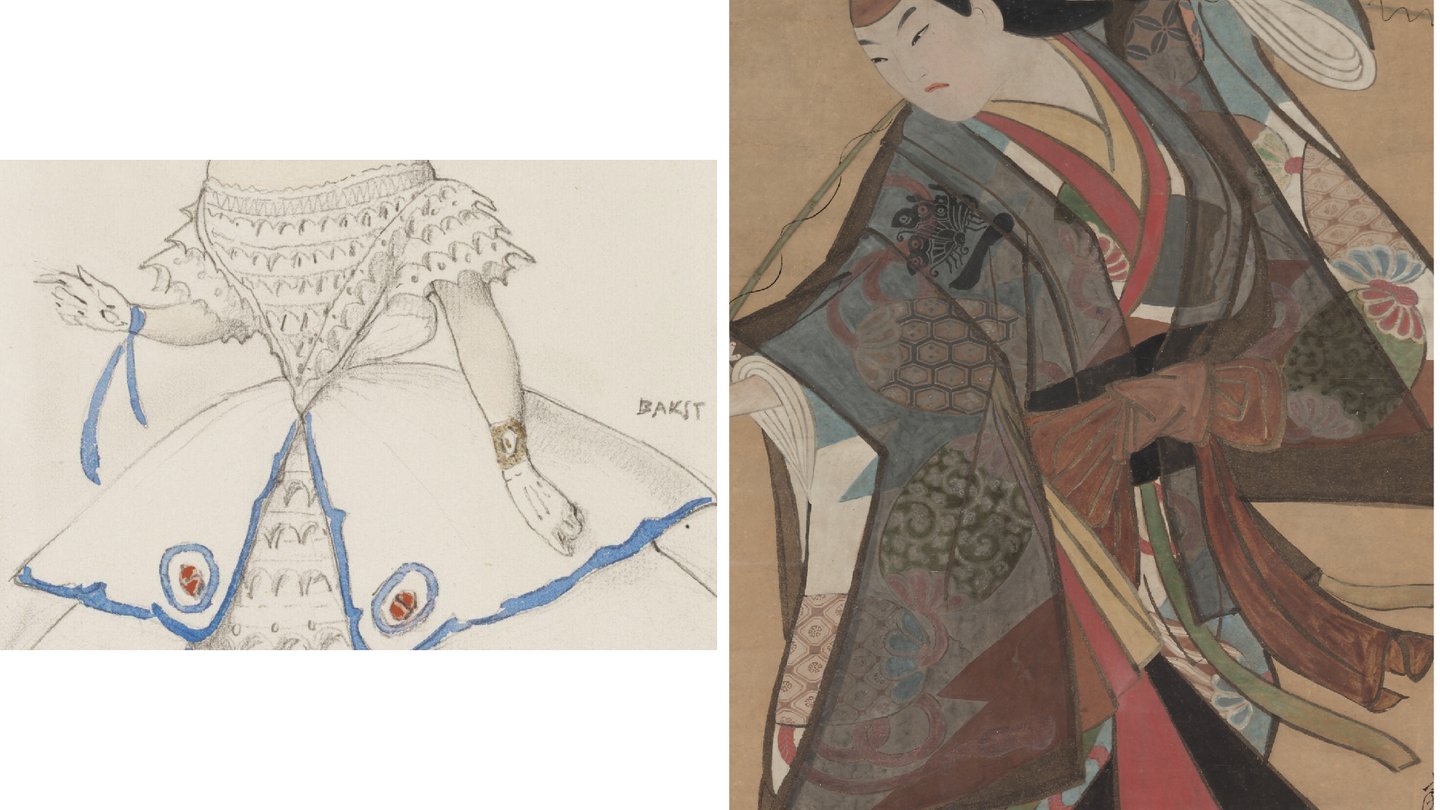
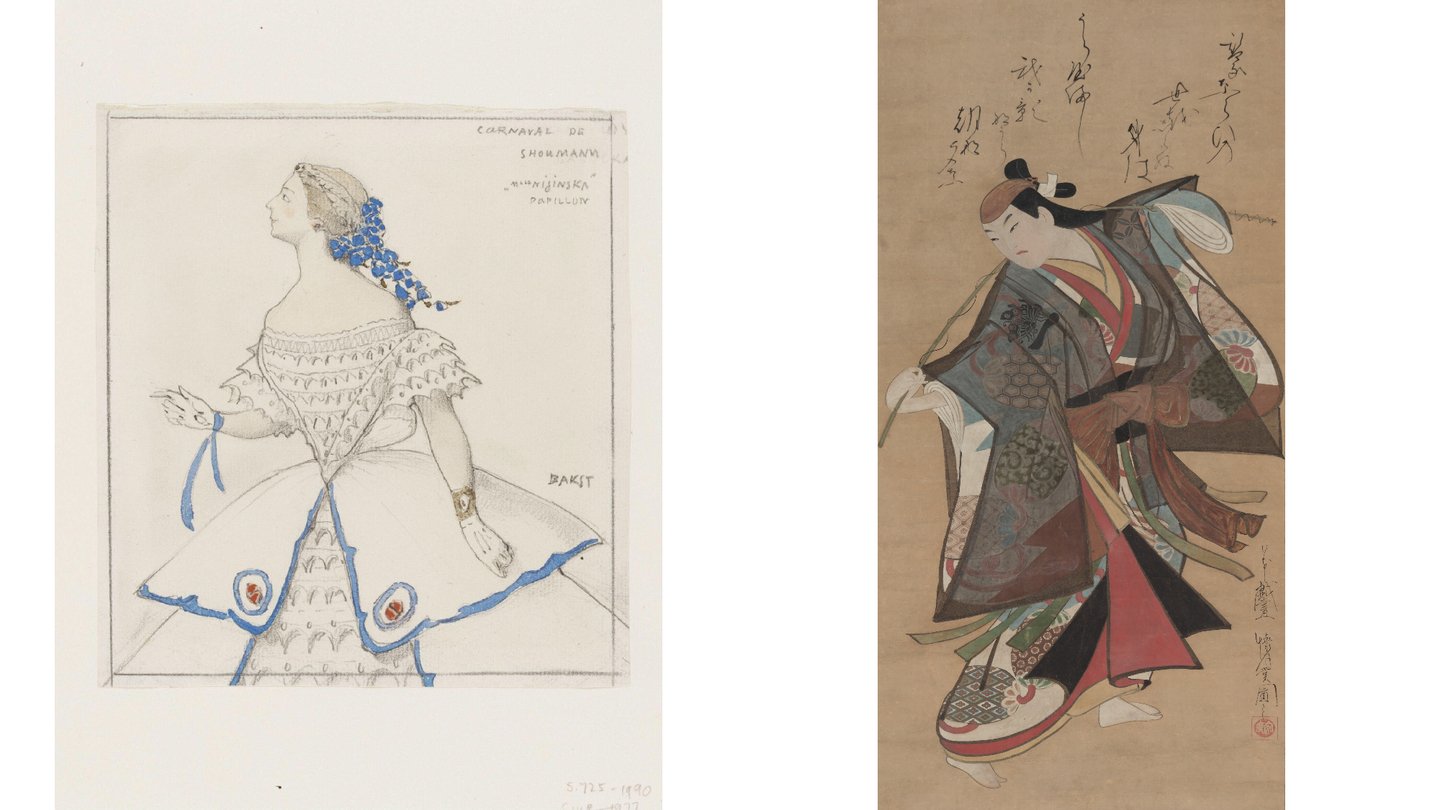
Léon Bakst. Bronislava Nijinska as the Butterfly. «Carnival.» 1910. Kaigetsudo Ando. Sanjō Kantarō II as Urasumi Taro. Early 18th century.
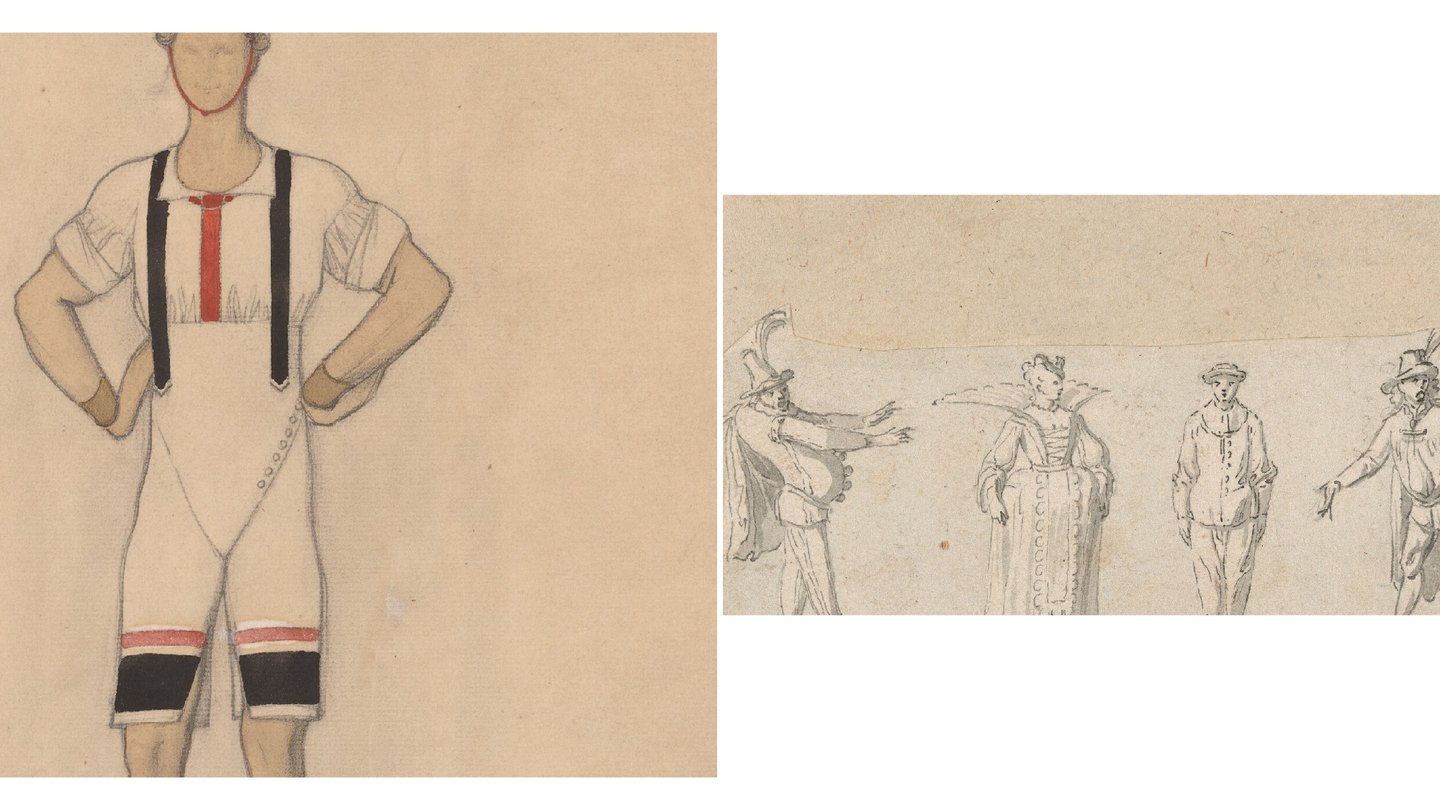
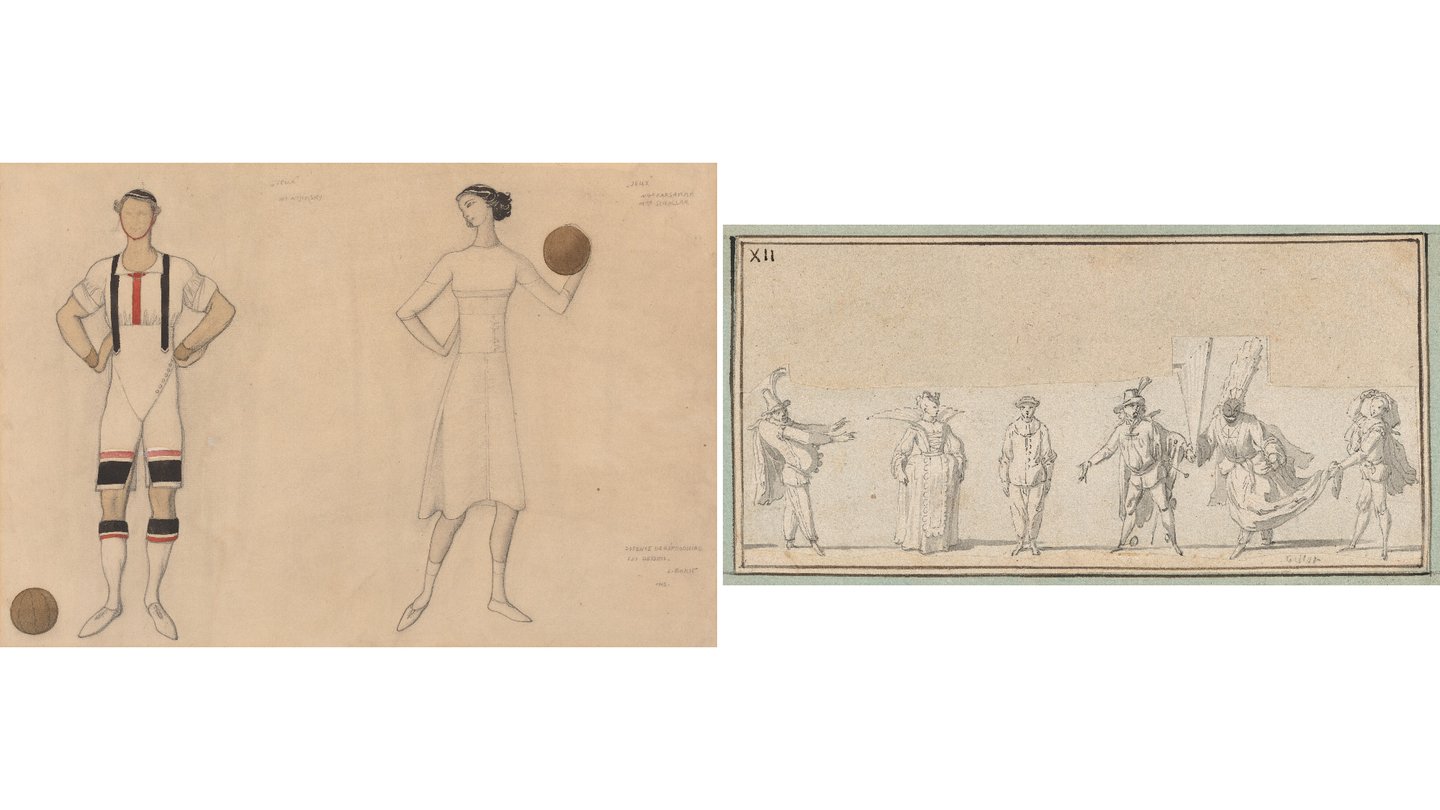
Leon Bakst. Costume sketches for the ballet «Games.» 1913. Claude Gillot. Six studies of actors from Commedia dell’arte. Early 18th century.
How does a pattern change volume?
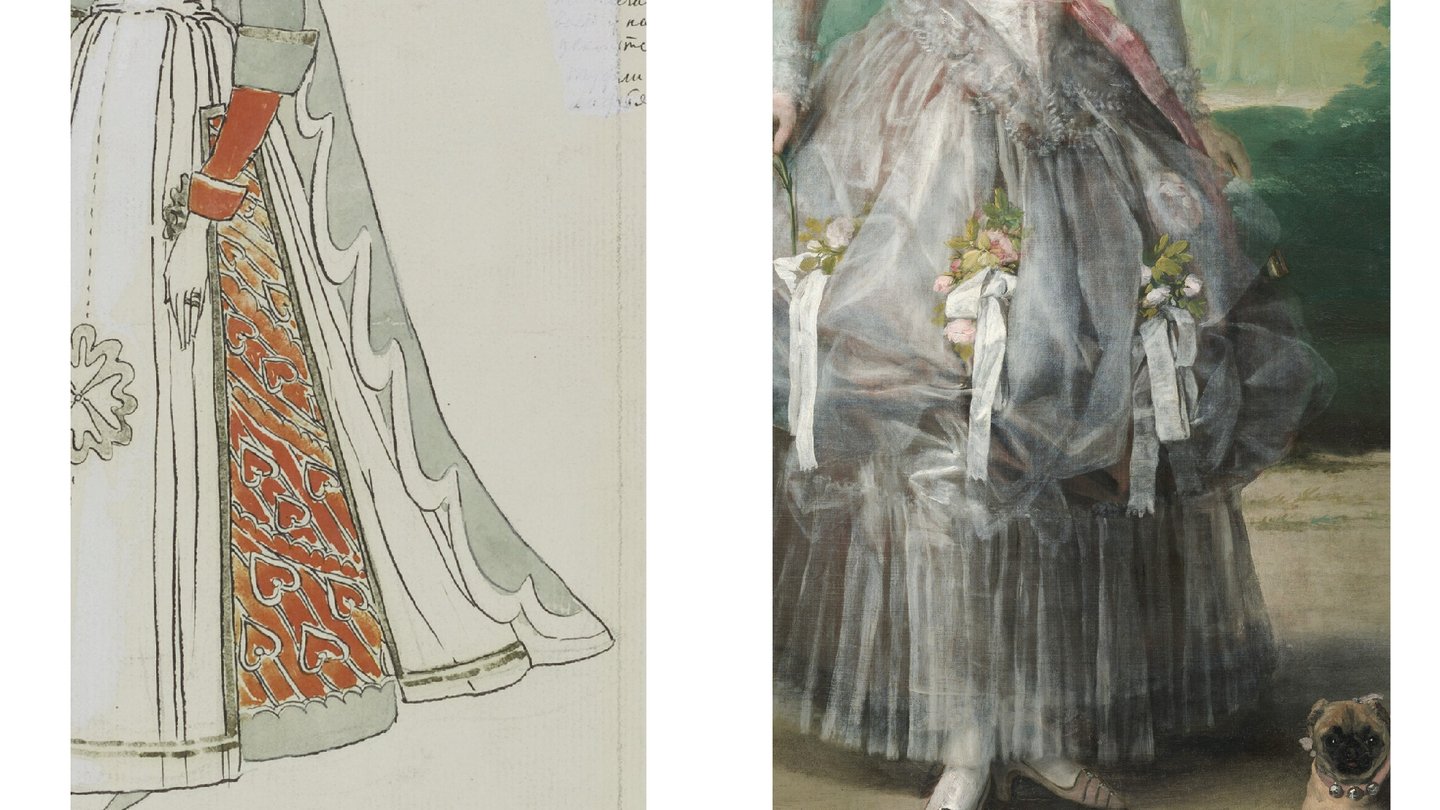
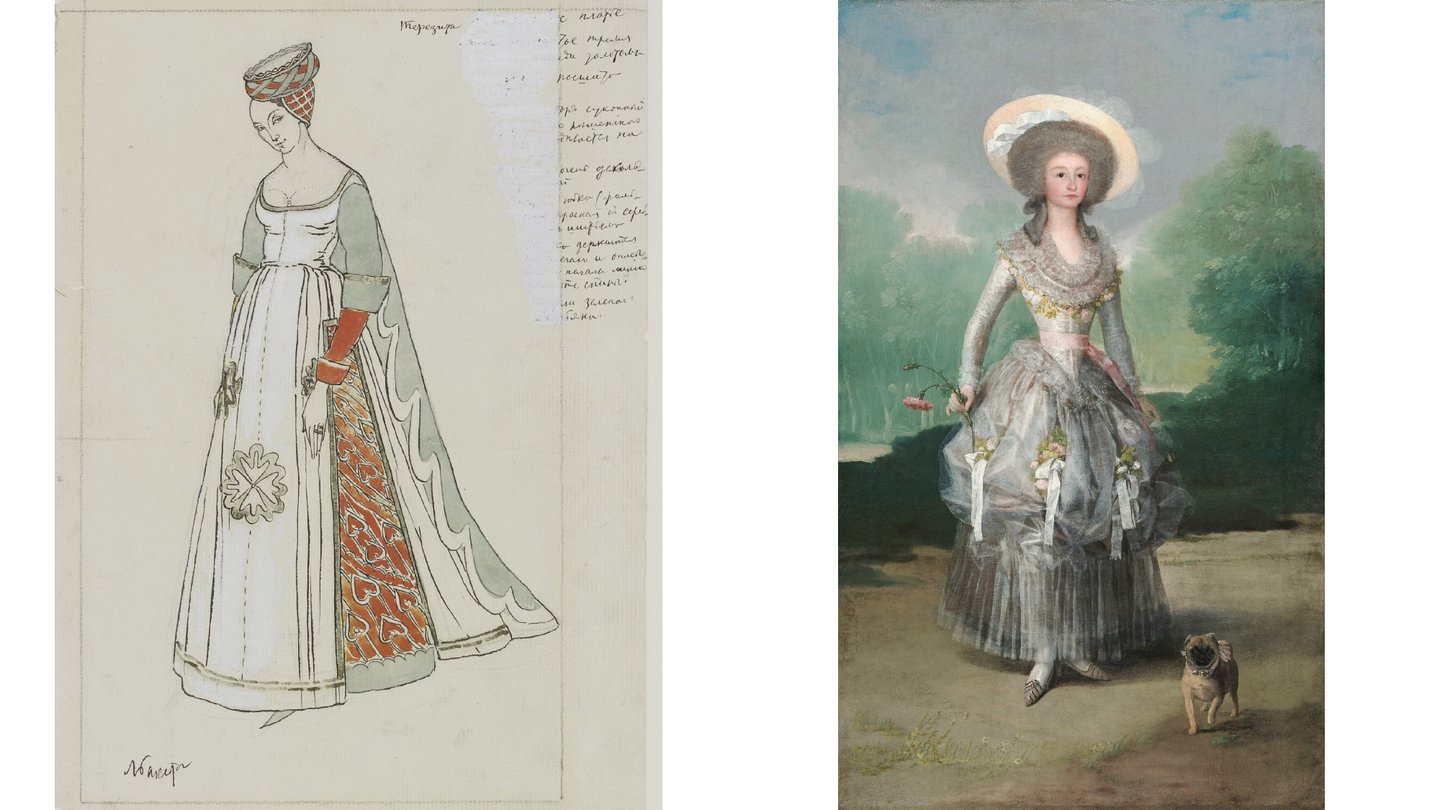
Leon Bakst. Terenta. Sketch for the production of «Don Juan Refuted.» c. 1907. Francisco Goya. Marquise de Pontejos. c. 1786.
In Terenty, a narrow band of red ornamentation is particularly noticeable next to the nearly untouched paper. In the Marquise’s piece, the adjacent sections of the dress are close in color, and the eye perceives the difference through highlights and shadow. In Baxter, depth is shown by the boundary between two fabric patterns; in Goya, it can be seen even within a single gray tone.
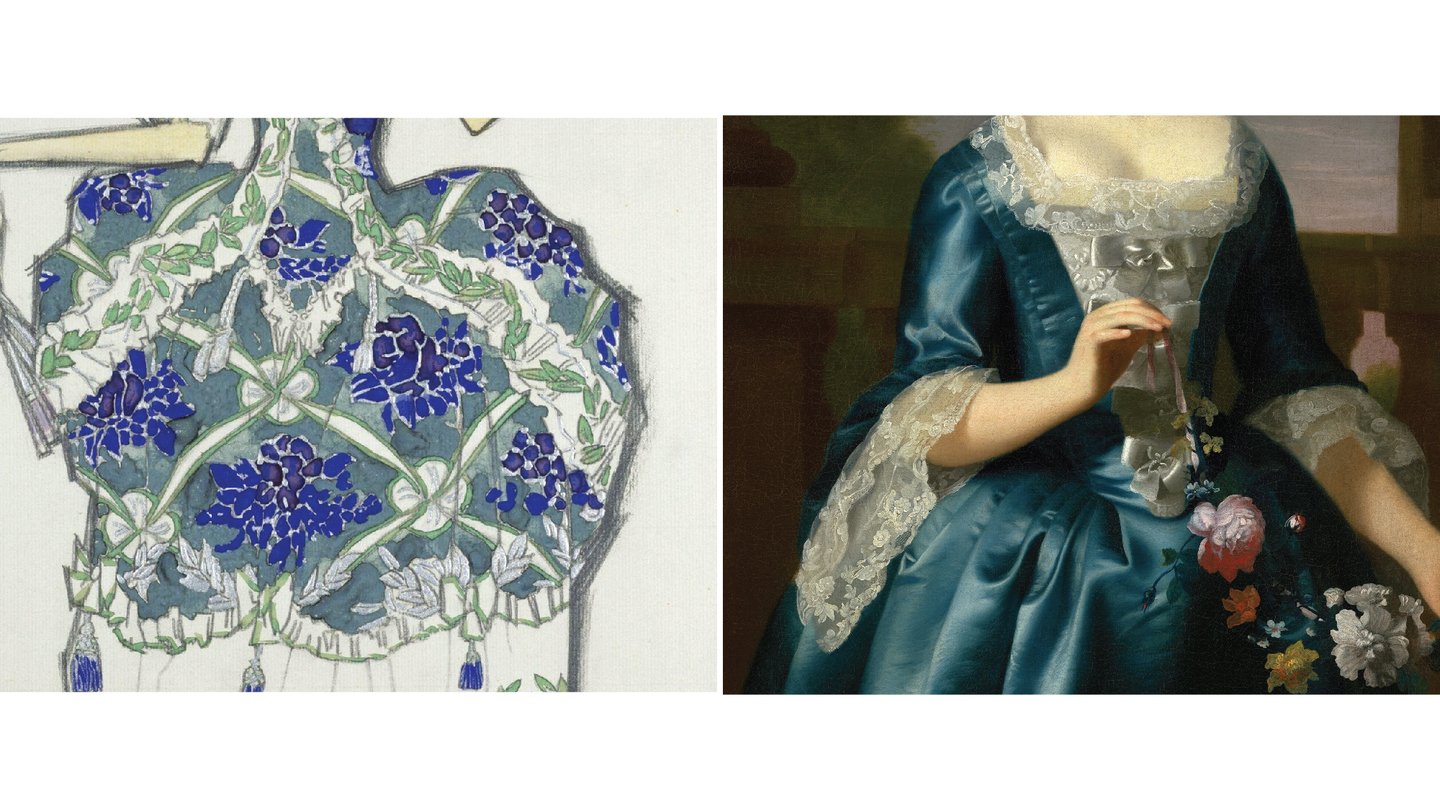
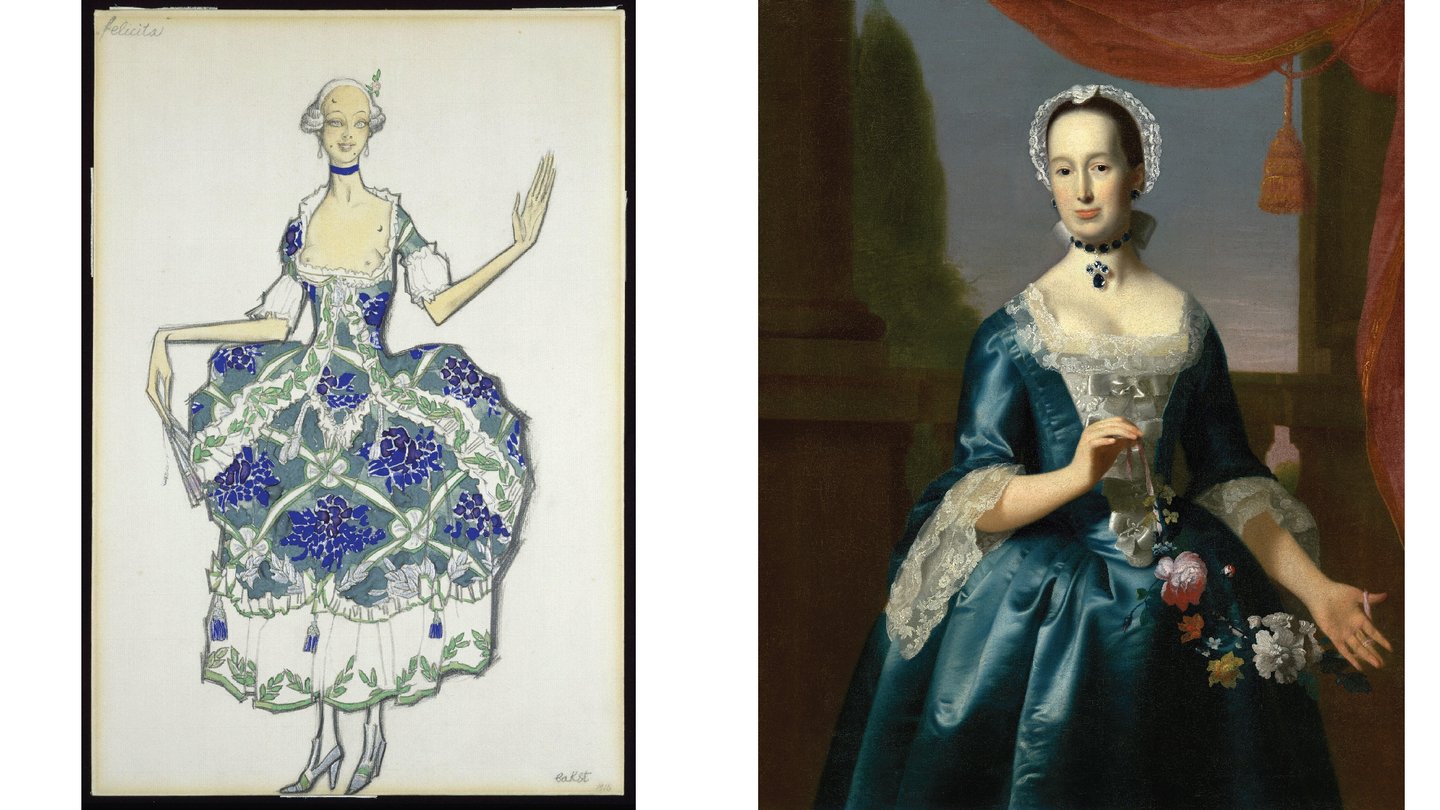
Léon Bakst. Felichita. Sketch for the ballet «Women in a Good Mood.» 1917. John Singleton Copley. Anne Fairchild Bowler. c. 1763.
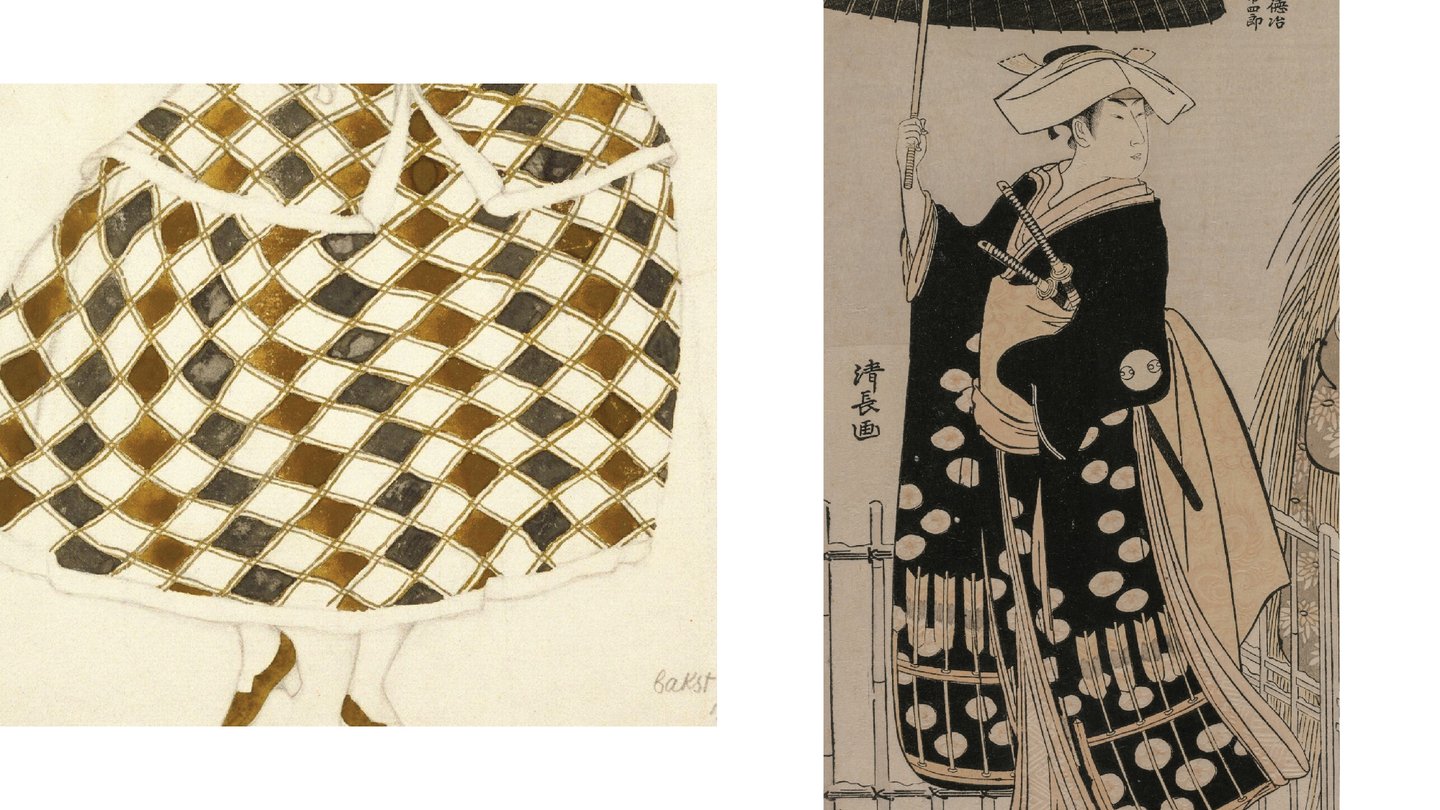
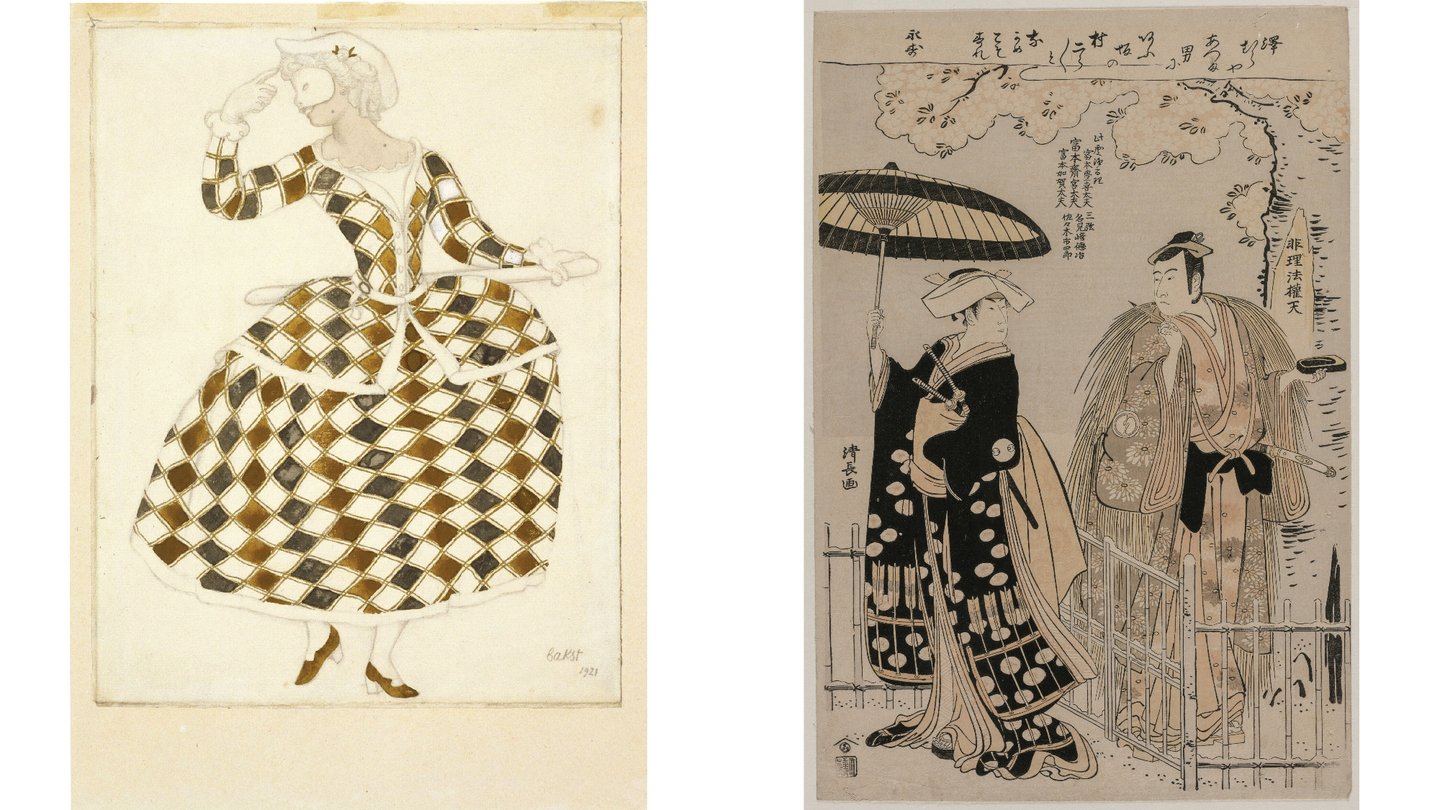
Léon Bakst. Columbine. «The Sleeping Princess.» 1921. Tori Kiyonaga. Actors Sawamura Sodzuro III and Arashi Muraziro in the roles of Kusunoki Masatsuru and Koto-no Naishi. 1786.
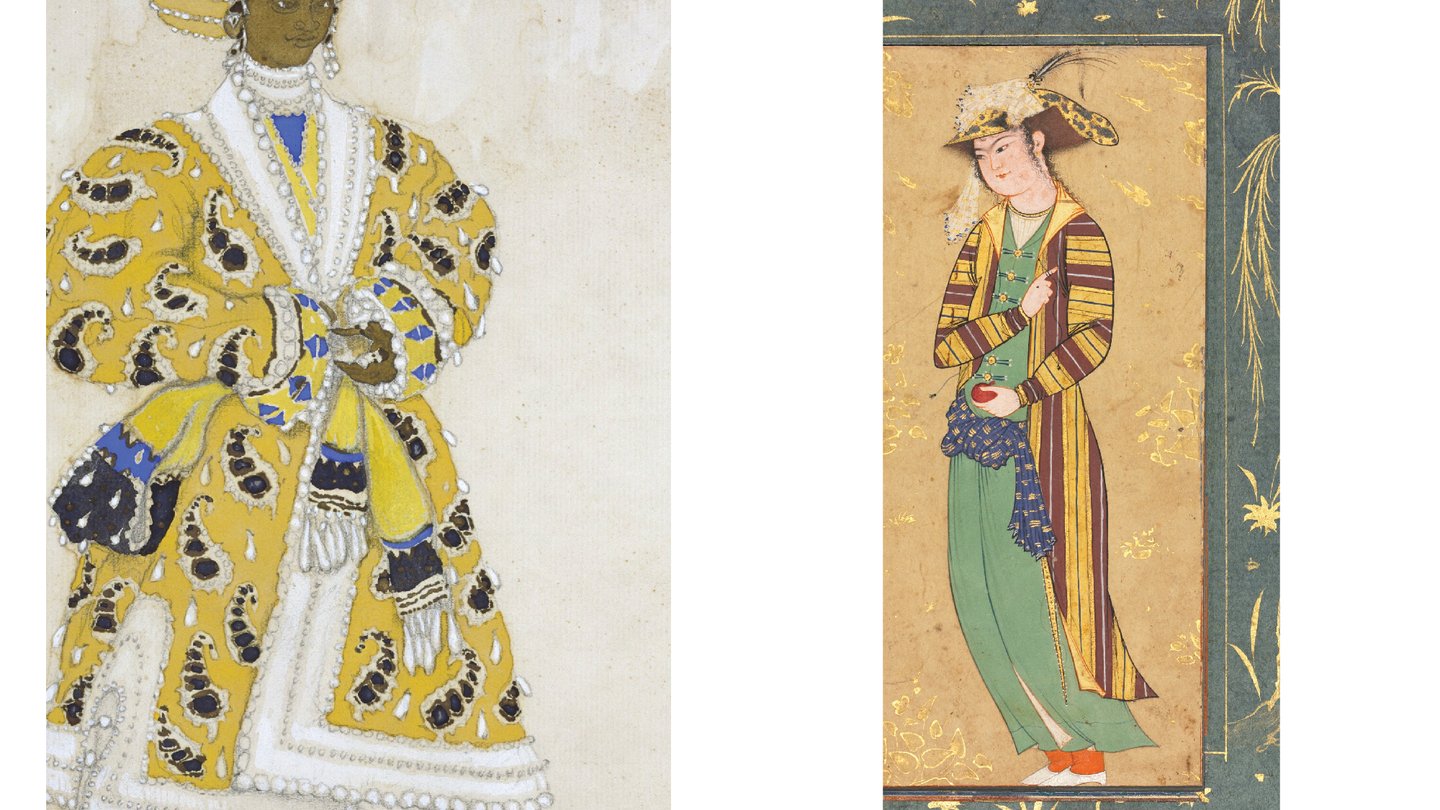
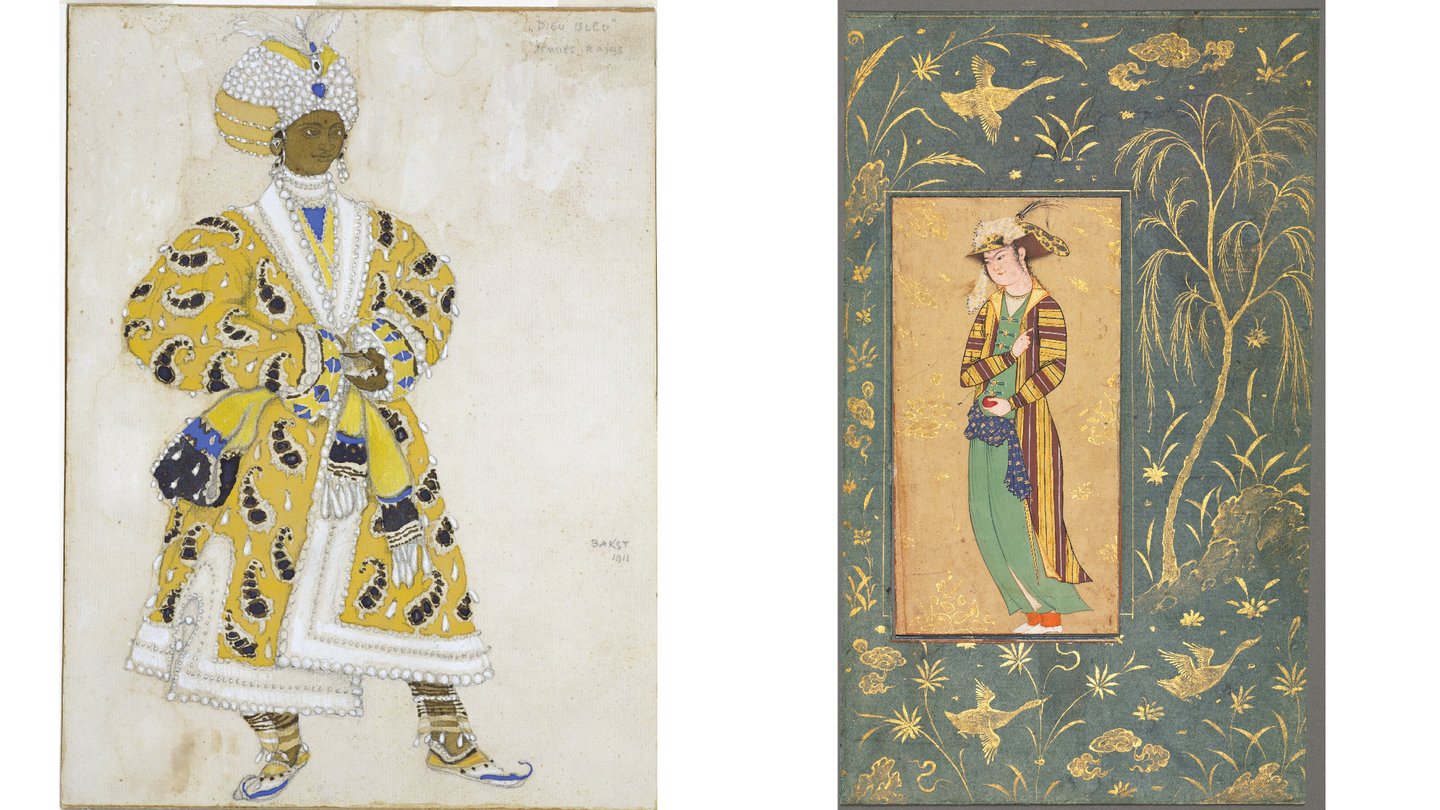
Leon Bakst. Young Raja. Sketch for the ballet «The Blue God.» 1911. In the style of Reza Abbasi. Young man with a pomegranate. Album leaf. c. 1600–1650.
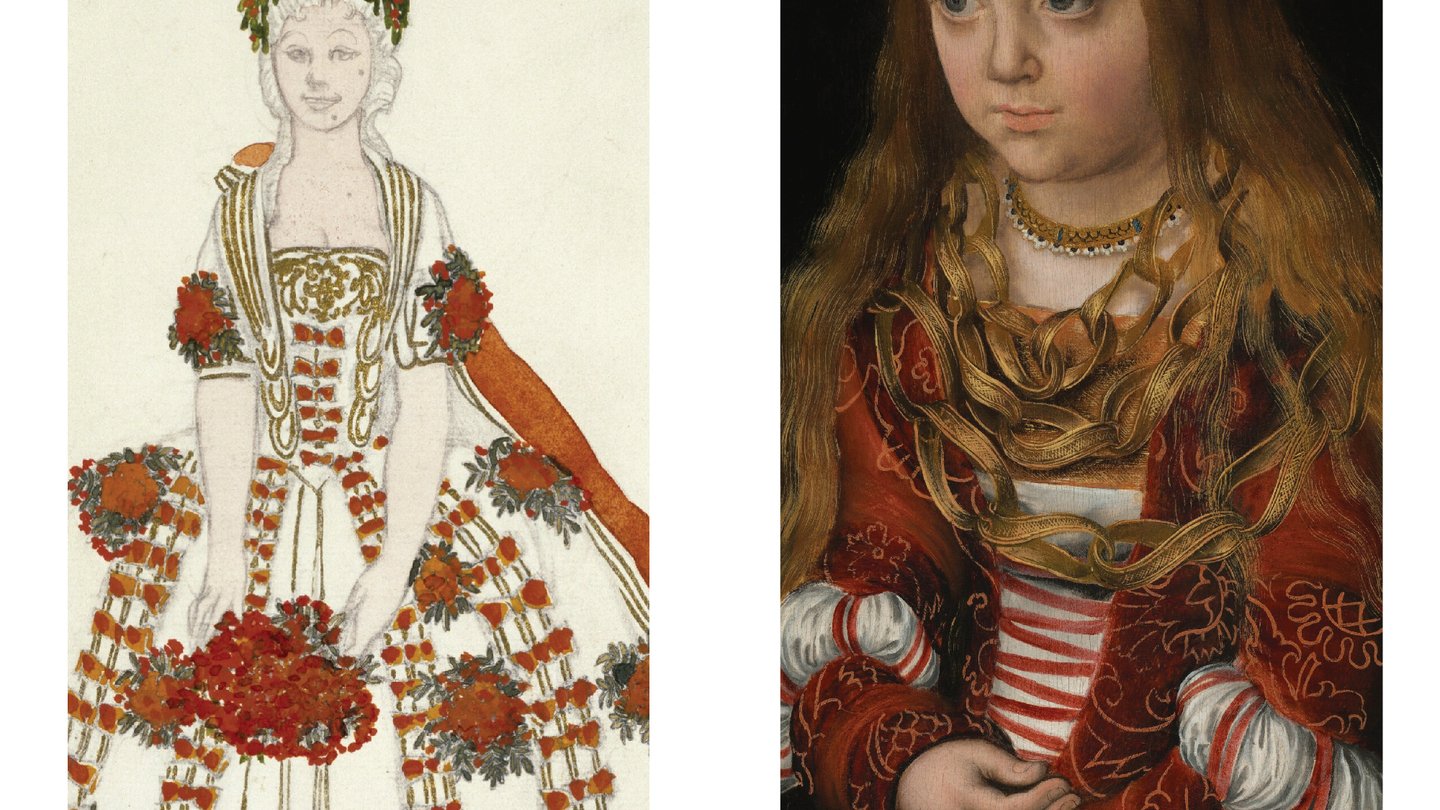
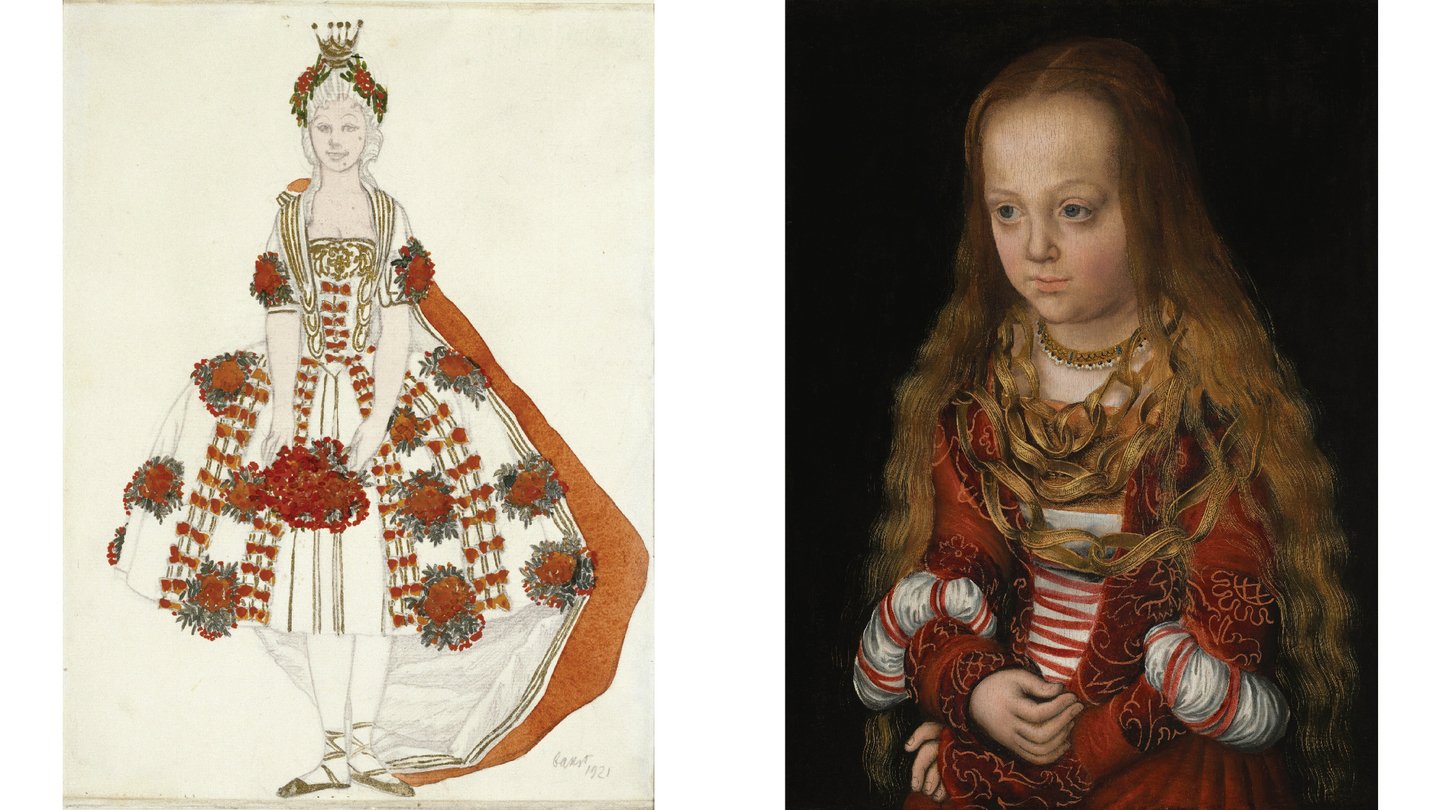
Leon Bakst. Rowan Fairy. «Sleeping Princess.» 1921. Lucas Cranach the Elder. Saxon Princess. c. 1517.
How does costume assign roles?
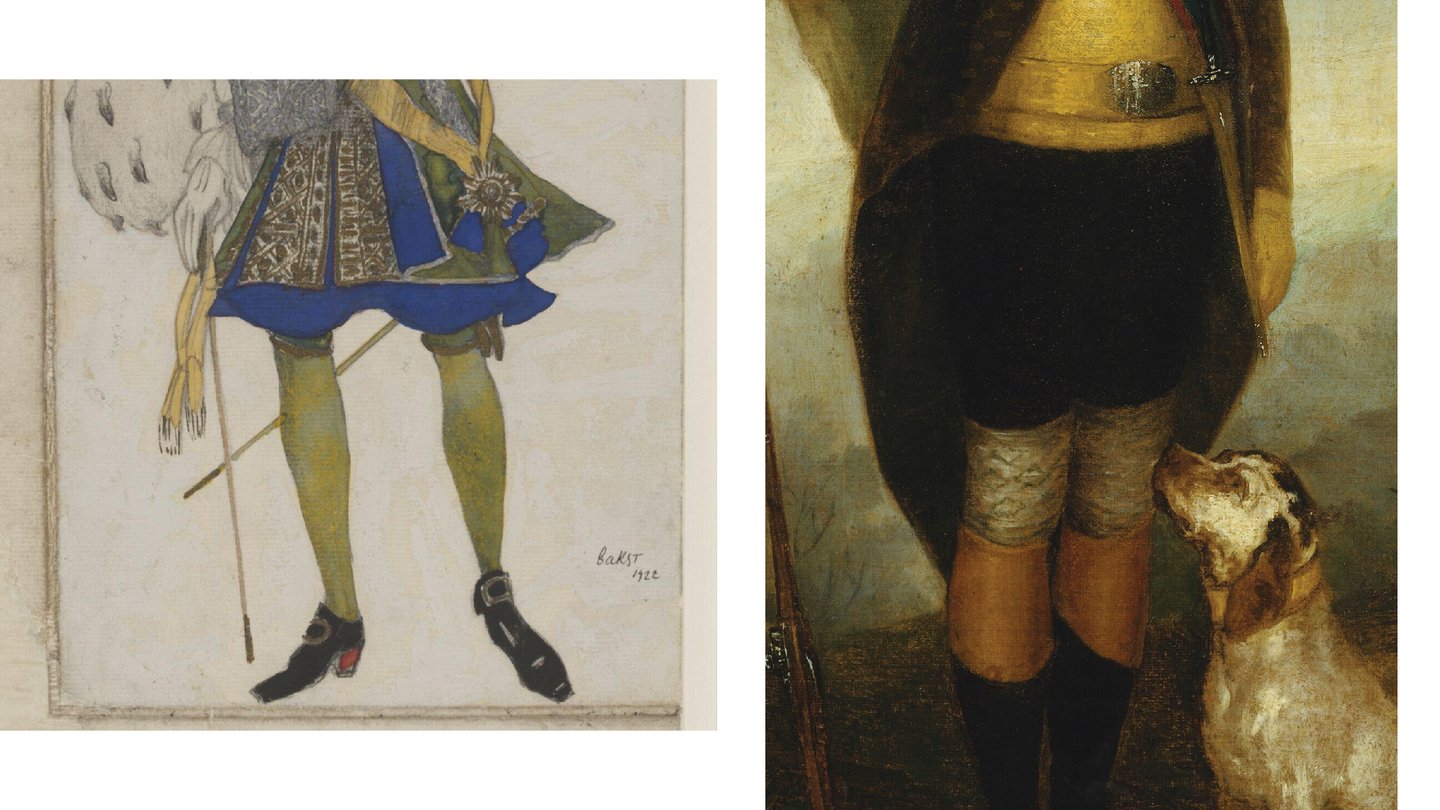
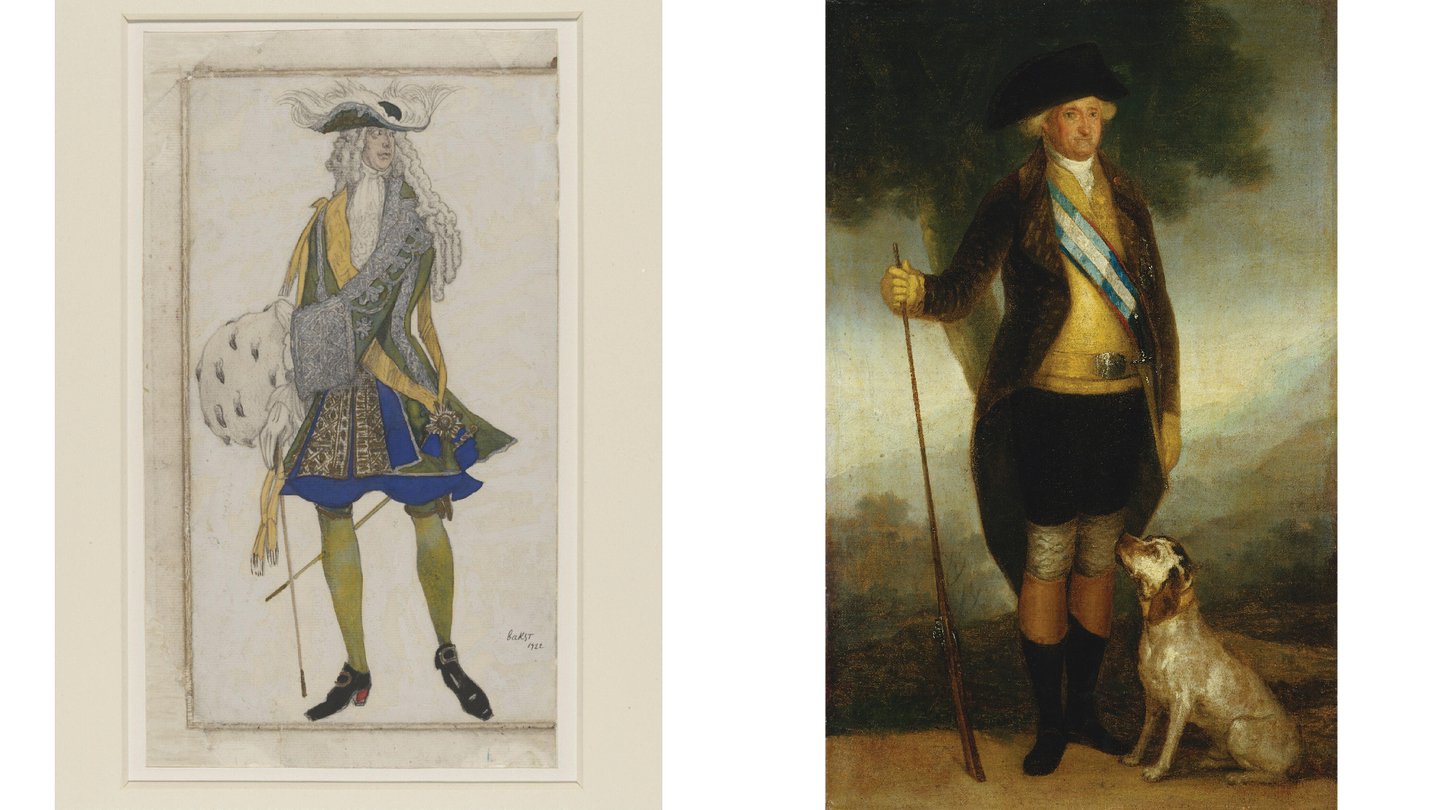
Leon Bakst. King Florestan XXIV. «The Sleeping Princess.» 1922. Francisco Goya’s Workshop. Charles IV in hunting attire. c. 1799–1800.
On the Baxter sheet, green stockings and black shoes are sharply delineated against the light paper; the angle between the feet can be easily replicated with one’s own. In the portrait, the boots recede into the brown earth, and a dog sits nearby. Stability emerges from the figure’s connection to the landscape; the theatrical king’s stability is achieved through the positioning of his feet.
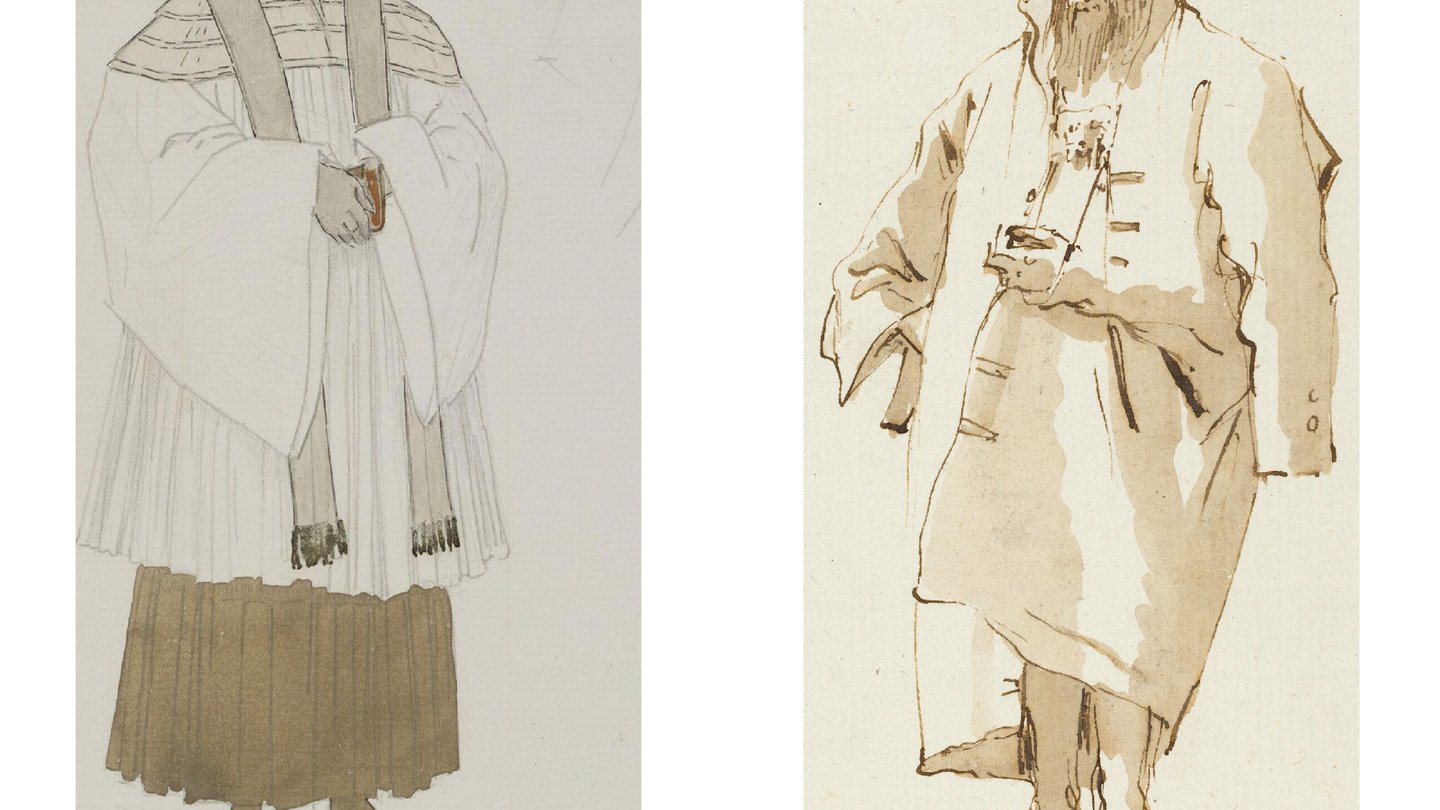
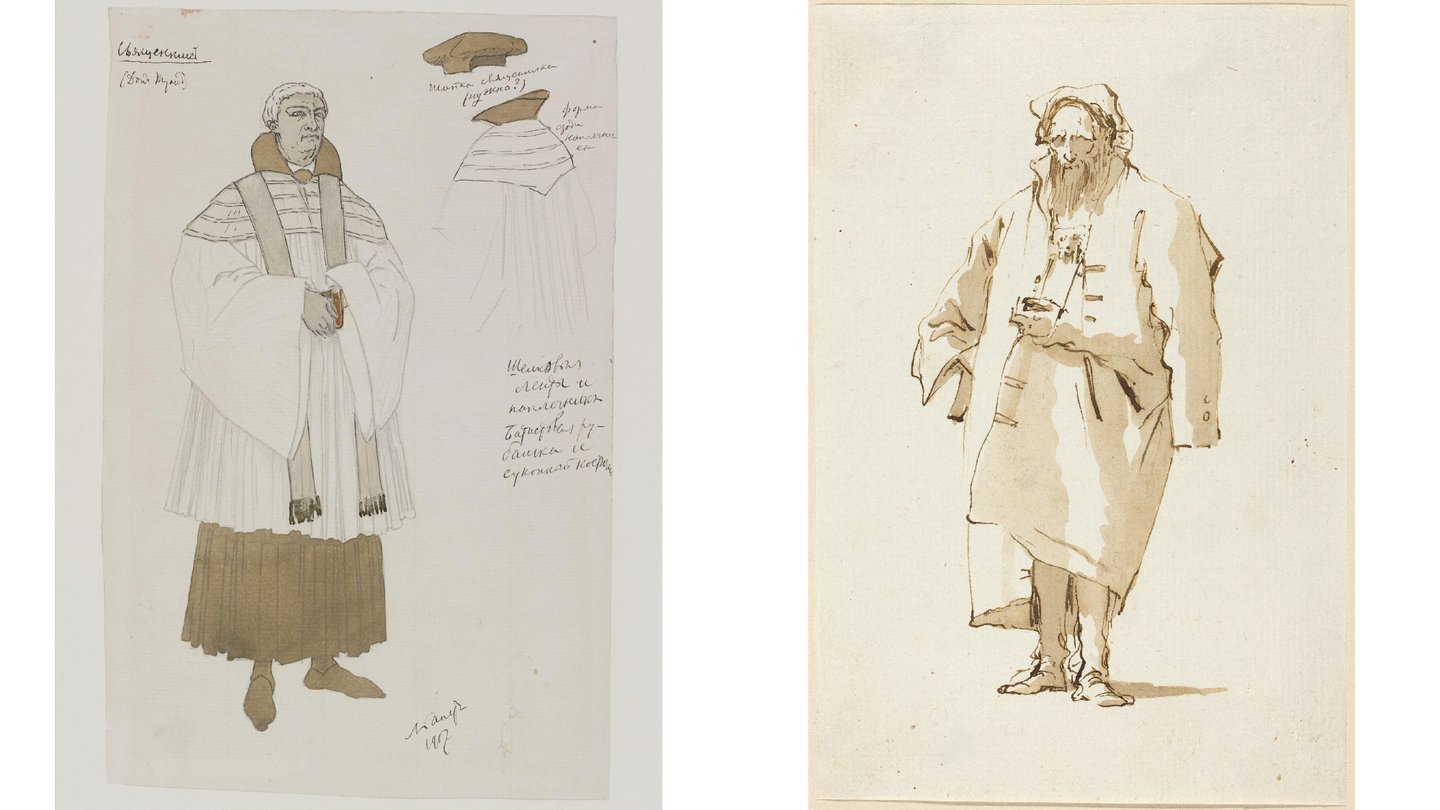
Leon Bakst. Priest. Sketch for the production «Don Juan Refuted.» c. 1907. Giovanni Battista Tiepolo. Standing Eastern character in a long coat. 1753–1762.
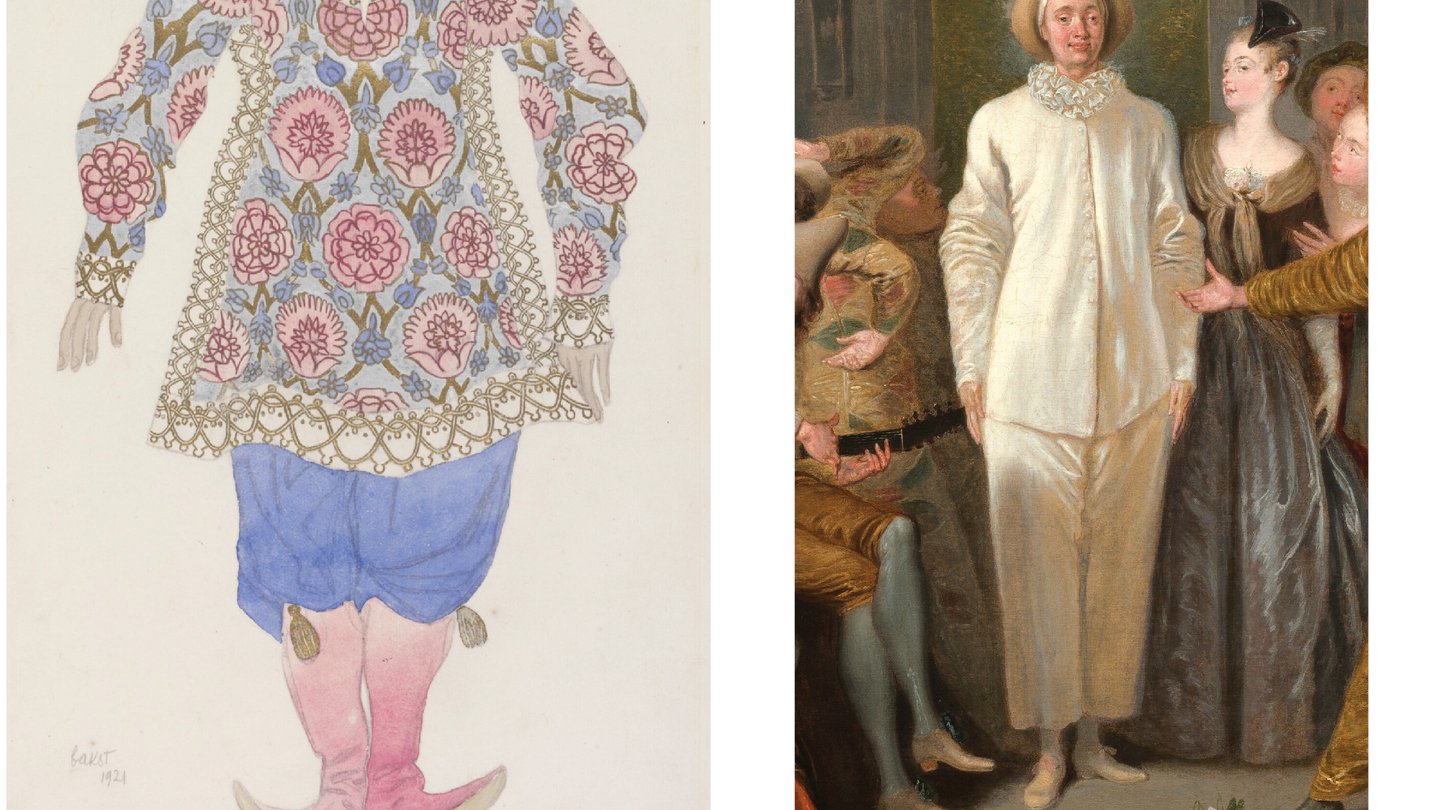
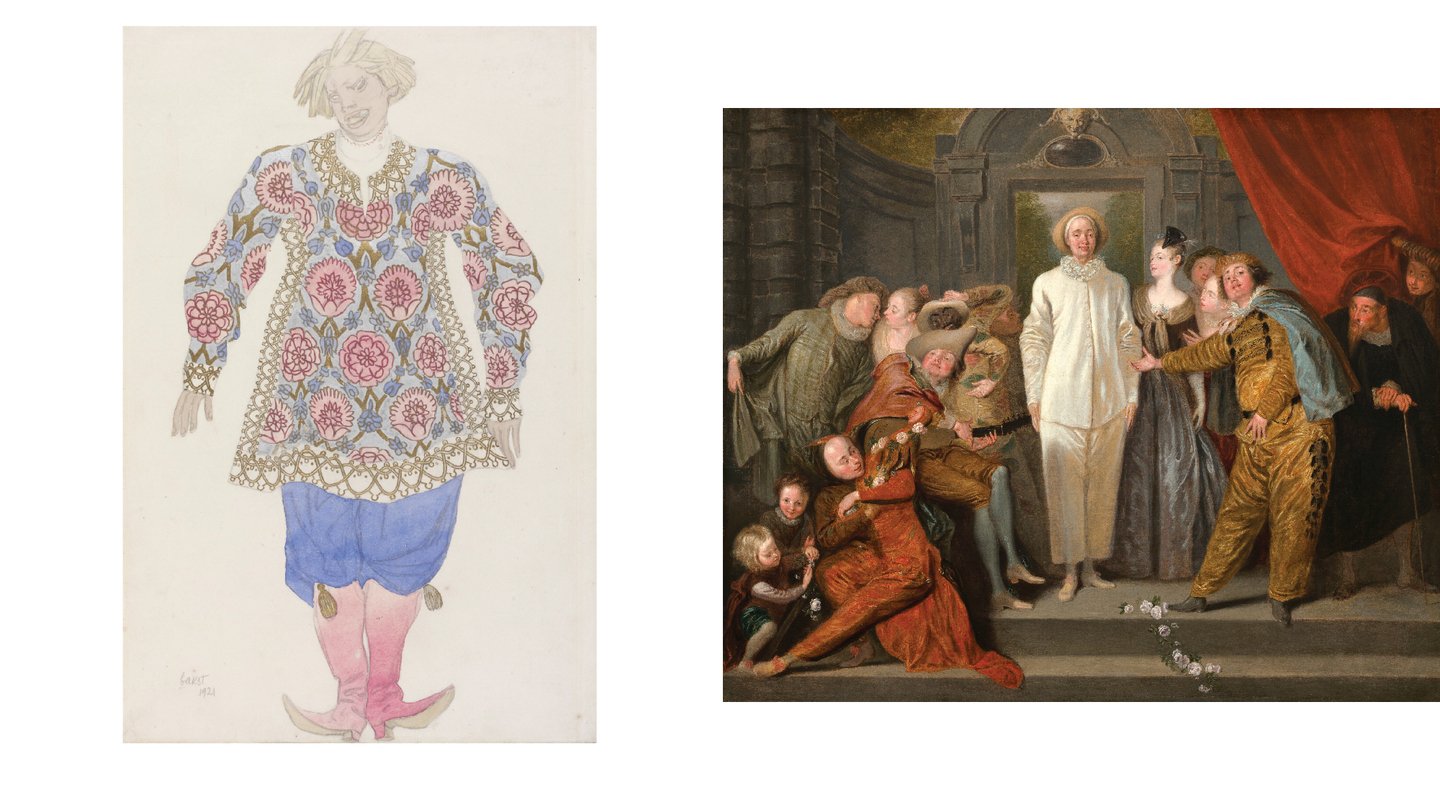
Leon Bakst. The Russian Clown Ivan. «The Sleeping Princess.» 1921. Antoine Watteau. Italian Comedians. circa 1720.
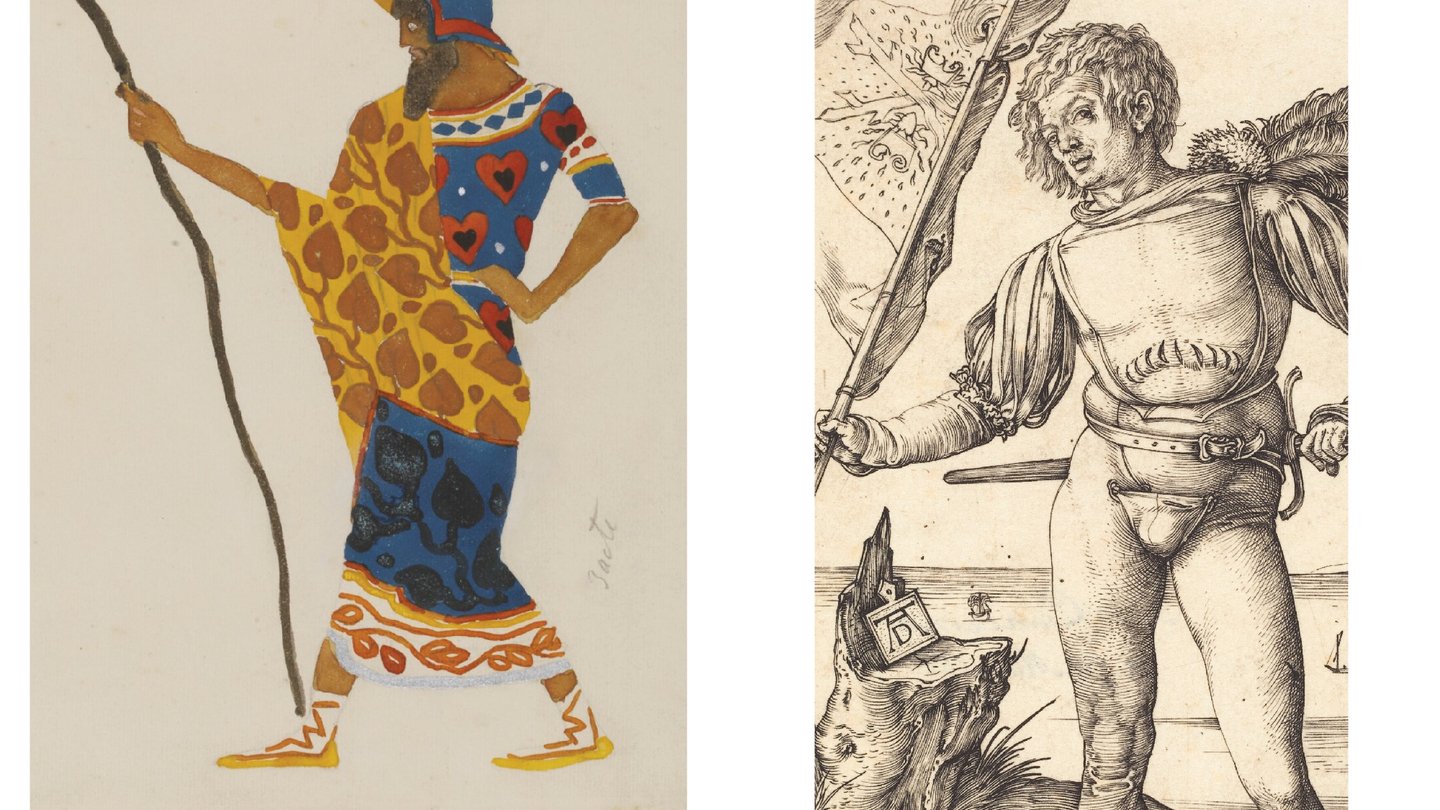
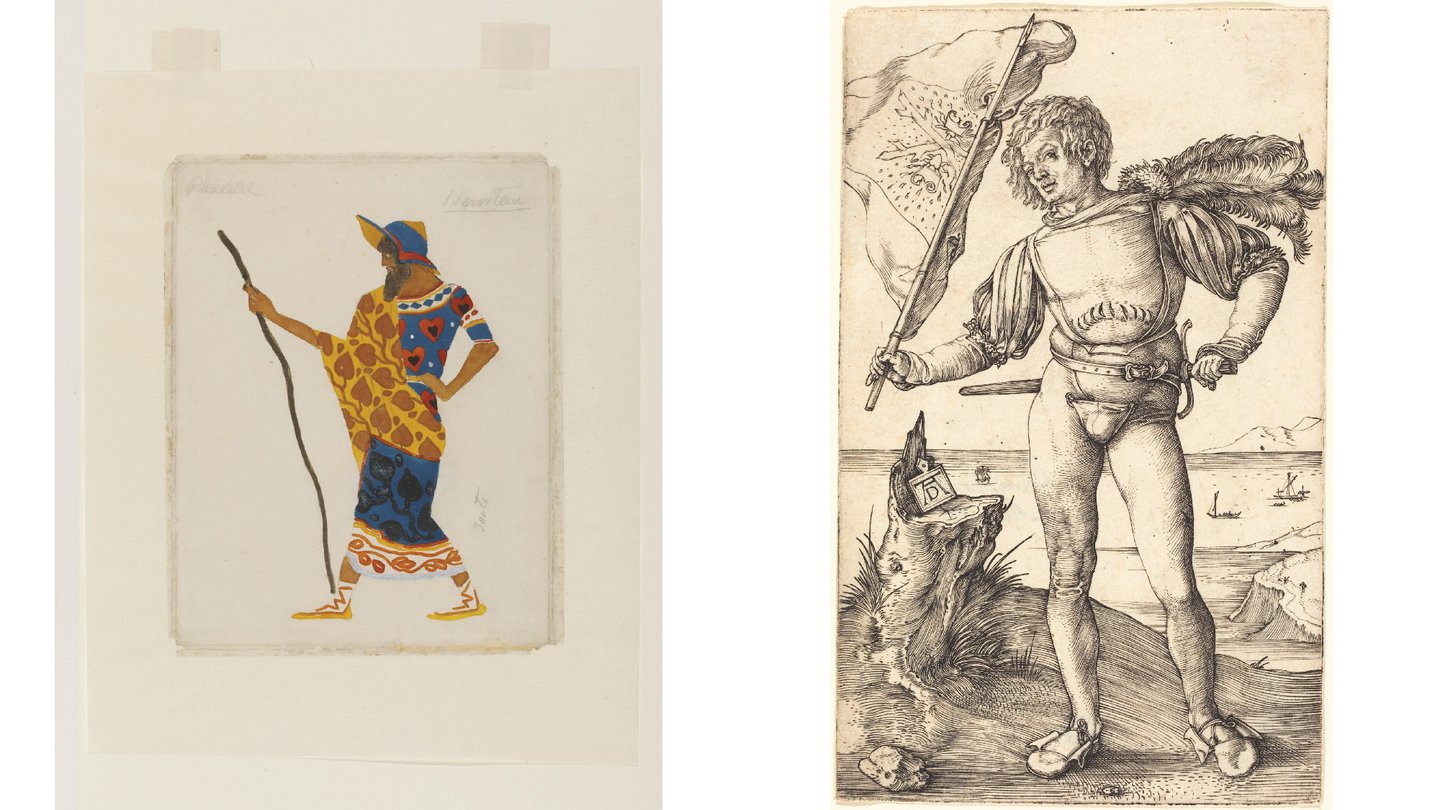
Leon Bakst. Costume sketch for D’Annunzio’s «The Fedora.» 1923. Albrecht Dürer. Standard Bearer. c. 1502–1503.
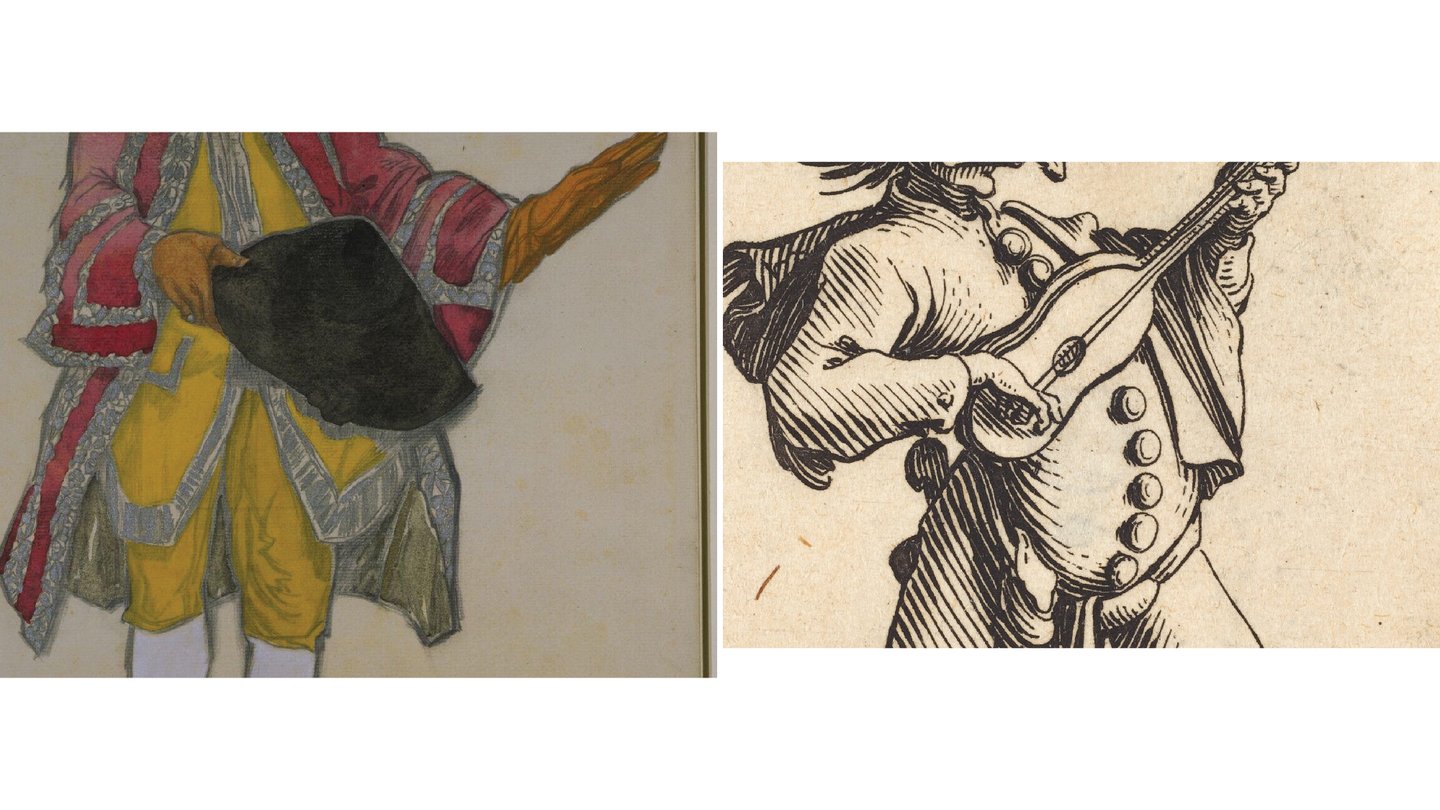
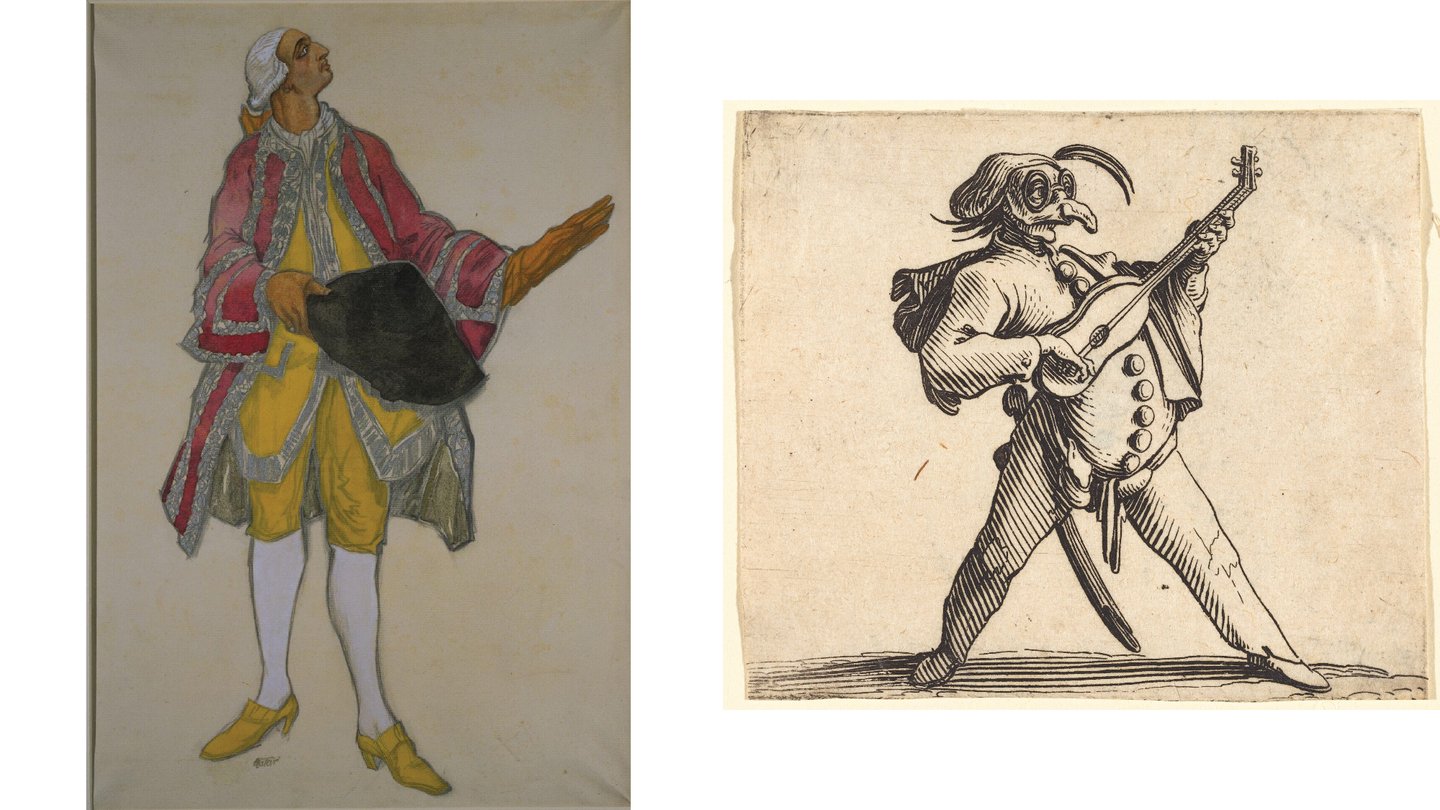
Leon Bakst. Leonid Myasin as Leonardo. «Women in a Good Mood.» c. 1917. Jacques Callot. Comedian in a mask with a guitar. c. 1622.
How does the viewer complete the gesture?