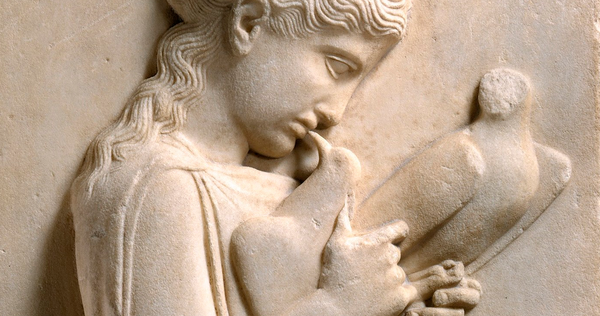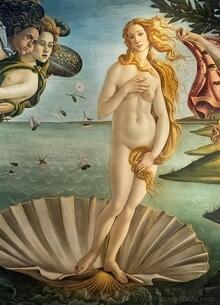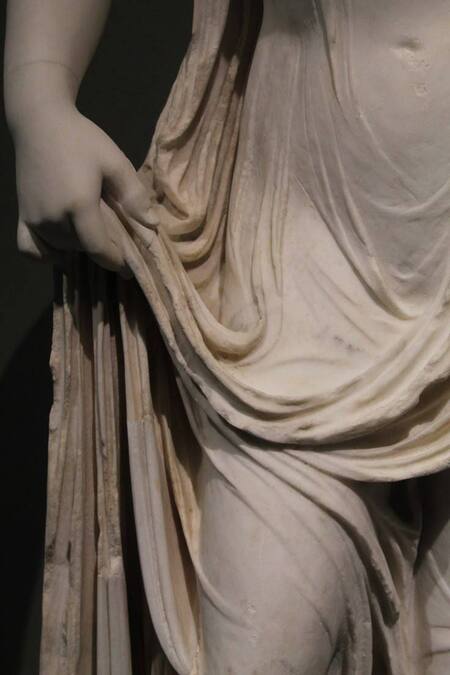
Even the dust in Rome is a historical treasure!
In Ancient Rome, the creation of sculptures depicting clothing and drapery began with the emergence of its own monumental and plastic tradition—during the Roman Republic (approximately the 4th–3rd centuries BCE), building upon the artistic influence of the Etruscans and Ancient Greece.
INDEX
I. Concept and Topic Selection
II. Goal, Hypothesis, and Relevance
III. Arrest and Introduction
IV. Research and Visualization
V. Conclusion and Notes
VI. Bibliography and Sources
I. CONCEPT AND TOPIC SELECTION
In Roman sculpture, the interplay between fabric and body reflects the transition from the Greek ideal of physical harmony to the Roman cult of civic duty, power, and moral fortitude. For the Romans, drapery ceased being merely a way to display anatomical beauty and transformed into a complex social and philosophical symbol.Unlike the Greeks, who celebrated the nude athlete as the pinnacle of creation, the Romans viewed nudity as vulnerability or a sign of barbarism (with rare exceptions concerning the glorification of emperors). Fabric functioned as the citizen’s «second skin, ” defining their place within the hierarchy of the cosmos and the state.
TOPIC SELECTION
My choice is driven by a genuine interest in the depiction of details in ancient sculptures. I believe that the sculptors of Ancient Rome possessed a true mastery in conveying realism, both in the drapery and in the human forms, which deserves separate attention and recognition.
PRINCIPLES
Material Selection Principle: This study covers various examples of ancient Roman sculpture. Selection is based on the significance of the sculptures, the information available about them, and their capacity to illustrate the central concept.Rubrication Principle: The research is structured around key thematic blocks that gradually unfold the topic of the study while detailing the core ideas.Source Selection and Analysis Principle: Sources include authoritative works on art history and ancient culture. Priority will be given to scholarly articles and verified online resources.
II. OBJECTIVE, HYPOTHESIS, AND RELEVANCE
GOAL
The objective of my visual research is to explore the philosophy of the relationship between fabric and the body in Ancient Roman sculptures, utilizing visual examples to support and validate my hypothesis.
HYPOTHESIS
My hypothesis is that the Romans admired Greek sculpture, where spiritual perfection was expressed through the nude body of an athlete or god, but in Roman society, public nudity was considered indecent and unsuitable for a citizen or politician. Therefore, sculptors rendered the drapery in their works so finely and closely fitted as to preserve the plasticity and beauty of the body.
RELEVANCE
The selection of this topic is relevant and promising for research, as it allows for the combination of art historical analysis of form with the study of Roman social and political symbolism. Unlike the Greek tradition, where drapery often idealized anatomy, Roman masters used the folds of clothing as a tool to convey the subject’s status, power, and character.
Praxiteles. Venus. Roman copy, 2nd century CE, of a Greek original from the 4th century BCE. Louvre, Paris.
Note: Below are links to the image sources in the chronological order used throughout my research.
Key Philosophical Aspects• Stoicism and Control over Nature. Roman philosophy was heavily influenced by Stoicism, which taught the suppression of passions and the subordination of the individual to the social order. The heavy, dense folds of the Roman toga physically conceal and «discipline» the body, placing reason and civic status above natural instinct and sensuality. • Social Role Versus Individuality. Unlike the Greeks, who celebrated the nude athlete as the pinnacle of creation, the Romans viewed nudity as vulnerability or a sign of barbarity (with rare exceptions of imperial glorification). The fabric functions as a «second skin» of the citizen, defining their place within the hierarchy of the cosmos and the state. • Monumentality and Eternity. During the Imperial era, drapery acquires its own architectural logic. Deep, rigid folds create a play of light and shadow, transforming the human figure into an unwavering monument symbolizing the eternity and immutability of Rome itself. • Modesty and Virtue (Pudicitia). In female statuary, the fabric embodies moral purity and fidelity to the family. Layered garments (tunic, stola, and palla) gently conform to the figure, alluding to corporeality while strictly confining it within the bounds of propriety.
Realism: Unlike the idealization sought by the Greeks, Roman sculpture frequently conveyed realism. Sculptors aimed to capture the individual characteristics and emotional expression of each person.Themes: Roman sculpture often served political objectives; therefore, portraits of emperors and military leaders were created to emphasize the power and achievements of the rulers.Busts and Portraits: Roman sculpture often utilized busts and portraits as a form of representation.Scenes from Daily Life: Some sculptures depicted scenes from everyday life, usually among ordinary citizens.Use of Greek Copies: The Romans frequently copied Greek sculptures, adapting them to suit their own purposes.
To begin, let’s examine the common features in the paintings from this block depicting arrest, which we will explore in more detail later. Firstly, the figure of the convicted person is rarely brought to the forefront—the artists seem to deliberately maintain a distance. We can also note that an open visual space is present before the gazes of the detainees in all the paintings. Secondly, let’s pay attention to the color white. In many of these works, it appears in some capacity in the depiction of the detainees; I suggest the artists emphasized the face or expressed sympathy for the characters this way.
Key Aspects of the Interrelation Between Fabric and Body• Symbol of Status and Citizenship: Unlike the Greek tradition, which often celebrated heroic or divine nudity, Roman portrait sculpture preferred to cover the figure. Clothing (primarily the toga for men and the stola with palla for women) emphasized belonging to Roman citizenship, social rank, magistracy, or priestly dignity. • Density and Weight of Drapery: Roman fabrics (predominantly heavy sheep’s wool and linen, later imported silk) fell differently than the light chiton of Classical Greece. Sculptors carved the folds more deeply and monumentally. The fabric did not so much cling to the body, revealing anatomy in the style of «wet» Greek drapery, as it architecturally organized the volume of the statue. • Balance Between Bodily Realism and Costume Convention: The Roman portrait leaned toward the individualization of the face (verism), whereas the body was often rendered using established heroic or classical types. The fabric acted as the link: it smoothly transitioned from the rigid, heavy folds of the toga to the exposed parts of the body (chest, shoulder, arms, or legs in cuirass armor). • Hellenistic Legacy and Pathos of Movement: Influenced by late Greek art (Hellenism), Roman masters used the dynamics of drapery to convey movement, inner tension, or high pathos (for example, in depictions of military commanders or emperors in military cloaks—paludaments—or allegorical figures)
• Archaic Period (3rd–1st centuries BCE): Sculptures such as the famous bronze statue of the «Orator» (Arringatore, 1st century BCE) or early types of toga-bearers (statues of citizens in togas) already depicted heavy wool fabric, rendering folds and civic status. • Influence of Greece and Hellenism (2nd–1st centuries BCE): Following the conquest of Greece, Roman masters adopted Hellenistic techniques for rendering fabric—more complex, flowing, or dynamic drapery that emphasized the body’s form or the figure’s monumentality. • Imperial Period (1st century CE onwards): The depiction of drapery reached a peak of perfection in imperial portraiture, for instance, in the statue of «Augustus from Prima Porta» (1st century CE), where the cuirass and the paludamentum draped over the hips are carved with the utmost detail.
Rationale for Topic Selection• Synthesis of Greek Heritage and Roman Realism. Roman sculptors actively borrowed Hellenistic techniques («wet drapery»), but adapted them to suit their own objectives of portrait likeness and official representation. • Social and Political Code. In Rome, clothing (especially the toga) was a strict marker of civil status, age, and office; therefore, its plastic rendering directly influenced how the viewer interpreted the image. • Evolution of Artistic Language. This theme allows one to trace the trajectory from the austere restraint of the Republican period to the Baroque opulence and profound chiaroscuro found in the era of the Antonines and Severans.Key Aspects of the Research Concept• Contrast of Textures and Materials. Examining how masters conveyed the weight of a wool toga, the lightness of a linen tunic, and the smoothness of an exposed body in hard marble or bronze. • Drapery as a Compositional Framework. Analyzing the role of folds in creating rhythm, dynamism, and stability in a statue (for example, the famous compositions of the Togatus or Augustus from Prima Porta, where the armor and cloak work toward a unified monumental silhouette). • The Problem of Embodiment and Modesty. Investigating the balance between exposed and concealed bodies in male and female figures, including the phenomenon of «heroic nudity» combined with elements of dress. • Chiaroscuro Expressiveness. Considering the evolution of the chisel technique, which enabled folds in the 2nd–3rd centuries CE to become independent decorative and emotional elements.
Bibliography
https://ru.wikipedia.org/wiki/Ancient_Roman_Sculpture https://magisteria.ru/art-of-ancient-rome/sculptural-portrait-of-empire https://www.artsy.net/article/artsy-editorial-7-ancient-roman-sculptures https://italy4.me/istoriya/skulptura-drevnego-rima.html
Image Sources
Image Sourceshttps://ic.pics.livejournal.com/nikolai_endegor/55232138/1476479/1476479_original.jpg
skills-and-course