The visual language of horror often relies on animals for a facile jump scare—a sudden lurch from the darkness. However, there is another, more subtle pattern: a cat freezing and hissing in an empty dark corner, or an animal that senses a person’s impending death and lies beside them. I became interested in the capacity of the cat to serve as a detector of the supernatural. My choice of topic stems from a desire to distinguish between the conventional jump scare and a profound visual device that generates suspense through the fear of the unseen. This study will demonstrate how cinema materializes invisible threats through animal response.
Key Question and Hypothesis
Key Question: How has the cultural archetype of the mediumistic cat transformed into a cinematic trope where the animal’s behavior signals the presence of a hidden threat or the approach of death?
Hypothesis: The sensor cat is a distinct visual device in horror cinema. It operates not through inducing physical fear in the viewer, but through dramatic irony. The cat does not attack; it merely indicates the danger (or the dying person), compelling the audience to trust the animal’s instincts more than the characters. The visual representation of this device relies on a specific set of markers: gaze direction, body language, and sound.
Material Selection Principle
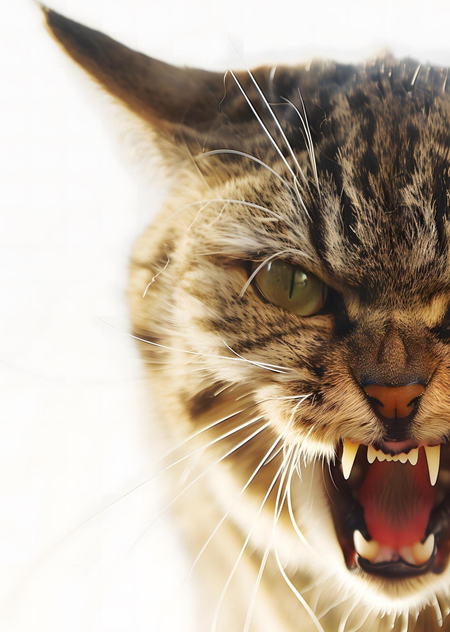
The material used consists of horror films and mystical thrillers from various years. The key selection criterion is the presence of a specific visual pattern: the cat exhibits aggression or fear (hissing, arching its back) toward a hidden threat, or it demonstrates anomalous calmness near a dying entity. Films where the cat acts merely as a victim or an element of sudden fright are excluded. Scenes featuring a clearly defined «sensor cat» effect have been selected for analysis.
Research Rubric Principle
The assignment consists of two main parts:
- Cultural Foundation (History):
1.1. Ancient Egypt. The connection between the cat and the goddess Bastet and Ra’s nocturnal journey, establishing the archetype of a guide between worlds. 1.2. The Middle Ages. The demonization of cats, transforming them into witnesses to the devil’s presence. 1.3. Romanticism and Literature. The solidification of the cat’s status as a medium capable of seeing ghosts.
- Visual Analysis (Film):
2.1. Defining the reception role and differentiating it from related archetypes. A comparative analysis of the cat-sensor versus the fake shot, and the cat-avenger, based on cinematic quotes (the difference between a cat leaping into the frame and hissing into emptiness). 2.2. Visual markers of reception. An analysis of key elements using scenes from films: the direction of the gaze (into the void), plasticity (the body map of fear), and sound design (hissing as a trigger). 2.3. The cat as a sensor of death. An analysis of a related type: an animal that premonishes human death and lies beside the person (using the example of the cat Azzi from «Doctor Sleep»). Demonstration of the functional shift from a detector of evil to a guide to the afterlife.
Principles for Selecting and Analyzing Textual Sources
The theoretical framework incorporates cultural studies on cat mythology and film theory texts concerning the anatomy of suspense. The analytical principle is based on comparing the cultural context (why the cat is a medium) with the cinematic context (how directors utilize this through the camera). This will demonstrate that the language of horror cinema visualizes pre-existing ancient archetypes.
Chapter 1. The Cultural Foundation: Why the Cat Sees the Unseen
Before analyzing the cinematic language of horror, it is necessary to understand the origin of the enduring cultural archetype of the cat as a creature with enhanced perception. This foundation has been laid over millennia, and each historical period has added new nuances to the image—from a divine guide to a demonic witness.
1.1. Ancient Egypt: A Passage Between Worlds
The earliest depictions of cats in Egypt were purely utilitarian: on the wall of a limestone tomb (c. 1950 BCE), the animal is captured hunting a field mouse. However, over time, the utilitarian function gave way to the sacred. Cats began appearing regularly in the wall paintings of tombs only during the New Kingdom, around 1500 BCE, by which time they were revered as the embodiment of the goddess Bastet. In later periods, mummified cats were buried with honors, and bronze statuettes were dedicated to temples during religious festivals.
Ancient Egyptian wall painting from the tomb of Nebamun, circa 1350 BCE.
Painted wild cat in the tomb of Khnumhotep II, Egyptian heir prince and nomarch of Menat-Hufu, 12th Dynasty
It was in Egyptian tradition that the idea of the nocturnal journey originated: the cat, moving freely in the darkness, became associated with a guide between the world of the living and the world of the dead. In the context of our research, this is the first prototype of a sensor cat—a being that exists on the boundary and is capable of seeing what is hidden from humans.
1.2. The Middle Ages: Demonicization and the Devil’s Witness
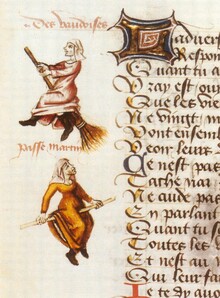
With the arrival of Christianity, the perception of the cat underwent a radical transformation. Its nocturnal habits, unblinking gaze, and independent nature made it a suspicious figure in the eyes of the Church. Cats, especially black ones, began to be associated with witches and the devil. During this period, a fundamentally different function for the future sensor cat was established: if in Egypt the cat was a conduit to the gods, in medieval Europe it became a witness to the presence of evil. Its reaction to the unseen was now interpreted not as prophecy, but as proof that the devil was nearby. It is this very model—the cat knows something is amiss—that would later form the basis for horror scenes where a hiss into the void marks a threat.
The Bodley Bestiary, mid-13th century
1.3. Romanticism and Literature: Solidifying the Medium’s Status
Nineteenth-century romantic literature endowed the cat with the ability to exist in two worlds simultaneously. In Edgar Allan Poe’s novella «The Black Cat» (1843), the animal becomes a silent witness to a crime, its gaze pursuing the murderer as an embodiment of conscience and supernatural retribution. This literary archetype cemented the cat’s status as a creature that perceives what humans cannot, and whose behavior serves as an indication of hidden truth. By the turn of the twentieth century, the cultural formula was established: the cat is a medium, and its reaction is a message from another world. Cinema simply had to visualize this ready-made formula—and that is precisely what happened in horror.
Chapter 2. Visual Analysis: The Sensory Cat in Cinema
Moving from a cultural foundation to cinema, it is first necessary to distinguish the sensor cat from related visual devices that utilize cats in horror, but with a different function. This delineation is critically important because the viewer’s perception of the scene depends on the specific role the animal plays in the frame.
Ridley Scott, Alien, 1979
2.1. Determining Placement and Delineation from Adjacent Figures
The approach closest to the cat-sensor technique is the false start (cat scare), classically formed in the film Cat People (1942). In the famous scene, Alice walks down a dark street, hears a rising growl, turns around—and at that moment, a bus appears from the darkness, and the sound she mistook for a cat turns out to be the motor noise. Here, the cat is present only on an aural level, but the principle itself becomes archetypal: an animal (or its sound) is used to deceive expectations, only to strike the viewer with a real threat. In contrast, the cat-sensor does not deceive. Its reaction is truthful: if it hisses toward a corner, something is indeed there.
Jacques Turlane, People-Cats, 1942
The second related archetype is the vengeful cat, as seen in films like The Unholy (1977), where cats actively hunt and kill villains. Here, the animal functions as an active agent of violence, whereas the sensor cat remains a passive indicator. It does not attack the threat—it merely points to it, compelling the viewer to tense up in anticipation of something the cat itself does not engage with.
Denny Erly, The Uncanny, 1977
2.2. Visual Indicators of Admission