Concept
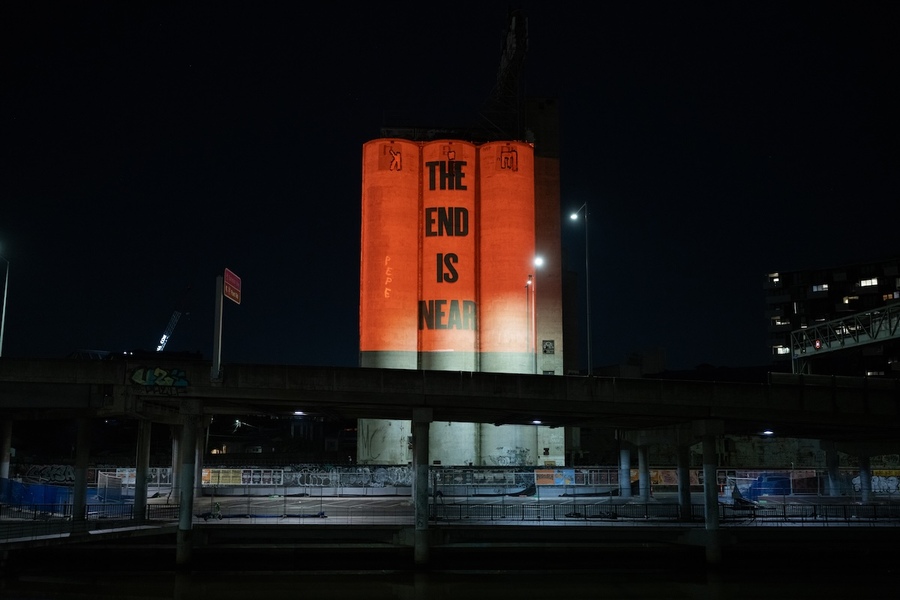
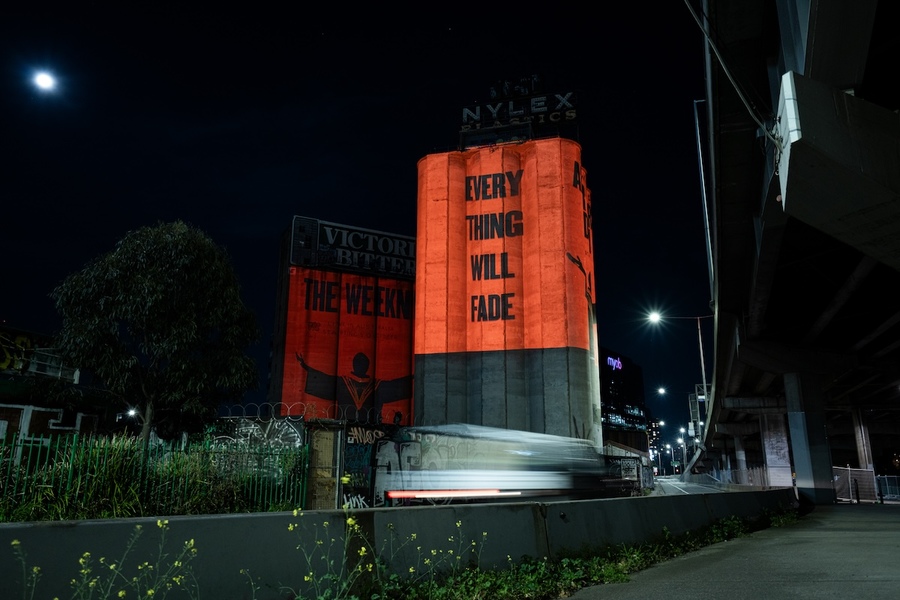
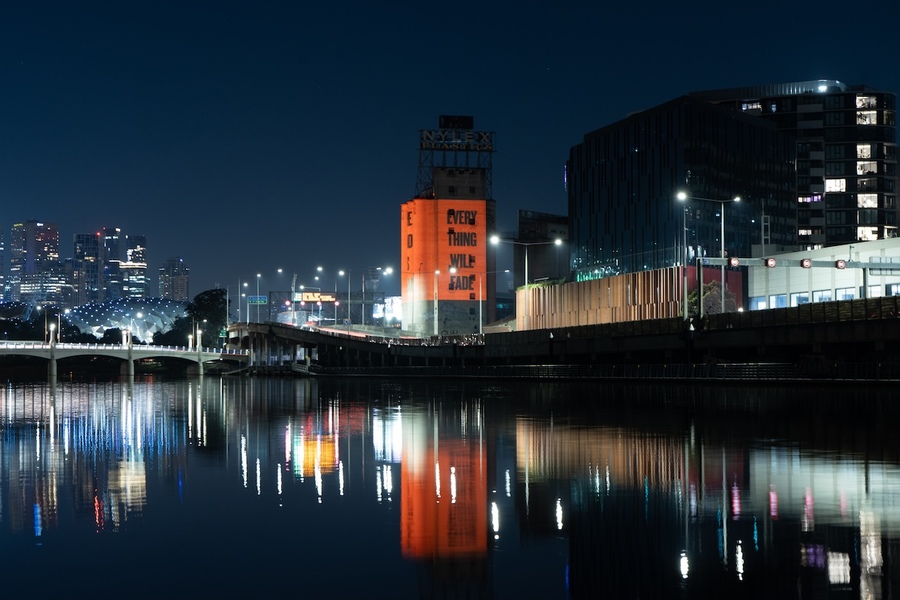
Projection commemorating The Weeknd’s tour (Melbourne, 2024)
August 2024. At the historic factory building in Melbourne, as evening set in, bright inscriptions appeared reading «It will all disappear» and «The end is near.» Industrial facades were filled with red luminescence displaying ominous and frightening phrases through projection, but passersby were left to figure out what lay behind them [1].
It soon became clear that all of this was part of the announcement tour for The Weeknd across Australia. Similarly, several months later, billboards and digital screens in Atlanta, Los Angeles, Miami, and New York generated suspense ahead of the release of the singer’s album, «Hurry Up Tomorrow.» Fans immediately began assembling different versions of the announcement from various cities, constructing theories and speculation. The album soon debuted at number one on the Billboard 200 [2].
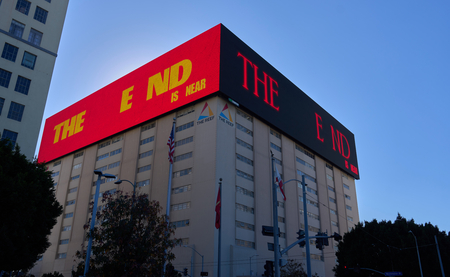
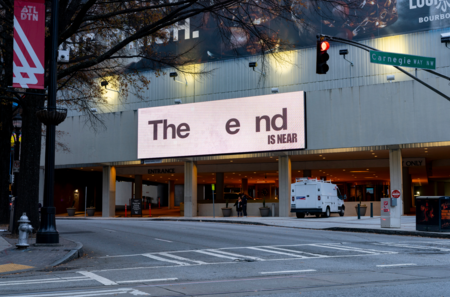
Billboards for the «Hurry Up Tomorrow» album promotional campaign (USA, February 2025)
Billboards and posters have accompanied music releases for decades, and it often seems they convey nothing new beyond an announcement of an upcoming event. However, promotional mediums are increasingly moving beyond a simple invitation or information delivery; instead, they are becoming a puzzle that the audience must solve, photograph, and discuss on social media. This reflects a much more significant trend.
The music market is long oversaturated. According to Luminate, in 2025, approximately 106,000 new tracks entered streaming platforms daily, yet 88% of all compositions garnered no more than 1,000 streams over the course of a year [3]. In such an environment, even a very good release can pass unnoticed by listeners if the artist simply steps out of the public eye for a period.
Previously, attracting an audience back to an album after a hiatus required a standard set of tactics: radio rotation of successful singles, artist appearances on television and in magazine spreads, published interviews, and the distribution of traditional posters—what is commonly known as ATL marketing.
In such a system, the listener remained a passive recipient.
Today, this is no longer enough; to avoid getting lost among hundreds of thousands of releases, artists are turning to new advertising and marketing tools—puzzles and quests, interactive platforms, exclusive events, virtual happenings, and various methods of personalization and collaboration with the audience. Usually, such campaigns are described as successful marketing moves and are measured by reach, chart positions, and streaming numbers. But what actually allows for these metrics to be demonstrated?
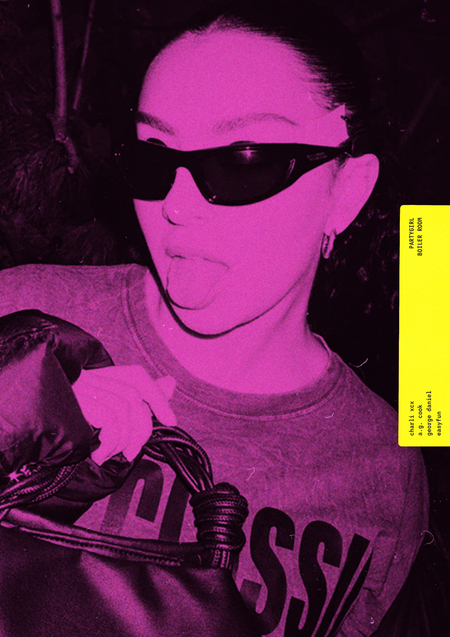
Charlie XCX at the Party Girl rave ahead of the release of the album «Brat» (New York, February 2024)
The central question of my research is how modern advertising strategies and promotion formats enable musical artists to maintain competitiveness in the global music market. The goal is to answer this by identifying the means through which artist-audience connections are built within these campaigns and by analyzing their significance for the contemporary listener.
The hypothesis is that modern music release promotion formats aim to foster a sense of co-participation among listeners. This, in turn, allows for the development of a deep, personal connection between the audience and the artist, thereby increasing listener loyalty and engagement.
As a result, fans become not only consumers of music but also active participants in its promotion: they independently disseminate information about the artist and their releases, attract new audiences, and thus contribute to enhancing the artist’s commercial viability and competitiveness in the music market.
The material selection principle is based on successful case studies of global artists, with an emphasis on the Western market. The deliberate limitation of the selection is due to the fact that the relationship between an artist and the audience in the East Asian music market is structured differently and requires a distinct, comprehensive approach to promotion. The categorization is based on dividing modern advertising tools by the degree of listener engagement and is structured as a four-step ladder: research, immersion, attendance, and participation.Textual sources can be divided into three types. The first type consists of official announcements and press releases from platforms, artists, and studios involved in the projects. The second type includes materials from music and cultural publications—authoritative reviews that provide context and assessment. The third type comprises publications from fans themselves (wiki communities, social media posts), illustrating the experience that participants in advertising campaigns underwent.
Research — Quests and Riddles
На этапе исследования слушатель вовлекается в релиз
He discovers clues, deciphers messages, connects disparate details, and thus gradually learns more about the upcoming release, forming initial expectations and gaining the context needed to perceive it. Often, formats that allow exploration of the environment prior to the album’s release gradually evolve into immersive experiences.
Adèle’s Secret Messages for the «30» Album
Adele’s «30» promotional album on the Battersea Power Station building (London, 2021)
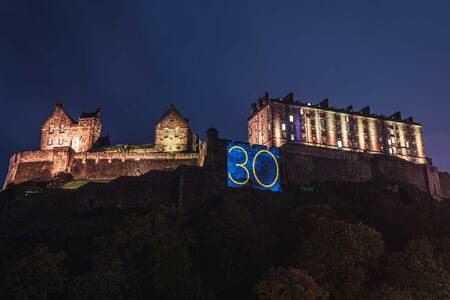
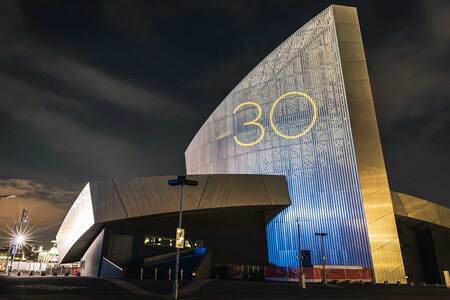
Promotional album for Adele’s «30» displayed on the facades of Edinburgh Castle and the Imperial War Museum North (Edinburgh and Manchester, 2021)
Such secret announcements create among fans a sense that they are privy to a shared mystery, a code understood only by them. Yet, the barrier to entering the list that shares this mystery is relatively low—once a person recognizes whose announcement it is, they transform from an ordinary passerby minutes earlier into a keeper of knowledge about the release. In this case, the investigation occurs quite passively and only creates a brief feeling of inclusion.
Gorillaz Mural Quest for «The Mountain»
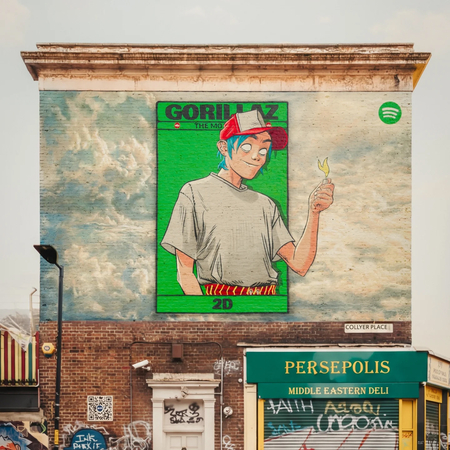
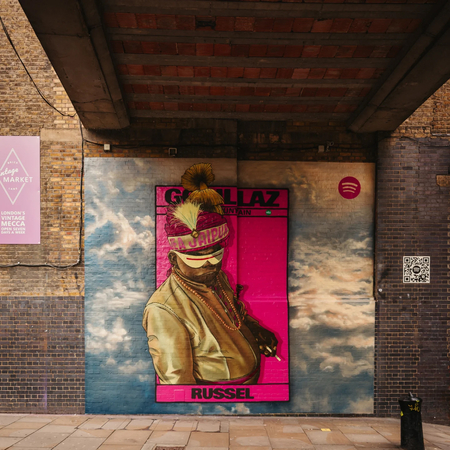
Gorillaz and Spotify Mural Quest for the album «The Mountain» (London, 2026)
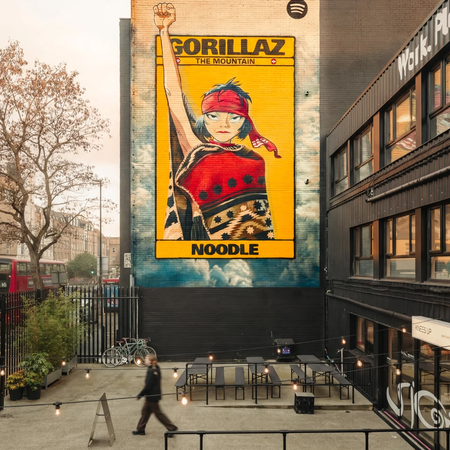
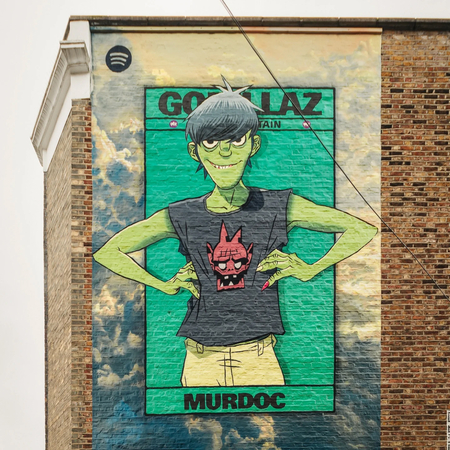
Mural Quest by Gorillaz and Spotify for the album «The Mountain» (London, 2026)
Similar to this, real-world quests allow the audience to experience the same sensations the artist felt while creating the album. In this case, using a quest, the group allows fans to feel like travelers in search of something significant and special, transporting the participants on a journey through India in search of inspiration.
In such a situation, the listener is given a perspective through which they should better perceive the album. The research in this instance is slightly more active—it is aimed at understanding the artist’s intention, even though it already involves a degree of immersion.
Online Quest «Decoding ARIRANG» by BTS for the «ARIRANG» Album
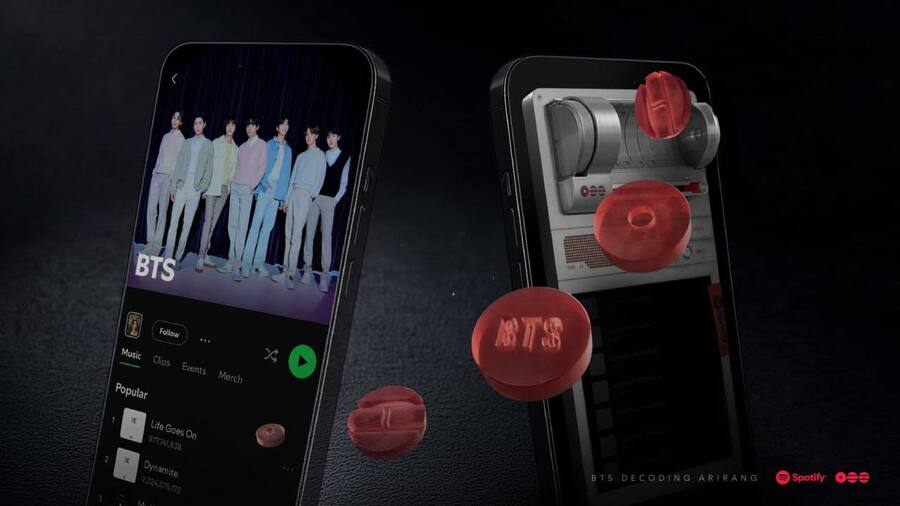
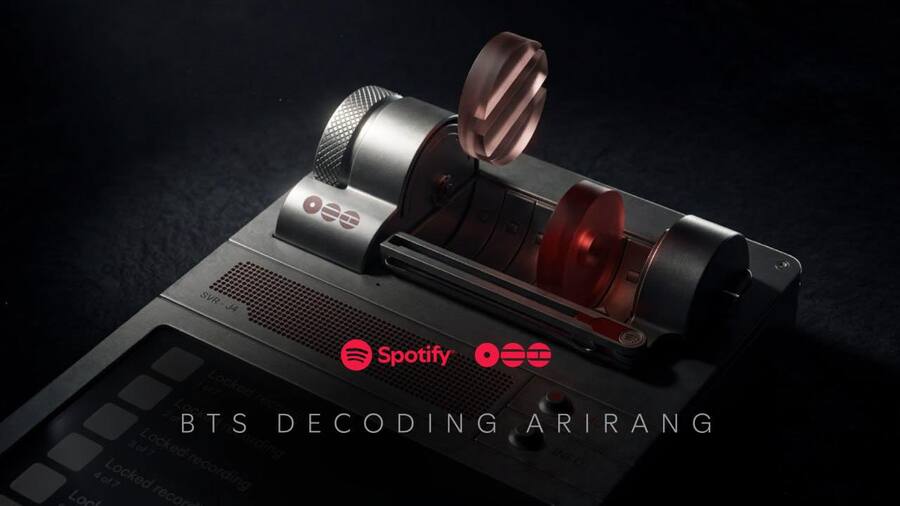
Promotional materials for the online quest «Decoding ARIRANG» (2026)
Rihanna Mobile Quest for «ANTI»
Digital Quest for the Twenty One Pilots Universe
Immersion — interactive websites and digital spaces
Уровень погружения очень близок к исследованию и нередко перекликается с ним.
However, while the previous stage focuses primarily on discovering and uncovering information about a release, this one centers on interacting with the world built around it. The listener is immersed within a specially designed environment, exploring its elements and engaging with the release’s aesthetics and history through direct experience.
Tame Impala Site Game for «Dracula»
Sean Mendes' Website for «Wonder»
Alicia Keys' Virtual Diary for the Commemorative Edition of «The Diary of Alicia Keys»
Doja Cat’s InterstellHER Air website for «Planet Her»