Relevance:
Residential space is a vital part of a person’s daily life. An apartment not only serves as a place to live but also reflects the habits, character, social standing, and lifestyle of its inhabitants. The organization of space, the selection of furniture, interior objects, and decorative elements shape a unique atmosphere in the home, allowing us to see how a person interacts with their environment. The depiction of private apartments in 1970s Soviet cinema is of particular interest. During this period, the theme of urban housing and daily life becomes a noticeable part of the film’s artistic landscape. The interiors allow us to examine not only the features of the living environment of that time but also the relationships between people, their habits, and their individual traits. Cinema offers the opportunity to study the apartment as a visual archetype—to observe the layout, the furniture, the household items, the color palettes, and the ways personal space is organized. However, it is crucial to view the on-screen interior not as an exact reflection of the entire Soviet society, but as an artistic interpretation of the living environment.
Research objective:
To identify the characteristics of private apartment imagery in Soviet cinema of the 1970s and to determine how the interior reflects the lifestyle, character, and daily life of the characters.
Research Subject:
Art films from Soviet cinema of the 1970s depicting the daily lives of people in individual city apartments.
Area of Study:
Visual representation of a private apartment, focusing on interior organization and methods for reflecting the daily life of the residents through the living space.
Research Question:
How does the interior of a private apartment in Soviet cinema from the 1970s reflect a person’s lifestyle?
Hypothesis:
Even a typical Soviet-era apartment can reflect the individuality, character, and lifestyle of its inhabitants. The premise is that the features of the interior, the arrangement of furniture, and the objects within the living space allow for the revelation of the characters' personalities and the nature of their daily lives.
Research Methods:
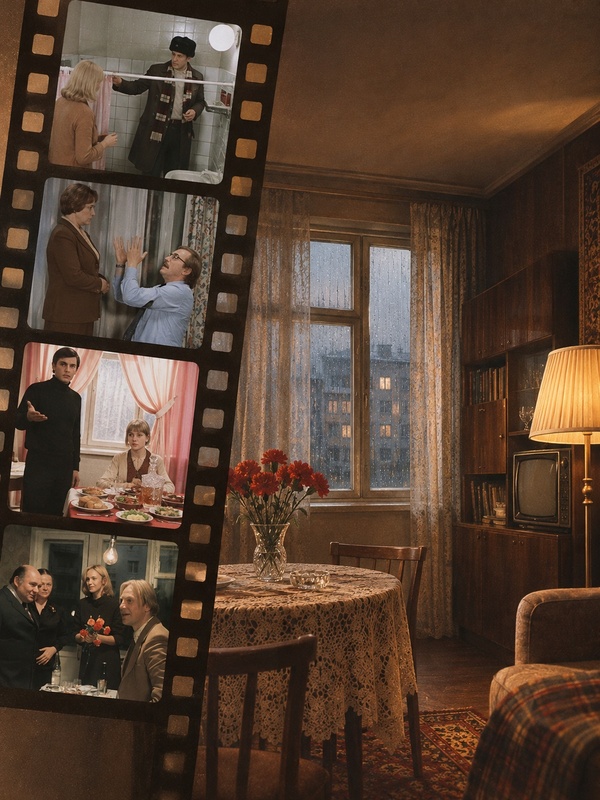
The work involves visual analysis of cinematic frames, comparative analysis of interiors, study of the material environment, and comparison of spatial solutions. Primary attention is given to apartment layouts, furniture, finishing materials, everyday objects, and the organization of personal space. Four Soviet films were chosen as research material: «The Irony of Fate, or When Fortune Favors the Bold» (1975), «Office Romance» (1977), «Moscow Does Not Believe in Tears» (1979), and «Vacation in September» (1979). Analyzing these films will allow for an examination of various ways private apartments are depicted and track how living space becomes a part of the film’s artistic image.
CHAPTER 1. THE SOVIET APARTMENT OF THE 1970S: HISTORICAL AND ARCHITECTURAL CONTEXT
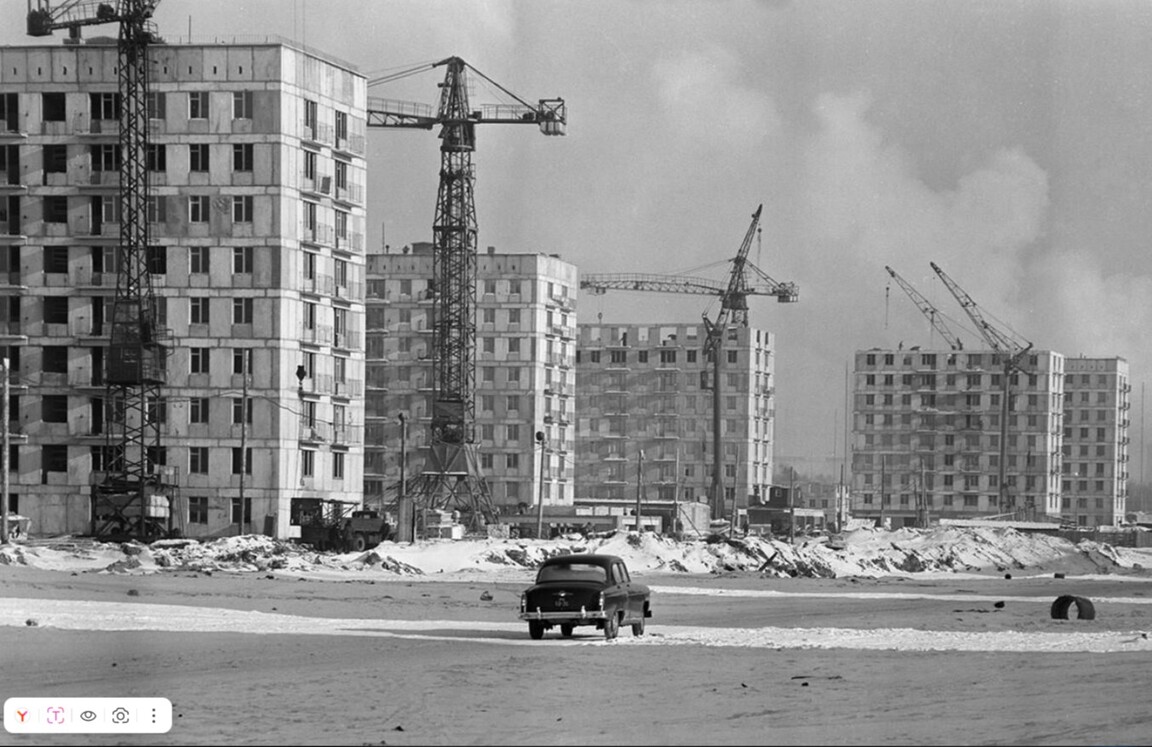
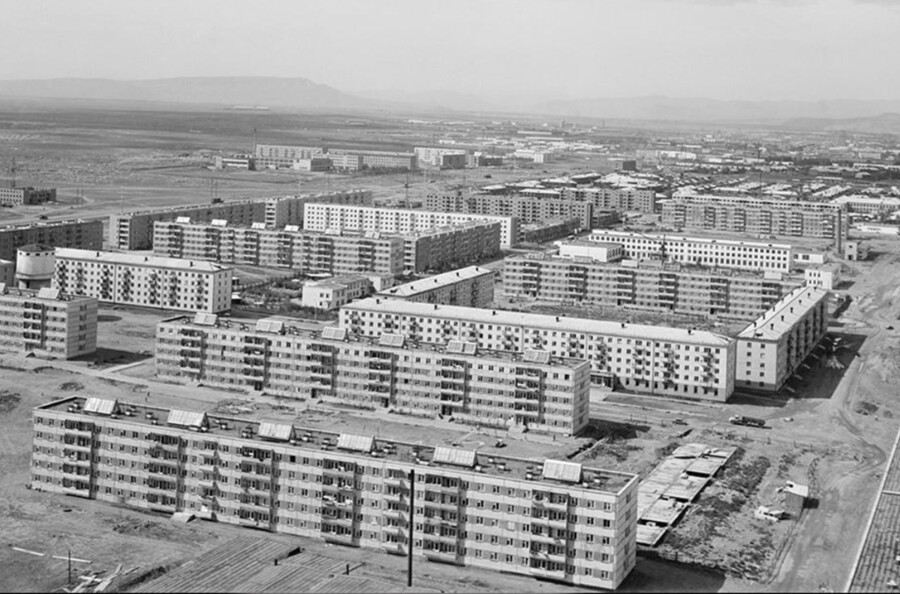
Типовая жилая застройка советского города в 1970-е годы. Источник: указать архив, автора или издание и год фотографии, если они установлены.