Navigation
- Concept
- The Human in Everyday Life
- The Visual Image of the Person
- Form as an Expression of Character
- Conclusion
1. Concept
2. People in Everyday Life
In Fyodor Khitruk’s films, everyday life becomes material for observing human nature. The director approaches situations that might seem insignificant on their own: work, leisure, conversations with neighbors, performing official duties, or resolving organizational issues. However, it is precisely in these circumstances that people’s habits, their attitude toward others, and their behavioral peculiarities emerge. Khitruk observes not only the characters' actions but also what lies beneath them—the desire for peace, the ambition to achieve a certain status, indifference to others' problems, or an inability to empathize with others.
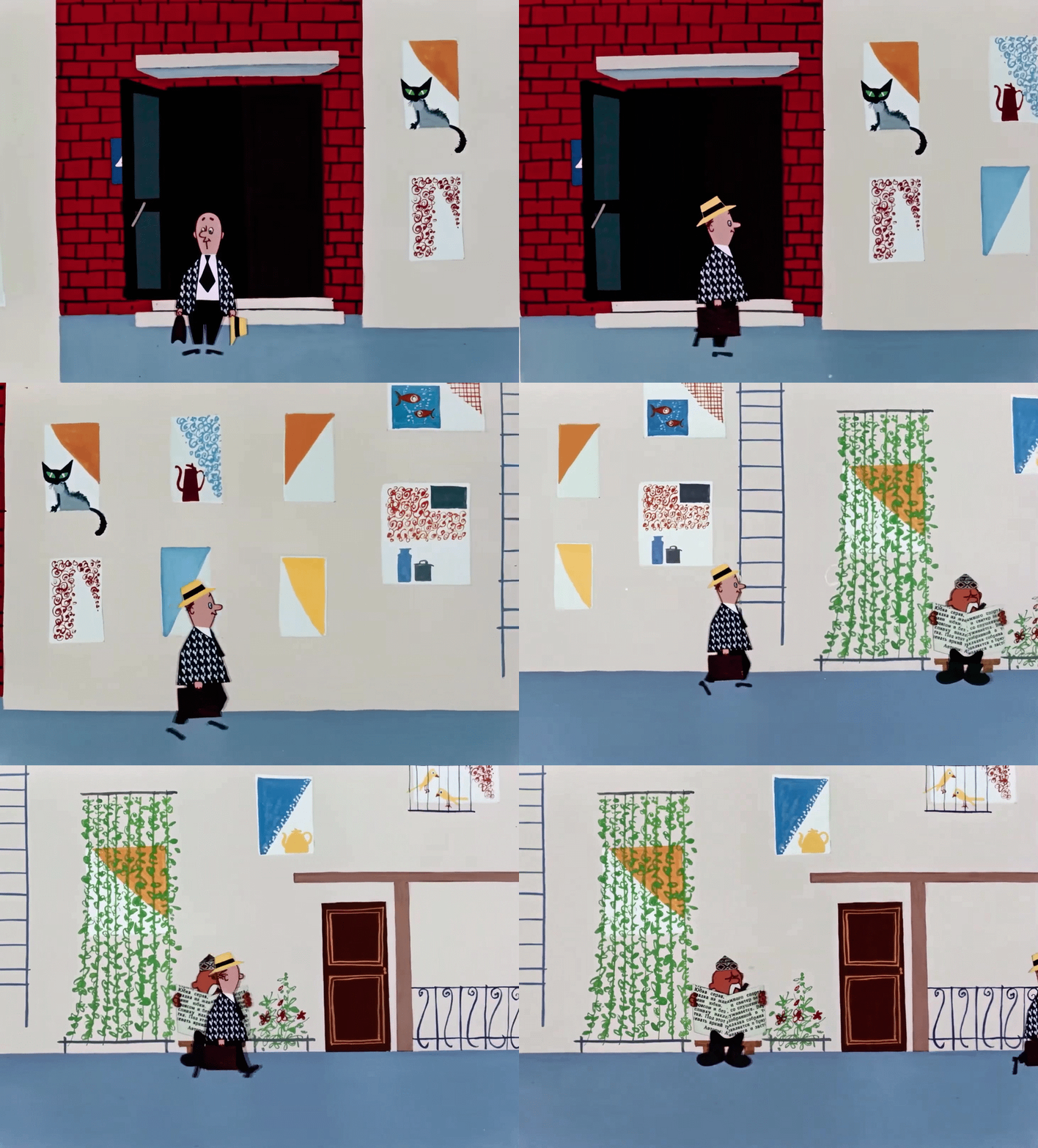
«The Story of a Crime, ” directed by Fyodor Khitruk, 1962.
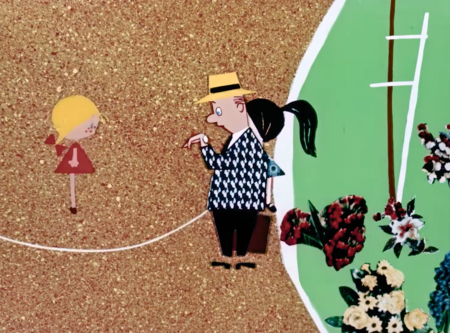
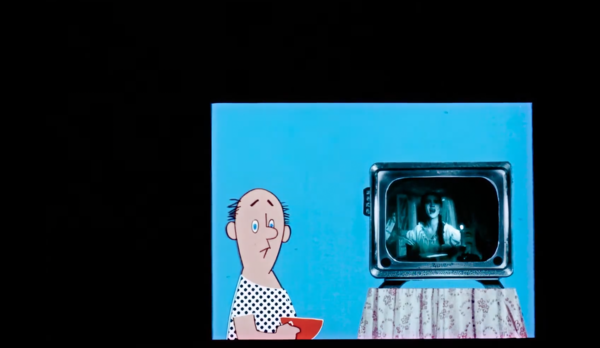
In «The History of One Crime,» the director pays attention to how everyday inconveniences gradually transform into a serious problem for a person.Vasily Vasilyevich Mamin’s life consists of routine activities: work, returning home, relaxing in front of the television. However, his ability to carry out these familiar tasks peacefully is constantly interrupted by those around him.
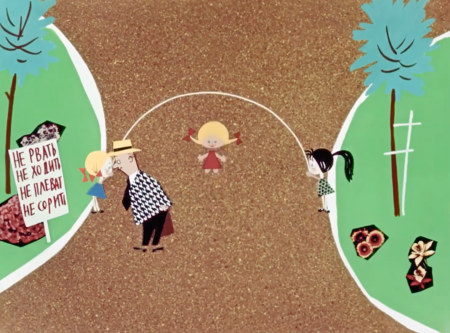
«The History of a Crime, ” directed by Fyodor Khitruk, 1962.
Hitruk doesn’t depict a single major conflict, but rather a series of recurring episodes where Mamin repeatedly confronts the carelessness of others.
«The History of a Crime, ” directed by Fyodor Khitruk, 1962.
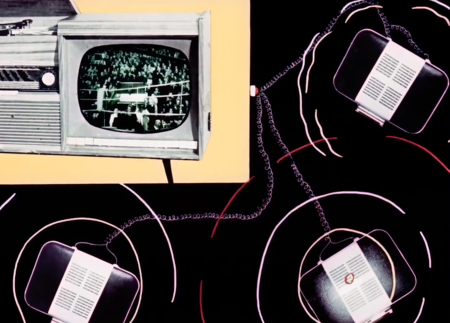
However, the director is not limited to depicting the main character’s irritation. He also shows the behavior of the neighbors, who do not view noise or disturbances of someone else’s peace as a reason to consider other people. As a result, the domestic situation gradually takes on a broader character: the viewer’s attention shifts from an individual to the relationships between people in a shared space.
«The Story of a Crime,» directed by Fyodor Khitruk, 1962.
«The Story of a Crime, ” directed by Fyodor Khitruk, 1962.
Thus, the director draws attention to how profoundly the actions of some individuals can impact the lives of others, especially when those individuals have no power to alter the circumstances they find themselves in.
«The Story of a Crime, ” directed by Fyodor Khitruk, 1962
In «Film, Film, Film, ” Khitruk addresses the everyday lives of people involved in making movies. It is particularly evident how well the director knows the portrayed environment: he shows endless negotiations, revisions, waiting for decisions, arguments, and the dependence of the outcome on numerous people.
«Film, Film, Film, ” directed by Fyodor Khitruk, 1968.
«Film, Film, Film, ” directed by Fyodor Khitruk, 1968.
Hitruk particularly captures the contradiction between creative ambitions and the practical realities of work. The screenwriter tries to find an idea, the director strives to realize the vision, but new obstacles arise at every stage. Moreover, these difficulties are often not related to the creativity itself, but to the necessity of interacting with other people, accounting for their demands, and reaching consensus. In the film, this manifests through the constant shifting of circumstances: just as one issue is resolved, the next appears.
«Film, Film, Film, ” directed by Fyodor Khitruk, 1968.
3. The Visual Image of a Person
4. Plasticity as Character Expression
5. Conclusion