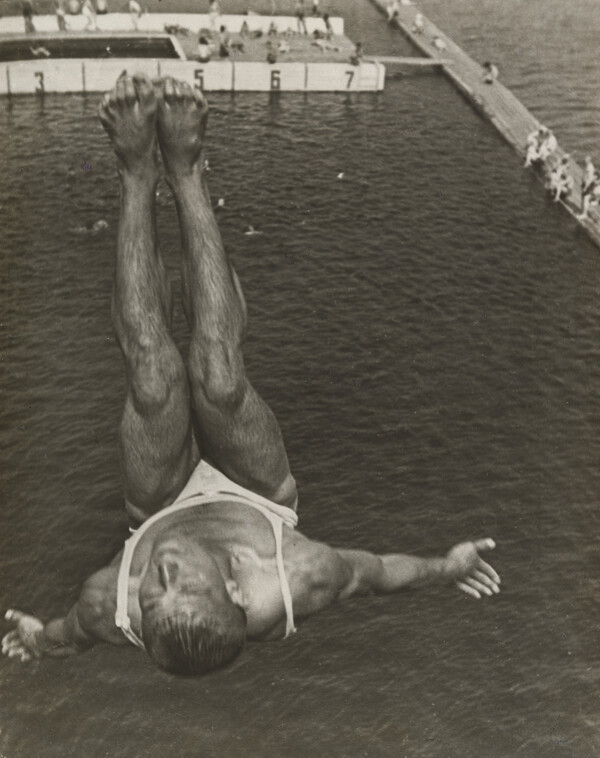
Cover. Alexander Rodchenko. Dive. 1934.
A large figure is inverted relative to the conventional standing human posture. Water forms a free background, while the edge of the platform and the people watching the jump provide orientation in the upper portion of the frame. This very relationship allows the central question of the work to be posed: by what criteria is motion recognized in a frozen image?
Contents
- From Pose to Motion
- Phases of Movement
- Perspective and Space
- Interaction within the Frame
- Rhythm of Collective Motion
- Sport as a Public Image
Concept
Research Question: How did Soviet photography of the 1920s–1930s convey motion in a sports frame?
A sports photograph freezes an action, yet the viewer continues it mentally. A runner’s lean, legs lifted off the bar, or the distance between competitors allows us to envision the moment before and after the shot. I am interested in what elements make this continuation convincing. The 1920s–1930s period was chosen because sports subjects connected photographic experimentation with the public display of physical culture. In the museum interpretation of Soviet material, bodily engagement and mass performances were linked to the cultivation of a new person. [3]
The research hypothesis is that the sensation of motion is created by the interaction of the chosen phase, the shooting angle, and the compositional rhythm. An unstable body posture suggests continuation, the viewpoint alters its relationship with the environment, and the repetition of gestures connects people into a unified composition. Furthermore, sports attire and equipment can be present even in a static portrait. Therefore, the expressiveness of the frame must be distinguished from the ability to recognize a specific exercise.
The primary material consists of 50 Soviet photographs selected from the individual cards of the «History of Russia in Photographs» project. The selections included running, jumping, game episodes, exercises, and physical culture parades. Portrait poses and pauses were included as control cases: they allow us to test whether a single sports subject is sufficient to create an impression of movement. The work maintains a distinction between competition, training, posing, and ceremonial routines. Most frames are from Moscow photography of the 1930s; photos by Penson from the Uzbek SSR expand the regional comparison. This selection does not represent all regions or sports of the USSR.
Two foreign images have been incorporated into the relevant chapters. László Moholy-Nagy’s «Trampoline» allows for a comparison of the observer’s position in a water sport, while Martin Munkácsi’s photograph of a goalkeeper examines moment selection and the details that explain it. The similarity of these approaches is considered a commonality in the visual challenges of interwar photography. This, however, does not establish direct influence between the authors. [4; 5]
The structure moves from recognizing a specific action to understanding its public significance. The first two chapters distinguish between posture, pause, and phase of movement. The following two explore spatial orientation, camera placement, and participant relationships. Finally, the chapters examine the repetition of gestures and the modes of public display of sports. Each chapter pairs specific images; control examples clarify the boundaries of the hypothesis.
Catalog cards were selected to verify authorship, titles, and dates. The exhibition text from MoMA establishes the historical framework; Lavrentyeva’s article aids in analyzing Rodchenko’s system of viewpoints, and Melentiev’s study provides regional context for women’s sports in Pensacola. MoMA publications were included for international comparisons and the history of magazine reproduction. Their information is categorized by purpose: the catalog establishes attribution, while the research article offers interpretation. The latter is compared against the visible characteristics of the frame, rather than replacing observation. The basis for my conclusions rests on body positioning, presence of support, boundaries of the field, scale, and figure repetition. [1–3; 6; 7]
Historical Context
In Soviet interwar material, physical culture is presented both as an individual pursuit and as an organized public spectacle. The MAMM museum overview connects these images to the concept of the New Man. [3] The selected photographs depict various settings for this visibility: swimming pools, school gymnasiums, stadiums, parks, and central squares. During the analysis, it is important to trace how the change in location and scale alters the meaning of the same athletic gesture.
From Posture to Motion
From a racket or swimsuit, the sporting context is easily discernible. It is much more difficult to determine what action is taking place in front of the camera. The first pairings examine this difference: a gesture may communicate an exercise, denote belonging to a sporting environment, or simply support portrait posing.
Gesture in front of the camera
Ill. 01. Stepan Krasinsky, Solomon Tules. Tennis. Winner of the 2nd USSR Tennis Championship, Elena Dmitrievna Aleksandrova-Poselskaya. 1925.
The racket and the rotation of the shoulders allow one to read the tennis player’s position within the swing. Light clothing unifies the torso and legs into an elongated silhouette, while the arms define the cross-directional movement. To understand the action, only a few relationships within the silhouette are needed. Since there is no opponent in the frame nor clearly distinguishable court markings, it remains an open question whether this captures a live play moment or a deliberately posed gesture.
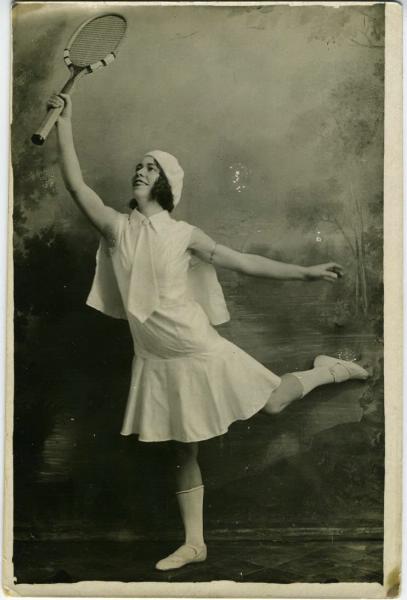
Ill. 02. Unknown Artist. «I am playing tennis.» 1920s.
The raised racket, tilted head, and extended leg combine into a highly expressive pose. The photograph conveys the nature of the action through its recognizably characteristic signs. Comparing it with the previous frame reveals the limits of our knowledge. A single pose cannot determine the speed of movement or real participation in a competition.
These two tennis photographs establish the starting point for our investigation. While the recognizable gesture allows us to imagine the swing, the image does not tell us if it continued in a real game. It is crucial here to distinguish between our understanding of movement and a documented event.
The Body in a Sports Environment
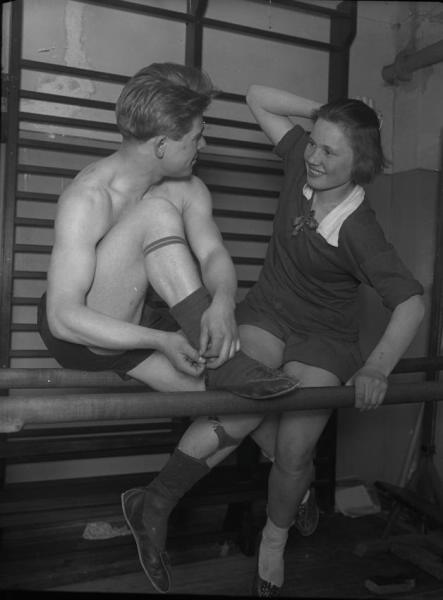
Ill. 03. Arkady Shaikhet. Male and female athlete. 1928.
The climbing wall, stadium, and spear define the nature of the exercises. In these frames, the environment and equipment interact with the body in different ways: they help reveal the training, present the female athlete to the viewer, or outline the trajectory of a future throw.
The male and female athlete are shown close to each other by the climbing wall. The focus is on the arm and shoulder, while the implement signifies the training environment. Compared to tennis poses, this image is less dependent on recognizing a specific athletic gesture. It depicts bodily preparation and the interaction between people, which are easily lost when selecting only expressive jumps.
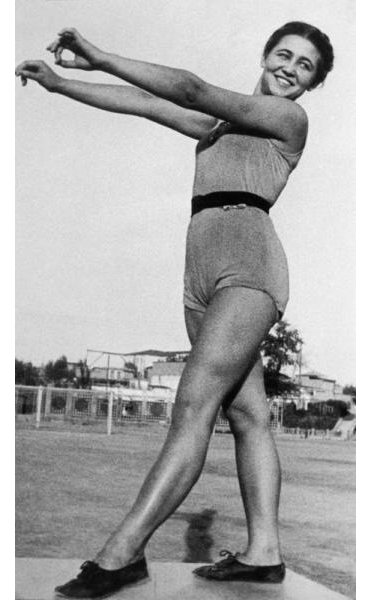
Fig. 04. Max Pennson. Sportswoman. 1927–1929. The turning of the torso and the extended arms connect with a smile directed at the camera. The sportswoman maintains contact with the viewer within the depicted exercise. The open space of the stadium makes the athletic gesture public. Melentyev links Pennson’s photographs to the Soviet conception of new public roles for women in Uzbekistan. For our analysis, it is important to see how such an image is constructed; the heroine’s ethnicity and the actual degree of equality in one photograph do not follow. [2, pp. 53–55]
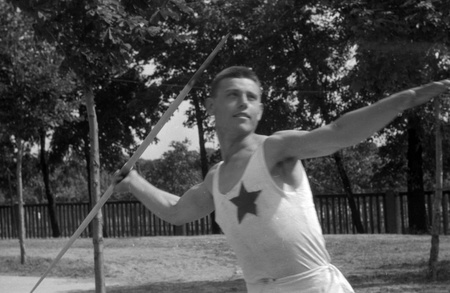
Ill. 05. Olga Ignatovich. Javelin Throw. 1930s.
The javelin extends the direction of the arm, while the body, opened to the side, separates the preparation phase from the expected throw. The result is not yet apparent, but the trajectory has already been outlined. The athlete’s face retains significance, presenting us simultaneously with an image of action and an individual figure. The emblem on the clothing adds a mark of belonging to the bodily gesture.
Pause and equilibrium
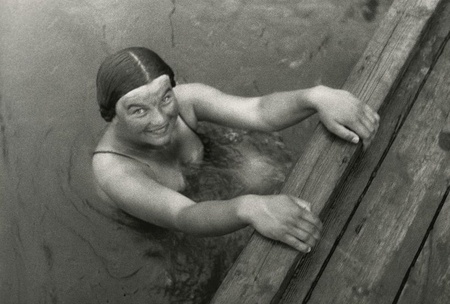
Fig. 06. Mikhail Prekhner. Swimmer. 1933–1937.The pool and the water surface link the following photographs to motion, although in the selected moments, stopping and support are particularly noticeable. The pause remains part of the athletic experience, but its visual structure differs from running or a free jump.The swimmer holds onto the edge of the pool and looks toward the camera. The diagonal of the pool’s edge connects her arms to the point of view, and the water explains the nature of the activity. At the moment captured, the support, face, and smile hold the viewer’s attention. It is impossible to determine from the image alone whether this pause was preceded by a lap. In the next group portrait, the athletic setting is retained, but the way the participants are presented changes.
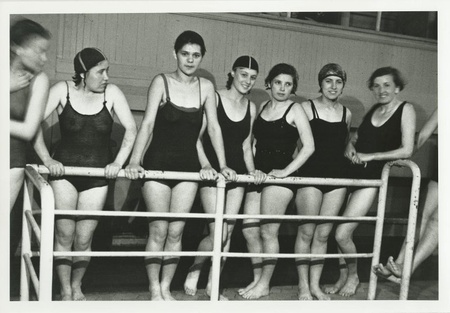
Ill. 07. Georgy Lipskerov. Swimmers. 1936–1939.The swimmers are positioned along the fence and hold onto a common bar. Repetitive dark swimsuits unify the group, while individual faces and head turns maintain distinctions. Compared to Prechner’s solitary swimmer, this piece presents a group. The captured pose does not yet show a stroke or a synchronized exercise—the repetition of figures can organize a group portrait without depicting an active phase of movement.
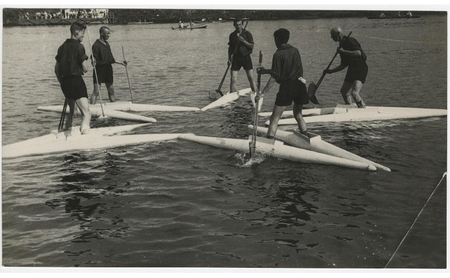
Ill. 08. Eleazar Langman. On water skis. Culture Park. 1930.
Langman’s frame reveals elongated floating supports and individuals standing on them. Their posture connects bodily stability with the movable water surface. The setting suggests possible movement, but the photograph does not allow us to determine its speed. In contrast to the portraits by the pool, the question of support becomes paramount: athletic experience can be conveyed through maintaining balance, without a sharp gesture or detachment.
The presence of the athletic body does not yet create a definitive image of action. In this series of photographs, movement arises as anticipation, the recognition of a gesture, or the possibility of losing balance. A more defined reading requires indicators of a transitional moment—a lift-off, a step, navigating an obstacle. The following chapter examines these.
Phase of Motion
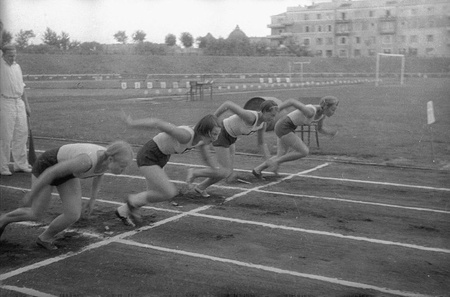
Ill. 09. Sergey Vasilin. Young Runners at the Pioneers Youth Stadium. 1938.
The photograph does not capture the entire run-up or jump. It preserves a single moment, requiring the viewer to reconstruct the duration. The starting line, the takeoff board, the plank, and the finish tape help the viewer understand what preceded the frame and what continuation to expect.
Start, Distance, Finish
The runners are leaning forward at the starting line. The positions of the arms, legs, and torsos vary among the different athletes: the photo shows the transition into the first steps. The lanes establish the general direction, while the differences in posture make the commencement of the run appear asynchronous in visual perception. In the next frame, Ignatovich’s camera will be behind the athletes; here, the side view allows for a comparison of their bodies along a single starting boundary.
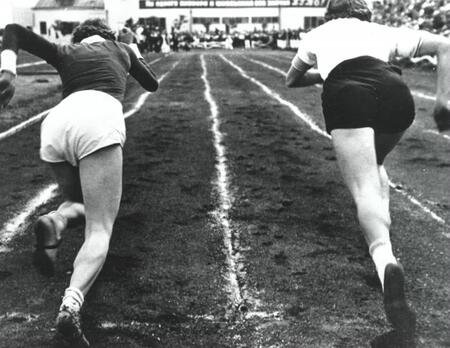
Ill. 10. Olga Ignatovich. Start. 1930s.
Olga Ignatovich places the viewer directly behind the runners. The nearest figures enter the frame in close-up, while the tracks recede between them toward the background. The chosen moment captures the release from the starting position. The impression is of movement originating from the viewer’s point of view. The sweep of the arms helps convey the effort without requiring excessive motion blur.
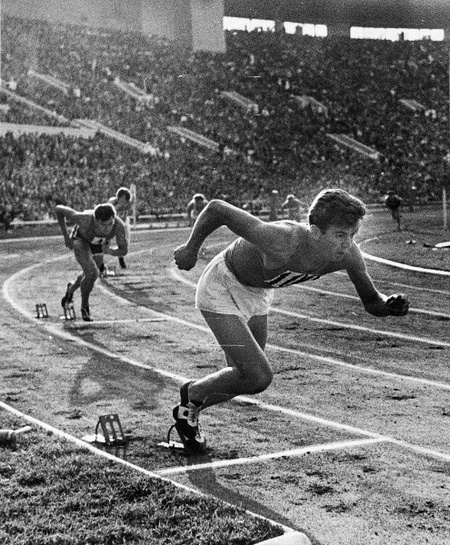
Ill. 11. N. Volkov. Athletics. Running. 1930s.The lead runner leans sharply forward, occupying most of the frame. The bent support leg, the extended arm, and the track lines make the direction of the action particularly clear. The distant participants provide scale and depth. The lean seems unstable upon static examination, which is precisely what prompts the viewer to mentally continue the run.
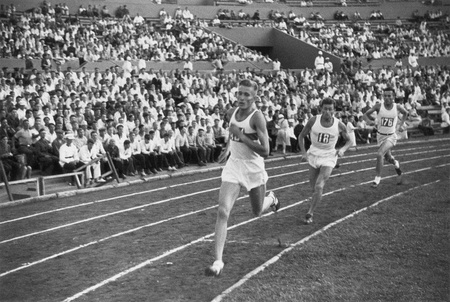
Fig. 12. Mikhail Prekhner. Race. 1938. The leading runner is separated from the following competitors by sections of the track. The curve of the track connects them in a sequence. The eye moves from the large foreground figure to the smaller, distant ones, and this spatial differentiation helps to read the progression of the race. The filled stands surround the action, underscoring its public nature.
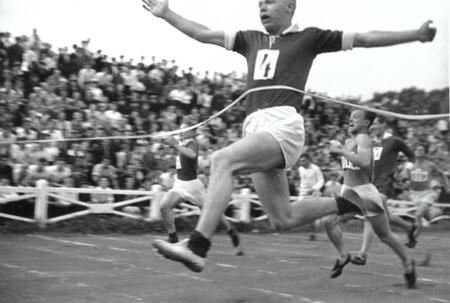
Fig. 13. Olga Ignatovich. Finish. 1930s.
The front runner crosses the finish line with arms spread wide and a raised leg. The ribbon and the next participant clarify the meaning of the moment. The posture could be interpreted as a separate leap, but the context transforms it into the completion of the race. This is an example of how a specific detail defines the reading of motion.
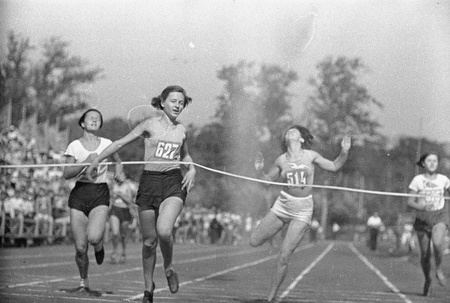
Fig. 14. Sergei Vasin. Summer Sports. Young Pioneers Stadium. 1937.
At the finish line, runners in various positions are visible simultaneously. Small temporal differences arise between the legs, arms, and torsos. The foreground allows us to examine the tension of the struggle for positioning along the course. The image holds several independent trajectories that converge toward a single boundary.
In this sequence, the same race is read across different temporal boundaries. At the start, the action is directed from the line forward; along the course, it is explained by the intervals between participants; at the finish, it is marked by the tape and the crossing of a common boundary. The moment gains meaning thanks to the spatial details.
Between support and flight