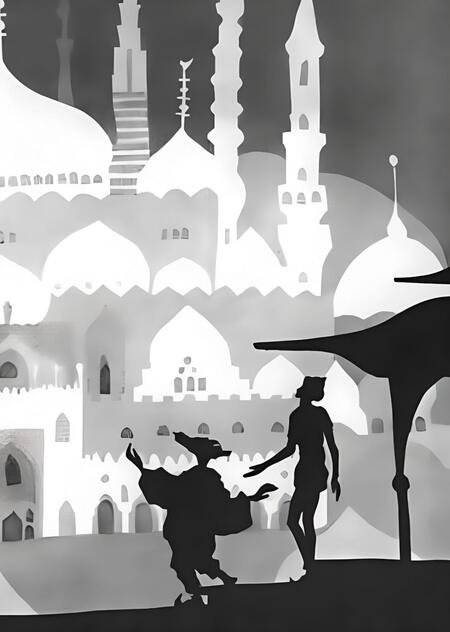
Introduction
«Film has movement, just movement on the screen…» — Lotte Reiniger, Art of Film magazine, 1936.
In the pantheon of global animation avant-garde, Lotte Reiniger occupies a singular place, presenting a unique bridge between the archaic art of shadow theater and the modernist quest for pure kinetics. Her 1920s experiments proved that surrealism is not the exclusive prerogative of a painted canvas or cumbersome game-film set design, but an organic quality of motion itself—born at the intersection of physical material and light.
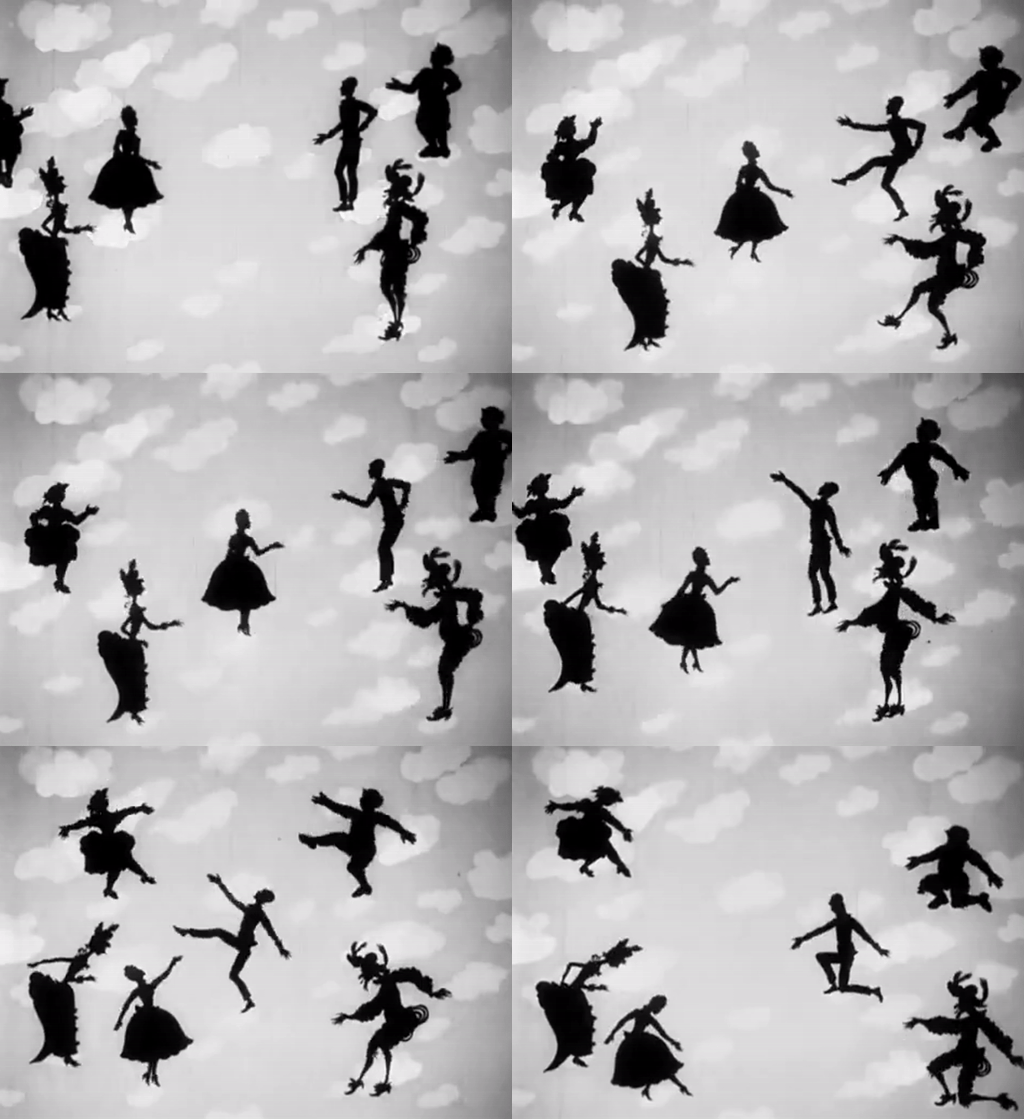
«Harlequin, ” Lotta Reininger, 1931
Rainiger’s Surrealism is born from this paradox: the absolute, age-old stillness of material confronts the unprecedented dynamism of montage. Rainiger’s visual language is the architecture of pure contour. The absence of half-tones and color concentrates the viewer’s attention entirely on the line itself—a line that, in her hands, becomes a blade, a tree branch, or the curve of a female hip. This study aims to deconstruct this optical illusion, arguing that in Lotte Rainiger’s hands, scissors and black cardstock proved to be a more precise instrument for dissecting the unconscious than the surrealist’s brush.
«The Ornament of the Beloved Heart»: The Birth of Kinetics
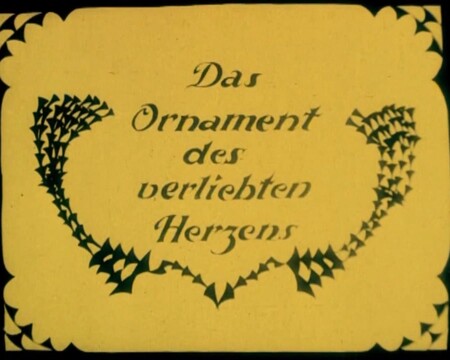
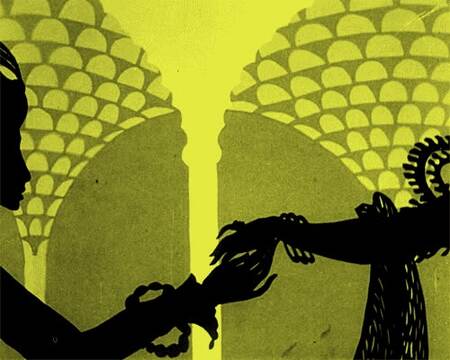
«Ornament of a Loving Heart,» Lotte Reiniger, 1919
«Ornament of a Loving Heart, ” Lotta Reininger, 1919
This is one of Rainer’s early experiments where form became the primary carrier of meaning—a seminal turning point in the history of Lotta’s auteur animation. Although only four minutes long, this romantic miniature established the visual language she would refine over the next sixty years.
The film demonstrates Raineriger’s innovative approach: expressiveness is achieved here through gesture, plasticity, and rhythm, rather than through the characters' facial expressions.
Innovation: Theatricality and Architectural Depth
Unlike classic flat shadow puppetry, Rayniger’s animation possesses cinematic depth. In 1926, she constructed an early prototype of a multi-plane camera—specifically, a multi-tiered shooting table. Layers of glass were arranged at different heights: static backdrops were placed on the lower tiers, while moving character elements occupied the upper ones. This allowed the camera to capture a true picture: as the lens moved, foreground objects and characters shifted faster than those in the background, thereby creating a convincing illusion of three-dimensional space, as seen in the work «Harlequin, ” 1931.
«Harlequin,» Lotta Reininger, 1931
The theatricality is the foundation of Lotta Reininger’s unique silhouette animation style, a fascination she has held since childhood. Over time, this childhood interest evolved into a craft. In her films, the pursuit of architectural depth was combined with extremely detailed rendering. The characters consisted of numerous parts—from 25 to sometimes 50—joined by hinges for mobility. The character’s nature was conveyed through the tiniest details: the curve of a curl, the line of a nose, the pattern of fabric, the movement of a hand.
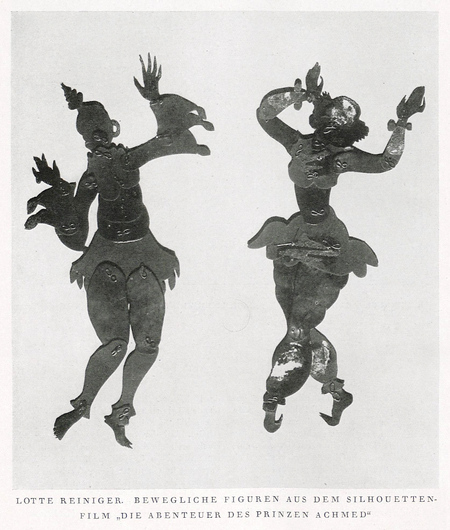
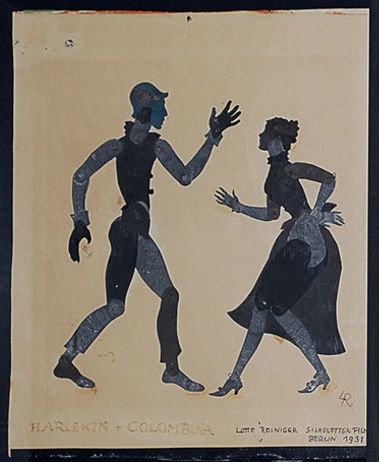
«Prince Ahmed’s Adventures, ” „Harlequin, ” Lotte Reiniger, 1926 and 1933
Synthesis of Music and Movement
For Reininger, animation has always been the visual equivalent of music. Reininger worked with the works of classics such as Bizet, Mozart, and Offenbach, as well as her contemporaries, such as Paul Dessau and Wolfgang Celler.
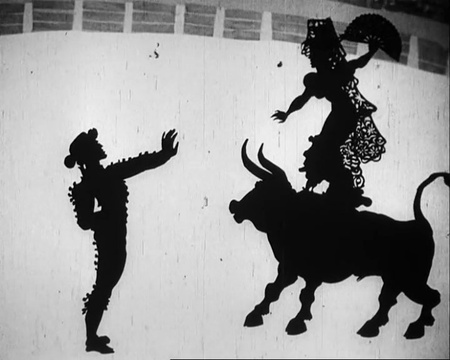
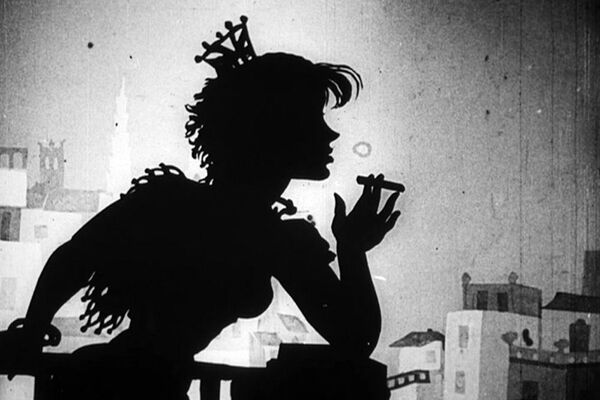
«Carmen,» Lotte Reininger, 1933
«Carmen,» Lotta Reininger, 1933
The silhouette animation «Carmen,» created in 1933, is based on Georges Bizet’s eponymous suite. Here, the music directly dictates the plasticity of the movements, transforming the animation into a visual embodiment of the musical piece.
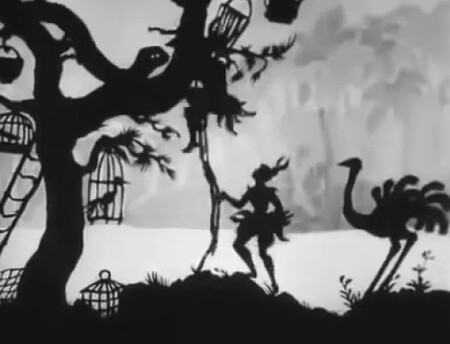
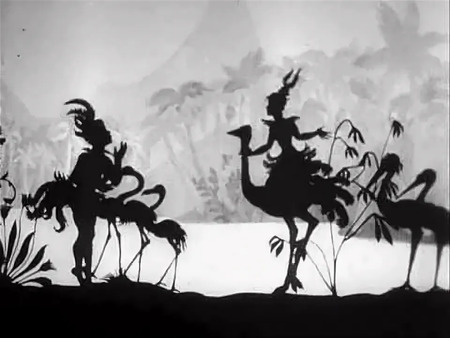
«Papageno, ” Lotte Reiniger, 1935
«Papageno, ” Lotte Reiniger, 1935
The short film «Parageno,» created in 1935, was realized under the inspiration of Mozart’s opera «The Magic Flute.» The characters' movements and the animation rhythm are subordinate to the musical theme, allowing viewers to «hear» the melody through motion.
«…From a creative standpoint, I see it as a visual expression of Mozart’s music…» — Jean Renoir, late 1920s–1930s.
The Balance of Archaic and Modernism
One can certainly say that Lotta Reininger’s innovation was also found in her choice of materials for her paintings. During the Weimar Republic, when the German avant-garde—from George Grosz to Dziga Vertov—was intensely focused on depicting the harsh and brutal social reality, Lotta consciously retreated into a world of magic and fairy tales.
«Cinderella,» Lotta Reininger, 1922.
Rainer often adopted classic themes from European and Eastern fairy tales. His avant-garde colleagues didn’t understand why she turned to fantastical narratives when the Weimar Republic was crumbling and reality itself needed documentation. But Lotte continued to retell magical and mythical stories using expressive silhouettes, minimal color, and dynamic animation.