Navigation
- Introduction. Research Concept
- The Body as Limit: Pain and Physical Endurance 2.1. Marina Abramović — Rhythm 0 (1974) 2.2. Chris Burden — Shoot (1971) 2.3. Gina Pan — Action Psyché (1974)
- The Spectator as Participant in Violence 3.1. Yoko Ono — Cut Piece (1964) 3.2. Vito Acconci — Seedbed (1972)
- Vulnerability as a Collective Experience 4.1. Marina Abramović — The Artist Is Present (2010) 4.2. Ana Mendieta — Silueta Series (1973–1980)
- Conclusion
- Bibliography
- Sources of Images and Video
Concept
The second half of the 20th century marks a period of radical reassessment concerning the nature of the artwork, its materiality, and the boundaries of artistic expression. Artists increasingly abandon the traditional object—the painting, sculpture, or graphic work—in favor of action, process, and presence. Performance art emerges as one of the key movements driving this shift.
Within the framework of performative practices, the artist’s body transforms from a mere instrument of expression into an autonomous field for artistic experimentation. It becomes a material, a space of conflict, a medium of communication, and simultaneously an object of influence.
The work no longer exists as an autonomous object within the museum space; instead, it becomes a time-bound event defined by the artist’s presence and the audience’s reaction. Performance cannot be fully preserved, collected, or reproduced. Its existence often remains only in the form of documentation—photographs, video, or text. Thus, the artist’s body becomes a transient and vulnerable medium for art.
The choice of theme stems from an interest in how artists of the 1960s and 1970s began to use their own bodies as a space to explore pain, control, fear, vulnerability, and interaction with the audience. Within performance, violence takes on a dual nature: on one hand, it becomes a way to demonstrate the limits of the human body, and on the other, a form of critique of social and institutional structures. Artists engage with bodily risk, physical pain, and psychological tension in order to dismantle the distance between the artwork and the viewer.
Key question: Why does the body become the central artistic medium in the art of the second half of the 20th century, and how does vulnerability transform into an artistic method?
The hypothesis of this study is that engagement with the body in performance art is linked to the crisis of the traditional art object and artists' desire to overcome the neutrality of the «white cube.» Through embodied presence, artists create art that cannot be separated from real experience, time, and emotional impact. Vulnerability and violence in this context are not provocation for provocation’s sake, but a means of exploring the boundaries of human existence and the mechanisms of interaction between the artist and society.
The study includes works by artists who present various approaches to corporeality: physical exhaustion, self-destruction, audience interaction, and the exploration of pain and psychological tension. Furthermore, the study does not focus on a single author but views performance as a broader artistic phenomenon.
Section I. The Body as Boundary: Pain and Physical Endurance
One of the key features of performance art from the 1960s and 1970s is the artist’s turn toward their own body as a space for physical experimentation. Unlike traditional art, where the artwork is separate from the creator, in performance, the artist literally places themselves at the center of the artistic process. Pain, fear, exhaustion, and risk become part of the visual language.
Similar practices arose during a period of crisis in modernist art, when artists began to question the possibility of creating a «neutral» work. The physical ordeal became a way to restore authenticity of experience to art and to dismantle the safe distance between the viewer and the artistic object. The political context of the latter half of the 20th century—wars, social protests, the crisis of institutional trust, and the growing interest in human physicality—also plays a crucial role here.
In the works of this period, the body ceases to be perceived as an idealized image. On the contrary, artists demonstrate its fragility, vulnerability, and limitation. Through physical tension, they explore the limits of human experience and question where art ends and real danger begins.
Marina Abramović
Marina Abramović Rhythm 0, 1974
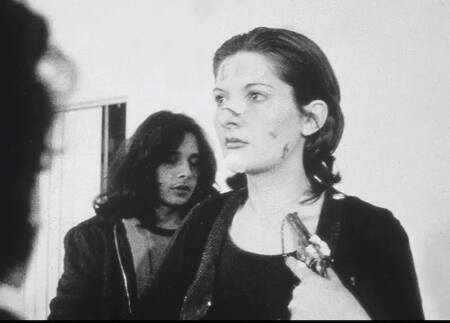
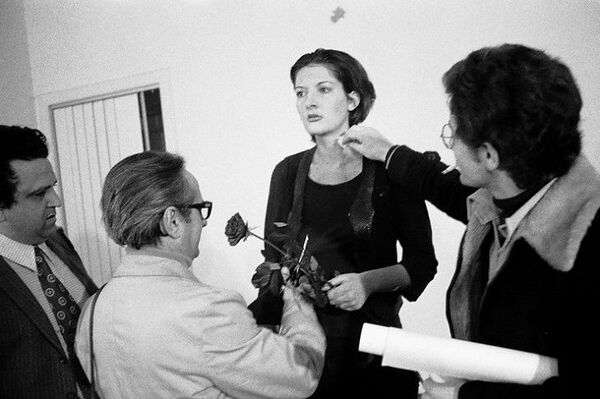
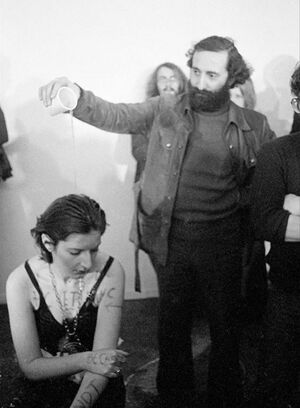
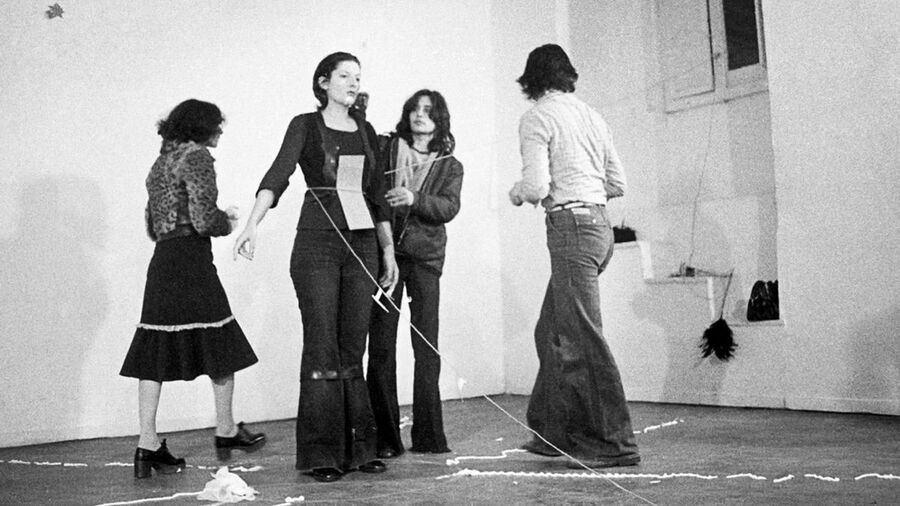
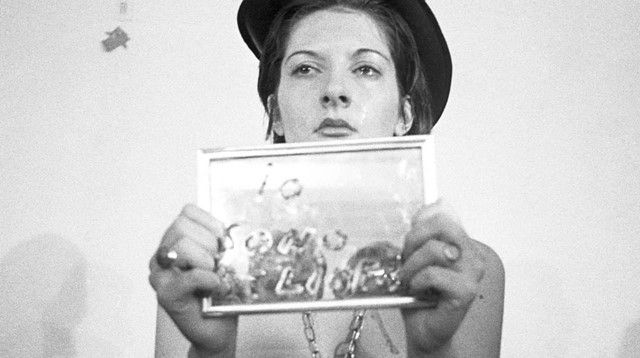
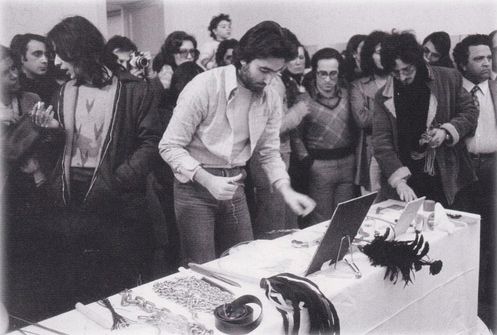
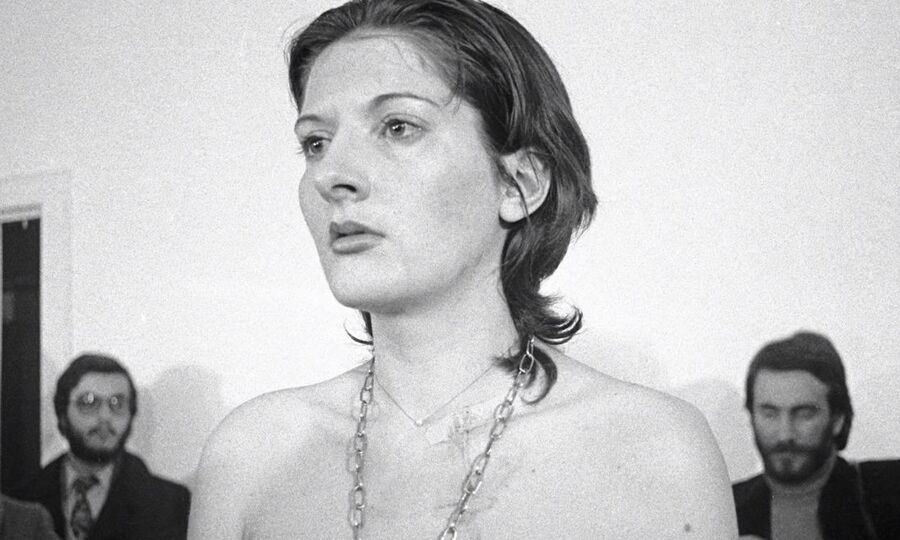
The performance «Rhythm 0» is considered one of the most radical works in 20th-century art history. For six hours, Marina Abramović stood motionless before the audience next to a table holding 72 objects: a rose, a feather, scissors, chains, a knife, a pistol, and a bullet. The artist had previously announced that the audience members could do whatever they wished with her body, and she took full responsibility for the ensuing events.
Marina Abramović Rhythm 0, 1974
At the beginning of the performance, the audience interacted with the artist cautiously: spectators gave her flowers and touched her hands and hair. However, the situation gradually began to change. People began cutting the artist’s clothing, scratching her skin, moving her body, and pointing a loaded gun at her. The piece demonstrated how quickly moral boundaries dissolve when an individual is granted absolute power over another person’s body.
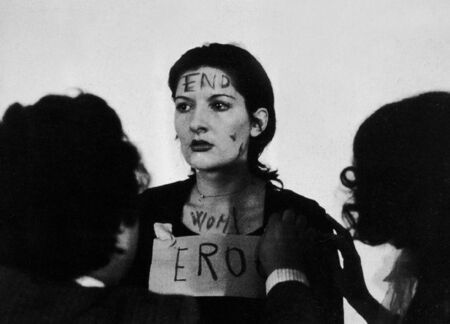
The theme of vulnerability plays a particularly important role here. Abramović completely relinquished control of the situation, transforming her own body into an object of collective force. The performance became an investigation into human aggression, crowd psychology, and the relationship between artist and spectator. Within the context of visual research, this work demonstrates how the body becomes not an image, but the direct site of artistic conflict.
Chris Burden
Chris Burden Shoot, 1971
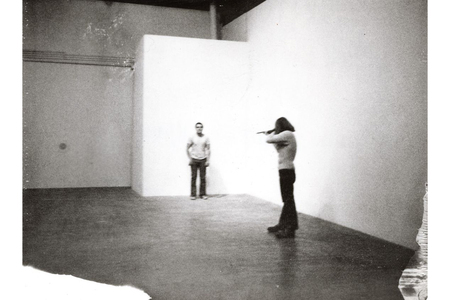
The piece Shoot has become one of the most iconic examples of 1970s extreme performance art. During the performance, Chris Burden asked a friend to shoot him in the arm from a short distance. Although the performance itself lasted only a few seconds, its documentation and subsequent discussion became an important part of modern art history. Burden explores the boundary between artistic gesture and actual physical danger. Unlike in theater or film, where violence is a simulation, the artist subjects himself to real risk in performance. The audience recognizes that what is occurring is not staged, and this is precisely what creates intense psychological tension.
The work emerges from the context of early 1970s American society—a period marked by the Vietnam War and the rise of media violence. Through her own body, Burden demonstrates how normalized the image of violence has become in mass culture. The performance transforms the single act of shooting into a symbol of widespread social anxiety and a crisis of trust in surrounding reality.
Gina Pan
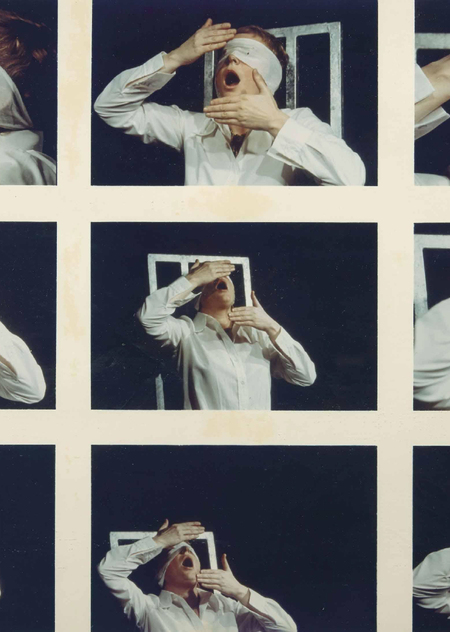
Gina Pane Action Psyché, 1974
Gina Pan’s work explores pain, emotional memory, and corporeal experience. In her performances, the artist frequently utilized her own body as a canvas for wounds, cuts, and physical endurance. The series Action Psyché continues this trajectory, merging physical suffering with the visual aesthetics of performance art.
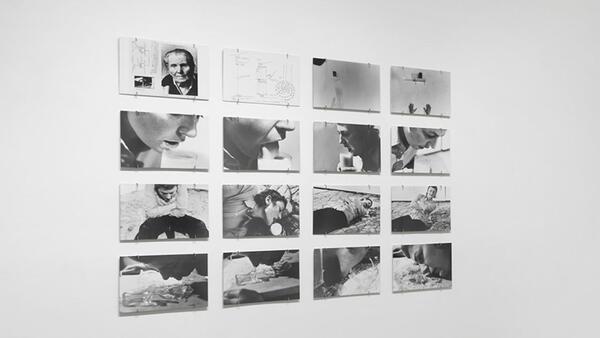
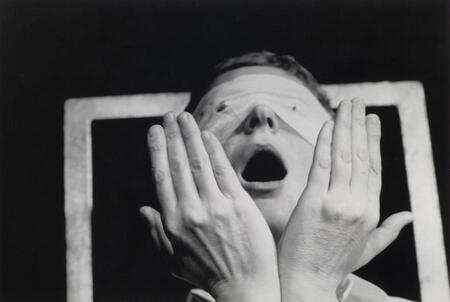
Gina Pane Action Psyché, 1974
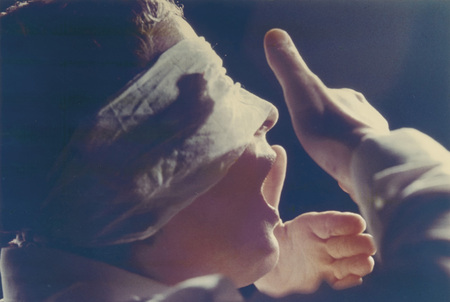
For Pan, physical pain is not an end in itself or a way to shock the viewer. On the contrary, the artist views it as a form of communication. Through real bodily harm, she attempts to convey the inner emotional tension that cannot be articulated through words. Blood and marks on the skin become a specific visual language of experience.
A defining characteristic of Pan’s work is its nearly ritualistic nature. The performance space is meticulously organized—gestures, objects, and actions acquire symbolic meaning. Thus, the artist transforms bodily action into a form of psychological and emotional expression.
Part II. The Audience as Participant in Violence