Table of Contents
1. Topic
2. Concept
3. List of artifacts used for analysis
4. Material selection criteria
5. List of sources and literature
6. List of images used
Topic
«Living Fabric: Draping as Metaphor in Hellenistic Sculpture»
Concept
Rationale for Topic Selection
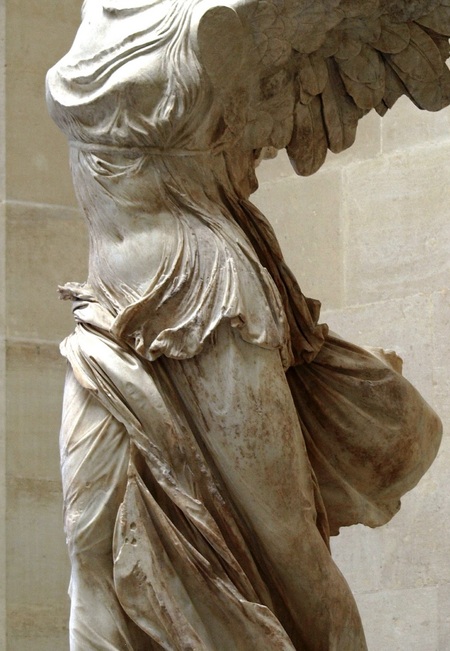
In 2024, I had the opportunity to visit the Louvre, where I saw the first sculpture that captivated me with its remarkable refinement: the sculpture of Nike of Samothrace. I had never before seen such convincing dynamism depicted in stone—the goddess’s drapery seems to billow in the wind, conveying movement. The Hellenistic period (323–30 BCE) meets the criteria for visual study and is interesting due to its blending of cultures and the superimposition of new meanings onto familiar elements; therefore, I chose this specific timeframe for my work. I hypothesize that fabric in Hellenistic sculptures acquires a new meaning: it ceases to be mere clothing and becomes a metaphor. I want to investigate what meanings are embedded in this element and what message the sculptors intended to convey through the drapery.Material Selection Principle
For this study, eight works were selected, differing in both geography (Attica region—Athens, Rhamnus; Asia Minor—Pergamum; Aegean Sea—Samothrace, Melos; Alexandria) and materials (marble, bronze)—these distinctions highlight the varied ways sculptors conveyed embedded meaning. The works were also created in different years (3rd century BCE; 2nd century BCE; c. 300 BCE; 230–220 BCE (this date refers to the original sculpture by Gall Laodisi, which is lost. My study presents a Roman copy dated to the 2nd century CE); c. 180–159 BCE; c. 190 BCE; 125–100 BCE). The works were chosen based on materials published on museum websites, such as the Louvre and the National Archaeological Museum in Athens, as well as on their descriptions in J. Pollitt’s book, «Art of the Hellenistic Age.»Principle of Categorization
The selected artifacts are divided into four semantic groups depending on the meaning conveyed by the fabric: «Movement» (Nika Samothracian and the bronze statuette of the dancer with a closed face and mask), «Emotions» («Battle of Zeus and Polyphemus» and «Battle of Athena and Alkyoneus» on the frieze of the Pergamon Altar), «State of Vulnerability» (the marble statue of Aphrodite of Tyepeolus and the statue of Gall of Ludovisi), and «Power and Status» (the marble statue of Themis from Rhamnus and the marble statue of Poseidon from the island of Melos).Principles of Selecting and Analyzing Textual Sources
The starting point for analyzing Hellenism and sculpture was J. Pollitt’s book, *Art of the Hellenistic Age*, which I found while researching Nike of Samothrace. I then drew some additional texts for research from the references in Pollitt’s work. Others were discovered in online libraries, such as the Internet Archive, after searching the term «hellenism.» Two types of textual sources were used for the study. Scholarly works (J. Pollitt, J. Ionas, R. Smith & G. Winnefeld, H. Koda) help understand the context of the era and the metaphorical meaning of drapery in the artworks—what the sculptor intended to convey and how they expressed their concept. Descriptions of artifacts on museum websites (Louvre, Metropolitan Museum of Art, National Archaeological Museum of Athens) provide information on the creation date, materials, and artists of the sculptures. After selecting the artifacts for the study, I searched the aforementioned sources for information on the drapery of each piece—what techniques the sculptor employed, what narrative was depicted, and what significance the fabric carried in the figure. I then correlated the researchers' findings with my own visual analysis of the folds to verify whether the sculpture itself confirms what is written about it. The work also proposes my own interpretation of the symbolism of certain draperies.Core Question and Hypothesis
On different pieces of costume sculpture, clothing is depicted in varied ways beyond simple divisions between male and female attire. This is especially evident during the Hellenistic period. For example, in «Aphrodite of Tyepelo, ” the fabrics are thin and cling closely to the body, allowing the torso to show through noticeably—she is alluring. In contrast, Themis from Ramnunta wears heavy garments, obscuring her form almost entirely. My core research question is: what metaphorical meanings are embedded in the fabric during the Hellenistic period? I hypothesize that the meaning of the fabric in Hellenistic sculpture is determined by how it relates to the body and the narrative. Stretched and billowing fabric conveys movement; fabric twisted in a vortex and bearing sharp folds reflects emotion; clinging, slack, drooping, or thin material suggests vulnerability, while heavy and static material creates a sense of power. Therefore, the same technique—such as the „wet drapery”[1]—can carry different meanings: for one figure, it suggests vigor, while for another, it suggests defenselessness.List of artifacts used for analysis
«Fabric as a Medium for Conveying Motion»:
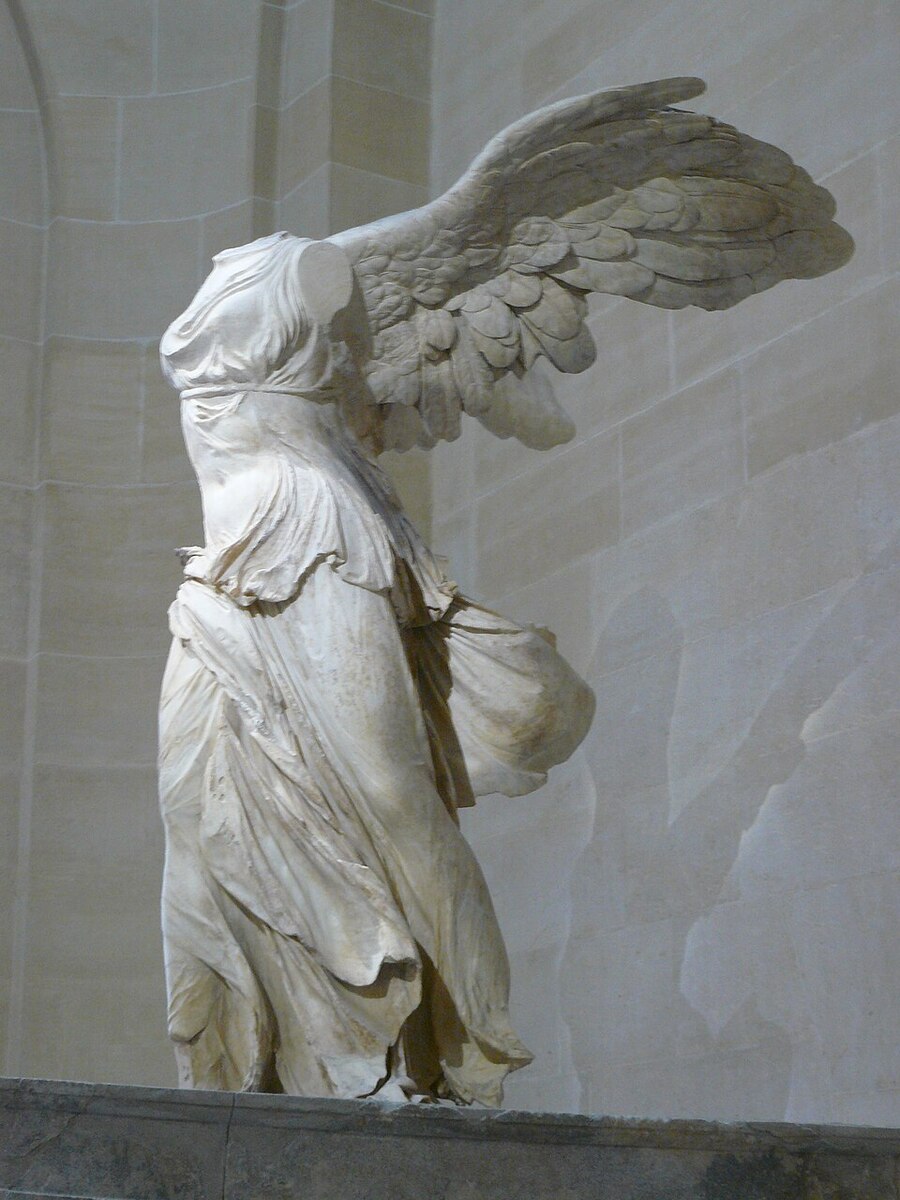
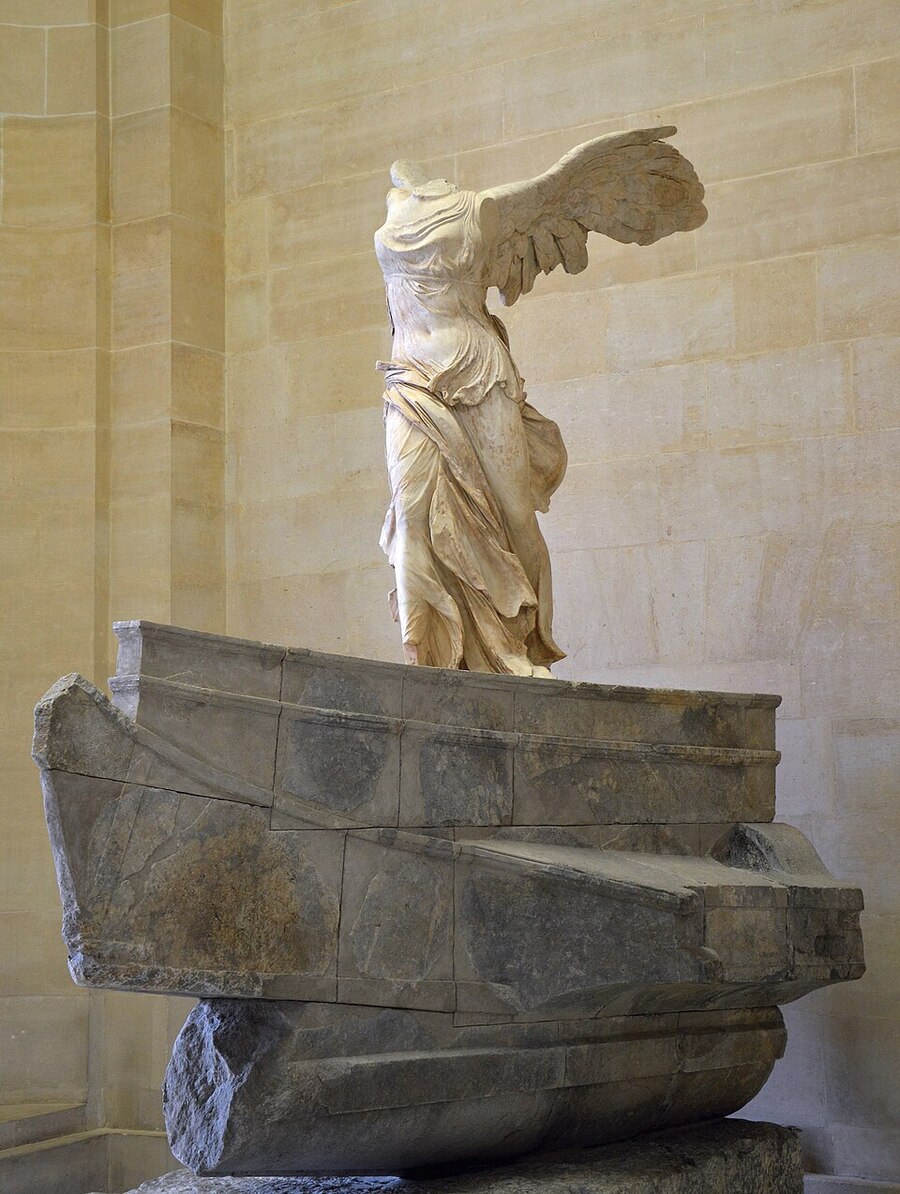
1/2
Nika Samofrakiskaya