Personal Exhibition Project
Dmitry Plavinsky. Archaeology of the Sign: From Sacral Text to Digital Matrix
Lolita Shatalina M26DZ21 Module 1
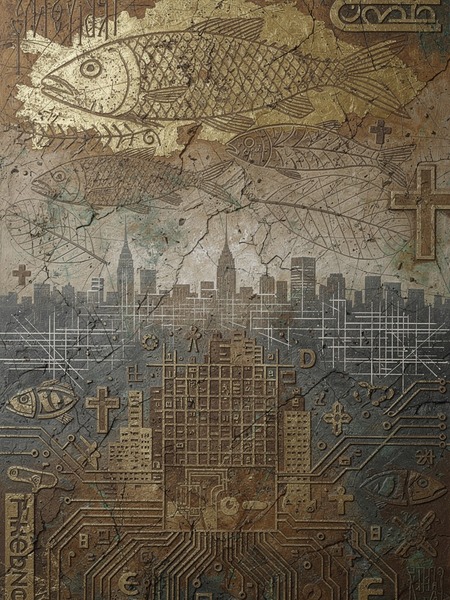
Автопортрет Плавинского. Москва. 1967 год.
BLOCK 1: Mentorship Framework and Project Passport
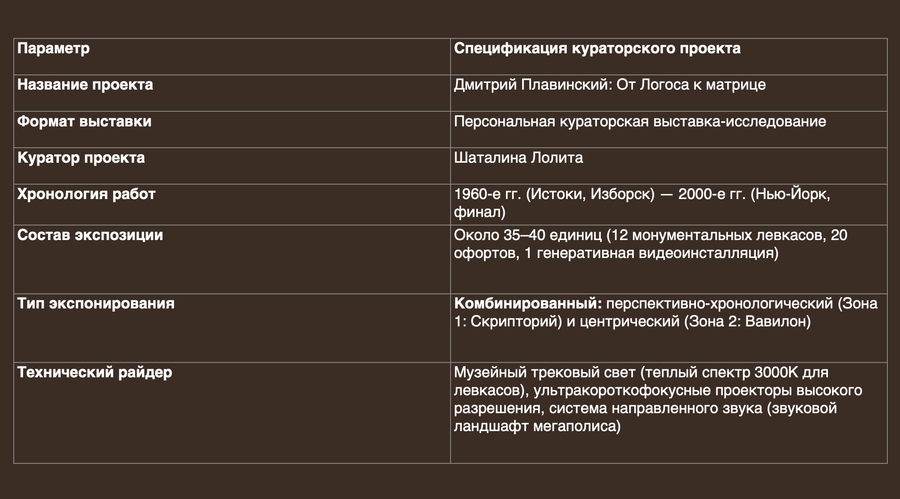
Exhibition Title: «Dmitry Plavinsky. Archaeology of the Sign: From Sacred Text to Digital Matrix.» Location: State Tretyakov Gallery (New Tretyakov Gallery, Krymsky Val, 10, Rooms 60, 61, 63). Format: Solo exhibition-installation, visual research. Curator: Lolita Shatalina, 1st Year Master’s Student at the HSE Art and Design School. Exhibition Content: 35–40 original works (painting, etchings, tempera), 3D hall architecture, site-specific media art, generative sound design.
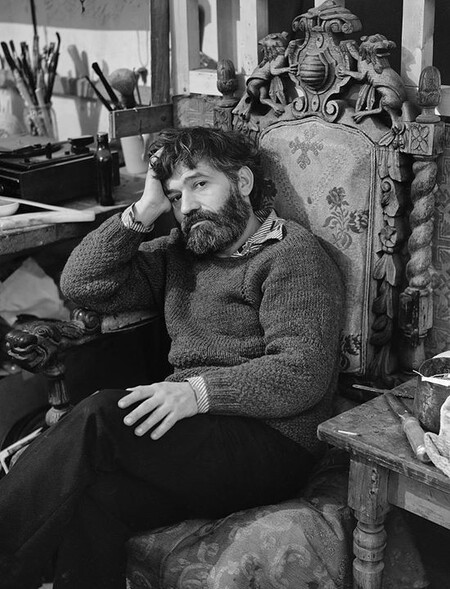
Фотографии Дмитрия Плавинского из семейных архивов. Москва.
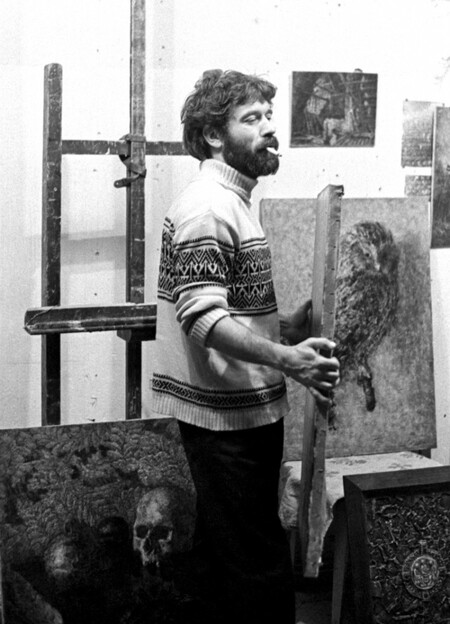
Curatorial Concept. Justification of Theme and Key QuestionDmitry Plavinsky (1937–2012) is a recognized classic of post-war Soviet nonconformism and a key representative of «structural symbolism.» However, today his legacy is often confined to narrow frameworks—either a nostalgic view of «Soviet unofficial art» or a purely formal admiration of the complex texture of his canvases. This visual-curatorial study proposes a radical re-evaluation of the author’s creative methodology through the lens of contemporary media philosophy. We pose a key question: how does the evolution of symbolic systems in Plavinsky’s work relate to humanity’s cultural shift from analog sacredness to digital simulation? The relevance of this project lies in de-provincializing the artist’s figure and moving him out of the local context of the «underground» into the field of global media archaeology.
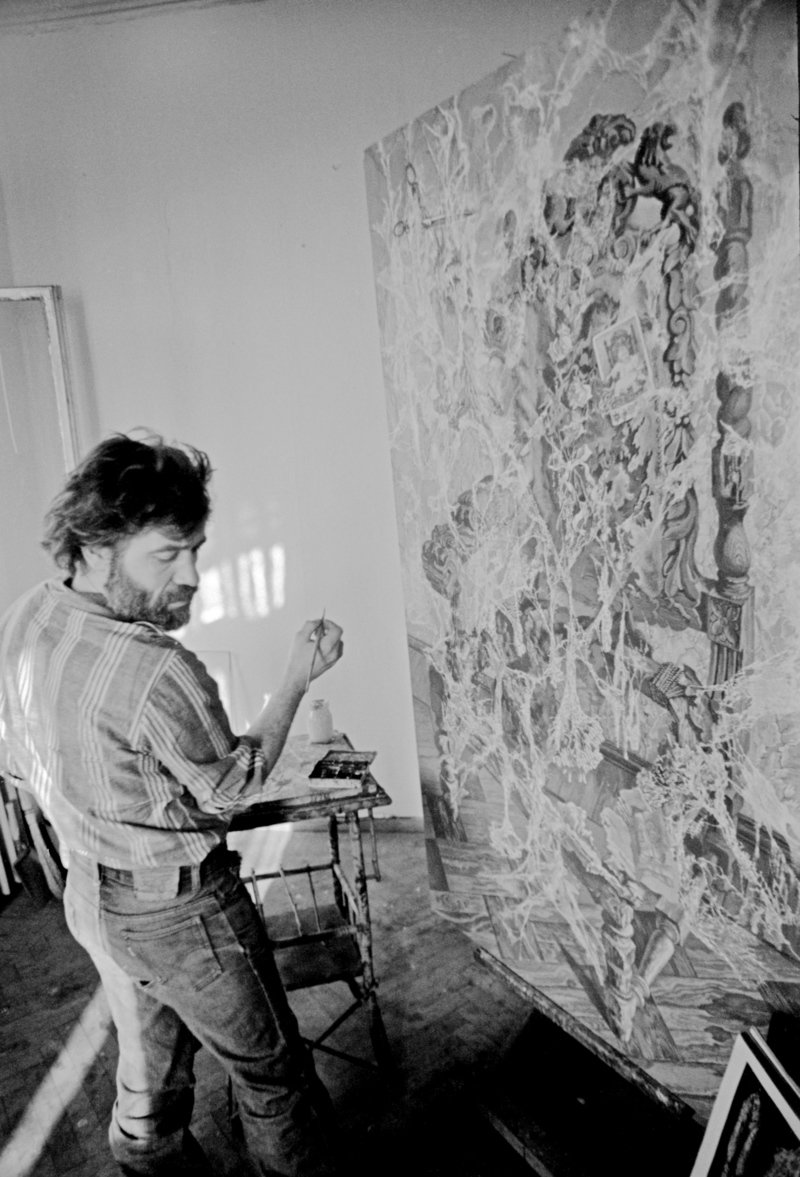
Dmitry Plavinsky working on a monumental canvas in the studio. 1960.
Hypothesis, Methodology, and Research Highlights Our hypothesis posits that Plavinsky functioned as a media archaeologist, whose visual language brilliantly anticipated the digital structure of the post-industrial world. The complex paleographic script of his early 1960s reliefs is structurally and morphologically related to the pixel grids and barcodes of the 21st century.
Principle of Visual Selection and Segmentation The material is structured across three acts («Scriptorium» — «Study» — «Matrix»), reflecting the change in the aggregate state of the sign—from tangible physical texture to the digital pixel.
Research Highlights: Key visual axes selected for this study include seminal works by the artist: «Turtle, ” „Word, ” the etching „Construction of the Gospel, ” the „Manhattan-Fish“ series, and the „Jerusalem Cycle.“ Every plastic aspect identified during the analysis of these works directly informs the scenic and lighting design for a specific exhibition space.
BLOCK 2: Act 1. Origins and Paleography of Memory (1960s) Research Section: Materialization of the Logos and the Archaeology of Memory. The transition from natural forms to the primary text of the canvas.
D. Plavinsky. Turtle. 1969. Canvas, gesso, mixed media.
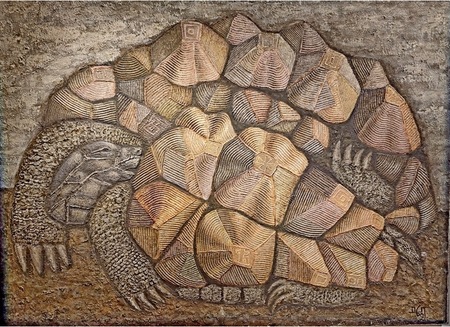
Research Highlight The Natural Code of «Turtle» The canvas «Turtle» from 1969—a primary visual manifesto of the early period. The curatorial analysis notes here the engagement with nature’s proto-script. The artist transforms the biological object into a tectonic relief. The segments of the turtle’s shell are read as precursors to ancient stone tablets, holding the traces of fading memory.Exhibition Format This plastic heaviness sets the tone for the entire first hall. The canvas is displayed unframed, with open, torn edges. By manifesting the concept of an «archaeological dig,» we erect a destroyed faux wall made of brickwork in the hall, from whose depths the work is «uncovered.»
D. Plavinsky. Word. 1969. Canvas, gesso, mixed media.
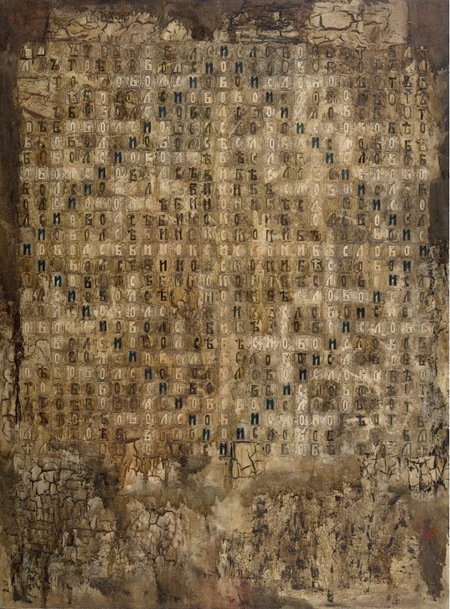
Research Highlight The Palimpsest of the Canvas «Word» In the work «Word, ” manual labor is presented as a sacred ritual. Plavinsky literally presses Old Slavonic letters into the wet gesso mass. What we see is a physical palimpsest—a multilayered text where traces of old signs emerge through the new ones. The use of muslin, sand, and fabric transforms the canvas into tangible matter.Exhibition Format To emphasize the tactility, unpainted fabric panels with graphic text sketches clipped onto clothespins are incorporated into the scenography (reference: image_Q1daFy.png), accentuating the theme of handmade scriptoria and archival dust.
D. Plavinsky. Easter. 1962. Canvas, gesso, mixed media.
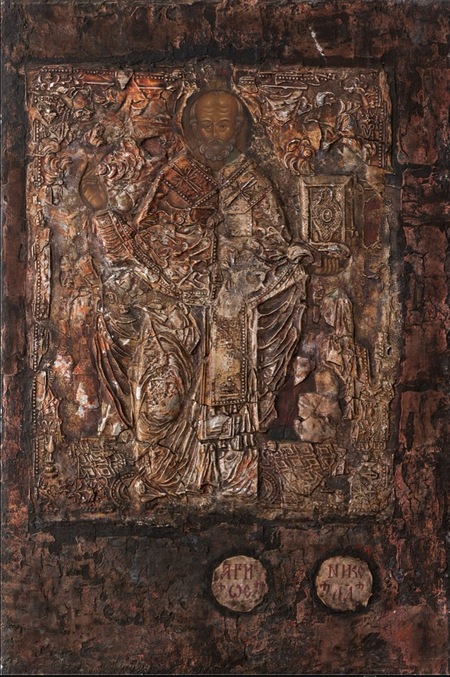
Research Highlight Religious Archaism in the «Easter» Relief An analysis of the monumental relief «Easter» reveals Plavinsky’s profound interest in Christian iconography and pre-Petrine culture. The artist completely transcends the traditional plane of the painting: raw chalk gesso is carved and built up, transforming the canvas into a tangible, three-dimensional artifact. The physical absence of a frame converts the canvas into a sacred object, extracted from its historical context.
Exhibition Format «Easter» occupies the central thematic axis. It is displayed on a false wall as the curator’s altar for the entire «Scriptorium» space, emphasizing the theme of the spiritual origins of the sign.
D. Plavinsky. Moldovan Tombstone. 1964. Canvas, mixed media.
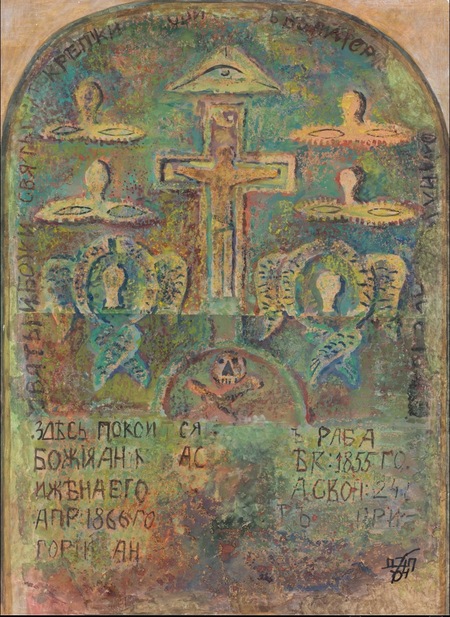
Curatorial Montage Ensemble Diptych of Codes We mount the canvases «Word» and «Moldavian Tombstone» on a single exhibition plane. This ensemble diptych is constructed upon the radical contrast of two cultural codes: one purely textual («Word») and one purely plastic, imitating a stone surface («Tombstone»). Together, they form a visual block representing the genesis of human writing from stone and earth.
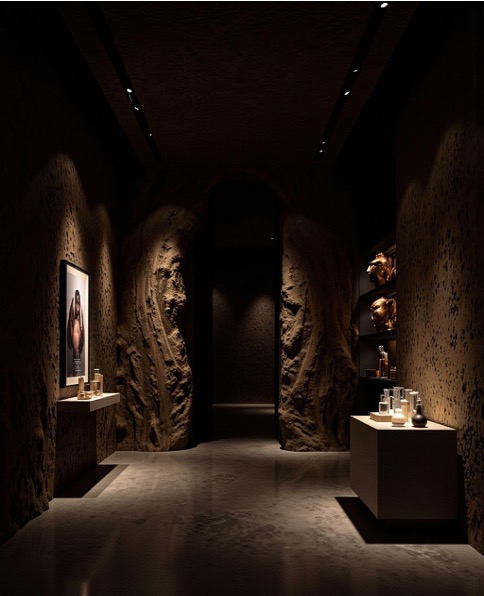
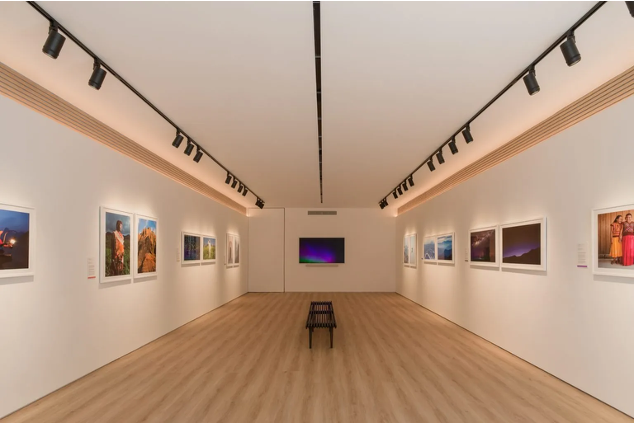
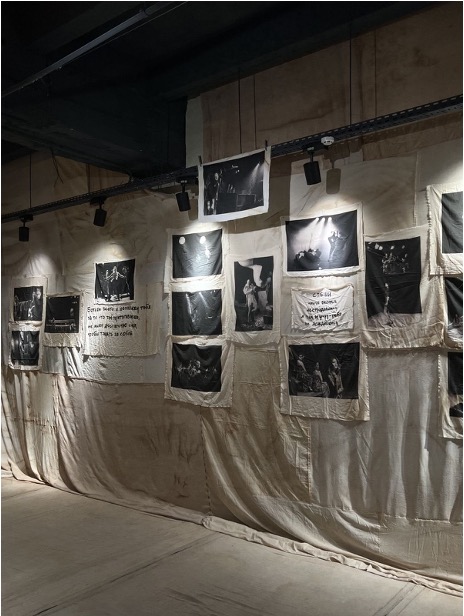
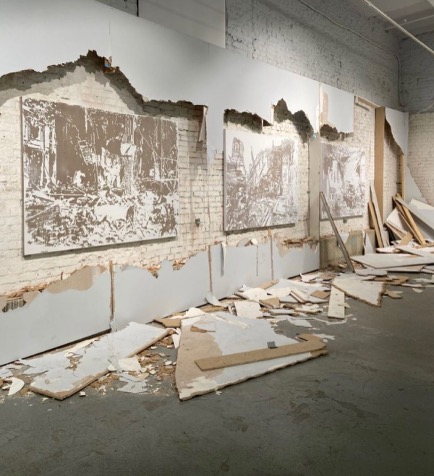
Scenography of Hall 1
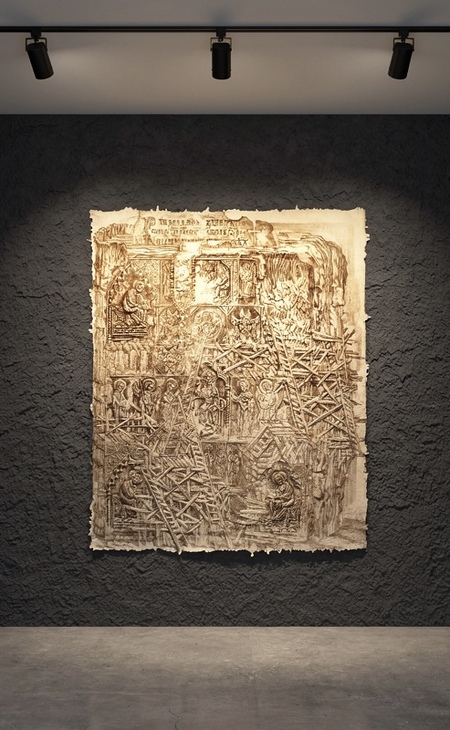
Set Design for Hall 1 (Zone A): Excavation Space The tactility and archaic quality evident in the early Plavinsky highlights directly dictate the set design for Hall 1. The space entirely abandons classical «white walls» in favor of matte graphite plaster and earthy, textured arched passageways. Dramatic warm lighting (3000 Kelvin) is directed precisely onto the reliefs of the works, revealing every physical layer of sand and marl.