

City Quest (or Gorkvest) is a traditional event for first-year students at the HSE Saint Petersburg campus, offering an immersive journey through the city.Participants explore the picturesque locations of St. Petersburg, solving riddles, completing tasks, and interacting with one another. By blending game elements, theatrical performance, and the urban environment, the quest transforms getting to know St. Petersburg into a vibrant team experience.This event helps students from out of town familiarize themselves with the city, while allowing all incoming students to make new friends, learn teamwork, and feel integrated into the new university community.

Mentors — active second-year students who help new freshmen adjust to university life. In other educational programs, these individuals are called coordinators.

Anastasia Tsybulskaya — scenario writing for stations, design and printing of materials, and acting at the station.Varvara Mikhailova — developing the visual concept, creating all design materials, and coordinating teams during the city quest.Yastrebova Anastasia — lead for the entire quest development process: from location scouting and station placement to overseeing scenario and prop development. She was also the conceptual inspiration for the opening involving the two grandmothers and one of the station writers. She played one of the grandmothers.
Our primary mission was to help first-year students connect with each other, adapt to the new environment, and feel like part of the university community through play and exploration of St. Petersburg. An equally important objective was to develop a unified visual style that would convey the atmosphere of the quest, reveal its themes, and unify all event materials.
Fostering Freshman Cohesion Creating opportunities for interaction and teamwork, allowing participants to meet not only their immediate group members but also other students in the program.Adapting to Students from Other Cities Helping those who have recently arrived in St. Petersburg feel more connected to the city and shape their initial impressions of it.Introduction to Petersburg’s Cultural Landscape Presenting the city through its spaces, history, and cultural context—not in the format of a traditional tour, but through an emotional and interactive experience.Developing Teamwork and Creative Thinking Placing participants in situations where achieving a common goal requires distributing roles, actively listening to one another, seeking unconventional solutions, and unifying ideas.Creating an Emotional Experience Making the event a memorable beginning to student life—a narrative in which the participant becomes a central character.Developing a Unified Visual Style Creating a recognizable identity that conveys the mysterious atmosphere of St. Petersburg, explores the theme of female creativity, and unites all the quest materials into a cohesive visual story.Designing Functional Design Materials Developing the visual presentation of publications and printed materials that not only supports the overall event concept but also helps participants navigate the city and engage with the challenges.Building the University Community Creating shared memories and experiences that will later form the basis for a sense of belonging to HSE and its student body.
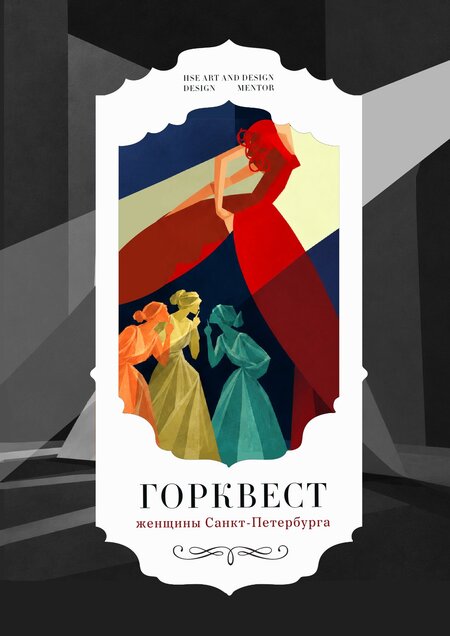
For the visual style, we selected two contrasting typefaces—Didot and Even Mono. Their combination helped emphasize the project’s character.Didot, with its expressive serifs and high-contrast strokes, became the primary accent font, lending the identity a sense of femininity and refinement. We paired it with the monospaced Even Mono, which introduced graphic rigor and a sense of structure.The contrast between the two typefaces allowed us to establish a clear typographic hierarchy and create a recognizable visual language where classical aesthetics meet modern design.
The palette is based on numerous shades of gray, which convey the reserved, slightly mysterious atmosphere of St. Petersburg. We complemented these with vibrant color accents to create a striking contrast and inject dynamism into the visual style. This combination helped emphasize the city’s enigmatic nature while preserving the intrigue characteristic of an urban quest.

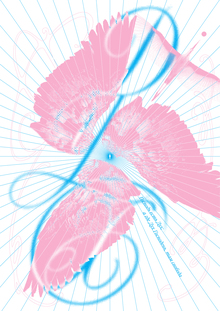
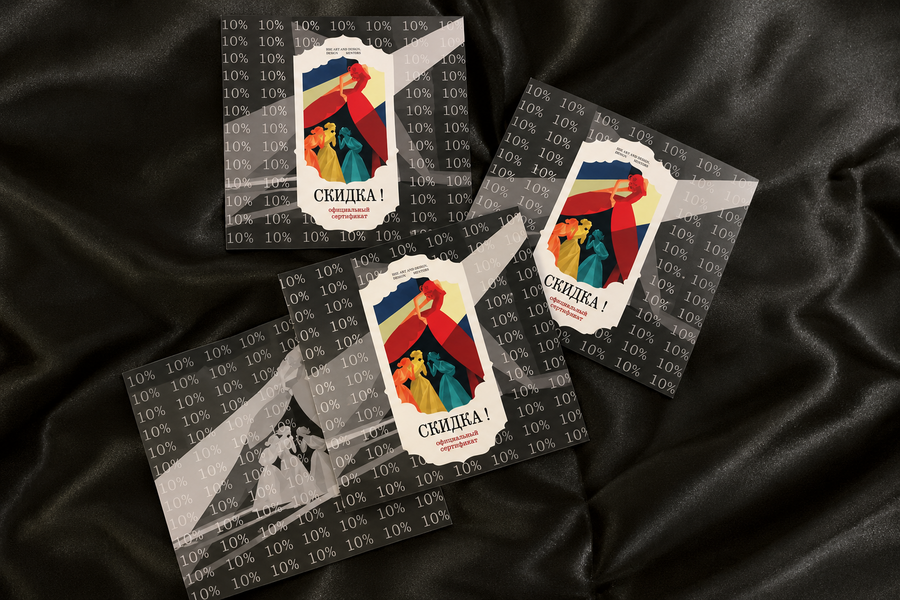
The visual concept is based on the contrast between the mysterious, gray Petersburg and the vibrant creative world of its female residents. Streams of color break through dark geometric shapes, gradually lifting the veil of secrets and introducing the viewer to the women’s stories of the city.The main protagonists in the publications are three friends who transition from post to post, unifying the entire visual narrative. Their bright dresses and dynamic silhouettes stand out against the gray surroundings, conveying creative energy and the multifaceted nature of feminine archetypes. A distinctive detail is the delicate lace framing, which lends elegance to the compositions and references the aesthetics of past eras. In this way, we presented Petersburg from a different perspective—vibrant, creative, and rich with intriguing stories.
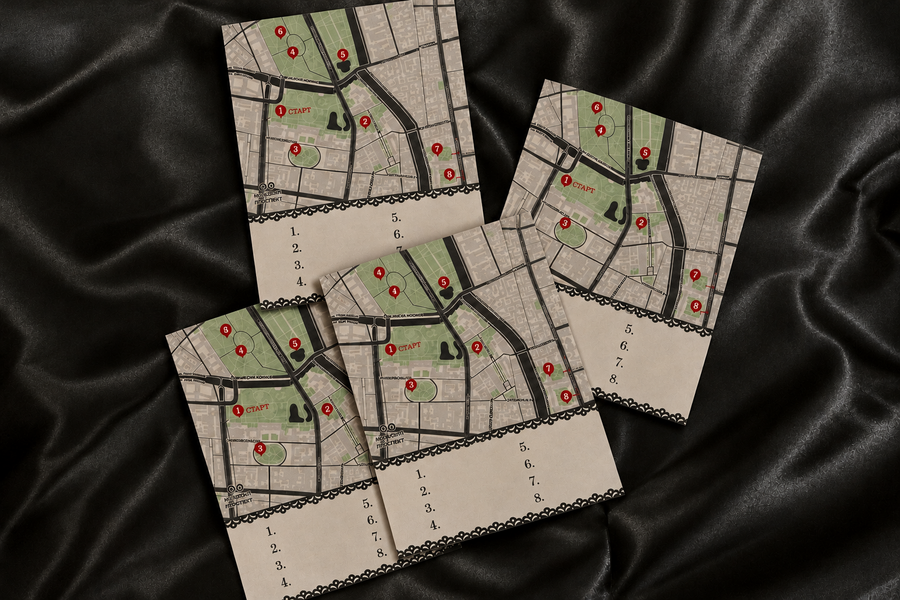
For the quest, we designed and printed a route map and certificates for the participants. We paid special attention to the map, as it needed to do more than just reflect the brand style—it had to be a complete navigation tool for St. Petersburg.
During its creation, it was important to us to meticulously plan the placement of points, the legibility of labels, and the ease of orientation. We considered that participants would use the map while walking through the city, so the information needed to be easily readable even while moving.
Preparing the print mockups was a separate phase. We had to translate the visual style from the screen to paper, while preserving graphic quality and usability. Ultimately, the printed materials became not just a part of the identity, but a crucial component of the quest itself.
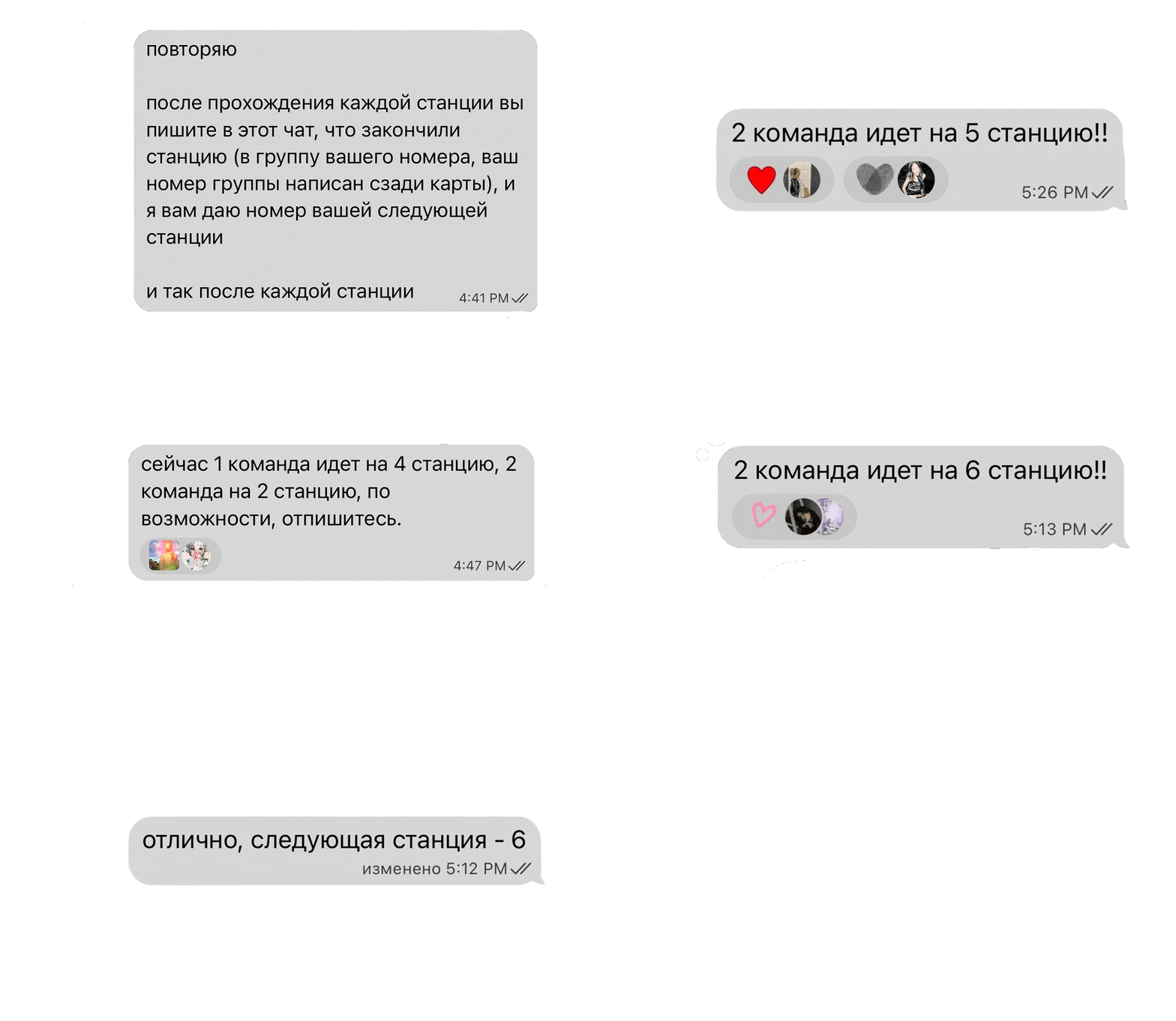
In addition to our acting roles, we were tasked with another important duty—coordinating the entire city-wide quest. In real time, we tracked the teams' movements, maintained communication with the station organizers, and worked to ensure all participants felt comfortable.During the event, we had to quickly change routes, redirect teams, and adapt to unforeseen circumstances to avoid delays and conflicts at the stations. It turned out to be much more complex than we imagined! We needed to keep countless details in mind simultaneously, make rapid decisions, and stay connected with everyone. This experience taught us how to operate under multitasking pressure and showed us the sheer amount of organizational work that goes into a successful event.
Plot begins with a conversation between two grandmothers reminiscing about their friend Svertochka. While alive, she kept a diary filled with clippings and notes that were precious to her—photographs, portraits, and poems. However, all the entries in the diary have suffered damage: the inscriptions have faded and the clippings have worn down over time. First-year students must help the grandmothers remember whose photographs were in the album. The main characters are eight women of St. Petersburg who lived in the city at different times and engaged in various professions. Among them are: the artist Elena Guro, the revolutionary Alexandra Kollontai, the activist Anna Filosofova, the director Dinara Asanova, the poet Anna Akhmatova, the poet and war correspondent Olga Bergolts, the ballerina Anna Pavlova, and the professor of mathematics Sofya Kovalevskaya. For each station, activities related to the main profession of the heroines were outlined. The task for the first-year students at the stations is to help the heroines remember their names.
Elena Guro’s Station: the main goal is to help the artist remember what she used to love drawing. She has a sketchbook and pastels; from her conversation, the freshmen should understand that Elena is drawn to the theme of nature and bring her drawings of nature within an urban setting. Alexandra Khoshabova played the role.
Dinara Asanova’s Station: she has several sheets with printed text for the film script, «The Woodpecker Doesn’t Get Headaches.» The freshmen must perform a short scene based on the script at the station and help Dinara remember who she was. Natalia Mets played Dinara Asanova’s role.