03–04.04
N. Lenin [V.I. Ulyanov]
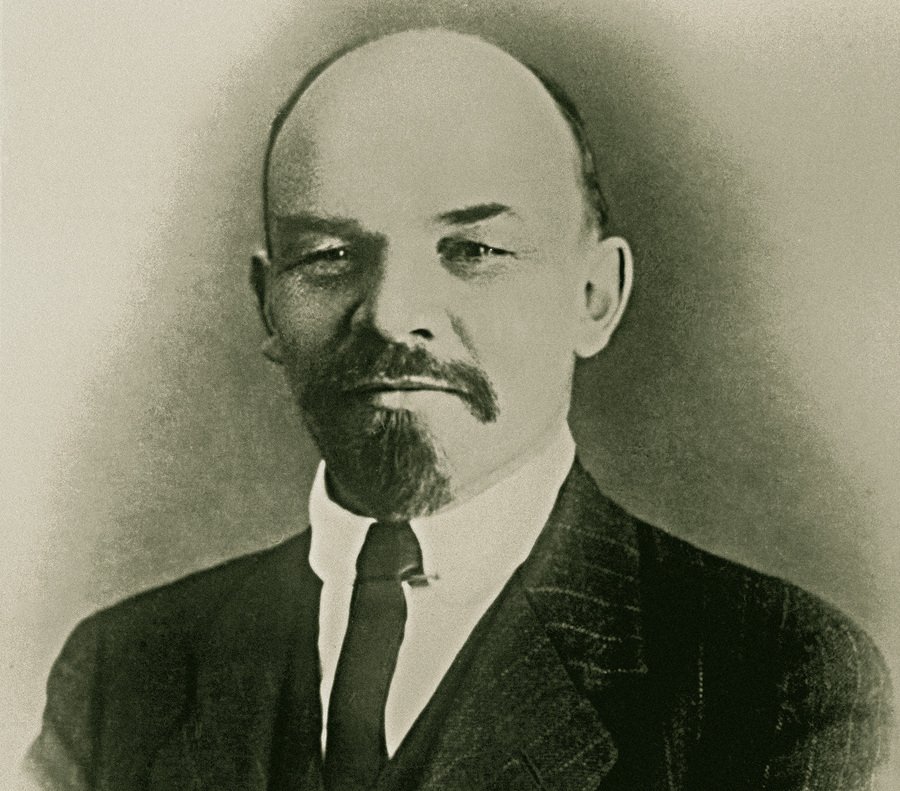
Stock Market Gazette, No. 16163 (Evening Edition) | Russkaya Volya, No. 45 (Evening Edition) | Izvestia of the Petrograd Council of Workers' and Soldiers' Deputies, No. 32 Passage of Russian Emigrants From Kolomna (Own Correspondent PTA). Recently, 30 Russian political émigrés arrived here by train from Teselburg, along with their wives and children, led by Lenin. The émigrés traveled through Germany in a sealed carriage, under the guard of three German officers. They had their own provisions, and they were forbidden from interacting with anyone from the public. The émigrés say they had intended to return via England and Norway, but our ambassador in Paris informed them that sea travel was closed, and the English authorities were generally slow to respond to their request. It was then that the Swiss socialist Zimmerwaldian, Platten, secured them the right to travel through Germany. According to the émigrés, they held no peace negotiations with German socialists…
Lenin’s Arrival Last night at 11:30 PM, Vladimir Lenin (Ulyanov), the leader of the Bolshevik faction, arrived from abroad after spending many years in exile. …Greeted in the square with thunderous shouts, he addressed the crowd, emphasizing that the entire world was watching Russia with admiration. «Long live the social revolution!» the orator concluded to the sound of the Marseillaise. Entirely unexpectedly, on April 3rd, the Executive Committee of the Russian Social Democratic Labor Party received a telegram stating that a large group of emigrants was returning from abroad, among whom was V. I. Lenin. This news caused great excitement among the social democrats, and arrangements for welcoming the guests immediately began. The Executive Committee decided to welcome Lenin through a special delegation… The timing was difficult: the holiday prevented the telegraph from reaching the proletariat masses, and there were no newspapers—so the workers' districts had to be informed by personal visits. Although the organizers had only about 12 hours, the news of Lenin and his comrades’ arrival quickly spread throughout Petrograd and stirred up numerous organizations. Military units that received this notification immediately issued orders for detachments of platoons to form an honor guard at the Finland Station. The sailors in Kronstadt were notified of Lenin’s arrival by telephone, and they promptly reported that despite the ice floes, they would manage to reach Petrograd on an icebreaker and would send their honor guard and an orchestra…
At 11:30 a.m., the train arrived. Lenin disembarked, greeted by friends and comrades from his long history in party work. Under the party flags, he marched to the station, with troops standing guard to the sound of the Marseillaise. The naval officer accompanying Lenin led him through the ranks of sailors, then asked him to return here, where Lenin delivered his first speech to the revolutionary troops in free Russia.
Continuing along the lines of troops, past the ranks standing guard at the station and passing the workers' militia, N. Lenin was met with enthusiastic welcomes everywhere. In the front rooms of the station, he was greeted by delegations, including N. S. Chkheidze, Chairman of the Executive Committee. Finally, Lenin reached the square. The sea of heads grew agitated; floodlights illuminated the square from end to end, banners snapped in the wind, and massive crowds shouted «Hurrah,» welcoming the arriving old soldier of the revolution. The people demanded a word. Lenin climbed into a vehicle, silence fell over the square, and Lenin delivered his first speech to the revolutionary proletariat of Petrograd here…
In front of the building of the Petersburg Committee of the R.S.D.R.P., a huge crowd gathered, and here, from the balcony, N. Lenin was supposed to speak three times…
…The celebration continued well past midnight. It was only at four o’clock in the morning that the workers of the revolutionary social-democrats of Petrograd left the meeting hall.
April 6 | Thursday
Moscow Chronicle
Early Morning, No. 75 Mysterious Car Recently, a car with armed individuals has appeared on the streets of Moscow. This vehicle was spotted on Povarskaya, Vozdvizhenka, and Prechistenka. Shooting was carried out on police officers from inside the car.
Scourge of the Wealthy A series of the most audacious robberies have taken place in the Dorogomilovo district. A detachment of mounted and foot soldiers was dispatched to the criminal element in Dorogomilovo. Several arrests were made…
Street Shooting Incidents On Prechistenka Boulevard, some hooligans in the yard of property No. 11 began shooting at passersby. The public scattered in a panic. When the police arrived, the hooligans ran away…
Season Opening Yesterday, the opening of the football season took place at the Zamoskvoretsky club, attended by a huge crowd. The hosts played against K.F.S. The match was very interesting and ended 0–0; the game was refereed by E. E. Fiala.
07.04 | Friday
April Theses
On the Tasks of the Proletariat in This Revolution …I am printing these personal theses, supplied only with the briefest explanatory notes.<…> 3. No support for the Provisional Government; clarification of the complete falsehood of all its promises, especially regarding the refusal of annexations. Exposing, instead of permitting the sowing of illusions, the «demand» that this government—the government of capitalists—cease to be capitalist. 4. …Clarifying to the masses that the SRD is the only possible form of a revolutionary government… As long as we are in the minority, we conduct work of critique and error-finding, while simultaneously advocating the necessity of transferring all state power to the Soviets of Workers' Deputies.<…> 7. The immediate merger of all national banks into one national bank and the introduction of control over it by the SRD. 8. Not the «introduction» of socialism as our immediate task, but the immediate transition to control by the SRD over public production and the distribution of goods… N. Lenin
Press Reactions Lenin’s behavior meets with sharp universal opposition. «Zemlya i Volya» notes the tactlessness of his passage through Germany… Upon arriving here, Lenin became the most energetic proponent of the reaction. «Rabochaya Gazeta» is deeply convinced of this… «Pravda» is clearly embarrassed by Lenin’s conduct…
Party of Communists Lenin, together with a group of uncompromising Bolsheviks, decided to break away from the s.-d. labor party and form their own faction called the «Party of Communists.» The party program will be established at a special congress called specifically for this purpose.
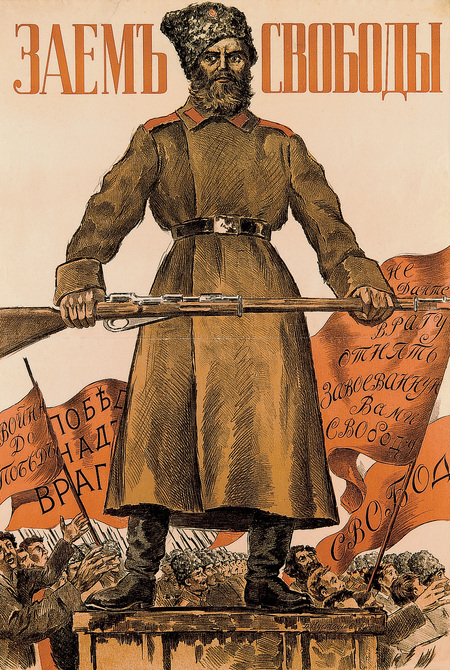
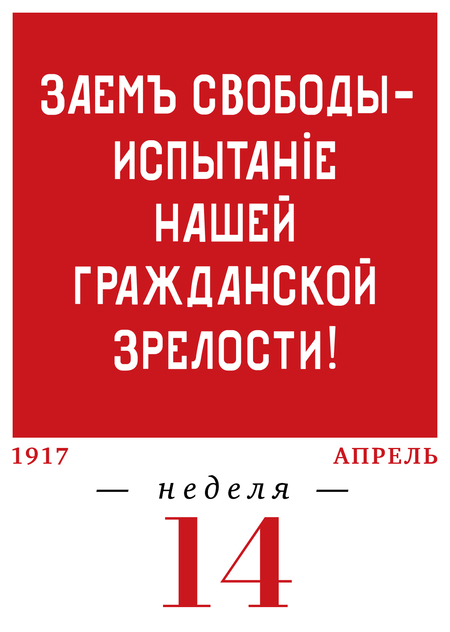
Speech, No. 80 The Loan of Freedom — A Test of Our Civic Maturity The emancipated Russia faces its first serious political examination before the world. The subscription for the Loan of Freedom has begun… Within a month, the application for loan certificates has increased by over a billion rubles. Increased use of the printing press threatens a new escalation in the already exorbitant cost of living. It is our duty to relieve the government of the sad necessity of relying on this financial source… Everyone must subscribe as much as they can. The terms of the loan allow even the smallest savings to be placed in it… The initial deposit for the loan may not exceed 6 rubles, which is roughly one day’s wage or the price of two poods of wheat… …The actual interest rate on the loan is six, and moreover, since 1922, the loan has been being circulated, and from that moment, there is the opportunity to receive a 17,8% premium on the initially invested capital upon repayment. Considering the risk currently associated with investing free funds in dividend stocks and real estate, the Loan of Freedom must be recognized as a profitable investment of capital. …Avoid unnecessary spending. In the pursuit of comforts and luxuries, you are only contributing to rising prices and increasing extravagance. The weaker the demand for goods, the less basis the merchant has to inflate prices. The less you ask for goods, the more money you will place in the loan. Let the queues of buyers form at savings banks and banks, not at stores selling unnecessary items during the war.
Illustration: B. Kustodiev. Poster «The Loan of Freedom»
04/08 | Saturday
Early Morning, No. 77 Ukrainian Congress General Alekseev gave his consent at Kiev. Alekseev agreed to the formation of two Ukrainian brigades. War Minister A. I. Kuchkov confirmed Alekseev’s statement. The report sparked enthusiasm at the Ukrainian congress. A banner bearing a portrait of Taras Shevchenko, presented in the hall, provoked an explosion of delight among those present… …At the Ukrainian congress, the necessity of having our own army and currency—what Ukrainians possessed before 1654—was discussed.<…>
Ukrainian Teachers' Congress Kiev. The Ukrainian Teachers' Congress has concluded. The resolution regarding middle schools states that teaching the Ukrainian language, history, and literature is mandatory in all schools in Ukraine, even private ones. In schools where the majority of students are Ukrainian, entirely Ukrainian instruction will be introduced over two years… At the request of a significant Russian minority, Russian parallel classes are being created in Ukrainian gymnasiums. The resolution regarding elementary schools recognizes the necessity of Ukrainizing all-class schools starting at the beginning of the new academic year; the Russian language, as a subject of study, will be taught starting in the third year of schooling… During the Ukrainization of all types of primary schools, the rights of minorities and national groups are guaranteed. It was decided to appeal to professors at higher education institutions in Ukraine who speak Ukrainian to deliver lectures in Ukrainian. (Correspondent Report)
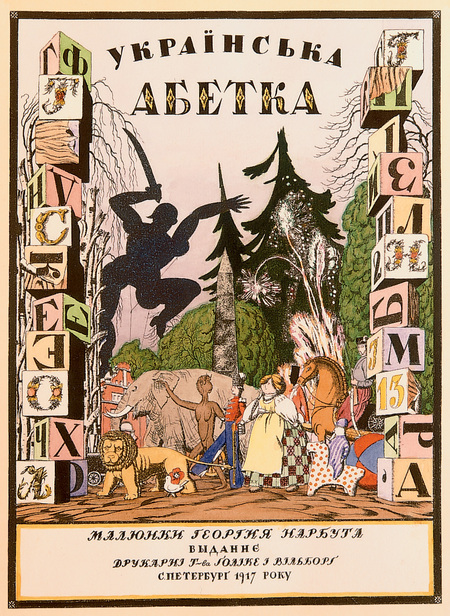
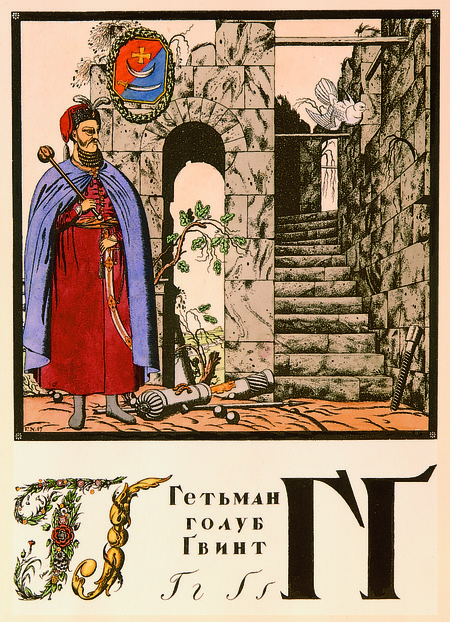
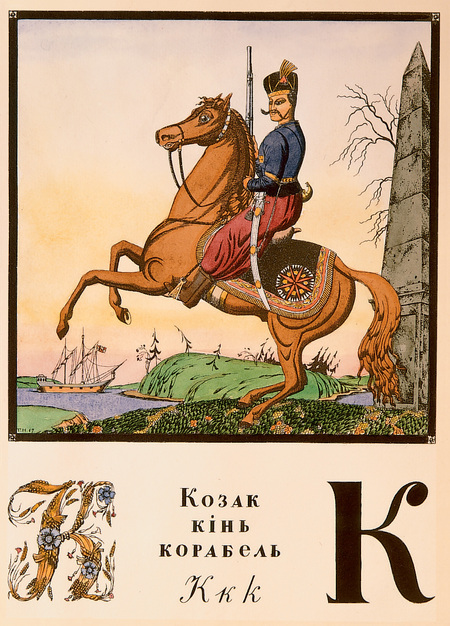
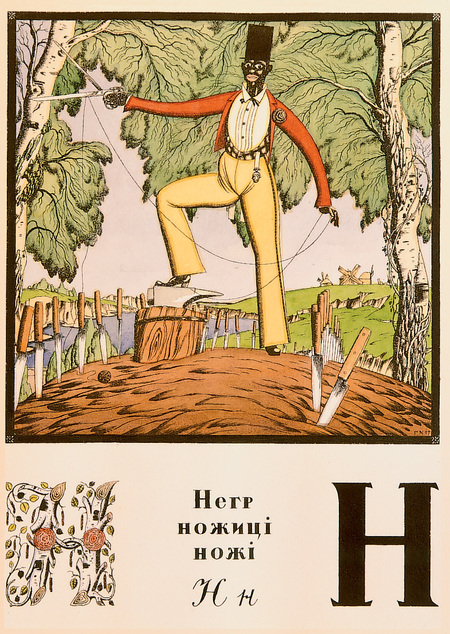
Narbut. Ukrainian Alphabet
April 9 | Sunday
Ramp and Life, No. 15 Theatre Chronicle The issue—which was of intense interest to actors at State Theatres—concerning what objectives State Theatres should pursue and how they ought to be organized, was resolved at the last general meeting of representatives from State Theatres and specially invited individuals—among whom was V. I. Nemirovich-Danchenko of Moscow—in the sense that theatres must operate on autonomous principles, under conditions that guarantee the full realization of that autonomy by the commissar for the former Ministry of the Court.
Revolutionary
At festivals in Moscow’s finest movie theaters, the film «Revolutionary» enjoyed outstanding success, starring the renowned artist I. N. Perestiani as both writer and lead actor. At the Khanzhonkova Theater, the packed audience gave Mr. Perestiani a loud ovation.
Theatre Gazette, No. 15
Sketch by I. N. Perestiani… Despite the evident rush of the production, director E. Bauer delivered several beautifully poignant and powerful scenes. The depiction of the exile is particularly strong and interpreted with romanticism. Snow and fur, people in animal skins, longing for their homeland, wasting away from consumption, and the impossibility of returning home. The scene of the exiled man’s death—set on a beautifully realized naturalistic Yakut yurt set—is breathtaking, as is the moving burial of the deceased and the oath taken over the grave.
The script is tastefully crafted; it tells the story of a revolutionary who spent many years in exile and was returned to free Russia by the decree of «Citizen Kerenovsky.» The old populist, the «grandfather, ” meets his grandson, whose party opposes the war. A series of conflicts are successfully resolved with both the grandfather and the grandson joining the volunteer army.
Many lines resonate deeply with the audience. The play is easy to watch, and the viewer is moved by the noble performances of Mr. Perestiani („grandfather“), Ms. Bogdanova, Mr. Strizhevsky, and others.
W.