July 31 | Monday
Birzhevyye Vedomosti, No. 16363 (Evening Edition) Fourteen People Killed on the Baltic Railway Yesterday …At three o’clock in the afternoon, at the tenth milepost, between Ligov and Petrograd, during the crossing of oncoming trains, twelve people fell off the footplate… …A total of six people were killed, two of whom were soldiers… A similar tragedy occurred on the same railway near Krasnoye Selo station, where passengers and six soldiers standing on the footplate fell off at full speed and were killed on the spot. Throughout the entire line of the Baltic Railway, up to Volosovo station, a number of accidents occurred due to overloaded carriages. Passengers, unable to enter the wagons, began to congregate on the roofs, some of whom were intoxicated and fell from the roofs while the train was moving at full speed. In total, fourteen people were killed on the Baltic Railway during the entire day, eight of whom were soldiers…
Disaster on the Nikolayev Railway …On July 31 at 3:15 AM, passenger train No. 10 (from Moscow) at Bolshaya Vishera station was mistakenly routed onto a siding occupied by a freight train. Three second-class carriages, a baggage car, and a refrigerated car were destroyed. Forty people were killed, and approximately 70 were injured…
Evening News, No. 106 Epidemic of Robbery A strange, unprecedented spectacle has recently become the norm on almost all passenger trains arriving in Moscow via the Moscow-Kursk, Kazan, Nizhny Novgorod, and Ryazan-Ural railways… The cars are, of course, crammed to capacity, which is hardly news… But what fills them are not passenger carriages—they are veritable storehouses, completely piled high with sacks of bullets and bags of oats, flour, potatoes, wheat, and buckwheat. These bullets and sacks are everywhere: They fill every shelf; they spill out from under the benches; they clutter the aisles so thoroughly that not even the most diligent conductor can navigate through them, meaning ticket checks are virtually nonexistent. The cars are stuffy, hot, and dusty… And the air is thick with flour dust… From the conversations, you can surmise that the cars are overrun by the most brazen predators—speculators who shamelessly rob not only those whom they resell the imported goods to at five or six times the original price, but also the state treasury, since they pay nothing for the transport of their «hand luggage, ” and often not even for the ride itself… And what is particularly astonishing about these swarms of speculators, constantly moving to and from Moscow—is that a huge percentage of them are soldiers. And, to some extent, people dressed in military uniforms… They brush off two or four police officers as if they were annoying, yet completely harmless, flies.
08.01 | Tuesday
Departure of the former royal family
Exile of the former emperor and his family to Tobolsk. The Provisional Government resolved in a secret meeting to transfer the former emperor and his family to Tobolsk.
Birzhevyye Vedomosti, No. 16364 (morning edition) | Novoe Vremya, No. 14842
…This decision was prompted by counter-revolutionary agitation that became known to the Provisional Government. Information had emerged about possible attempts to free the former Tsar from the Alexander Palace. The Provisional Government took extraordinary security measures. The Tsarskoye Sel garrison was reinforced. The former Emperor was guarded by a triple guard. It was then decided to completely isolate the former Tsar. Initially, there was discussion about sending the former imperial couple to one of the Volga region cities in Russia. Suggestions included sending the former Tsar to Kostroma, Yaroslavl, or Nizhny Novgorod, but it was later decided to send the former Tsar to a more remote location—specifically, Tobolsk. The former imperial couple was informed of the Provisional Government’s decision. The former Tsar and Tsarina did not object to the transfer to Tobolsk… The Council of R. and S. insisted on moving the former Emperor and his family from Tsarskoye Sel to a more remote area of Russia. The former Emperor’s daughters were offered the option of remaining in Tsarskoye Sel or Petrograd. However, they stated that they would accompany their parents.
On Sunday, July 30, the spiritual advisor of the royal family, accompanied by deacons and singers, was summoned to Alexander Palace to perform the final liturgy and a blessing service. At midnight on August 1, a foot guard approached Alexander Palace, cavalry arrived, and cars, trucks, and convoys began to pull up. The unusual activity around the perimeter of Alexander Palace attracted many people, who were then dispersed…
From the morning of July 31, energetic packing took place in the palace. The departure arrangements for the former royal family were being coordinated by local executive authorities with the involvement of A. F. Kerensky. Many trucks had already shipped the belongings to the Alexandrovskaya station by nightfall. The royal family waited for their departure all night without sleeping. At all times, A. F. Kerensky or the aide to the commander, Lieutenant Kozminsky, were in the palace.
It was only at a quarter past six in the morning that the staff learned what all these preparations signified.
Before leaving the palace, lines of mounted escorts formed up, tasked with closing the entire procession. Three royal open cars were positioned in front of the palace…
The former Tsar exited the palace and strode toward the automobile in the escort of A. F. Kerensky. Some witnesses felt that tears were welling up in the former Tsar’s eyes. He was dressed in a military uniform. Beside him walked Alexey Nikolaevich in his sailor shirt with ensign epaulets. Alexandra Feodorovna left without assistance; she had recovered from her illness shortly before the departure. The Grand Duchesses, dressed in light summer dresses, struck observers with their unwell appearance—they had recently suffered typhus and had shaved their heads.
The former royal family was seated in the automobiles, accompanied by Alexey Nikolaevich’s tutors and the Grand Duchesses' ladies-in-waiting. A. F. Kerensky accompanied the Tsar.
An armored car was sent ahead down the highway through the park. Along the entire route, all the way to Alexandrovskaya station, lines of riflemen formed on both sides to guard the path. The motorcade was escorted by a cavalry troop.
Security was rigorously established along the route. People were ordered to be on high alert. Each rifleman was issued 60 cartridges…
It began with a wonderful, sunny morning. There wasn’t a single unauthorized spectator around. A. F. Kerensky showed constant great concern and resolutely monitored every detail of the trip. The cars moved slowly along the highway, and within fifteen minutes, they arrived at Alexandrovskaya Station, where a specially prepared train from the Northern Railway—consisting of six first-class carriages—was already waiting. The train featured a dining car in the center and three sleeping cars. The former royal family and their accompanying staff were housed in these cars. The royal party was situated together in the train. A convoy was placed in the third-class carriages situated at the front and back. Machine guns were mounted on the platforms of the convoy cars. Around six in the morning, the train with the former royal family departed from Alexandrovskaya. A. F. Kerensky left with the train. Before departing, the former Tsar bid farewell to the convoy personnel. Throughout the journey, he remained silent and contemplative. The heir, as was customary, was in good spirits. As for where the royal family went—there is no definitive information on this matter…
Peasant Delegate at the Moscow State Council. Illustration by M. Nappelbaum.
Exchange Gazette, No. 16364 (Morning Edition) State Council in Moscow The State Council in Moscow, convened for August 12, will last for three to four days. The Council will open with a declarative statement by Minister-President A. F. Kerensky regarding the general state of the nation… A. F. Kerensky, by the way, will emphasize that the State Council in Moscow has been called to ascertain the general situation, not to discuss matters of state governance. A. F. Kerensky will indicate that the Provisional Government directs Russia’s domestic and foreign policy, bearing full power and all responsibility for its actions… The sessions of the State Council will take place in the building of the Bolshoi Theater. Finland, Ukraine, and Poland will also receive invitations to participate in the State Council in Moscow. Members of the 4th State Duma will be present in full at the State Council in Moscow. The Council will also include presidiums of all Executive Committees of the Councils of R., S., and Kr. Deputies, representatives of science and art, representatives of industry, cooperatives, city public administrations, all political organizations, and so on.
Evacuation of the Tauride Palace All institutions of the Councils of R. and Deputies have moved from the Tauride Palace to the Smolny Institute. Starting August 1, the Tauride Palace will be managed by a construction commission of the Provisional Government. Work on reconfiguring the Tauride Palace will proceed at full speed from August 1. The Provisional Committee of the State Duma will remain in the Tauride Palace for a time.
August 3 | Thursday
A Riotous Crowd
Sovremennoye Slovo, No. 3399 Assisting Commissar of the 3rd Spassky Sub-district, Sharikov, was freed by the police from the grasp of hooligans. In the city of Petrograd, crowds of curious onlookers gathered yesterday afternoon near the butcher shop on Sadovaya Street, drawn by a scandal ignited by a group of dark-clad individuals over the following matter. Leather intended for shipment to one of the factories was being removed from the shop. The people overseeing the removal possessed the corresponding identification from the local police force. However, several rogue merchants, mostly soldiers, began shouting that the shop owner intended to conceal the leather goods from requisition. The agitators rushed the individuals accompanying the leather carts—the orderlies—and began beating them. The crowd invaded the shop and started to cause havoc. Sharikov, the assisting commissar of the 3rd Spassky sub-district, upon being informed of what was happening, went to the incident site accompanied by five police officers. The enraged crowd subdued the police officers and, shouting, «Beat the Jews, ” „Beat the police, ” attacked Sharikov, beat him until he lost consciousness, and, wrapping him in dirty straw, took him away in a cab heading toward Nevsky Prospekt. Then, part of the crowd, incited by specific individuals, headed to the commissariat and caused complete destruction there… A small detachment of soldiers who arrived at the scene of the riot finally managed to restore order. One of the police officers opened fire, which forced the crowd to flee in a panic. Assisting Commissar Sharikov was freed from the hands of the hooligans by the police and was sent to the Obukhov Hospital in heavy condition. Sharikov’s gold watch on a chain, a wallet containing 200 rubles, and all his documents were missing. The police are aware of most of the individuals responsible for the riot. Steps have been taken to detain them.
Exchange Gazette, No. 16368 (morning edition) Execution of Deserters In the 7th Army, the verdict of the military field court ordering the execution of three deserters for treason against the homeland and the revolution was carried out. On the day of the executions, about 150 deserters voluntarily presented themselves to the first stage commander.
August 4 | Friday
All-Russian Chamber of Commerce and Industry Congress
Yesterday, the second All-Russian Trade and Industry Congress was held in the Theological Lecture Hall of Moscow University. Approximately 300 delegates have arrived so far… All the largest stock exchange and trade and industry organizations are represented at the congress. Among the representatives of science are Professors P. B. Struve and M. N. Sobolev.
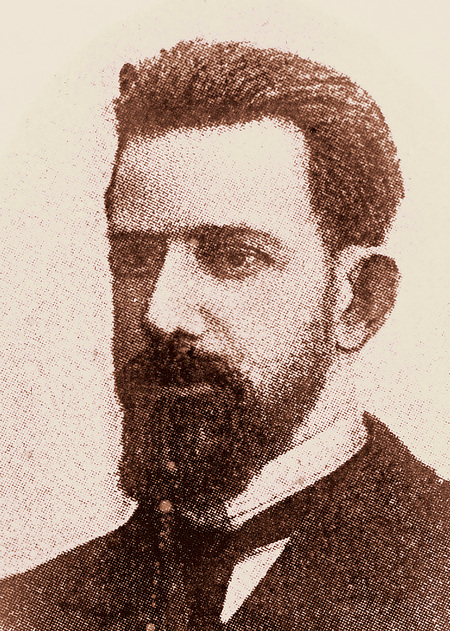
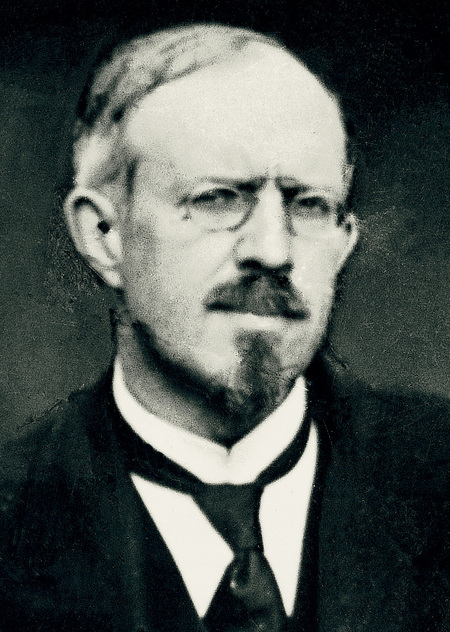
P. Strove on the left, P. Ryabushinsky on the right.
Novo Vremya, No. 14844 | Russkoye Slovo, No. 177 …The chairman of the congress, P. P. Ryabushinsky, began his opening address: «We have gathered for this congress with a heavy heart. A thick gloom hangs over all of Russian land. After the overthrow of the hateful Tsarist government, there was hope that the Russian state would find a direct path. All possibilities opened before the Russian people, but, regrettably, we have spoiled them with our own hands… What lies ahead? That is the question. The government believes that only through governmental measures—through the monopolistic organization of industry and trade, a state monopoly—can the country be pulled out of its dire straits. …Our authority is struggling to find funds and does not know how to escape its present difficult situation. It continues only the unsuccessful path followed by our old regime: it prints promissory notes. All of this, gentlemen, frightens us… We know that the natural development of our life will proceed as it should, and, regrettably, it will severely punish those who violate economic laws… Regrettably, the strong hand of hunger and popular poverty is needed to seize the throats of those false friends of the people—members of various committees and councils—to make them see reason… Russian land groans under their fraternal embraces. The people do not yet understand this, but they will soon understand and say, „Away, deceivers of the people.“ When will the formerly enslaved, but free Russian citizen, rise up? All we hear are the satanic guffaws of those who are ashamed to speak the word homeland… „Merchants, traders, we must save the Russian land.“
This speech, interrupted by resounding applause, made a profound impression on the congress… Following P. P. Ryabushinsky, S. N. Tretyakov presented an extensive report on the negotiations regarding the formation of a new composition of the Provisional Government… The congress acknowledged S. N. Tretyakov’s work in this area as correct…
The university’s theological hall is filled with people who are frightened and hardened. Sardonic smiles, shrugging shoulders. Exclamations can be heard: — We cannot live like this!.. — We are heading toward ruin, toward disaster… These are merchants and industrialists, gathered from all corners of a shocked Russia. Their mood is profoundly grim… The extensive, thoughtful, angry, and masterfully delivered speech by P. P. Ryabushinsky, the leader of Moscow and Russian trade and industry, was a clear and vivid expression… seemingly of the entire congress, without the slightest exception… — We await strong authority, —P. P. Ryabushinsky said, —but from the very beginning, a gang of charlatans has effectively taken power in Russia!.. — That’s right! Precisely! Bravo, bravo!.. — This entire detrimental system leads to destruction and consumes vast amounts of state funds… — Power raises taxes… They tell us, «Sacrifices, sacrifices.» But it’s not enough to demand—one must also know how to do things. And it is rightly said among us, «Is it wise to give to a wasteful person?» — True! Absolutely true! Bravo! —the congress erupts in a storm of approval. — It is time to admit that we cannot have any system other than the bourgeois one. This is the structure in the whole world today. And our power will only be true power when it thinks and acts in a bourgeois manner. Anything else will be a fiction and a disintegration of the state organism. — Correct!..
S. N. Tretyakov’s speech was met with approval and equally pronounced condemnation from the Provisional Government. The speaker’s dark eyes shone menacingly and resolutely. His rhetoric was just as firm and harsh. The speaker recounted his negotiations with K. G. E. Lvov and later with A. F. Kerensky regarding the trade minister’s portfolio. S. N. Tretyakov was convinced that the representative of the commercial class could not and could not share power with the current ministers and their known program… The stern, unfavorable opinion of the speaker seemed to lean toward the idea that the left-wing ministers should let themselves collapse completely without help from the right. The speaker called this an «inevitable evolution.» And at the end of this evolution, perhaps Russia’s demise, or perhaps a partial collapse. And by that time, the commercial class, having organized itself, must be prepared. Russia cannot do without its business people. They are necessary like bread and water. And then, having taken power, the experienced men will save Russia… In the same tones of malicious condemnation, hopeless pessimism, open rupture with the Provisional Government, and undisguised hatred for the socialists, a number of other speakers spoke. And this all-Russian assembly of commercial people left a heavy feeling on the soul…
Aug 5 | Saturday
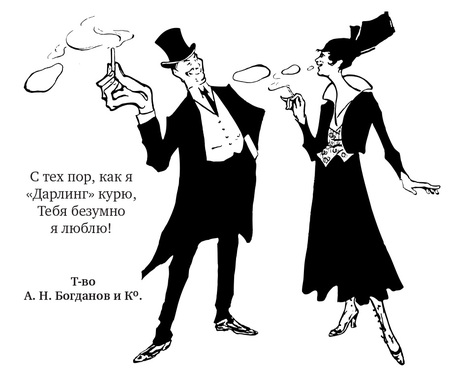
Petrogradskiy Listok, No. 187 The Tobacco Plague Finally, the tobacco syndicates have achieved their goal; as of August 1st, the price of tobacco and cigarettes has risen by almost 90 percent, and the lion’s share of the profit will go into the pockets of various shareholders, with only crumbs passing on as increased excise tax rates to the treasury…
At the Alexandrinsky Theatre The former administration spent over 60,000 rubles on the production of Lermontov’s «Masquerade.» Amidst the luxurious sets, costumes, and staging, the psychological drama of Lermontov was overshadowed by the artistic input of Golovina and the «tricks» of Meyerhold. The theatrical event literally reduced itself to a spectacle and a decorative presentation. The poet’s intent and his word were relegated to the background. Now, the artists have adopted this critical perspective, rightly pointing out that such a staging of Lermontov’s drama leaves no room for their own theatrical creativity. «Masquerade» has been decided to be removed from the repertoire…
August 6 | Sunday
Morning Russia, No. 191 Murder of Colonel Purgasov Petrograd (PTA). On July 30, the commanding officer of the regiment, G. M. Purgasov, was killed by his own soldiers. One of the platoons in this regiment refused to recognize the officer, who had been newly appointed as the platoon commander, as their superior. The main perpetrators were identified and arrested. The platoon had been ordered to be disbanded, but the platoon refused to comply with the order, and a part of the regiment revolted. When the regiment commander attempted to restore order by force, the rest of the regiment also joined the mutineers and surrounded the commander, who fell victim to the blows of the deranged crowd.
Execution of the Chairman Kyiv (Own Correspondent). The chairman of the executive committee of the workers' militia, Popov, and the committee secretary, Tsisluk, were executed by a «shock battalion» without trial and in the sight of all the workers of the engineering-construction militia who were forced to attend. The militia sent a statement to the Ministry of Justice demanding the appointment of a commission of inquiry.
Resolution of the Cossack Council Novocherkassk (PTA). …The majority of deputies sees a way out of the tragic situation of the homeland in the Moscow National Council and insists that a resolution be issued clearly indicating that the source of appointing unified authority in Russia is the Moscow Council. The proposal is adopted. Ten deputies from the Don are appointed to the Moscow Council, led by Ataman Kaledin…