05/16 | Tuesday
Moskovskie Vedomosti, No. 101 Moscow Chronicle Given that the production of ice cream—a luxury item—consumes large daily amounts of sugar, cream, milk, and other nutritional products, the Commissar for Moscow, N. M. Kishkin, has announced a mandatory decree prohibiting the production and sale of ice cream in Moscow starting May 14th.
May 16–17
Inevitable catastrophe and boundless promises
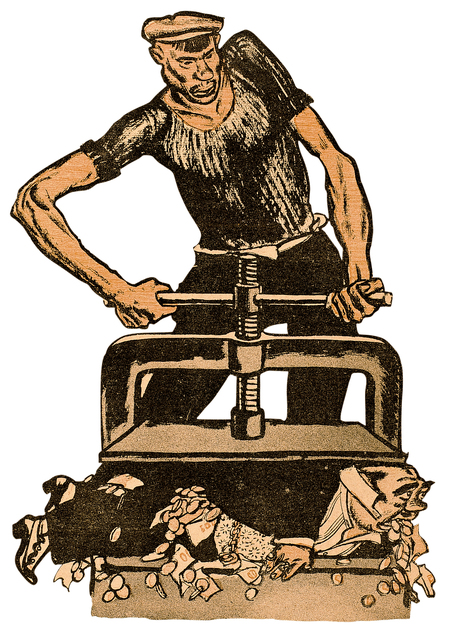
Truth, No. 58, 59 Article One …In a previous issue of «Truth,» we pointed out that the program of the Executive Committee of the Council of Workers' and Soldiers' Deputies is now no different from the program of «terrible» Bolshevism. Today, we must state that the program of Minister Menshevik Skobelev goes beyond Bolshevism… specifically in the point where it promises to «take profit from the banks' coffers» in the amount of «100 percent of the profit.» Our party is much more modest. It demands less in its resolution—namely, only the establishment of control over banks and a «gradual» (listen! listen! the Bolsheviks are for gradualism!) «transition to a more equitable progressive taxation of income and assets»… …The whole point is that the «new» Provisional Government does not want to get to work, and even if it wanted to, it could not, being entangled by thousands of chains representing the interests of capital. The entire people should be called upon in one day to get to work… …to develop immediate practical measures to merge all banking and credit institutions into one state bank and to establish precise control over all banking operations… …to grant oversight not only to all Councils of Workers', Soldiers', and Peasants' Deputies, but also to the councils of workers in every major factory, as well as to representatives of every major political party… …to call upon the entire people to immediately implement universal labor service through local self-government, and to establish a nationwide militia for its control and execution… Anyone who genuinely wants to save tens of millions of people from disaster must be prepared to defend such measures.N. LeninArticle Two …We must seize the main fortress of financial capital; without this, all phrases and schemes for saving from catastrophe are a deception. Furthermore, the capitalists, and even most capitalists, do not intend to «strip» the proletariat—to deprive them of «everything"—but rather intend to employ them in useful and honorable work—under the control of the workers themselves.N. LeninIllustration: Novy Satirikon, No. 21. Drawing by V. Lebedev
05/17 | Wednesday
Mutiny of Deserters in Kyiv
Clashes between deserters and the police, as well as regular soldiers, are becoming increasingly severe. In the pursuit of deserters, the police have detained many active-duty soldiers who happened to not have their documentation with them. These soldiers' protests caused general unrest among the detainees.
Russian Word, No. 109
Rebellious deserters throughout the city are being chased by the police, beating them and seizing their weapons… Artillery was sent against a group of deserters who had captured a machine gun. However, before the artillery arrived, the troops managed to disarm the deserters of the machine gun, which was never fired… But while defending the machine gun, the deserters fired from revolvers, wounding several people. Driven away from one location, the deserters gather in another… In the capture of the deserters, the cadets, in addition to the police, were involved…
It was established that the main cause of the deserters' revolt was the accumulation at a distribution point where all detainees—a significant number of former city guards and gendarmes, as well as professional thieves and robbers—were being sent. These sinister individuals began inciting the deserters with stories about how the police and cadets allegedly bullied people who did not happen to have identification, beat them, and so on. …Professional thieves, interfering with the group of deserters, shouted slurs against Jews and tried to start looting stores. However, their actions in this regard were unsuccessful… The night passed quietly in the city, although the population remained in a state of high tension after yesterday’s mass searches, arrests, and clashes… The deserters who caused disturbances yesterday either voluntarily reported to the assembly point or left the city…
May 18 | Thursday
New Time, No. 14780 Social Democratic Ruin The education system of the current ministry, involving the most prominent and radical socialists of all stripes—SDs, SRs, Laborites, and others—was met with great hope. Already within a week of taking office, the socialist ministers felt it necessary to report on their activities to the Council of Workers' and Soldiers' Deputies. The Minister of Posts and Telegraphs, Ceretelli, expanded primarily on general policy in his speech, omitting any mention of the condition of his direct department, which, as is known, has fallen into severe decline… Our industry is not less decayed than the postal service… Industrial ruin is growing not day by day, but hour by hour, and in the coming days, approximately 20% of all plants and factories in the Petrograd district are expected to shut down. According to industrialists, this is mainly a direct result of the wild surge in the price of labor. Workers' demands have boiled down to a slogan deadly to industry: maximum compensation for minimum labor input. Typically, industrial crises escalate due to overall overproduction; in our case, conversely, factories and plants are being forced to close amid massive underproduction of almost all consumer goods… By demanding impossibly high wages, the workers have effectively confiscated all enterprise profits and forced the erosion of its core capital. This situation, of course, cannot last long: enterprises are beginning to fail, the capitalists leading them are liquidating their businesses, and tens of thousands of workers—who are being paid more than the value of their labor—are ending up on the streets… …All of this will lead to the cessation of our manufacturing industry, providing nothing for the peasantry, who will be left without cloth, without boots, and without iron, while the peasantry will be obligated to feed hundreds of thousands of idle, unemployed people in the capitals and cities using bread requisitioned from their stores…
I. Gofstetter
May 19 | Friday
A. I. Konovalova’s Letter of Resignation
Yesterday, Minister of Trade and Industry A. I. Konovalov submitted a resignation request to Prime Minister G. E. Lvov. The primary reason for A. I. Konovalov’s departure from the coalition cabinet is the growing financial and economic crisis in the country.
Russkiye Vedomosti, No. 112 A. I. Konovalov on the reason for resignation …A. I. Konovalov fully approves the measures outlined by the government in the field of finance, such as increasing income tax, strengthening superprofit taxation, raising inheritance duties… He strongly supports conciliation committees and the creation of arbitration commissions to resolve conflicts between owners and workers, but he is highly skeptical of the form of state control and the method of regulating production proposed by some of the ministers. In the context of Russian reality, establishing democratic bodies, in Konovalov’s opinion, would simply result in inexperienced individuals filling most enterprises instead of improvement—leading only to final disorganization… …According to A. I. Konovalov, the hope for preventing a crisis could only exist if the Provisional Government finally demonstrated full authority, if it finally embarked on the path of restoring the state and social order that is being violated day by day. However, Konovalov does not see this possibility of the government demonstrating full authority in this case and deems it necessary to clear the path for representatives of the socialist parties, sincerely believing that the Russian Revolution must enter a new phase and reach a unified socialist ministry…
May 19 | Friday
Kronstadt Autonomous
Bich, No. 20. Kerensky—“revolutionary sailor.» Drawing by Deni
The Council of Workers' and Soldiers' Deputies of the city of Kronstadt, by a majority of 210 votes to 40, with 8 abstentions, resolved to take control of the actual power and administration of the city of Kronstadt, declare that Kronstadt does not recognize the Provisional Government, and replace all representatives and agents of the Provisional Government in Kronstadt with its own representatives. In order to communicate with the rest of Russia and Petrograd, it was resolved to address the Petrograd Council of Workers' and Soldiers' Deputies directly, bypassing the Provisional Government…
May 20 | Saturday
«Glass of Water» by B. Skriba
(Moscow Maly Theatre productions in Petrograd)
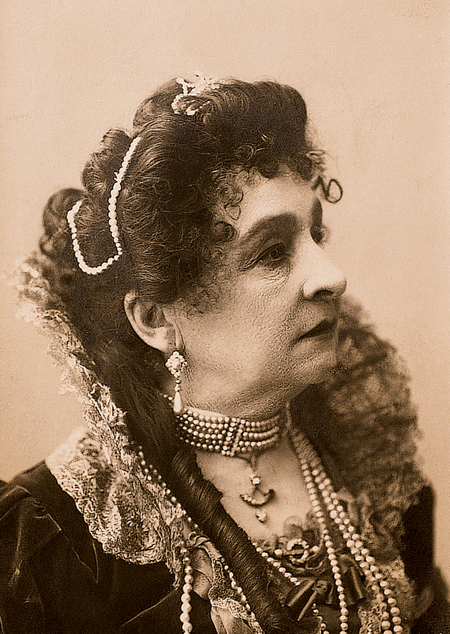
New Time, No. 14782…Skribovsky’s «Glass of Water» is, in its own way, a French theater «Three Musketeers»… In essence, this is not a «Glass of Water,» but a glass of old, aged port wine, which glows and sparkles like a golden topaz in the lights of the theater stage… Yesterday, A. I. Yuzhin—Viscount de Bolingbrok—raised this glass of port wine in honor of the old, true traditions of theatrical performance, and in tribute to a great talent who has been shaped by a fine school. A. I. Yuzhin presented a superb, meticulously detailed portrayal of a courtier—flexible as a Toledo blade when fate is against him, and as firm as a granite rock when fortune begins to smile upon him… Mrs. Shukhmina provided the stylish rendering of the classically virtuous ingenue, and Mr. Ostuzhev delivered it with a velvety quality, full of nuance and ornamentation. Mrs. Smirnova—Queen Anna (or perhaps Ermolova!)—and Mrs. Levshina—Duchess Malborough—added their touch to this interesting production. Why didn’t they stay in Moscow to comfort the Muscovites, or bring joy to the Petrograd residents?… The theater was far from full.K. OstrozhskyPhoto: Queen Anna — M. Ermolova
The «Alexandrinci» Tour Moscow exchanged its state theater troupes with Petrograd. Unfortunately, our Maly Theatre was poorly organized, and its company was assembled unevenly and haphazardly… The «Alexandrinci, ” on the other hand, gathered nearly all the best talent and created an ensemble in Moscow… All the new plays were a success. In „The Living Corpse, ” Mr. Apollonsky is magnificent; he surpasses the performer of the role of Protasov in the Art Theatre (Mr. Moskvin). Ms. Vasilyeva and Mr. Lersky delivered an astounding scene as Karenin and General Abrezkov. Furthermore, Ostrovsky’s comedy, „Wolves and Sheep, ” was better received than it is currently by the artists of our Maly Theatre: at the forefront was the wonderful Murzavetskaya—N. S. Vasilyeva; Lytkaev—Mr. Lersky—was excellent; and Mr. Apollonsky (Murzavetsky) and Ms. Tima (Glafira) were very good. However, there was no one like Anfusa Tikhonovna, as portrayed by O. O. Sadovskaya—and, of course, you can’t have two artists like Sadovskaya at once. The older plays—“Professor Storitsyn“ and „The Unfortunate Heiress”—were a success, mirroring last year’s performance. The latest novelty was the translated play „Love Has Conquered.“ Watching our guests perform, I thought that it was no wonder the Mikhailovsky Theatre existed for so long in Petrograd: the actors of the Alexandrinsky Theatre seemingly had time to study from the French—how to play graceful pieces with both humor and finesse…Not a columnist
Reduction of Confectionery Production Due to the scarcity of flour, butter, and sugar supplies, the Central Food Committee issues a mandatory decree prohibiting the production and sale of French rolls, enriched bread, kulebyaka, pies, cakes, waffles, all kinds of gingerbread, sponge cakes, biscuits, and other confectionery items. All current confectionery stock must be sold within one week.
May 21 | Sunday
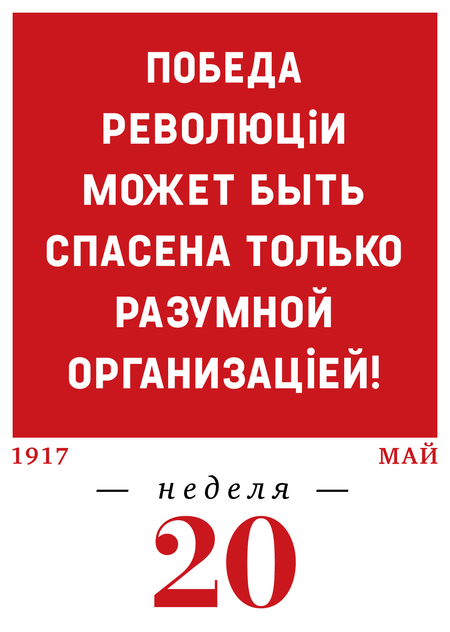
Russian Word, No. 113 Industry Regulation If Germany managed to avoid economic collapse during the war, it was only due to successful socio-state organization of its economy. Russia must assimilate the beginnings of state regulation of the economy in the coming years—and especially now—both at the production stage and in the product distribution stage. For example, when there is a severe shortage of fuel complicated by transportation disruptions, the distribution of coal or oil cannot be left to private hands. We do not need to discuss productive monopolies because the treasury is empty. The state lacks the funds to buy out old enterprises or start new ones. Therefore, every effort must be made for private industry to consolidate itself as much as possible… The German government used syndicates. We cannot avoid this method of combining enterprises, and we must consider measures for effective state control over these syndicates… The victory of the revolution can be saved only through rational organization! M. Bernatsky
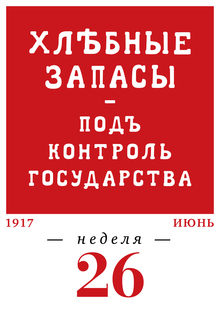
New Time, No. 14783 The Food Catastrophe …The entire current food policy consists of continuous errors… How can we speak of fixed, immutable bread prices when the prices of everything else are constantly changing?… A purchasing apparatus simply does not exist… …The bread monopoly and fixed prices might only hold real significance in the case of bread requisition. But if the peasants are not satisfied with the current fixed prices and refuse to surrender all their reserves—how will Mr. Shingarev and Groman requisition bread from them? Imagine any village in the most fertile bread-producing province of Russia… In every village there are various kinds of craftsmen, servants, etc. Until now, they bought flour or ready-made bread from the local shopkeeper. Now, by the law of March 30, all private transactions involving bread are forbidden. You are not allowed to buy bread from a neighbor-peasant or from the nearest shop. Only the volost food committee is supposed to handle this. …It is clear that the monopoly law will not be enforced in practice…B. Yurievsky