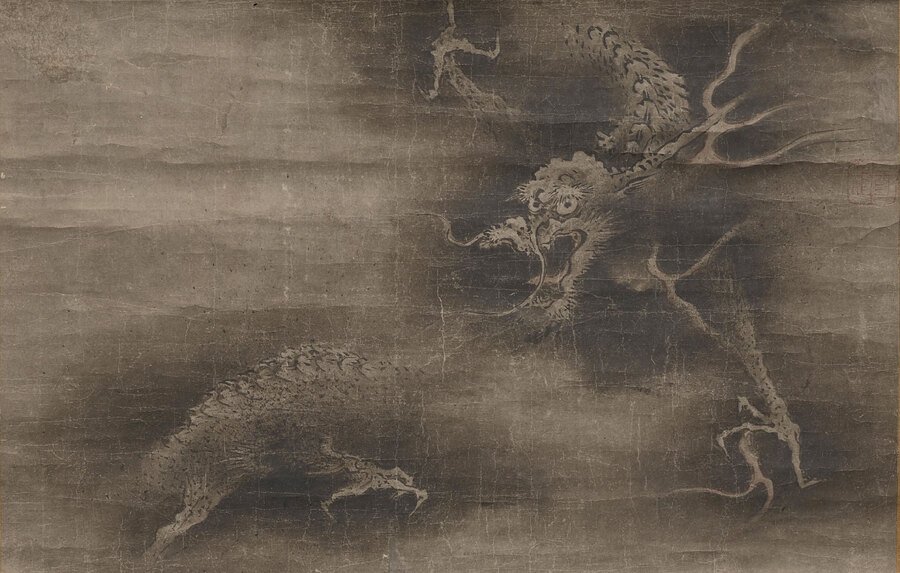
«1. SHEET TOPOGRAPHY: THE SCALE OF ABSENCE.»
The European pictorial paradigm of the 14th–15th centuries was built upon the aesthetic fear of emptiness (horror vacui). The canvas, board, or illuminated miniature was perceived as a container that the artist was obligated to fill exhaustively with figures, architecture, or ornamentation to prove the materiality of the depicted world. In East Asian monochrome painting, negative space became the primary compositional asset. To depict the colossal power of the mythical dragon Ru, artists of the Yuan Dynasty in China and the Muromachi period in Japan did not need to enlarge the animal itself—they needed to radically increase the volume of the «air» surrounding it.
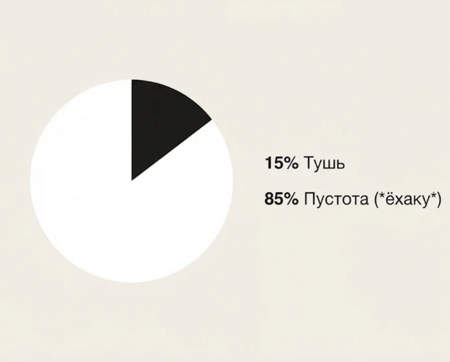
If we translate the optics of the Eastern scroll into the language of dry graphic data, we see a radical disproportion. The dragon form itself—rendered in ink pigment—occupies no more than 15% of the total sheet area. The remaining 85% is reserved for the white space. This mathematical relationship demonstrates that the artist is designing not so much the animal’s anatomy as the void that contains it. In Chinese aesthetics, this category is denoted by the term xū (void), while in Japanese, by yohaku (remaining white). As art critic E. V. Zavadskaya notes, the void here «is not something unexpressed, a non-being, but rather, it is the receptacle… the condition for all transformation» (Zavadskaya, 1975). The unpainted paper ceases to be a mere technical interval and transforms into a dense mass of mist that holds the composition together.
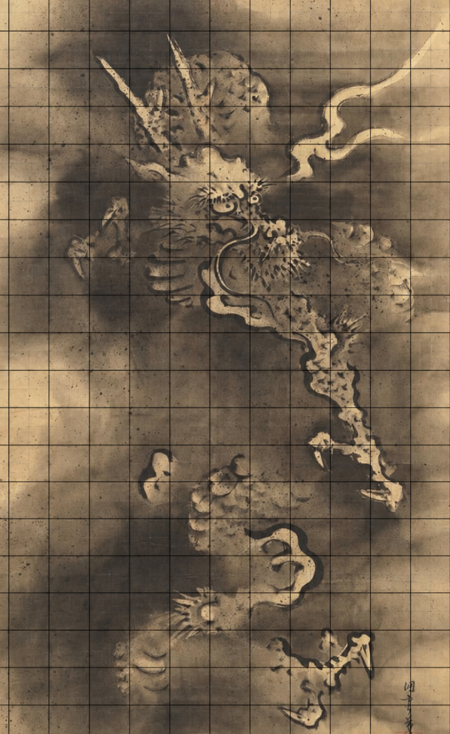
The difference in approaches becomes clear when superimposing an identical modular grid. In dense European compositions, the viewer’s gaze glides across the surface, constantly decoding the narrative of the details—not a single module is left without information.
In the Eastern scroll, the gaze sinks into «blind spots.» French scholar François Cheng argues that it is the void in Asian painting that ensures the circulation of the painting’s internal currents, binding the visible elements together (Cheng, 1994). The absence of pigment creates immense visual pressure on the few areas where the ink touches the paper. The white background begins to function as a giant optical lens, multiplying the tension of a fragment of scales or a claw snatched from the haze.
Кано Масанобу. Парные свитки. Конец XV — начало XVI в. Шёлк, тушь.
Встреча волхвов.Миниатюра из «Великолепного часослова герцога Беррийского». Братья Лимбург, ок. 141
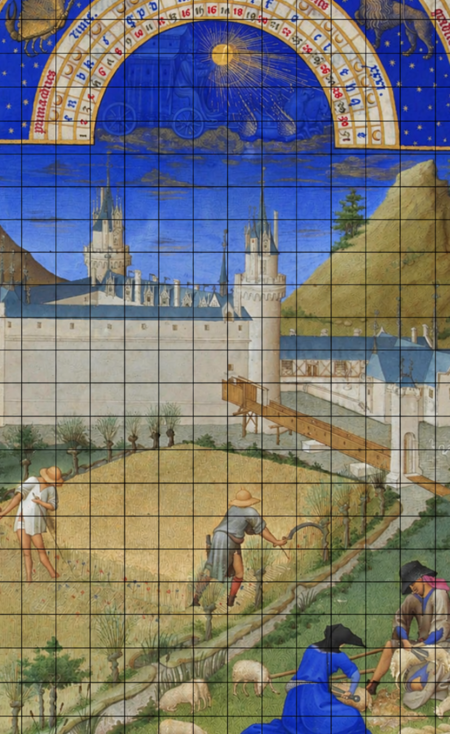
Comparative Analysis of Compositional Density: The European Concept of the Fear of Emptiness (Left) Versus the Far Eastern Concept of Yohaku (Right).
The main paradox of Far Eastern composition is this: if a dragon is placed entirely within the confines of a specific format, it immediately assumes a finite, measurable size. Such complete visibility strips it of its mythological status. By pushing most of its body beyond the edge of the scroll and filling the center of the composition with dense mist, the artist deliberately breaks the physical boundaries of the artwork. The dragon becomes boundless. According to N. Nikolaev, the aesthetic of elision compels the viewer to «complete» the painting in their mind, making them a co-author (Nikolaev, 1999). The dimensions of the dragon are no longer limited by the width of the silk scroll—they are only constrained by the limits of the viewer’s imagination.
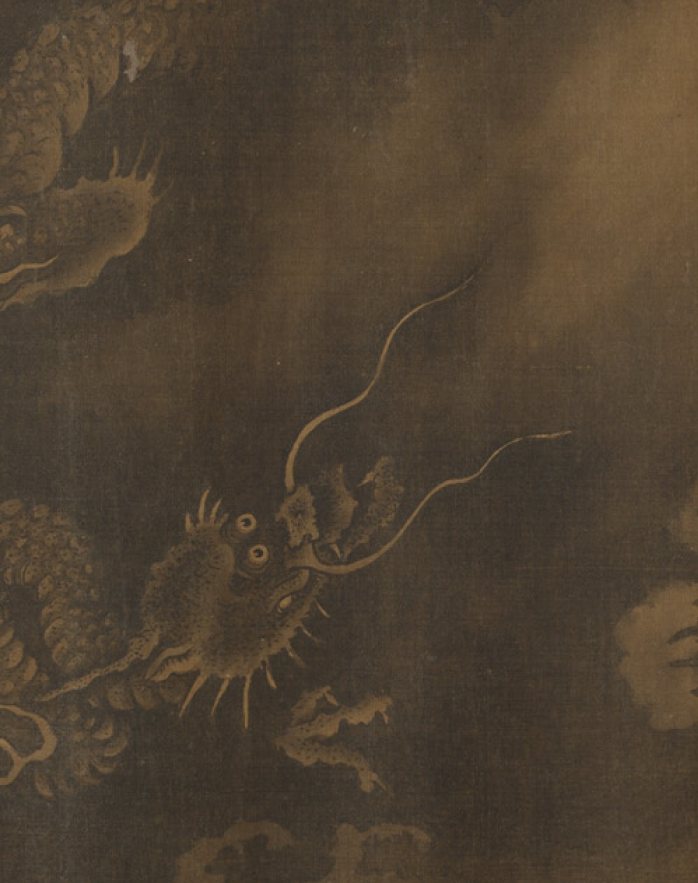
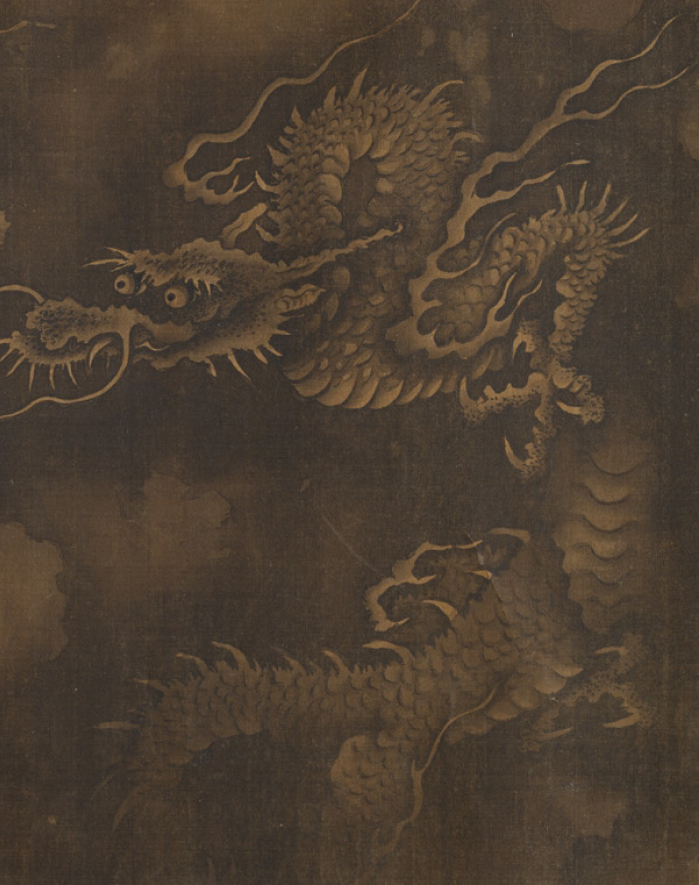
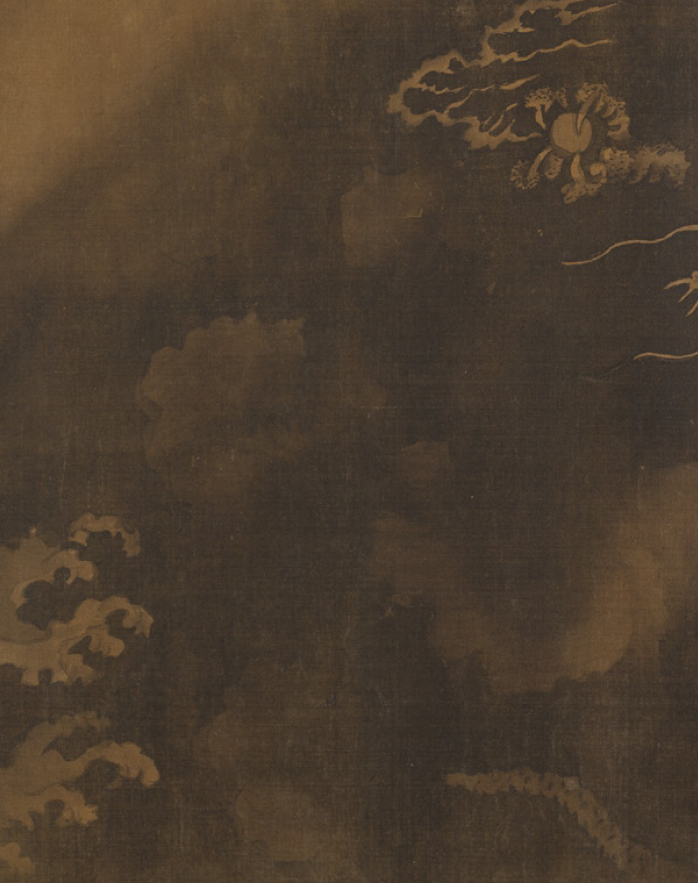
Diagram of optical magnification of object scale through occlusion and fragmentation.