How can one miss a time they never lived in?
Concept
Nostalgia is usually connected to one’s own memories—people, places, and events that cannot be revisited. But sometimes a similar feeling arises in relation to a time we never experienced. We can feel a closeness to another era, recognize it through imagery, and regret not having been a part of what transpired. Where does this sense of loss come from if we lack the personal experience that could be lost?
Media culture grants us access to images of unrealized time. Music, photography, advertising, film, and archival footage preserve or recreate people, objects, sounds, and atmosphere. These are not the era itself, but fragments of it—selected, filmed, and presented in a specific way. Gradually, they become familiar, even though they belong to someone else’s life. As a result, the past can be perceived not just as historical information, but as an emotionally resonant world.
We explore other people’s pasts through media—and begin to imagine our place within them.
The sense of presence evoked when viewing images and video recordings is particularly compelling. The camera was truly there—at the moment of the event we see now. It shows us the event, the faces of the people, the movement, and sometimes an incidental detail of the event that was never even planned to be preserved. By rewatching the footage decades later, we can involuntarily occupy the role of an observer. Artistic reconstruction can move beyond documentary footage to suggest perspectives that no one captured at the time of the event. The more convincing the image, the easier it is to imagine oneself as a witness. However, the ability to observe the past is not equivalent to the ability to live it.
We miss not only the memories, but also the opportunities we never had.
Digital archives intensify this contradiction. Today, the past is almost always at hand. A recording can be reviewed, a song listened to for the first time decades later, a photograph zoomed in to the finest detail. Yet, the event itself remains irreversible. The people on the screen do not yet know their own future, but we already know how everything ends. And our proximity to it is built on the testimonies of others. Old images can evoke admiration, curiosity, a desire to try a different way of life, and be accompanied by feelings of longing for inaccessible time.
This research explores how media culture transforms someone else’s past into an emotionally intimate world. Through music, film, advertising, and archival imagery, we will attempt to understand why time that some never experienced can sometimes feel almost like a personal memory.
Nostalgia and Memory
Nostalgia usually begins with a memory. But how do you explain a yearning for a time that existed before you were born?
In her book, «The Future of Nostalgia,» Svetlana Boym examines nostalgia much more broadly—as a complex human relationship with memory, history, the irreversibility of time, and the imagined past. She distinguishes between two types of nostalgia: restorative, which strives to bring back what has been lost, and reflective, which is focused on the experience of time itself and the realization that return is impossible.
Sometimes we don’t want to return to the past. We want the opportunity to be there someday.
This feeling is indeed common among people who have no personal memories of a specific time. A study titled «You Weren’t There!”—The Influence of Historical Nostalgia on Young Consumers (2026) surveyed young people who felt nostalgia for a time they had never experienced. Participants described their attachment to eras they knew primarily through movies, images, and narratives. One participant mentioned that while watching an old film, they especially feel a desire to live the depicted life themselves. Others noted that media showcases the appealing aspects of the past, thereby intensifying the longing for it.
Whenever I encounter things from that era—be it fashion or the surrounding atmosphere—it feels even more real, as if I am right there. You can almost convince yourself that you were part of that epoch.
For some, the past begins with a memory. For others, it begins with a song, an old photograph, or a first-time viewing.
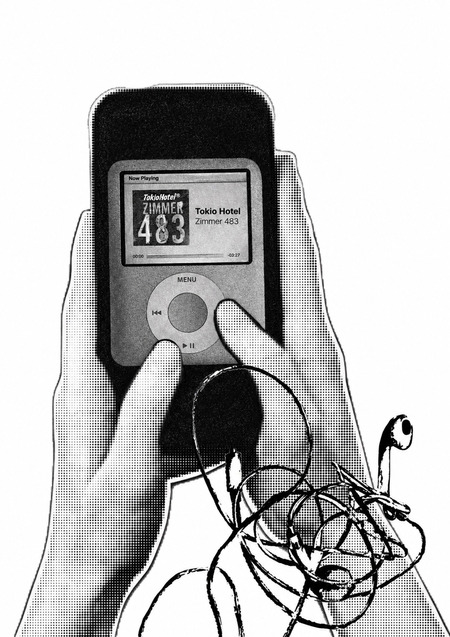
Music allows us to touch epochs we never experienced. By discovering vintage artists, we begin to become interested not only in their songs but in the era in which they were released.
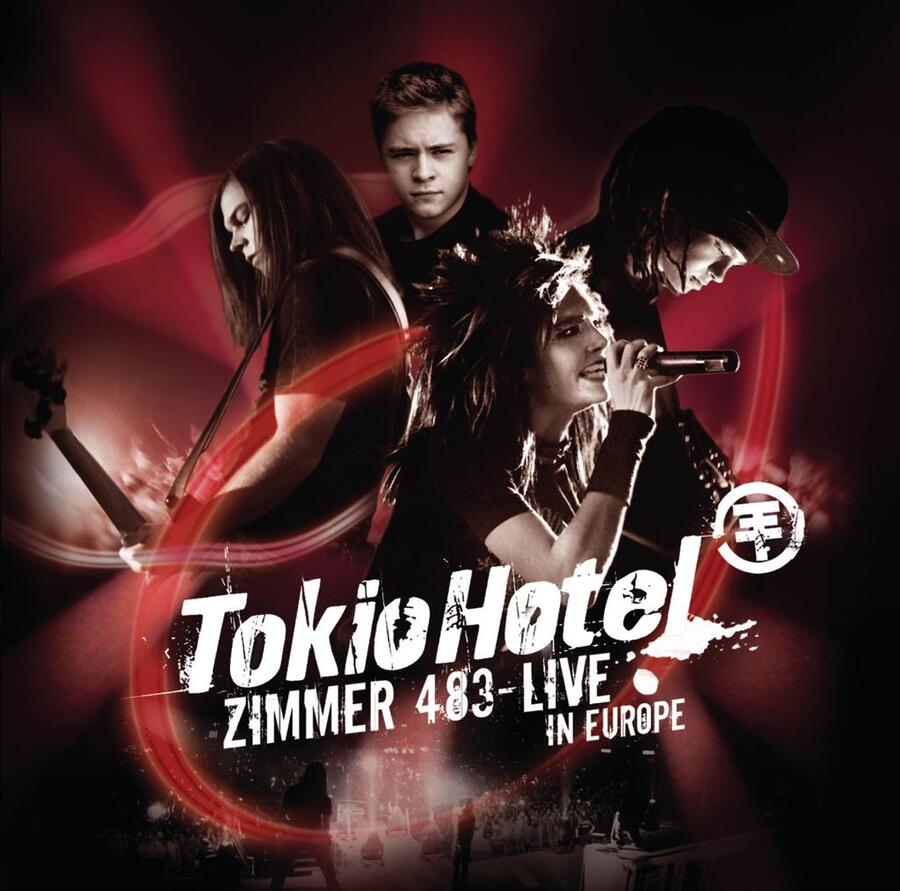

Tokio Hotel — album covers for Zimmer 483 and the concert DVD Live in Europe, 2007.
In 2007, Tokio Hotel released the album Zimmer 483 and the concert DVD Live in Europe, capturing the atmosphere of their performances, their stage personas, and the emotion of their fans. A particularly striking example is their performance of «Monsoon» at the MTV Europe Music Awards in 2007 under artificial rain.
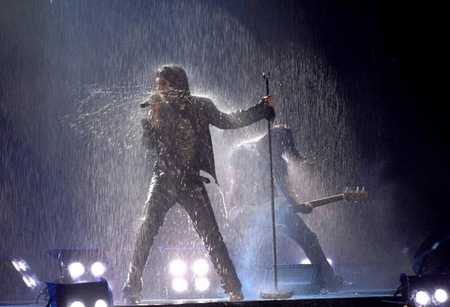
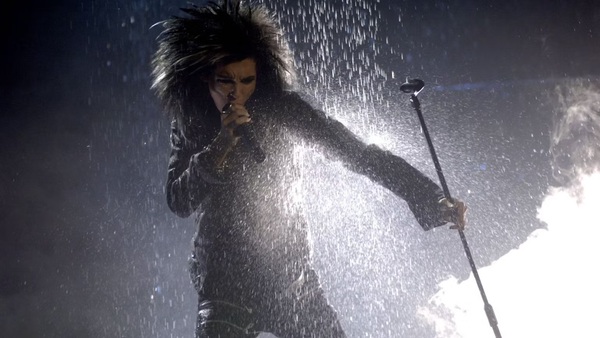
Tokio Hotel — «Monsoon, ” MTV EMA, 2007. Archival photographs