Navigation
- Research Concept
- «The Terminator» (1984): Physical Puppets and Cel Animation
- «The Terminator» (2009): Digital 3D Models and Computer Animation
- Key Visual Effects Specialists
- Visual Comparison of Two Eras
- Conclusion
- Bibliography
- Image Sources
Research Concept
The mechanical skeleton of the T-800 serves as a relevant object for comparing visual effects technologies from different eras. In the film The Terminator (1984), the character was created using a full-scale animatronic model, a miniature model, and stop-motion animation. In Terminator 2 (2009), his depiction was primarily realized through digital 3D modeling, rigging, computer animation, and digital compositing.
The objective of this study is to trace how the transition from physical models to digital production influenced the visual representation of the T-800. To achieve this, four aspects are compared: the character’s mechanical structure, methods of creating movement, the plausibility of mechanical motion, and the character’s integration into the surrounding environment. Special attention is paid to how the applied technologies are reflected in the final film frames.
«The Terminator» (1984): Puppetry and Stop-Motion Animation
In the movie «The Terminator» (1984), several models were used for different scenes featuring the T-800. Stan Winston Studio created a full-scale mechanical skeleton, as well as a separate upper body for medium shots. Furthermore, Doug Beswick constructed a miniature model approximately 0.61 meters tall, designed for frame-by-frame animation of the character’s full-body walk cycle.
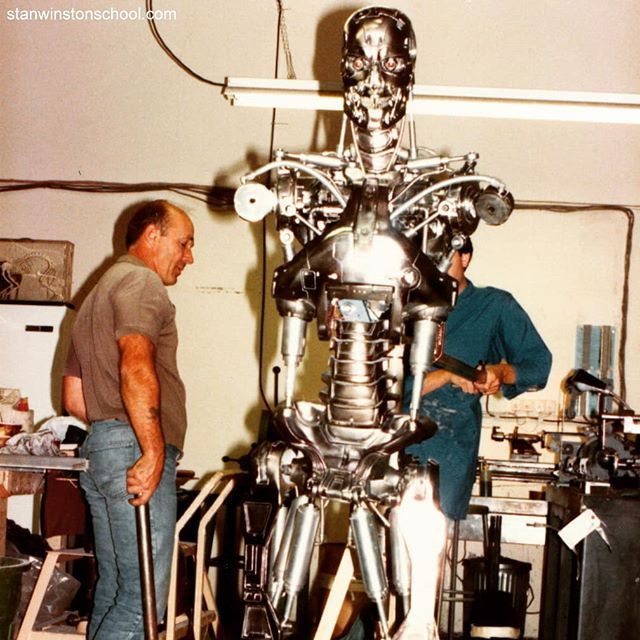
Fig. 1. Full-scale mechanical model of the T-800 exoskeleton, «The Terminator, ” 1984.
The foundation for the endoskeleton’s design was inspired by the sketches and concepts of James Cameron. Stan Winston Studio developed the character’s construction, preserving the key elements of the original concept. To ensure the endoskeleton’s proportions matched Arnold Schwarzenegger’s physique, the team referenced the actor’s height and physical build, crafting the mechanical skull based on a mold of his head.
Fig. 2. Creation of the T-800 head sculpture model, Stan Winston Studio, 1984.
The entire fabrication process took about six months. Initially, the artisans sculpted individual components from Roma clay, then created polysulfide rubber molds, and produced plaster casts. After sanding the surfaces, the parts were cast in epoxy resin using polyurethane molds. To increase the structural integrity, the team integrated layers of fiberglass cloth and custom-made steel ribs. Finally, the components were sanded, subjected to vacuum metallization, and aged to give the endoskeleton its characteristic metallic appearance.
Fig. 3. Fabrication of mechanical endoskeleton parts for T-800, Stan Winston Studio, 1984.
The finished, full-scale animatronic puppet weighed about 45.4 kg. The steel frame complicated the control but gave the model real physical weight. As Stan Winston noted in an interview, when the mechanical feet touched the surface, real metal parts impacted the ground. This physical mass became an important source of the character’s sense of heft and power.
Creating the full-scale animatronic puppet provided the endoskeleton’s form, details, and surface with a real physical foundation, but the model could not perform all movements freely. Therefore, the creation team had to employ various control methods depending on the specific motion tasks.
Fig. 4. Assembly of a full-scale T-800 endoskeleton model, Stan Winston Studio, 1984.
For the medium shots, a separate upper torso piece, the T-800, was used. It was attached to a specialized harness worn on Shane Mahan’s back. Mahan animated the puppet using his own body movements, transferring torso sway to it. Since one of the character’s legs was already damaged, Mahan also imitated a limp to convey the T-800’s characteristic gait.
During filming, Mahan controlled the arm movements while Bob Williams operated the mechanical head remotely. For close-ups requiring quick or abrupt movements, the head and individual body parts could be filmed separately and manipulated by hand.
Fig. 5. Shane Mahan in the T-800 upper body wearable model, 1984.
These methods demonstrate that the movement of the physical animatronic puppet is actually achieved through the collaborative work of the model’s structure, mechanical devices, and operators. The creators' team did not require one monolithic physical model to execute all movements; instead, they adapted the model and control methods to suit specific movement tasks.
The full-sized animatronic doll was primarily used to demonstrate individual endoskeleton components, static schematics, and movements achievable with physical mechanisms, while full-body walking sequences of the endoskeleton required frame-by-frame animation. For this purpose, Doug Beswick constructed a miniature T-800 model approximately two feet tall, which was about one-quarter the size of the full-sized model.
Fig. 6. Miniature T-800 model for frame-by-frame animation, Doug Beswick, 1984.
To maintain visual consistency between the two models—the miniature and the full-scale mechanical doll—they were created concurrently. Beswick collaborated closely with the Stan Winston team, producing the corresponding scaled-down versions based on the measurements and blueprints of the full-size components.
Fig. 7. Miniature model of the T-800 endoskeleton, various views, 1984.
The main framework of the miniature model was constructed from machined aluminum parts, with brass toes and steel feet to reinforce the ankle joints. Elements such as the skull, rib cage, spine, and pelvis were created using sculptural modeling, mold making, and casting. To bring the model’s appearance as close as possible to a full-sized mechanical doll, the team also utilized similar epoxy materials, aluminum powder proportions, and electroplating technology, in addition to incorporating details like hydraulic tubes and bolts.
Frame-by-frame animation creates motion by sequentially capturing still images of a model in various poses. Each time, the animator alters the position of the model’s joints and body, then shoots a single frame. When these frames are played back in succession, a cohesive motion is created.
Fig. 8. Filming of frame-by-frame animation, 1984.
Because of the model’s large size, animators had to set up multiple control points and measuring scales to ensure the accuracy of the direction and magnitude of each positional change in the model. Additionally, the film crew incorporated slight camera movements into certain frames and placed a glass plate between the camera and the model. By altering the position of the vaseline on the glass surface, they simulated the motion blur effect that occurs during rapid movement.
Frame-by-frame animation involves more than just sequentially changing the model’s position. To achieve a sense of continuous motion in the final image, the film crew must also control the model’s position, camera movement, and the motion blur effect.
Thus, in the 1984 film, different types of models were utilized depending on the specific demands of each scene. A full-scale animatronic puppet allowed for the visualization of the endoskeletal structure and the execution of isolated movements, whereas a miniature model was employed for frame-by-frame animation of the full-body gait. This division ensured a combination of material detail and more complex motion, but it required maintaining visual consistency between the models of different sizes.
«Terminator» (2009): Digital 3D Modeling and Computer Animation
In the film Terminator (2009), the primary work on creating the digital character T-800 was performed by ILM (Industrial Light & Magic). Unlike the 1984 approach, which utilized various physical models to execute different on-screen tasks, in 2009, the mechanical skeleton was created predominantly using a digital three-dimensional model and computer animation.This process involved creating two interconnected digital assets: a digital head of Schwarzenegger and the final, fully computer-rendered T-800 mechanical skeleton.
Fig. 9. The T-800 digital endoskeleton in a factory setting, from «Terminator: Salvation, ” 2009.
According to Cinefex magazine No. 118, Roland Kickinger was initially planned for the film, and ILM was supposed to combine the mechanical skeleton’s head with its body using tracking technology. However, as the production plan evolved, the director decided to portray Arnold Schwarzenegger’s image more distinctly in the movie. Since Schwarzenegger did not participate in the motion capture, ILM had to recreate his facial appearance using digital production.
Fig. 10. Digital recreation of Arnold Schwarzenegger’s appearance, ILM, 2009.