In his work Camera Lucida, Roland Barthes emphasizes that to look at a photograph is to initiate the work of memory. Photography does not simply reflect the past; it actively provokes memories, creating a space for an encounter with one’s past self.
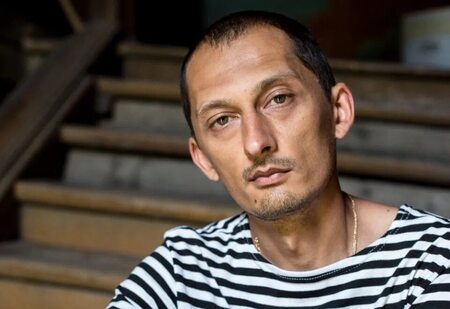
Dmitry Markov (1982–2024) was a documentary photographer, volunteer, and author of photojournalism about the «provincial Russia, ” shot on an iPhone. He was the first Russian participant in an Apple advertising campaign, won a Getty Images grant, and received the grand prize of the „Silver Camera“ competition.
I hardly have any childhood photos. Perhaps that’s why, watching the youth on the outskirts of the city, I recall my own childhood with a touch of melancholy.
The theme of childhood and youth is one of the central motifs in the photographer’s work.Markov grew up in industrial Pushkin, near Moscow, in the 1990s, adjacent to a criminal district.From 2005 to 2012, he volunteered at an orphanage near the Estonian border. From that point on, photographing children became a way for him to simultaneously reconnect with his own childhood while also distancing himself from it.
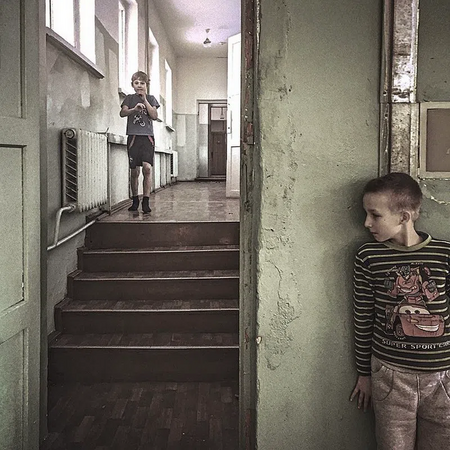
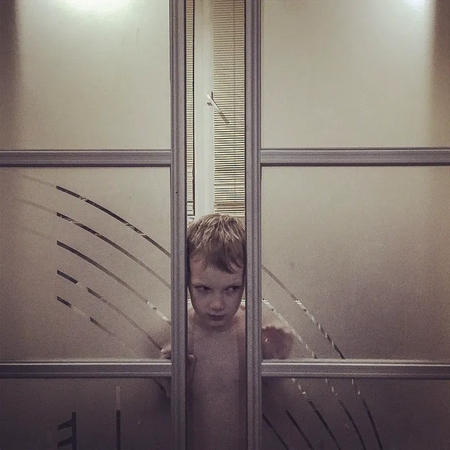
Photo: Dmitry Markov
The relevance of this study lies in the absence of reflection on the connection between Markov’s personal experience and the visual construction of childhood in his work. This research proposes viewing Markov’s childhood photographs not as social reportage, but as a visual engagement with memory.
Given this, the core research question is: How is Dmitry Markov’s own childhood experience manifested in his photographs of children—and what visual techniques allow us to speak of creativity as a form of working with memory? Our hypothesis is that Markov’s childhood photographs function as a double gesture of memory. On one hand, they document the social reality of childhood in an underprivileged environment. On the other, through recurring visual decisions (the child’s dynamic movement, physical activity, camera distance, and the avoidance of close-ups of suffering), the photographer recreates and simultaneously transforms the structure of his own childhood experience.
The subject of the study is photographs by Dmitry Markov from 2006–2023, in which children are the semantic center of the frame. The object of the study is their characteristics: the selection of subjects, their interaction with the environment, composition, distance, dynamism, and color palette.
The photographs selected for analysis are distributed across three contexts: Provincial Yard / Street (2013–2023): shots from the Instagram era* («Instagram is a Meta company service banned in Russia») included in the hashtags «#draft» and «Russia in a Square.» Key shots commented on by the author himself (interviews for Foto&Video 2008, the text «Older Teens» from Colta).Justification: the selected and commented-on works provide the author’s own reflection, which in itself is material for analysis. The selection is qualitative: the goal is not representativeness, but the identification of recurring visual patterns across different periods. Rationale for Source Selection Sources were chosen based on a principle of three perspectives: (1) the author’s discourse—interviews and texts by Markov where he directly discusses the link between childhood and photography; (2) biographical and curatorial materials—which reconstruct the context; and (3) the theoretical framework—Roland Barthes’s work Camera Lucida on photography as a memory device. Priority was given to sources that Markov himself commented on or that were created in dialogue with his practice.
Boys and girls
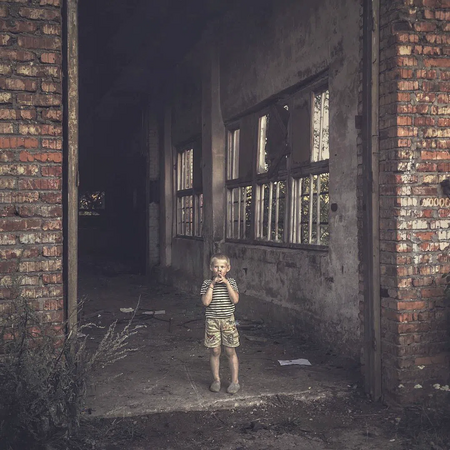
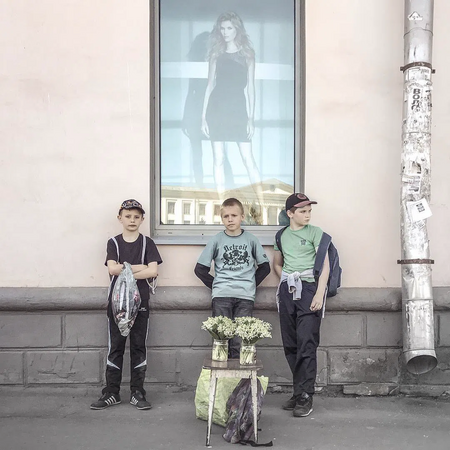
The main subjects in Markov’s «children’s» photographs are boys engaged in their active, daring games and outings away from adult supervision.Markov rarely focuses on girls. In his lens, they mainly appear interacting—either in relatively light and safe play with the boys or in the presence of adults.
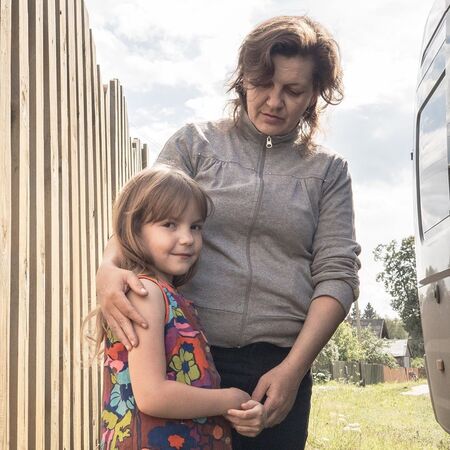
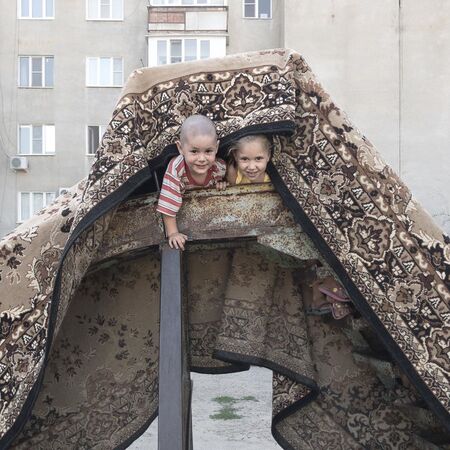
Girls in the photos Photo: Dmitry Markov
This choice of characters correlates with biographical experience: the boyish environment of Pushkino in the 1990s, street gangs, and the lack of constant adult supervision. Markov is more interested in and understands this childhood, which is why the photographer observes him.
and their parents
We were essentially self-directed: our parents vaguely had any idea what we did or where we were spending our time.
Markov’s heroes are also self-contained, absorbed in their own games and adventures. The figure of an adult interacting with children is generally represented rarely.
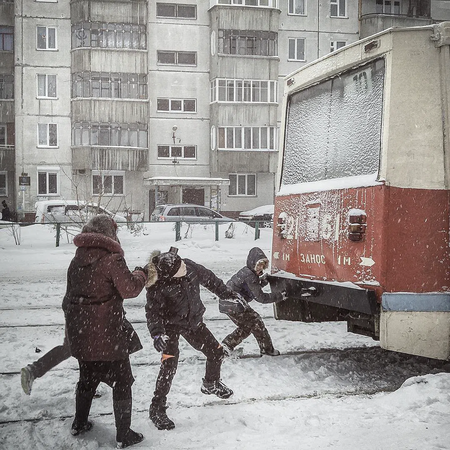
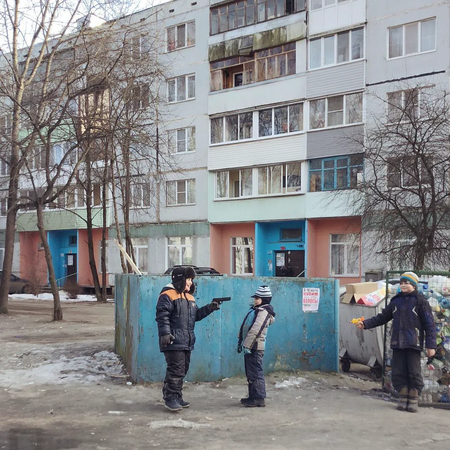
During playtime, no adults are present, not even in the background. Photo: Dmitry Markov
In photos from the countryside, the interaction between an adult and a child appears. However, it rarely forms the core subject of the photograph. Even when engaged in interaction, the children remain the central focus of the image.The adults present in the depicted childhood often function as background figures, not participating significantly. At times, contrary to the photographer, they may not even pay attention to the child.
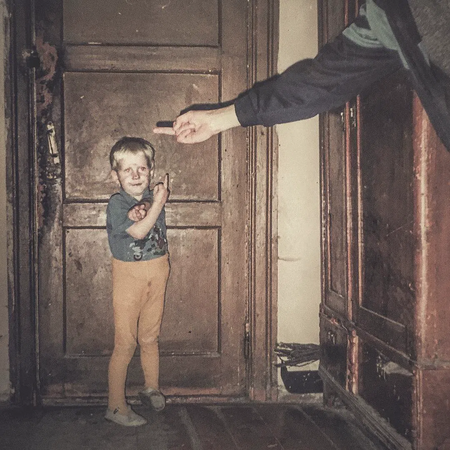
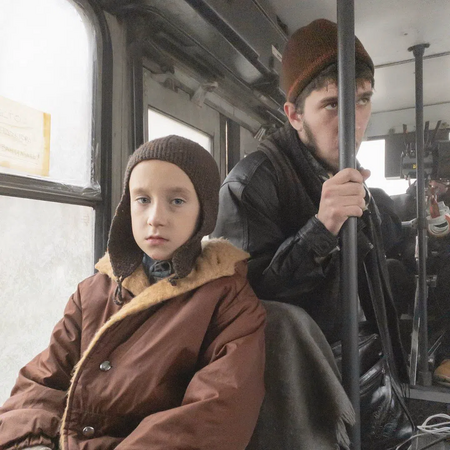
Adult as a «background» object
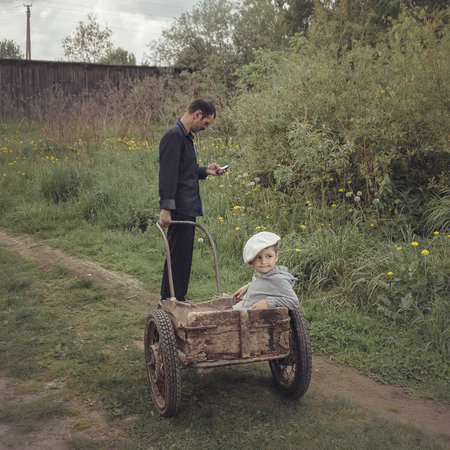
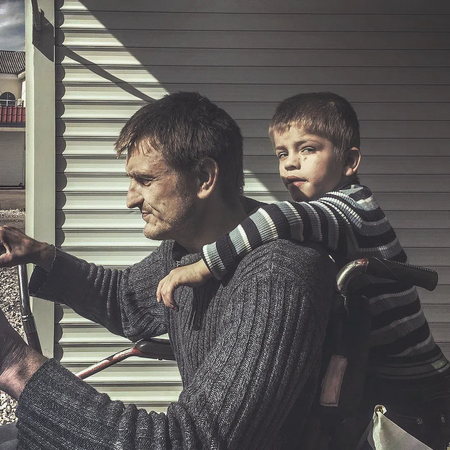
The child interacts with an adult who is distracted from them
A significant portion of Markov’s early photographs relates to his volunteer work at an orphanage. There, he photographed boys who were not temporarily escaping adult supervision, but who were completely deprived of it.However, the photographer’s core idea was never to depict this «abandonment» in a dramatic way; he did not want speculation.The key subject—his own childhood—was free, dynamic, and captivating.
I don’t photograph children from state orphanages. I photograph childhood. My goal isn’t to illustrate the social phenomenon of «children in state orphanages.» I want to convey the doubts and sensations inherent to childhood itself.
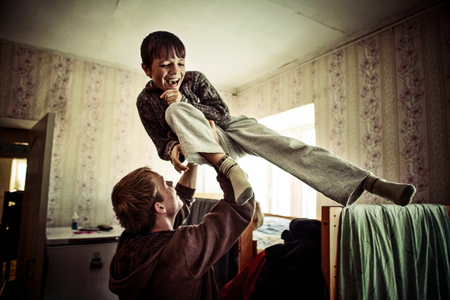
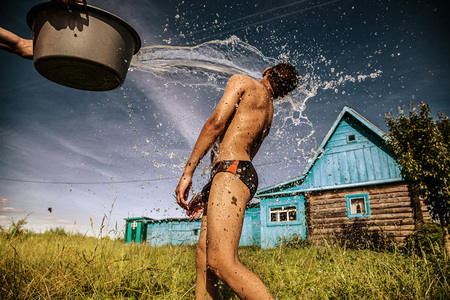
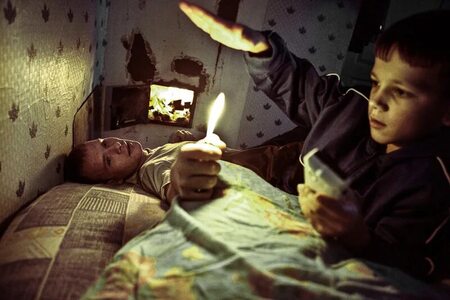
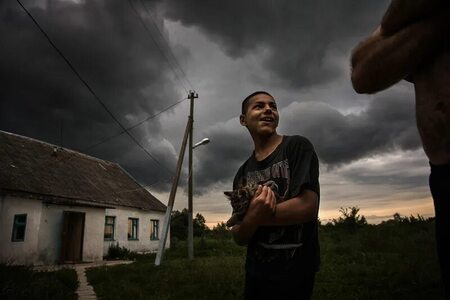
Photos from the «Older Kids» series about children from an orphanage Author: Dmitry Markov
It is important to note that Markov himself does not want to be an «adult figure» or a supervisor. Even though he is a volunteer responsible for overseeing the children, he allows the boys to experience all the charms of his own childhood, while documenting them. At the same time, he remains at a slight distance, though he is engaged in the event.
Fun Stories
Markova has long been criticized for the overly depressive nature of his photographs: gray, faded colors, bleak, dilapidated settings, and games played in abandoned places. All of this does not align with the definition of «happy childhood.» Yet, this environment is familiar and natural for the photographer—the 1990s, the industrial city, and active play within it.
We roamed abandoned construction sites and ran across garage rooftops. (…) It is entirely possible that for modern kids, playing video games, watching YouTube, or aimlessly wandering through malls evokes the same emotions that «war games» in the yard or melting lead plates from old batteries used to evoke in us.