A photograph seems to be direct evidence of something: if there is a photo, it means a person, street, or factory was actually in front of the camera. But in photomontage, the original shot is never left untouched. It is cropped, enlarged or reduced, joined with other photographs, color fields, and text. Because of this, the image begins to convey not only what was captured in the frame, but also how the viewer is being asked to interpret what they see. In my work, I examine photomontage using Rodchenko and Klutsis as examples—not just as an unusual artistic technique, but as a means of constructing a message through imagery.
Original size 1170x1600
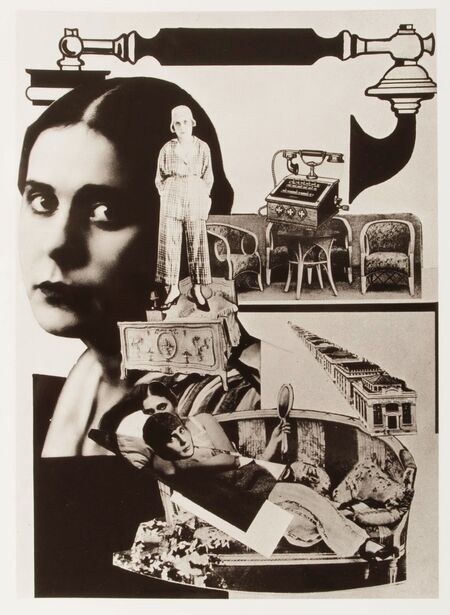
Photomontage in Soviet Visual Communication (1923–1931): Strategies of Alexander Rodchenko and Gustav Klutsis
Photomontage in Soviet Visual Communication (1923–1931): Strategies of Alexander Rodchenko and Gustav Klutsis
Project created at 20.10.2026
More projects in media of visual culture
We use cookies to improve the operation of the HSE website and to enhance its usability. More detailed information on the use of cookies can be fou...
Show more