Sections
1 Concept
2 The Banana album (The Velvet Underground & Nico)
3 The Velvet Underground
4 Loaded
5 The Velvet Underground X Supreme
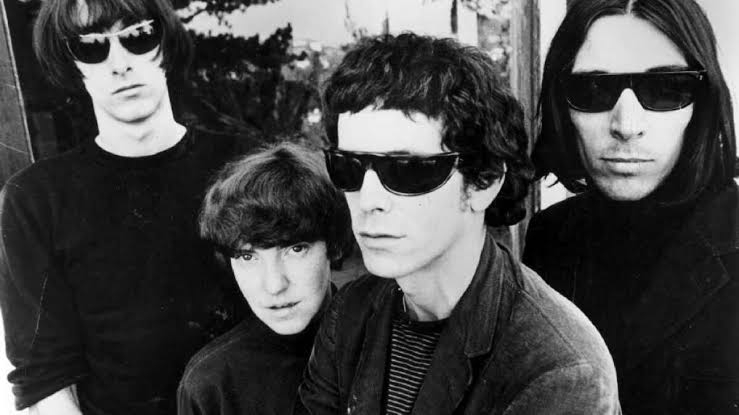
Steve Schapiro, The Velvet Underground (1966)
The Velvet Underground — an American rock band formed in 1960s New York, consisting of multi-instrumentalist John Cale, vocalist Lou Reed, percussionist Maureen Tucker, and guitarist Sterling Morrison. The group was unique among other New York countercultural phenomena: «The counterculture was characterized by colour, carnival, community and overt passion; the New York scene as personified by the Velvets was cool, monochromatic, alienated but culturally assured…”[1] The Velvet Underground remains a crucial source for understanding the development of the entire alternative scene, and their work is a unique synthesis of recognizable visuals and cult music.
Research Concept
The relevance of this study stems from the contradiction between the group’s commercial failure during its existence and its unprecedented influence on the formation of all subsequent rock music. During its active period from 1963 to 1973, the group never achieved significant popularity—its first album sold only 30,000 copies over five years, according to Lu Reed himself [2], and its songs were not played on the radio due to their often harsh and realistic lyrics dealing with sadomasochism and drug use. Despite this, the group made an unimaginable contribution to the development of rock, punk, and its subgenres. In a 1982 interview, Brian Eno said that everyone who bought one of the 30,000 copies created their own band [2].
Steve Schapiro, Andy Warhol, and The Velvet Underground at the Window (1966)
The Velvet Underground remains crucial today because they were interested not only in song but in all kinds of noise—feedback, silence, fuzz; sinister acoustic assault as well as pure lyricism—which means they were interested in every form of life that produced such sound.
Research Question:
How was The Velvet Underground’s visual code formed and subsequently transformed, and how precisely did it ensure the band’s recognizability and influence even after its breakup?
Research Hypothesis:
The research subject will be the visual code of The Velvet Underground, and the object of study will be the visual elements that formed their identity: album covers, photographs, graphics, and collaborations.
Andy Warhol, The Velvet Underground & Nico (1967) Billy Name, White Light/White Heat (1968) Billy Name, The Velvet Underground (1969) Stanisław Zagórski, Loaded (1970)
Selection and Justification of Research Samples The cover art for The Velvet Underground & Nico’s debut album (1967), which will help trace the interaction between music and Pop Art. The cover art for The Velvet Underground’s third album (1969), which demonstrates the evolution of the group’s style—from proclamation and manifestation to the intimacy conveyed through photography, color, and typography. These elements construct the group’s visual identity. The cover art for the fourth album, Loaded (1970), created with the assistance of Stanislaw Zagurski, features an illustration with a clear, almost architectural composition. This allows one to see how a distinct album cover image is formed, correlating with its title. Visual materials from a collaboration with the brand Supreme. These will help trace how the group’s visual identities adapt to clothing, contemporary culture, and commercialization.
Bernard Gotfryd, Andy Warhol at the Jewish Museum (1980) Cz.Czaplinski, Stanisław zagórski in New York (1981) Supreme, Supreme/The Velvet Underground Ringer Tee (2019)
Academic Resources
The Banana album (The Velvet Underground & Nico)
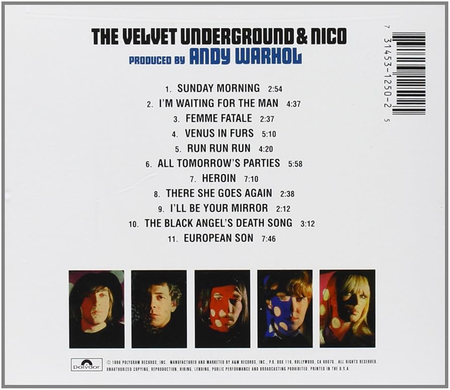
The debut album by The Velvet Underground & Nico is ranked 23rd on Rolling Stone magazine’s list of the 500 greatest albums. Music of such magnitude demands a cover design from a figure of equal stature. This is precisely what happened. Andy Warhol—a pivotal figure in Pop Art and one of the most famous artists of his era—did more than just create the album cover; he funded its release, granting the musicians complete creative freedom.Image: Andy Warhol, The Velvet Underground back cover (1966)
He was this catalyst, always putting jarring elements together, which wasn’t always something I was happy about. So when he put Nico in, we said, «Hmmm.» Because Andy insisted, «Oh, you’ve gotta have a chanteuse.» I shot back, «Oh, Andy, give us a break.»
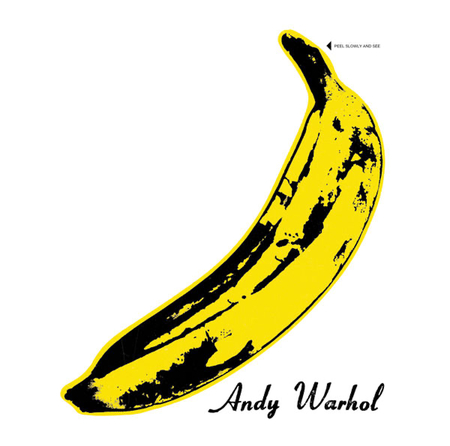
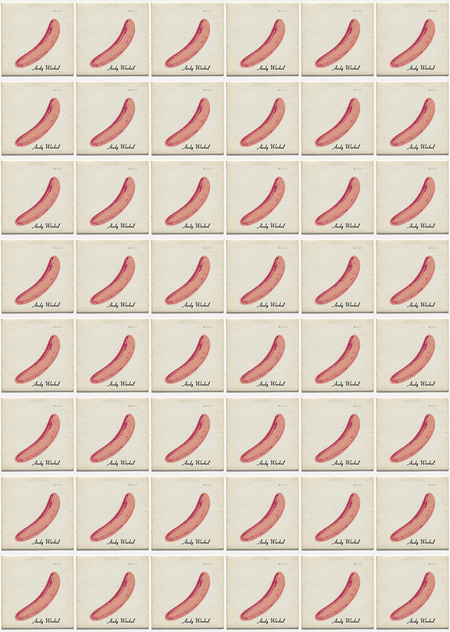
Andy Warhol placed a banana on the album cover, making it provocative: an object of everyday life transformed into a genuine artistic statement.Image: Andy Warhol, The Velvet Underground & Nico (1967)
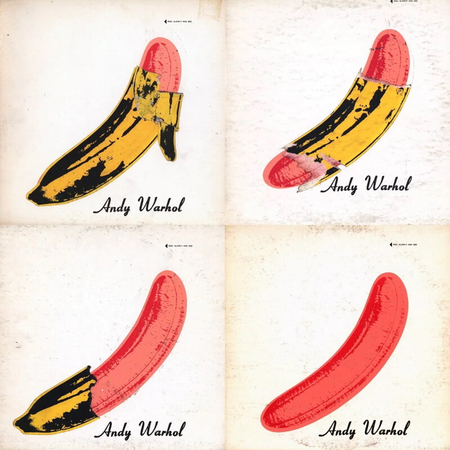
The first cover was interactive: listeners who bought the record could peel the skin off the banana. The flesh was flesh-toned, which only reinforced the cover’s provocative nature. Unfortunately, due to production costs, this idea was soon abandoned.
Image: Andy Warhol, The Velvet Underground & Nico early LP edition (1967)
Andy Warhol, The Velvet Underground early LP edition (1967)