Contents
1. Concept 2. Material Selection Principle 3. Main Body: — Origins: religion and the depiction of the Infant God — Child Saints: the idealized image of the Renaissance child — Children as bearers of dynastic status — Transformations: the emergence of childhood in art 4. Conclusion 5. Bibliography and Sources
Concept
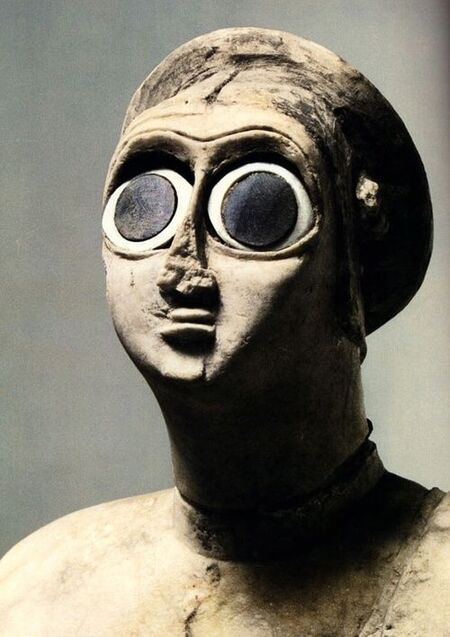
Sometimes, a single glance is enough to convey more than words ever could. But what if the eyes become the central element of the human form, and everything else recedes into the background?
This was what first captured my interest when I noticed the Sumerian adorants—small statues of people featuring disproportionately large, wide-open eyes. There is something simultaneously strange and captivating about their appearance. They stand motionless, their faces betraying almost no expression, yet it seems as if they are watching something with intense attention. This leads to a question: why did the ancient masters depict them in this manner?
These figurines were tied to the religious beliefs of the inhabitants of Ancient Mesopotamia; they were placed in temples where they symbolically represented a person before a deity, even when the person themselves was absent. I found the very idea interesting—that sculpture could somehow pray on behalf of a person, perpetually facing a god.
In my research, I set several questions before myself: Why did the eyes become such a vital part of these figures? Was their exaggeration merely a characteristic of ancient art, or was there a deeper meaning behind it? How does our perception of the human face change when the eyes become disproportionately large? Why do such figures appear simultaneously lifeless and alive? Why is their static gaze able to command attention even after thousands of years?
The central premise of my research is that the eyes of the Sumerian adorants are not just a feature of the face, but perhaps the primary means of illustrating humanity’s connection to the divine. Through a visual analysis of these statues, I aim to understand how ancient artists transformed an ordinary human gaze into a symbol of eternal prayer.
Material Selection Principle
1. Chronology
For my research, I selected adoration statues from the third millennium BCE, primarily from the 29th–26th centuries BCE. It was during this period that the characteristic depictions of praying people with disproportionately large eyes were created.
2. Geography
I plan to focus on the territory of Ancient Mesopotamia, specifically on monuments from Sumerian cities and culturally related centers, such as Eshnunna (Tell Asmar), Mari, and Nippur.
3. Various Examples of Statuettes
For comparison, I will select male and female figures, statuettes of different sizes, and those with varying degrees of eye exaggeration.
People before the gods
Imagine stepping into an ancient temple, one that has long since been deserted. Silence surrounds you, yet you can’t shake the feeling that you are not alone. Before you stand dozens of small human figures. They do not move, nor do they speak or do anything. Their hands are folded across their chests, and their enormous eyes are fixed somewhere ahead. It seems as though they are waiting for something. But what? And why doesn’t any of them look away?
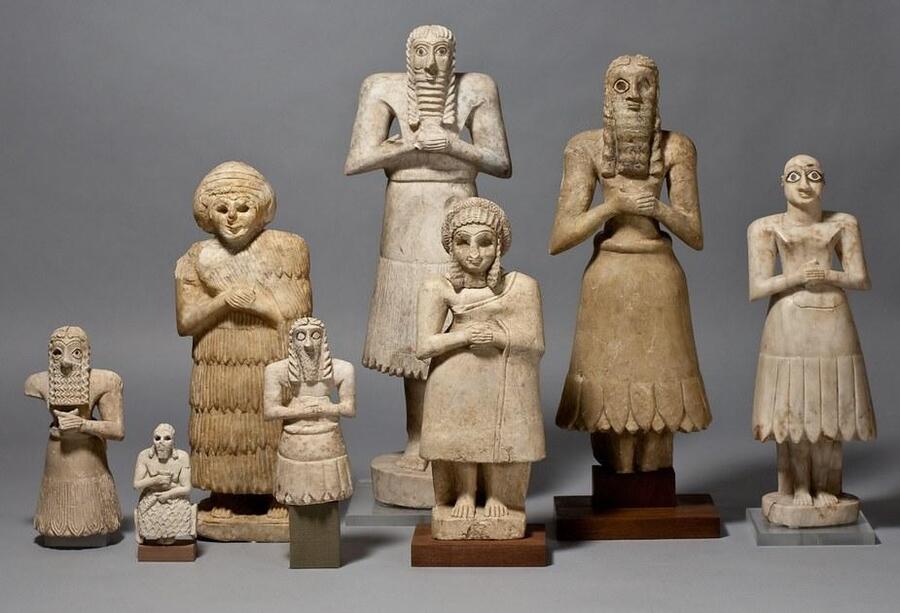
Group of adorants from Tell Asmar. 3rd millennium BCE (29th–24th centuries BCE). Tell Asmar (ancient Eshnunna), modern Iraq.
Adorants are depictions of praying figures that appeared in the art of Ancient Mesopotamia. They are particularly characteristic of the Early Dynastic Period, specifically the 3rd millennium BCE. These small statues were placed in temples as offerings to the gods. A statue could represent a specific person and symbolically pray for them even when that person was far from the temple. Therefore, the adorant was not merely a depiction of a person, but rather a kind of double, created to ensure their perpetual presence within the temple.
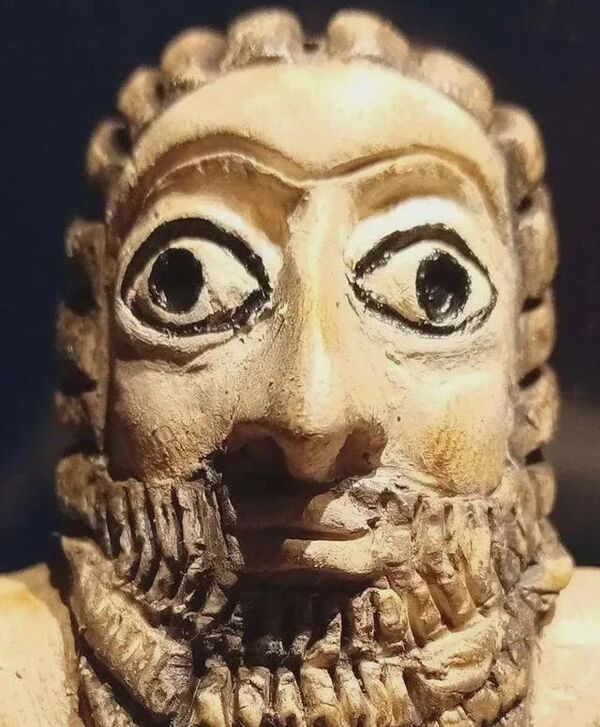
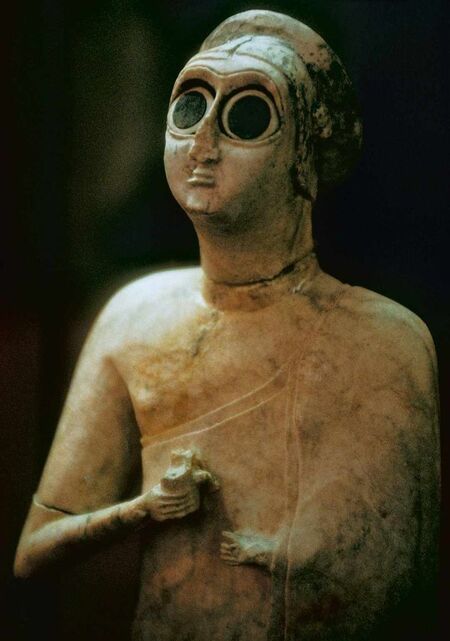
The eyes are more important than the face
There is something unique about how we perceive the human face. Usually, our attention is distributed across various features: we notice a smile, the shape of the nose, the expression of the eyebrows. But when we look at Sumerian adorers, all the other details seem to cease to exist. The first thing we see—the eyes.
But why specifically the eyes? Why not the hands clasped in prayer, the facial expression, or the posture of the bodies?
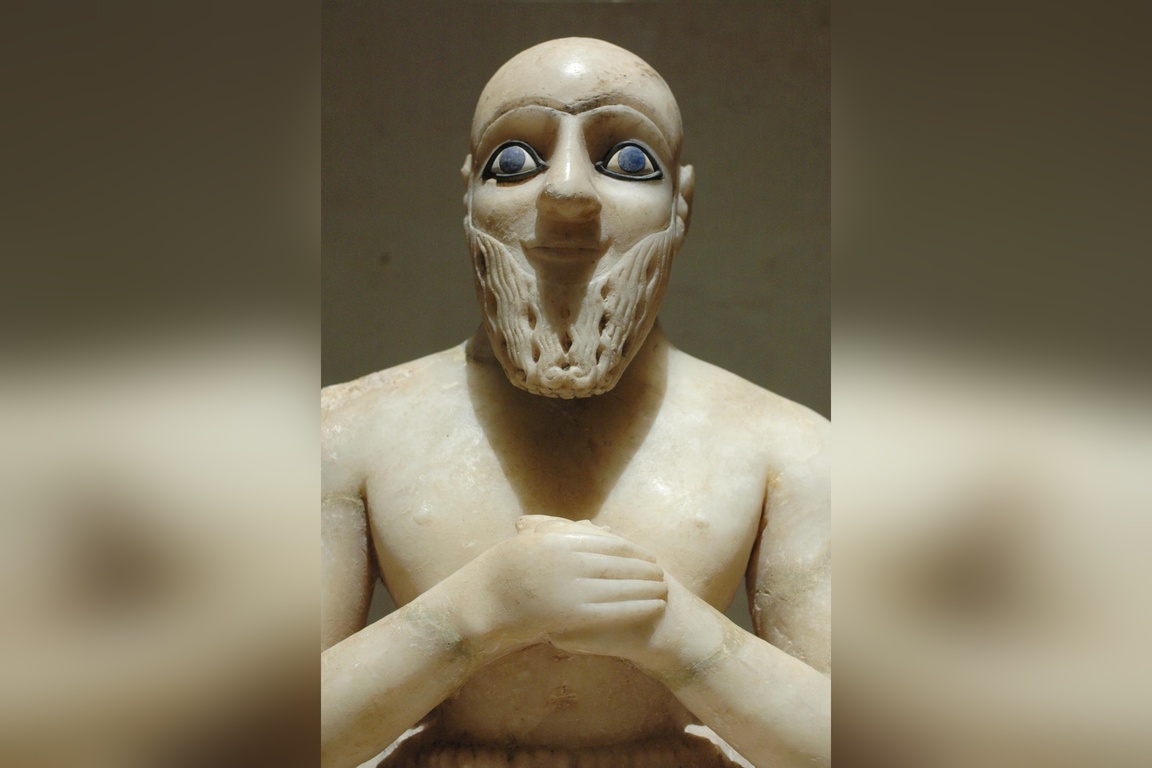
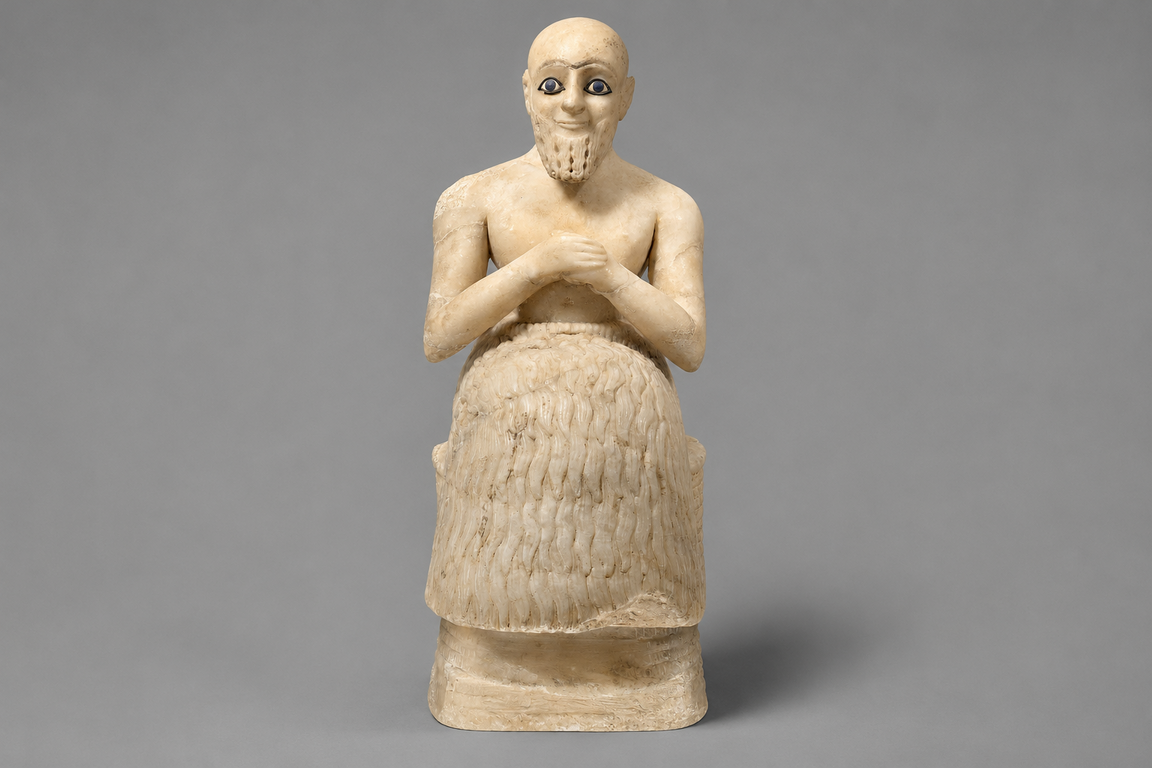
I decided to examine one of the statuettes from Tell el-Amarna more closely. At first glance, its face seems quite simple. The nose is straight and long, the lips are small, and the beard and hair are rendered using repetitive lines. However, when you shift your gaze to the eyes, you begin to notice just how significantly they differ from the rest of the face.
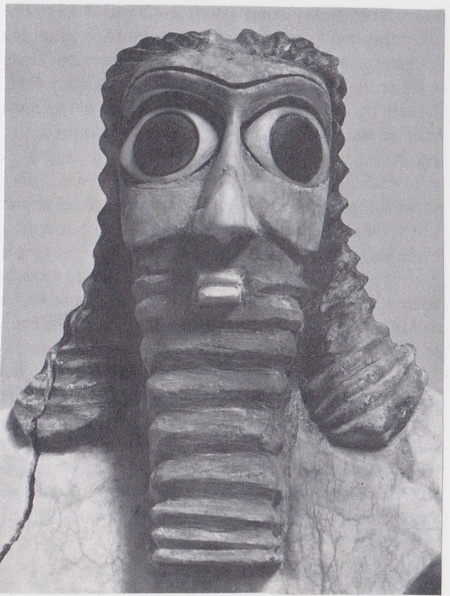
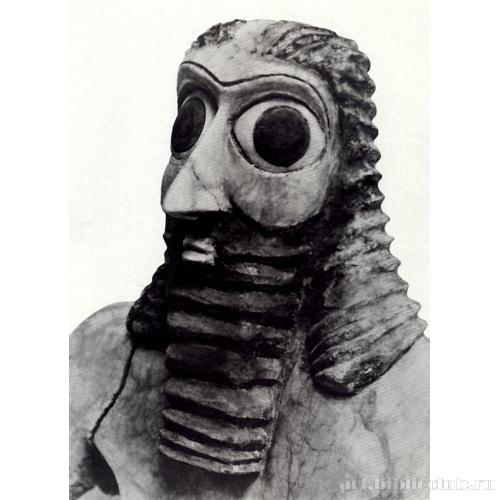
The eyes occupy a significant portion of the upper half of the figure and stand out not only in size but also in contrast. The light surface of the eyes sharply contrasts with the dark pupils. Because of this, the gaze appears directed straight ahead, and nothing seems capable of diverting it.
Interestingly, the eyes were not simply carved into the stone. Ancient masters used other materials to create them. For example, in the adorant from Tell Asmar, the sclera are made of shell, and the pupils are made of black limestone. This technique is called inlay. Thanks to the combination of materials, the eyes become more prominent and gain a special expressiveness.
It seems to me that this is a very important detail. If the entire figurine were made from a single material, the gaze might not have such a powerful impact. But here, the eyes seem to exist separately from the rest of the face. They stand out in color, shape, and even texture.
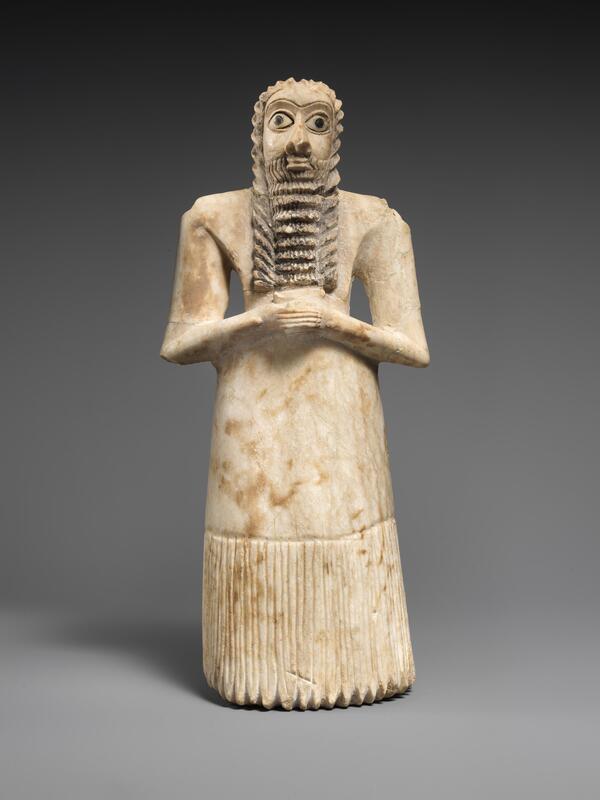
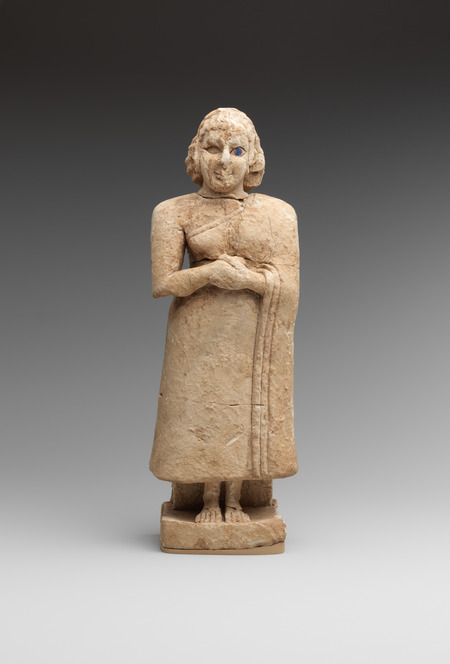
If you compare the different statuettes, you can notice that the eyes are not always depicted the same way. On some figures, they are almost round; on others, they are more elongated. Sometimes the pupils appear particularly large, and at other times, the bright surface occupies most of the eye. Yet, even with such variations, the gaze remains one of the most striking features of the face.
It appears that ancient masters could alter the proportions, shape, and detailing of the eyes, yet they consistently reverted to a single artistic technique—their exaggeration. But why deviate so drastically from natural human proportions?
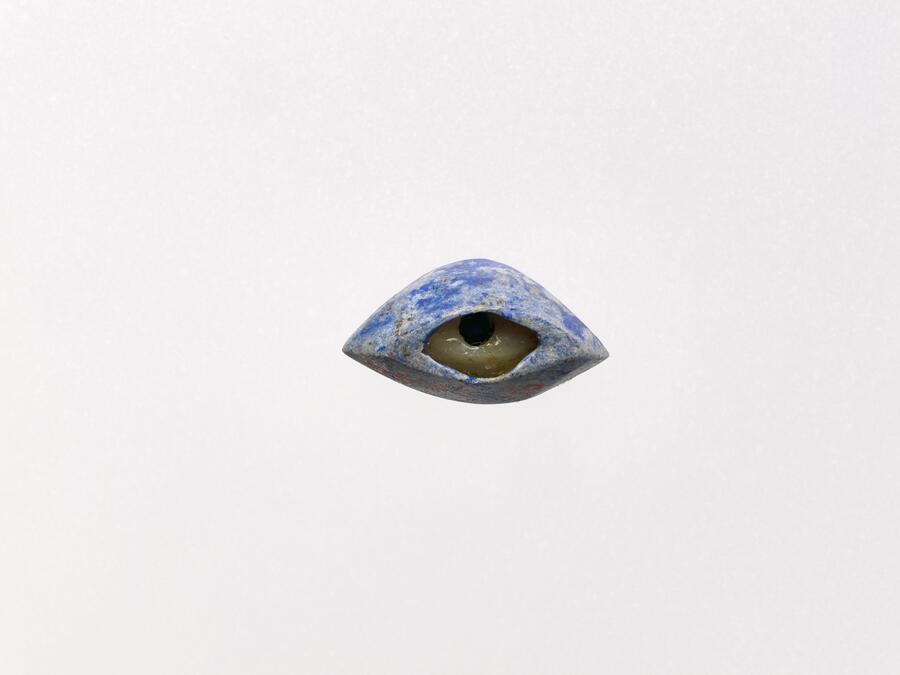
Inlay of a Statue’s Eye
26th–25th centuries BCE. Nippur, modern Iraq. Metropolitan Museum of Art, New York, Inv. No. 62.70.84