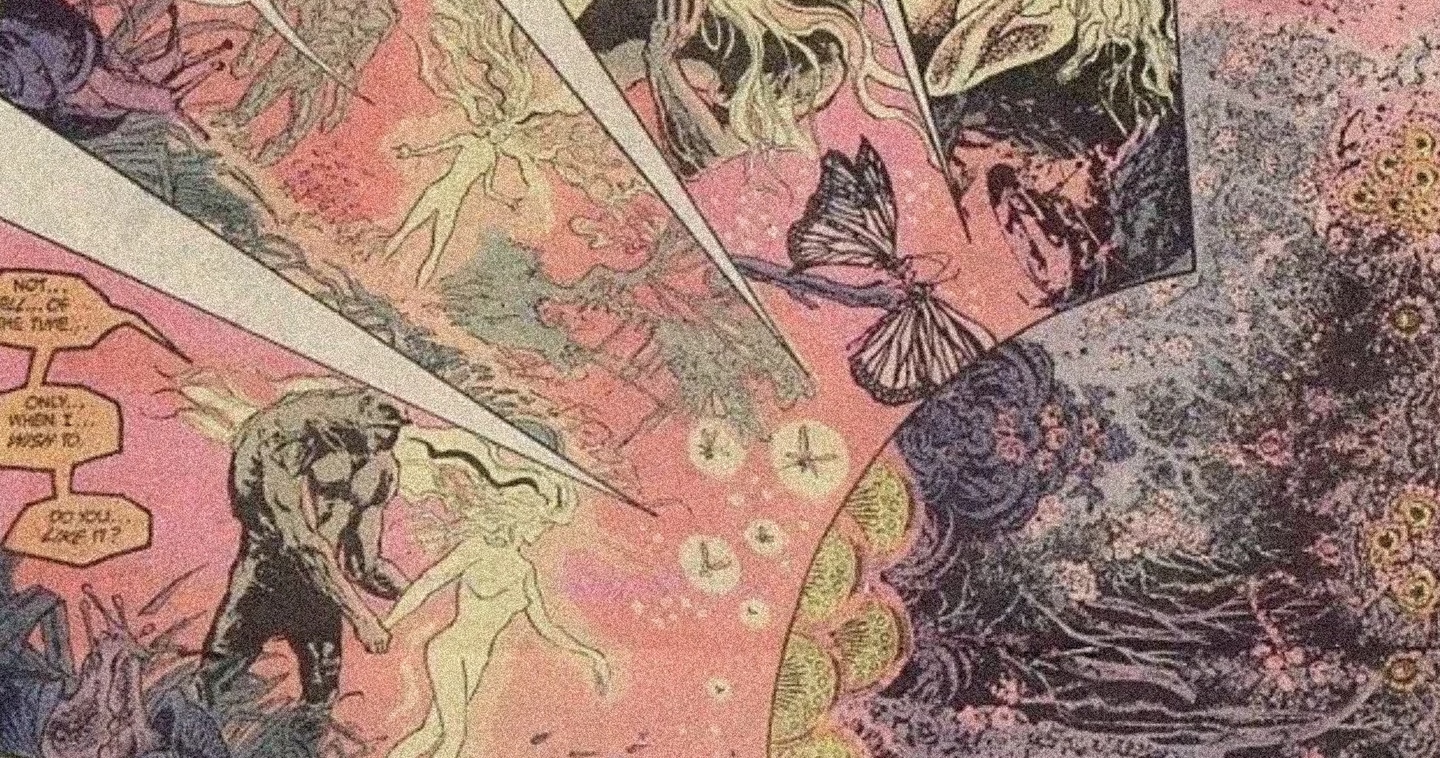
Comics are not simply children’s drawings; they are a form of art with a millennia-spanning history.
Topics
1. Concept 2. Albrecht Dürer and Berry Wrightson: Graphics from Different Eras 2.1 Engraving 2.2 Comparison with the Comic «Frankenstein’s Rebirth» 2.3.1 Comparison with the Engraving «Melencolia I» 2.3.2 Comparison with the Engraving «Sea Monster» 3. Stained Glass 3.1 Contrast 3.2 Figure and Composition 4. Conclusion 5. Bibliography 6. Image Sources
Concept
When reading international comics, such as those from DC, we typically focus on the plot and dialogue, without considering the creation process, composition, or line work. However, cultural literacy enables us to notice hidden connections: the work of an artist may reveal motifs and techniques from old masters. Even if the works belong to different eras, cultures, and art forms, their visual kinship sometimes becomes evident—even if not always expressed directly.
Answering the question, «What do German engravings, stained glass, and American DC comics have in common?» reveals numerous non-obvious connections. The importance of such an approach lies in the necessity of expanding genre understanding and accounting for historical legacy.
The objective of this research is to compare fundamentally different forms of art created across diverse cultural periods—forms that initially appear to have no common ground.It is crucial to uncover unexpected connections between vastly different art forms, created in separate eras and seemingly unrelated at first glance. The project also intends to avoid obvious examples where all elements of comics (from text to individual panels) are easily discernible.
Albrecht Dürer and Bernie Wrightson: Graphics Across Time
Engraving
Mass reproduction became one of the main factors that changed the role of art during the era of Albrecht Dürer. Before the development of printmaking, frescoes, altarpieces, and manuscript illustrations were primarily associated with the church, monasteries, and aristocratic patrons. Woodcuts and copper engravings allowed images to be reproduced on numerous sheets, enabling Dürer’s works to spread far beyond their place of creation and become accessible to a wider audience.Thus, Dürer changed not only the technique of engraving but also the very system of art distribution. Thanks to printing, the image moved beyond the church and courtly culture, becoming more accessible to the general public and transforming into a mass-market commodity. His monogram, recognizable imagery, and high technical precision established a model for authorship in graphics that later manifested in illustration, posters, advertising, and comics. In this sense, Dürer can be considered a precursor to contemporary visual culture, where an image is capable of rapid dissemination, gaining popularity, and simultaneously maintaining a connection to a specific author.
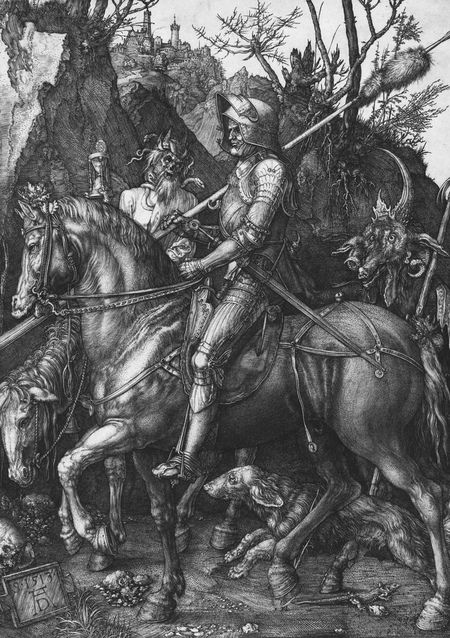
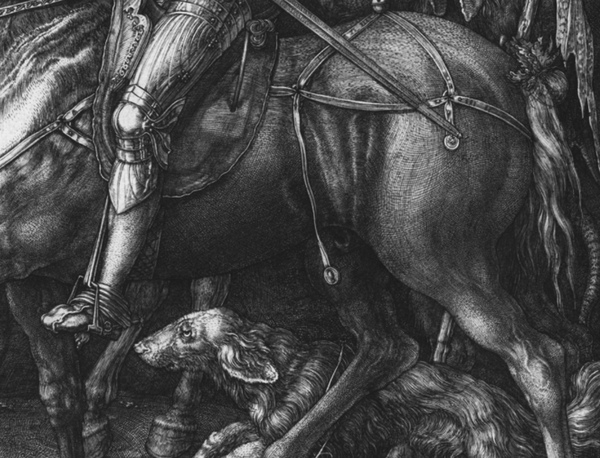
Albrecht Dürer, «Knight, Death, and the Devil»
In woodcut, Dürer carved an image into a wooden block, leaving lines that would accept the ink. In copperplate engraving, such as in «Knight, Death, and the Devil, ” he incised lines with a burin. In both techniques, expressiveness was built upon a sharp contrast between black and white. Dürer masterfully varied the direction, thickness, and density of his line work. The lines replicated the form of muscles, folds, and objects, thereby creating volume; cross-hatching intensified shadows and helped distinguish textures. These techniques bear a strong resemblance to the tasks of inking in comics: ink delineates the form, models the light and shadow, and makes the image clear upon printing. Therefore, Dürer is more accurately described not as the inventor of comic inking, but as a master of graphic language whose solutions became part of the tradition of printmaking.
Comparisons with the comic «Frankenstein: Rebirth»
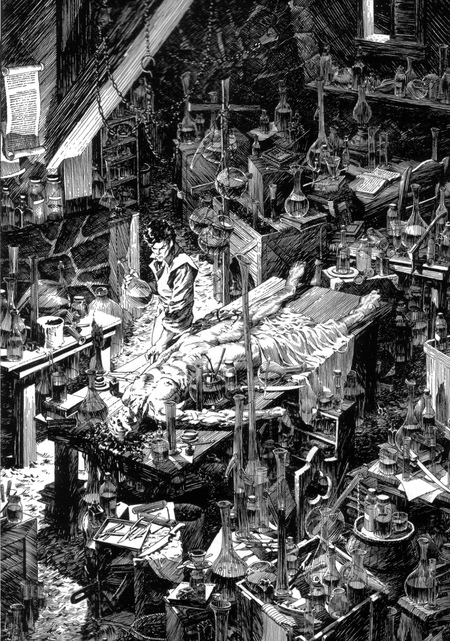
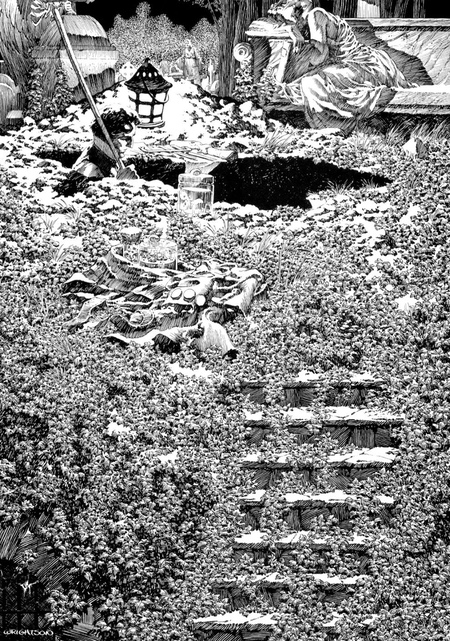
Bernie Wrightson, «Frankenstein: The Reanimation»
The comic «Frankenstein: Rebirth» by Bernie Wrightson—a graphic adaptation of Mary Shelley’s novel published in 1983. Wrightson does more than just retell the plot; he constructs a bleak world using black-and-white drawing: meticulously detailed faces, bodies, clothing, and interiors coexist with deep shadows and empty, unsettling spaces. His linework is extremely precise and fluid—it conveys the texture of skin, fabric, wood, and stone, while simultaneously amplifying the sense of decay and horror. Visually, the comic resembles an engraving: the black and white areas are sharply contrasted, shadows are built up with dense hatching, and the scenes appear almost theatrically staged. Wrightson develops the anatomy and objects in detail, yet he does not turn the image into a cold illustration. His graphic style is both spectacular and emotional: it helps evoke the loneliness of Victor Frankenstein and the tragedy of the creature he created.
«Frankenstein» is a true masterpiece of chiaroscuro, employing incredibly complex imagery while ensuring the viewer always sees exactly what they should be seeing [6]
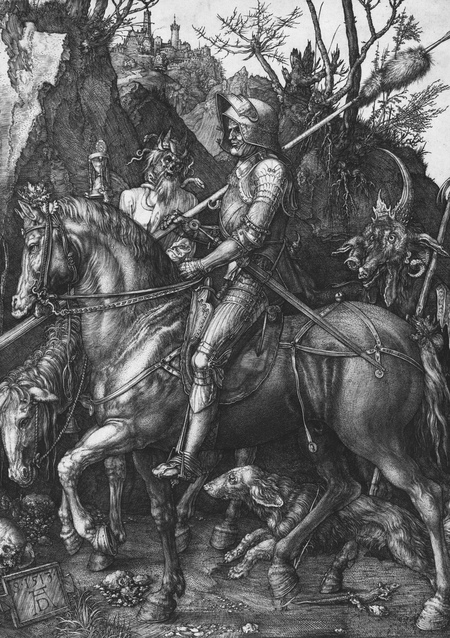
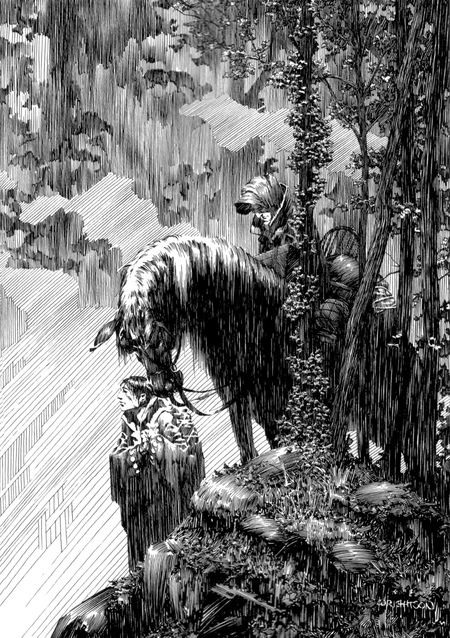
A Comparison of Albrecht Dürer’s «Knight, Death, and Devil» and Bernie Wrightson’s «Frankenstein: Rebirth»
For both masters, the contrast between light and dark masses plays a crucial role. Dürer utilizes delicate hatching and interwoven lines to create volume and atmosphere; Rauschenberg renders shadows more dense and cinematic, sometimes almost consuming the space with them. In both instances, darkness is not simply the absence of light—it serves to highlight the subject, generate tension, and direct the viewer’s gaze.
For Dürer, the line was not merely a contour. It simultaneously conveyed form, material, light, and movement. The density of the line is particularly crucial. In lighter areas, the lines are sparser and finer, whereas in shadowed sections, they thicken and cross over. This allowed Dürer to create a sense of volume without color. The black-and-white surface of the engraving becomes highly expressive: the objects appear material while simultaneously retaining a symbolic quality.Dürer also actively employed sharp contours to delineate figures and objects from one another. In this regard, his graphics can be compared to the comics of Bernie Wrightson: for both artists, the line does more than just describe an image—it organizes the viewer’s gaze and generates dramatic tension. However, Dürer’s line is subservient to a strict system of cross-hatching, while Wrightson’s line becomes an emotional burst and a «guide» through the work.
Comparisons with the comic «Swamp Creature»
Bernie Wrightson, «Bog Beast»
The character Swamp Thing has appeared in seven American comic book series to date, including several special issues, as well as in other DC Comics titles. The series gained massive popularity after its debut in the 1970s and during the mid-to-late 1980s under the stewardship of Alan Moore and the artwork of Bernie Wrightson.
Comparisons with the engraving «Melancholy»
The engraving «Melancholy» is constructed on the principle of multiple readings: the viewer moves from the figure to the objects, the background, and the symbolic meanings. In this regard, the engraving can be compared to a comic book—it is organized like a page of panels, but with blurred outlines. Dürer creates a frozen image that is about to move.
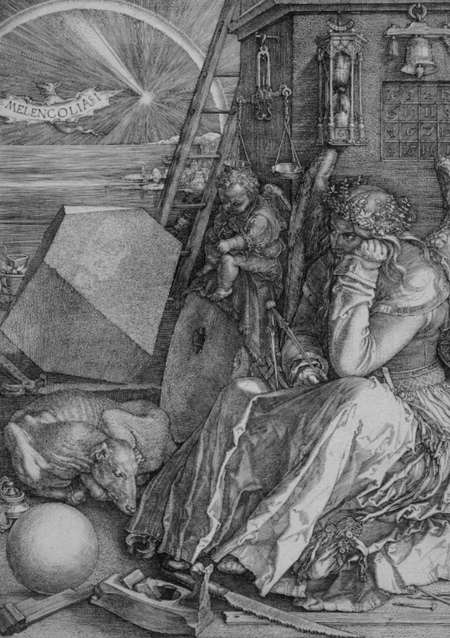
A Comparison of Albrecht Dürer’s «Melencolia I» and Bernie Wrightson’s «Swamp Thing»
In «Melancholy, ” every detail holds symbolic significance. The winged woman personifies the creative mind—one endowed with knowledge yet unable to complete its vision. The compass, ruler, and geometric solids speak to humanity’s drive to understand the world, while the hourglass and bell serve as reminders that time cannot be stopped. The ladder seems to lead toward an unattainable goal, and the magic square underscores the search for hidden order. The dog at the figure’s feet suggests not only loyalty but also a melancholic disposition [3]. The magic square on the wall expresses the desire to find harmony and underlying order; its bottom row contains the year the engraving was created—1514. Dürer gathered these elements to illustrate the contradictory state of the artist and the thinker: humanity possesses the tools of art and science, but it confronts the limits of knowledge, the flow of time, and the impossibility of achieving absolute perfection. Thus, the chaos surrounding the figure achieves harmony.
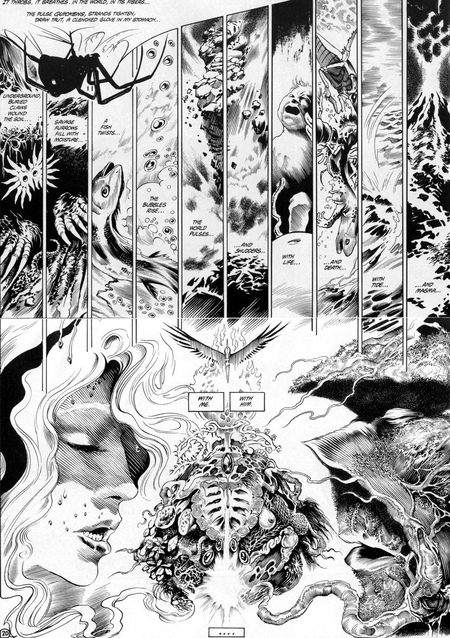
Excerpt from Berni Wrightson’s «Swamp Creature»
In Bernie Wrightson’s comics, chaos is conveyed through the fragmentation of composition into numerous small details and fragments. His tense, almost feverish graphic style creates an effect of «ordered chaos»: the image appears overloaded, yet the lines, shadows, and compositional elements adhere to a clear structure. Because of this, the scene simultaneously seems disorderly and meticulously organized.
Comparisons with the engraving «Sea Monster»