Navigation Menu
- Concept and Topic Selection
- Psychological Profile
- Conflict
- Dramaturgy
- Symbolism and Emotionality
- Conclusion and Bibliography
Concept and Topic Selection
Artemisia Gentileschi’s creative journey began in early childhood under the guidance of her father, the renowned painter Orazio Gentileschi. In his studio, she mastered the fundamentals of painting and was introduced to the artistic techniques of Caravaggio. In 1612, Artemisia moved to Florence, where she launched her independent artistic career, gained the recognition of influential patrons, and in 1616, she became the first woman accepted into the Florentine Academy of Drawing. She later worked in Rome, Venice, Naples, and London, gradually forging her own recognizable style. Artemisia frequently addressed biblical and mythological subjects, with a particular focus on female figures, psychological expressiveness, and the intense dramaturgy of the action. Her innovative approach to composition, chiaroscuro, and the interpretation of traditional themes established her as one of the most significant female artists of the 17th century.
In her painting, as in the works of many of her contemporaries, tonal relationships often dominated color. In the early seventeenth century, European painting gradually moved away from the idealized imagery and complex compositions of Mannerism, turning toward naturalism and emotional expressiveness.
Artemisia developed a special depth in chiaroscuro—in her work, tonal contrast is not just a tool for creating volume, but an important element of storytelling.
Through the distribution of light and shadow, the artist defines emotional accents, reveals the psychological state of the characters, emphasizes conflict, and shapes the viewer’s response to the events unfolding.
Psychological Profile
One of the frequent applications of chiaroscuro in Artemisia’s works is the creation of a psychological portrait of the characters. Light highlights faces, gestures, and bodily positions, allowing the viewer to read the characters' emotions even in the absence of active action.
It is particularly interesting to examine this chiaroscuro technique using the examples of two works: «Susanna and the Elders» (1610) and «Mary Magdalene» (c. 1620). Both paintings depict women experiencing intense emotional turmoil, yet the nature of their experiences differs radically. In the first case, the psychological conflict arises under the influence of an external threat; in the second, it unfolds internally within the heroine herself. Using this distinction, we will trace how Artemisia employs light to achieve the psychological depth of her subjects.
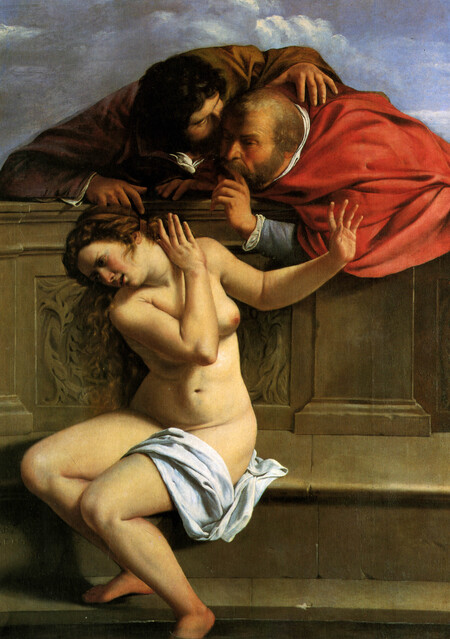
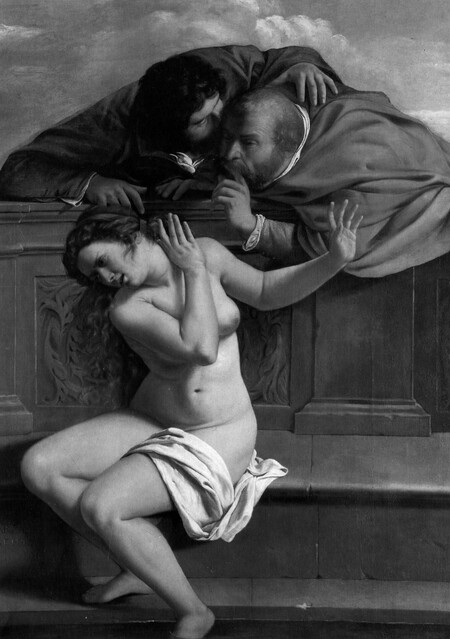
Artemisia Gentileschi, «Susanna and the Elders» (1610)
The composition is built upon the contrast between two elderly men and a young woman. The men lean over a stone railing, occupying the upper portion of the painting. Their figures are closely gathered, their gestures directed toward each other and toward Susanna, creating a sense of conspiracy. The heroine, in contrast, is positioned lower.
Unlike Artemisia’s later works, this piece lacks the stark contrast between the nearly black background and the brightly lit figures. The light is distributed relatively evenly, though Susanna’s body emerges as the brightest element in the composition.
Her light skin contrasts with the darker figures of the elders and the stone hedge, which allows Artemisia to build a hierarchy within the work. The viewer’s gaze is primarily drawn to Susanna before moving on to the men who are the cause of her emotional state.
On Susanna’s body, one can observe soft transitions between illuminated and shaded areas. Shadows beneath the chin, on the neck, chest, and in the folds of the body emphasize her tense posture. The light helps accentuate the curve of her torso and her raised arms, transforming physical movement into a reflection of an internal state. Importantly, the heroine’s body does not appear relaxed here, despite its nudity and soft modeling. The turned head, tense shoulders, and the desire to distance herself from the men conflict with the traditional image of a calmly posing nude woman.
Unlike «Susanna and the Elders, ” Artemisia addresses the depiction of internal conflict in „The Penitent Magdalene.“ The heroine is presented in a moment of renunciation of her former life and turning to faith.
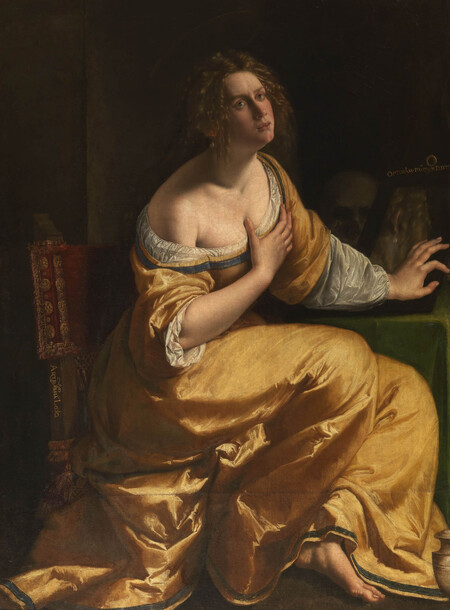
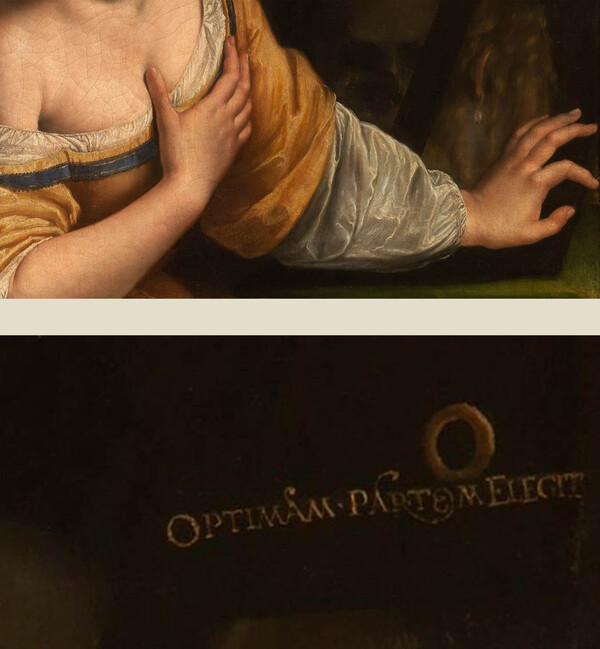
A significant distinction from the previous painting is the much more pronounced chiaroscuro contrast. The figure of Mary Magdalene emerges from a dark space, the boundaries of which are almost undefined. Because of this, the artist draws the viewer’s attention to the heroine’s gestures and posture.
It is particularly significant that the light source lies outside the depicted space. The viewer sees its effect, but not the source itself. This allows light to be perceived not just as a physical phenomenon, but also as a possible symbol of spiritual revelation. In the context of a religious narrative, the illuminated face of Mary Magdalene can be interpreted as a visual expression of her conversion to faith.
Meanwhile, Artemisia maintains the physical authenticity of the figure. She does not idealize the heroine’s face, nor does she strip her image of emotionality. The arm pressed to the chest creates a sensation of a sudden emotional impulse. The light emphasizes this gesture, making it one of the compositional focal points.
The mirror next to the woman also plays an additional role. It is traditionally associated with the motif of vanity and earthly beauty. Its frame bears the Latin inscription Optimam partem elegit, which alludes to the choice of a better, spiritual destiny. In the shadowed space, the mirror does not immediately capture the viewer’s attention. This suggests that the artist is establishing a particular hierarchy: we first perceive the emotional state of Mary Magdalene, and only then do we discover the objects that illuminate the meaning of her experience.
Conflict
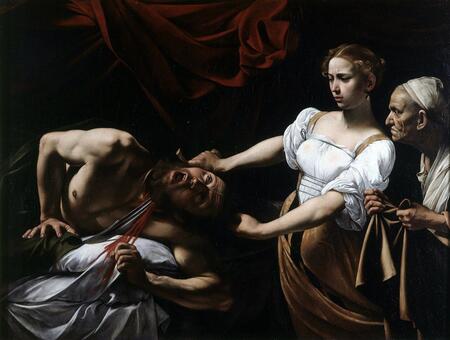
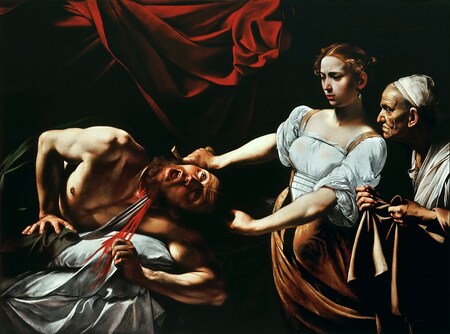
Another crucial narrative function of chiaroscuro is the revelation of conflict. By distributing light and shadow, the artist emphasizes the confrontation between the characters, highlights key actions, and builds tension among the figures. The light helps establish the thematic center of the scene and then guides the viewer’s eye toward the other participants in the unfolding events. Let’s examine this application of chiaroscuro using the paintings «Judith Beheading Holofernes, ” „Jael and Sisera, ” and „Judith and the Maid with Holofernes' Head“ as examples.
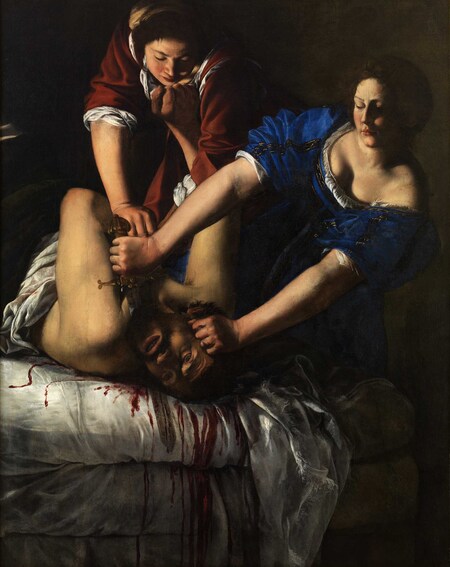
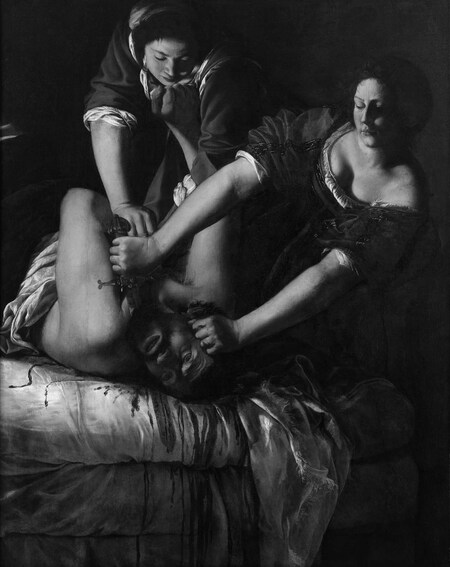
Lighting plays a crucial role in organizing the conflict. Figures emerge from an almost black background, upon which interior details are absent. The artist strips away secondary elements. It is interesting to note the characters' faces. Judith appears focused; her expression shows neither triumph nor obvious pleasure in the violence. The maid is equally absorbed in the action. Oloferne, conversely, is depicted with an open mouth and a strained expression. The differences in facial expression help the viewer discern the nature of the confrontation—the determination of the women set against the desperate resistance of the man.
The directed light highlights the faces and hands of the characters, as well as the white fabric of the bed. This draws the viewer’s gaze between the main figures in the scene and the instrument of violence.
The illuminated forearms of Judify and the maid form a system of diagonals converging toward Olopherna’s head. The light emphasizes the tension in the muscles, making the physical exertion of the heroines particularly convincing. The light unites the participants in the confrontation into a single compositional group, highlights their physical interaction, and underscores the climactic nature of the action. The shadow eliminates secondary details and concentrates attention on the standoff, transforming the lit figures into the work’s independent dramatic center.