Concept
Marriage is one of the most widespread and significant themes in world art, especially in Russian painting. This bright and multifaceted celebration, which was meant to bring happiness and harmony, actually conceals numerous social nuances beneath the surface. For every young woman, a wedding is a landmark event symbolizing the transition into a new life, filled with hopes and expectations for shared happiness with a loving husband. However, if we look into the past, we can see that not everything is as rosy as it may seem at first glance. In Russian folklore, there is a saying: «If you endure it, you will fall in love, ” which reflects the harsh reality of many women forced to accept their fate.
Throughout the centuries, marriage played an important role in society, representing not just a union of two individuals, but also a strategically beneficial agreement between families. In the context of a patriarchal society, unfortunately, arranged marriages were the norm, not the exception. Many young women became victims of this social structure, being effectively traded to other families for a good dowry or to strengthen kinship ties. In such circumstances, women had no choice—their destiny was often determined by their parents or older family members. Frequently, a bride would meet her future husband for the first time only at the wedding ceremony.
The concept of my visual research is to demonstrate how delicately and tragically the fate of unhappy brides is depicted, and to trace the evident connection between paintings created in different years that share a single, common bitterness.
The theme selection is driven by the desire to explore not only the artistic content within the great artists' works but also their emotional significance.
To investigate, I selected paintings by various 19th-century artists—both Russian and Western European masters—which demonstrates the multifaceted nature and prevalence of this issue across different cultures. The selection criterion for the works was the depiction of an unhappy bride forced to endure humiliation and acceptance of her powerlessness. In every painting, I sought a tragic narrative or a sorrowful atmosphere that allowed one to feel the pain of women from that era.
The structure of my research is organized chronologically and is based on a comprehensive review of the works, starting from individual Russian artists and concluding with the paintings of international masters. To analyze the chosen theme, textual sources such as various articles about the artists and their paintings were utilized.
The central question of my visual research is: What meaning is hidden within 19th-century paintings depicting unhappy brides?
Hypothesis: In 19th-century painting, weddings were depicted not only as a joyous and celebratory event but also as a tragedy and a satire on women’s rights.
Russian Painting.
Vasily Vladimirovich Pukirev
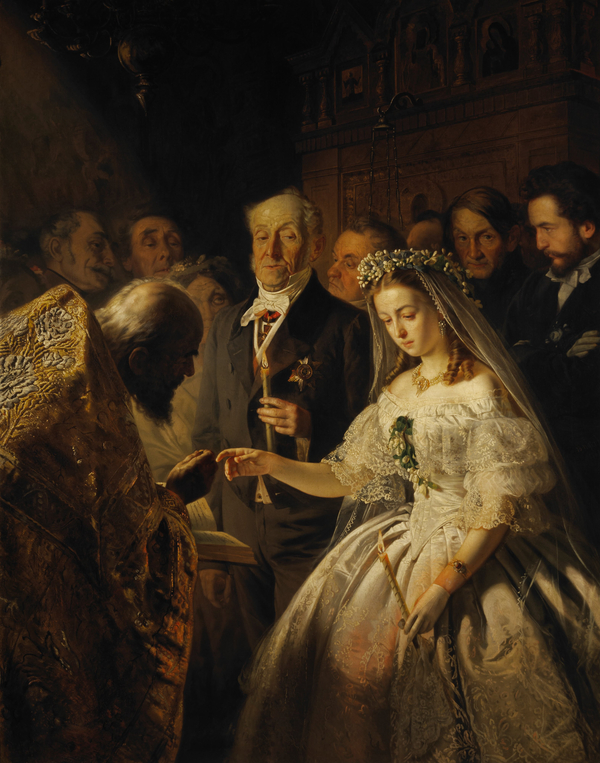
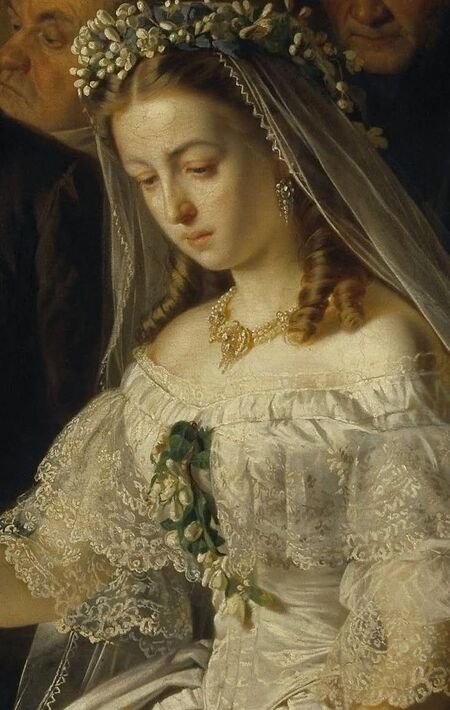
Vasily Vladimirovich Pukirev, «Unequal Marriage, ” 1862
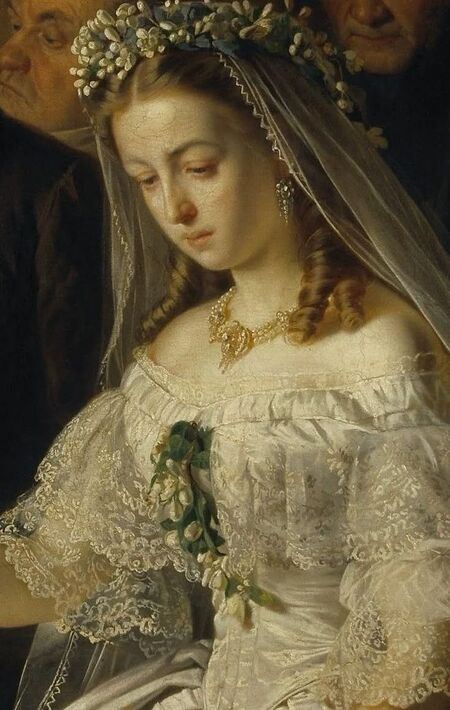
«Unequal Marriage» by V. Pukirev is a renowned painting that profoundly impressed its contemporaries with its horrifying subject matter and exquisite execution. The canvas depicts a beautiful, very young girl whose reddish, moist eyes were likely filled with tears many nights before the sorrowful event. Her left arm hangs lifelessly downward, holding a candle, while she helplessly extends her right hand toward the priest. The girl’s face conveys immense sadness and grief, yet simultaneously displays complete resignation to her inescapable situation. She understands the fate awaiting her, just as the frail, self-satisfied old man casts a condescending gaze upon her. Most likely, the unfortunate bride will become yet another soul ruined by him, much like the two old women (probably previous wives) in the wedding wreaths standing near the groom.
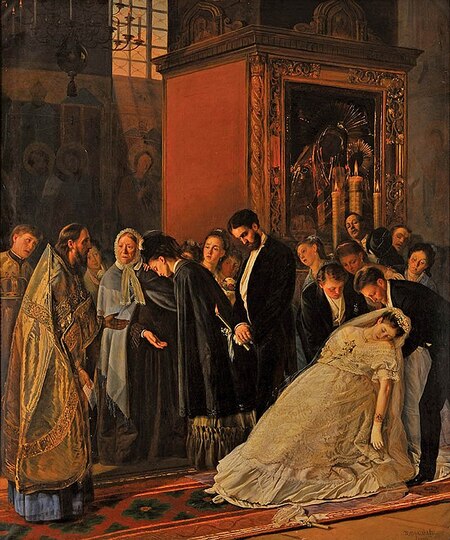
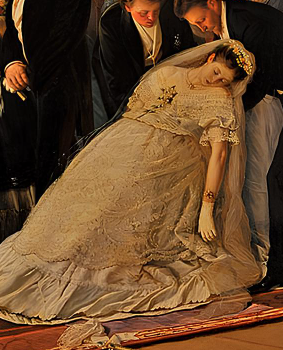
Vasiliy Vladimirovich Pukirev, «Interrupted Wedding (Two-Wife),» 1877.
Another work by Pukirev illustrates an aborted wedding. The beautiful young bride lies unconscious because her chosen partner already had a wife—this is why the painting also has the title «The Bigamist.» Although in this scene Pukirev’s bride walks toward the altar against her will, the subject matter and the tragic fate of the unfortunate bride do not become any less poignant.
Vasily Vladimirovich Pukirev, «The Reception of the Dowry in a Merchant Family During a Painting,» 1873
The painting conveys the suffocating pre-wedding atmosphere within the bride’s extremely modest merchant home. The steward is appraising the quality of the dowry, examining the dress fabric with an unimpressed look, while the woman with the child packs the rest into a half-empty trunk. The bride and perhaps her friend watch this entire scene with sadness. The groom, meanwhile, stands in the doorway with an arrogant air, observing and likely supervising the process. Pukirev again illustrates how powerless the women are when marrying against their will and how inconsequential feelings and love are in such marriages. The dowry for the groom is far more important than the bride herself, which is why Pukirev focuses the viewer’s attention precisely on the girl’s possessions, rendering her an inconspicuous part of the entire event.
Firs Zhuravlyov
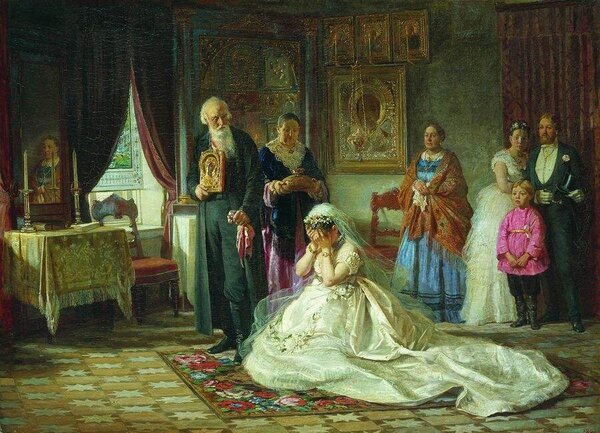
Firs Zhuravlev, «Before the Crown, ” 1874
The painting «Before the Wreath» illuminates a situation already quite commonplace. A bride, overwhelmed with sorrow, sits on the floor, weeping as she mourns her unfortunate fate and lost freedom. She does not conceal her sadness or resentment even in the presence of the shocked groom and his family standing behind the young woman. Beside her are depicted her parents, who observe their unhappy daughter with indifference; they prioritize a beneficial match and improving the family’s prosperity—a family that, by the way, is already quite affluent, a fact visible by the house’s opulent decor and the bride’s decidedly unmodest gown.
Firs Zhuravlev, «Before the Crown,» 1874.
The painting was so well-received by its contemporaries that Zhuravlev created a second version of the canvas, depicting a more private setting—perhaps in this interpretation, the parents even feel pity for their grieving daughter.
Firs Zhuravlev, «After the Wedding,» 1874
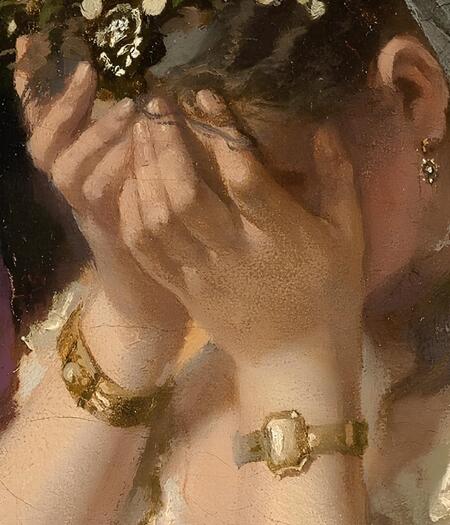
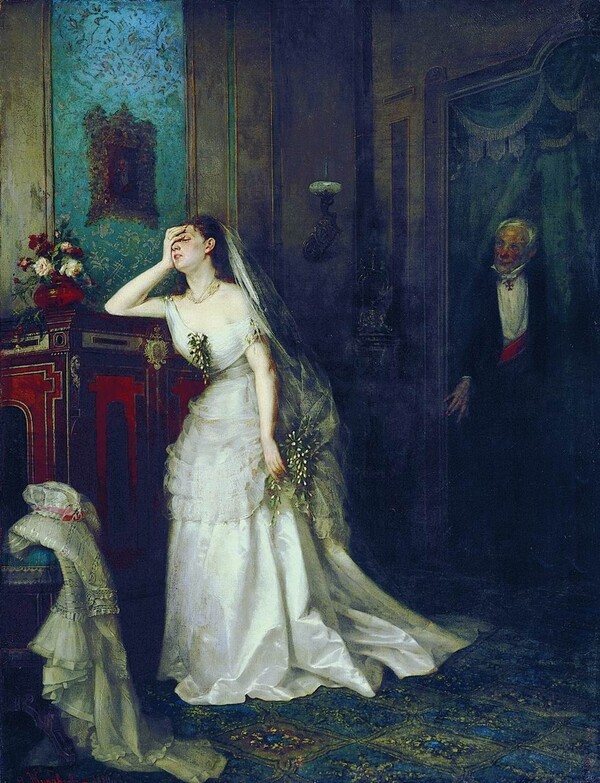
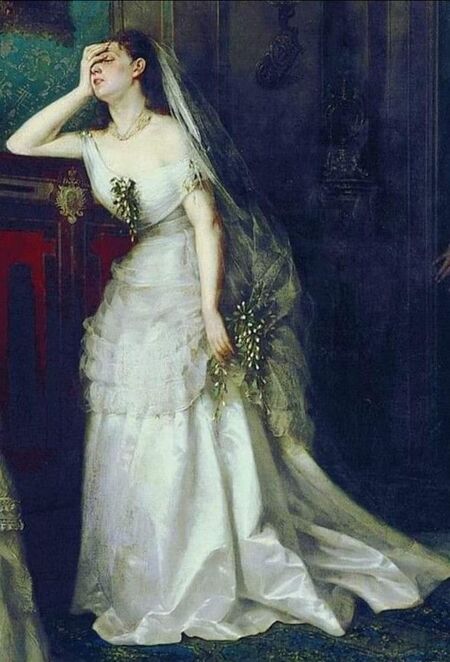
«After the Wedding, ” in my view, is one of the artist’s most dramatic works. Unlike his previous paintings, it illustrates a heavier and darker moment. The poor girl has already been married off to a decrepit and disgustingly smiling old man peering from behind the door. The unfortunate girl no longer has the strength to lament her situation, and with terror, she realizes that she will now have to fulfill her marital duties. This is evident if you look at the headscarf and peignoir lying on the chair to the left. Zhuravlev masterfully conveys the entire horror and despair of the bride.
Slides
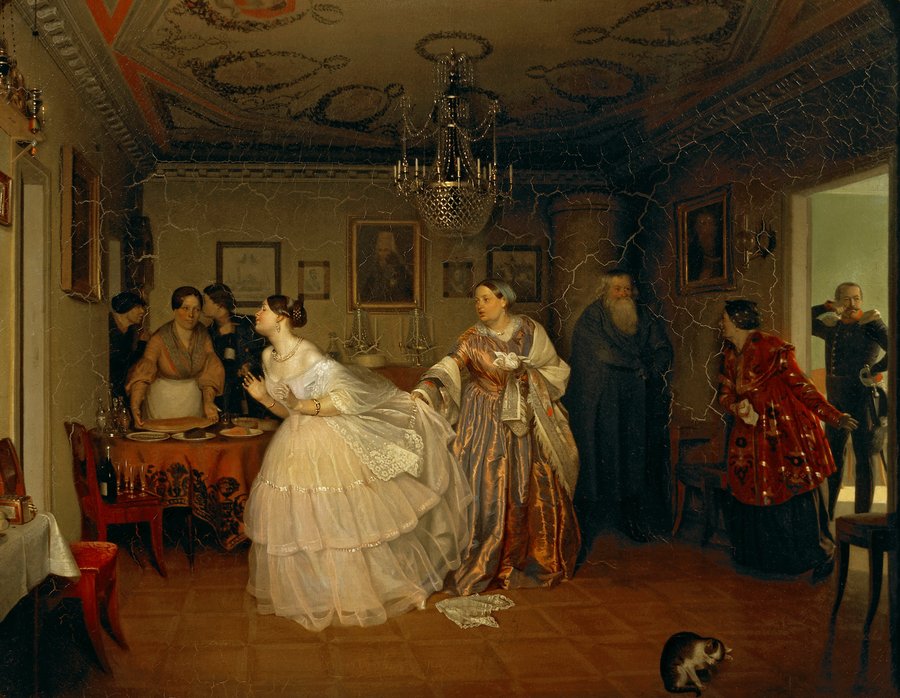
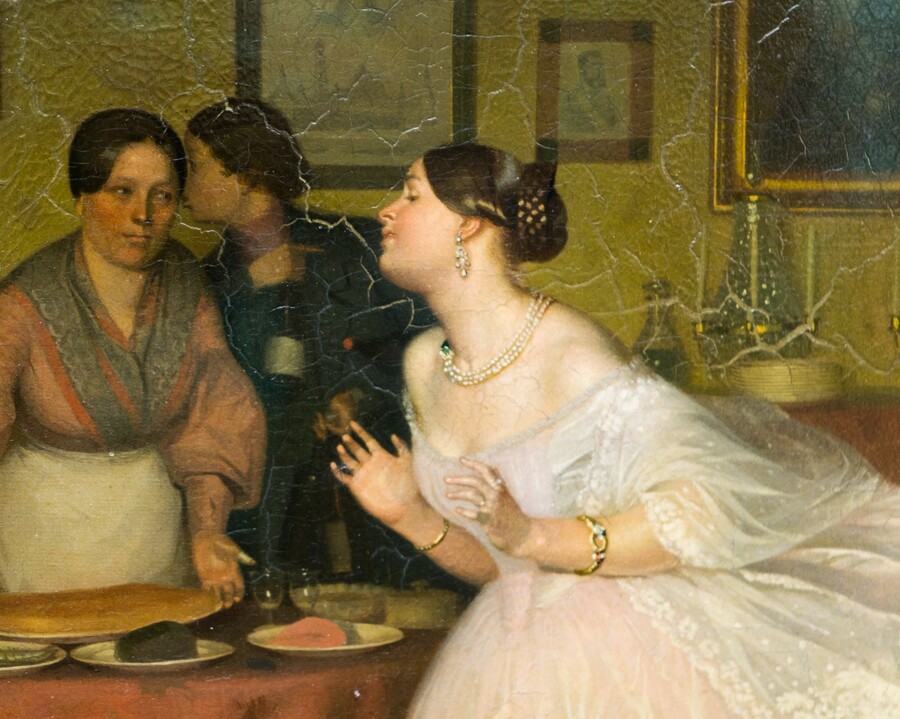
Pavel Fedotov, «The Major’s Suitor, ” 1848
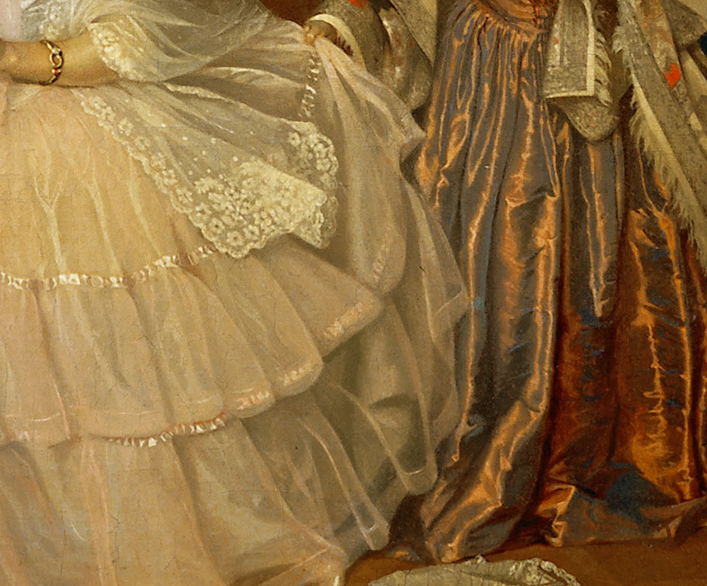
In «The Major’s Suitor,» Fedotov openly satirizes the social norms of his era. The artist depicts a typical daily scene from the 19th century: a impoverished major has come to propose to the daughter of a wealthy and affluent merchant. At the center of the composition is the bride—clearly frightened and disagreeing with her parents' decision—who is trying to escape while her mother holds her back, gripping the hem of her daughter’s dress. The self-satisfied and extremely pretentious major stands in the doorway, seemingly uninterested in the future bride. More likely, he is already daydreaming about how soon he will become rich and improve his miserable circumstances.
Adrien Volkov, «Broken Engagement» (1860)
Volkov’s work presents a sorrowful, indicting narrative. A young man arrives to ask for the hand of a wealthy merchant’s daughter, but suddenly, a daughter of a minor official—abandoned by her lover and holding a child—appears, exposing the man’s sinister nature. The culprit of these events is the centerpiece of the painting, symbolically positioned between the fainting, unhappily-betrothed bride and the discarded mother of his child.
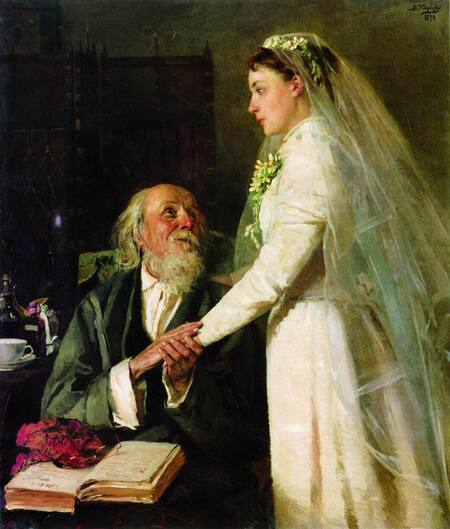
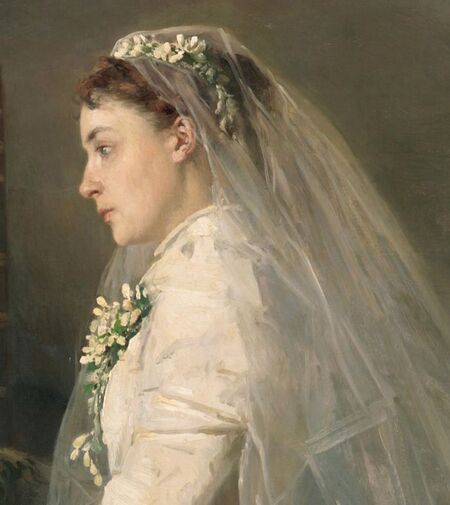
Vladimir Yegorovich Makovsky, «Before the Wedding, ” 1872
Vladimir Egorovich Makovsky, «Choice of Dowry» (1897–1898)
Makovsky portrays young women who are far from happy—like many others—who must fulfill their duties to their families, regardless of their own feelings.