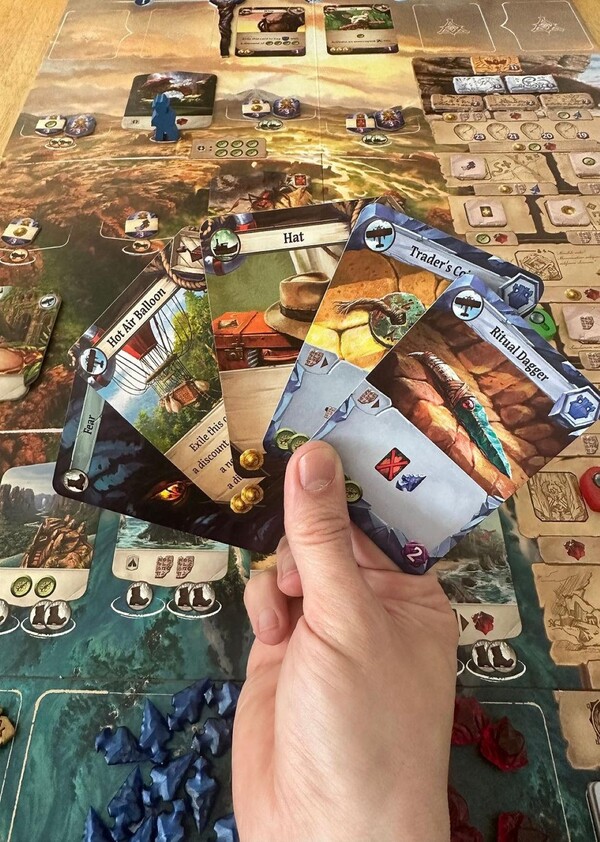
Concept
Cards are one of the most common components in tabletop games. Over time, they have come to signify not only game objects but also to contain specific rules—actions, effects, and limitations. Furthermore, a single card does not have to perform only one function. In some games, cards can be played in various ways; for example, a card might feature multiple possible actions, or it might allow the player to discard it to purchase something.
Jeffrey Engelstein, in his book «Building Blocks of Tabletop Game Design: An Encyclopedia of Mechanisms» [1], refers to multi-functional cards as those that present several possible actions, of which the player can choose only one. He notes that this mechanic naturally leads players toward complex decision-making, but for that choice to be interesting, the card must not have an option that is overtly superior to the others, otherwise, the choice would be trivial.
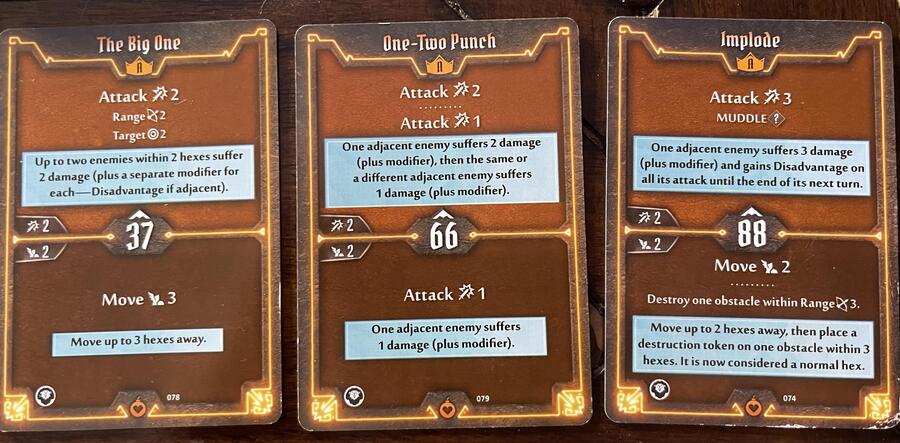
Multifunctional Cards in the game «Gloomahaven»
The question of choice can also be linked to the philosophy of play. Roger Caillois, in his work «Games and People» [2], highlights agon—a competition where participants strive to surpass each other through their own skills and abilities. In strategic board games, the ability to make decisions is one of those skills. Multifunctional cards allow this process to become more complex by forcing the player to evaluate several options simultaneously and forgo some in favor of others. Thus, even a single card can create a small strategic dilemma, the resolution of which dictates the subsequent course of the game.
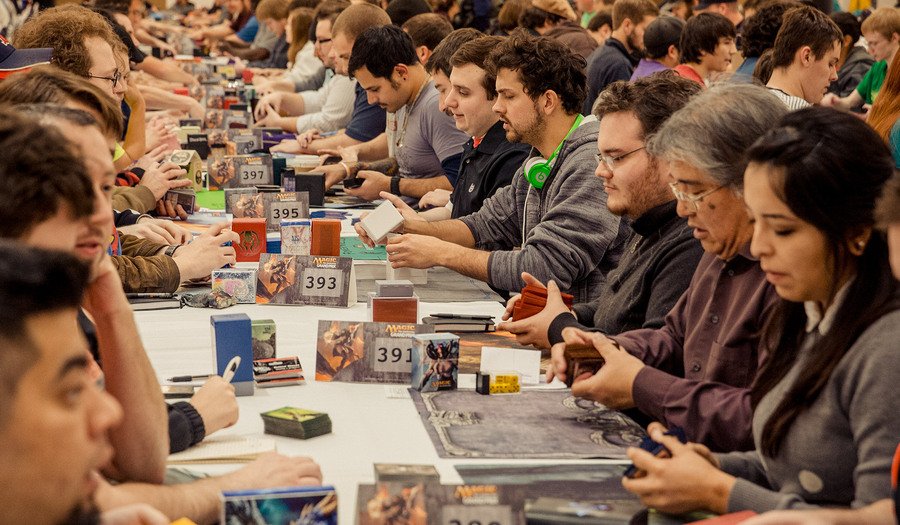
MTG Card Game Tournament
Key Question and Hypothesis
Central research question: How do different implementations of multifunctional cards affect gameplay and decision-making?
I hypothesize that the primary feature of such cards is the necessity of choosing between mutually exclusive actions. By using a card in one way, the player foregoes others, which gives the decision tangible weight. However, the nature of this choice depends on the specific implementation of the mechanic: in some instances, the player must choose between an immediate reward and long-term planning, while in others, they must consider the opponents' objectives. Furthermore, simply having multiple actions on a card does not automatically make decision-making engaging—what matters is the complexity of the choice presented to the player.
This work aims to systematically categorize board games based on how the multifunctional card mechanic is implemented. The main textual sources for analysis will be the rulebooks of board games where multifunctional cards have a significant impact on the gameplay. Appropriate photographs of the cards, board games, and gameplay sessions will be used as visual accompaniment.
The relevance of this study stems from the popularity of multifunctional cards in modern board games [3]. I believe that this mechanic is sought after by game designers because of its ability to be easily combined with other mechanics across different genres, which we will illustrate with examples later.
Rubicon
- The Historical Context of Playing Cards 1.1. The Origins of Playing Cards 1.2. When Cards Began to Convey Rules
- Multifunctional Cards in Modern Board Games 2.1. The Card as a Resource 2.2. Choosing Between Multiple Card Effects 2.3. Card Effects Based on Player Role 2.4. Card Effects Based on Auction Outcome 2.5. Card Effects Based on Game Phase
- ConclusionIn the first section, I plan to examine the origins of playing cards and how they evolved into rule carriers in modern board games. In the second section, I will explore various ways multifunctional cards are implemented in board games. I will focus primarily on their characteristics, their connection to other mechanics, and their influence on player decisions. In the conclusion, I will summarize the findings and return to the research question.
Historical Context of Playing Cards
Ancient European Playing Cards
The Genesis of Playing Cards
The history of playing cards dates back long before the advent of modern board games. The exact time of their invention is unknown, but the first evidence of using paper cards dates back to China before the 10th century [4]. Gradually, card games spread to the Islamic world, and by the second half of the 14th century, they had also arrived in Europe. A significant transitional phase was the Mamluk cards from Egypt, which already utilized four suits and numbers. Over time, European decks acquired the form familiar to us, although their composition and imagery varied depending on the region [5].
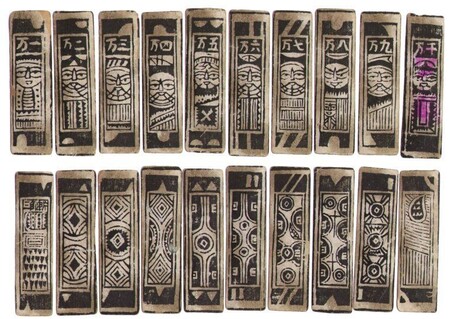
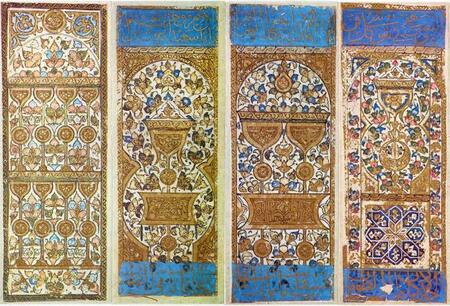
Ancient Chinese (left) and Islamic (right) playing cards
Initially, the purpose of cards was quite simple: each card represented a specific value or suit, and its role in the game was defined by general rules. Because of this, the same deck could be used for many different games. However, as board games developed, a standard deck of cards became insufficient, and cards gradually began to serve other functions—denoting events, game objects, actions, and even individual rules. Thus, from a relatively universal set of symbols, they transformed into complex game components.
When maps began to dictate the rules
Monopoly Game Cards
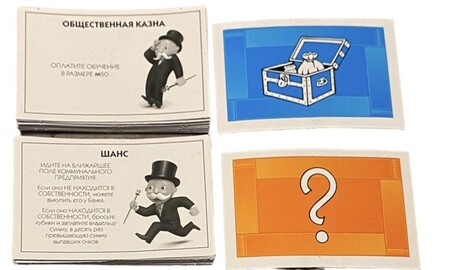
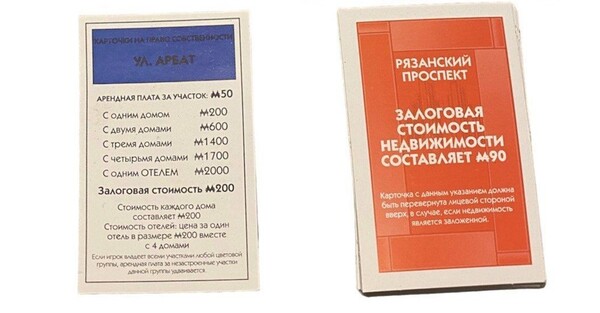
One area of development has been cards with specific instructions. Even in board games from the Victorian and Edwardian eras, cards with random events appeared, which could either help or hinder player progress [6]. A similar approach was later adopted in other games, such as Monopoly, where «Chance» and «Community Chest» cards compel the player to perform a designated action. Now, the card doesn’t just denote a value—it dictates what must happen in the game.
The games «Magic: The Gathering» (left) and «Dominion» (right)
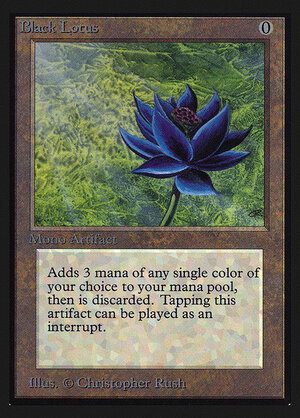
This principle later developed into card games featuring individual card properties. The most famous example of such a game is Magic: The Gathering (1993). Its creator, Richard Garfield, stated that the initial concept of the game was based on embedding the rules directly onto the cards [7]. This allowed each card to introduce new abilities, restrictions, and methods of interaction with other cards. A similar approach is used in Dominion (2008), where action cards allow players to alter the conventional turn order—drawing extra cards, taking more actions, or making more purchases [8]. Consequently, cards are no longer merely elements of the game, but carriers of its rule fragments.
Multifunctional Cards in Modern Board Games
A Party in Gloomhaven
The ability to place special rules on cards has given game designers the space to create a wide variety of card mechanics. If a card can contain a separate action or ability, nothing prevents adding several at once. For instance, in Glory to Rome [9], one card can function as a gameplay action, a resource, or a building object. However, linking the emergence of multifunctional cards to one specific game is difficult because such solutions arose concurrently and in vastly different forms. Next, we will examine various ways these multifunctional cards have been implemented and how they have influenced gameplay.
Map as a Resource
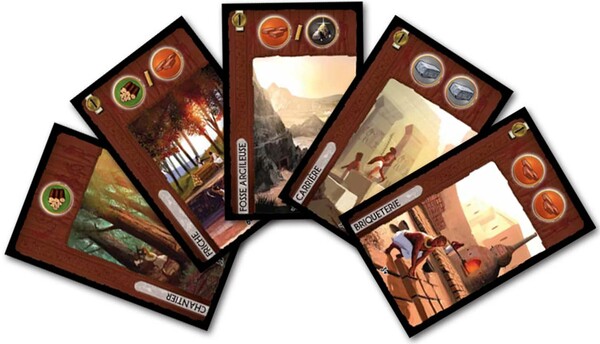
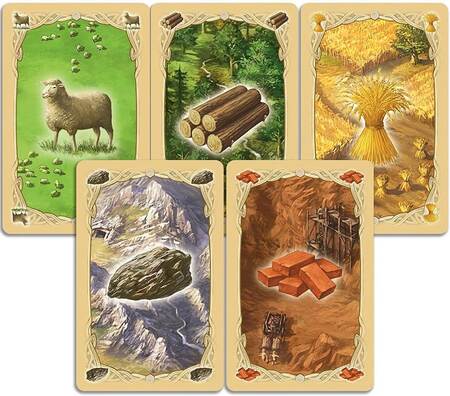
Resource Cards in the games «7 Wonders» (left) and «Catan» (right)
One way to implement multifunctional cards is to use them as resources. In this case, a card can not only fulfill its own in-game function but also serve as a means of payment. This mechanic combines two mutually exclusive options within a single component: the ability to play the card or to gain a resource upon its discard.
San Juan Game Cards
In San Juan [10], cards represent buildings that players can construct in their city. However, construction requires discarding other cards from your hand equal to the building’s cost. Thus, the player pays not with standard resources, but with potential constructions. A similar principle is used in Race for the Galaxy [11], where hand cards also serve as payment for placing specific cards on the board.
The main feature of this approach is the alternative cost. Each card spent is not merely a unit of resource, but an opportunity the player foregoes. Therefore, the decision to build depends not only on the building’s value but also on which cards must be discarded to achieve it.
Game board in «Res Arcana»
Another variation can be seen in Res Arcana [12]. Here, artifact cards can be played for their permanent effects, which allow for the construction of a resource-generating engine. However, if resources are needed immediately, there is an option to discard a card from your hand in exchange for them. Unlike San Juan, the discarded card is not simply used to buy another card; instead, it yields resources that can then be allocated as needed.