TABLE OF CONTENTS
Contents
Introduction
I. Genius and Rule: Why Art Cannot Be Reduced to Craftsmanship
II. Genius and Originality: Is Creating Something New Enough?
III. Genius and Imagination: How Does an Artistic Idea Come to Be?
IV. Genius and Taste: Why Originality Is Not Enough
V. Artificial Intelligence and Artistic Creation: From Tool to Author
Conclusion
INTRODUCTION
Not long ago, art was almost invariably linked to human authorship. A work presumed the presence of an artist—their experience, imagination, and a particular worldview. Today, that connection is less obvious because artificial intelligence now exists. And this AI is capable of generating images that appear to be complete works of art and elicit a genuinely sincere aesthetic response from the viewer.
But is that enough to call a machine an artist? If an image turns out to be expressive and unusual, does that mean there is creative thought behind it? Or do we perceive the result as art, even though the creation process itself is structured entirely differently? I believe that today, it has become more important to understand what actually makes creation artistic. To this end, I turn to the aesthetics of Immanuel Kant and his work, «Critique of Judgment» (1790).
In paragraph 46 of «Critique of Judgment, ” Immanuel Kant offers a definition that serves as the starting point for understanding artistic creativity.
«Genius is the talent (natural gift) that gives art a rule.»
My research engages with Kant’s philosophy as a tool for understanding contemporary artistic reality. His theory arose long before the advent of digital technologies, yet the questions it raises about the nature of genius, originality, and the artistic idea resonate with new urgency today.
I. Genius and Rule: Why Art Cannot Be Reduced to Craftsmanship
One of the earliest philosophical explanations of the nature of art is tied to the ancient idea of mimesis—imitation. However, imitation did not necessarily mean exact copying of the surrounding world. For example, in the philosophy of Aristotle, it becomes a mode of knowledge: the artist selects individual features of reality, combines them, and creates a new image. In Chapter IV of Poetics, Aristotle writes about humanity’s natural inclination toward imitation and connects it to the acquisition of initial knowledge. That is, we enjoy recognizing familiar images in a work, but artistic interest lies not just in the resemblance to reality; people are also interested in the manner in which reality has been transformed.
Dorifor. Cast at the State Tretyakov Gallery.
«Doryphoros» embodies the ancient Greek concept of the harmonious human body. In this work, Polykleitos sought to convey not the likeness of a specific individual, but ideal proportions based on the relationship between the figure’s parts. Particularly striking in this piece is the contrast between tense and relaxed body parts. Because of this, the figure appears ready for movement while maintaining stability. Consequently, the master in antiquity sought to discover a specific order in nature within the human form and express it through art.
II. Genius and Originality: Is it enough to create something new?
Originality as the beginning of a new artistic language
In Paragraph 47 of the «Critique of Judgment, ” Kant develops the idea that a genius’s work must be original and not simply follow an existing pattern. However, there is an important clarification: not all originality is a mark of genius. Novelty alone does not make a work of art. One can create something entirely unlike anything that has come before, but this does not necessarily possess artistic value.
Black Square, 1929, Kasimir Malevich
Malevich first presented the initial version of «Black Square» in 1915 at the exhibition «The Last Futurist Exhibition of Paintings 0,10» in Petrograd. At first glance, the viewer encounters an extremely simple image: a black geometric shape on a white background. However, the significance of this work never lay in depicting the square itself, but in rejecting the conventional understanding of painting as an art form that must necessarily represent recognizable objects. That is the very essence of its originality. At the exhibition, Malevich presented 39 Suprematist compositions. «Black Square» was placed in the upper corner of the hall—a spot traditionally occupied by an icon in a Russian home. This gesture specifically emphasized that the artist was proposing not just a new image, but an entirely different understanding of painting itself.
Marcel Duchamp. «Fountain,» 1917
In 1917, Duchamp exhibited a common porcelain urinal at a New York exhibition hosted by the Society of Independent Artists, signing it with the pseudonym «R. Mutt» and titling it «Fountain.» Despite the stated principle of open participation, the object was not allowed to be displayed. It later became one of the most famous examples of the ready-made—an artistic technique where an existing object is selected by the artist and relocated into the context of art.
If Malevich changed the perception of what painting could represent, Marcel Duchamp challenged an even more fundamental question: must an artist necessarily create a work with their own hands?
Duchamp barely altered the object itself. The artistic gesture resided in his choice, naming, and placement of the object within a new context. An ordinary item, which previously served a purely practical function, became a catalyst for discussing the nature of art, authorship, and the role of artistic intent.
So, if an artist doesn’t create an object physically, but merely selects it and imbues it with new meaning, where exactly does the creativity reside? In the object itself, in the author’s decision, or in the context that causes the viewer to see a familiar thing differently?
From a Kantian perspective, a certain contradiction arises here. Duchamp demonstrates originality, but is a single conceptual gesture sufficient to speak of genius in the Kantian sense? For the philosopher, originality should rather possess an exemplary character, not merely be arbitrary novelty. Therefore, «Fountain» is interesting not as a direct confirmation of Kant’s theory, but precisely as a work that compels us to test its boundaries.
III. Genius and Imagination: How is an Artistic Idea Born?
During the Renaissance, the very concept of the artist changed. While classical antiquity emphasized adherence to ideals and the pursuit of harmony, the individual identity of the creator came to the forefront. Works began to be valued for the author’s unique perspective, rather than solely for technical skill or adherence to established canons.
However, the question remains: where does the artistic idea itself originate? Why do some works merely depict objects and events, while others compel us to return to them again and again, finding new meanings?
In Paragraph 49, «Critique of the Faculty of Judgment, ” Kant introduces the concept of the aesthetic idea. Here, he understands it as an apprehension of imagination that prompts numerous reflections but cannot be fully expressed by a single, definite concept. In other words, a work of art is capable of saying more than can be articulated through words.
Here is the legendary «Mona Lisa”—one of the most famous portraits in the history of art. However, its significance is not solely defined by Leonardo’s mastery or the renowned smile of the woman depicted. The painting continues to capture people’s attention because of its unique sense of ambiguity.
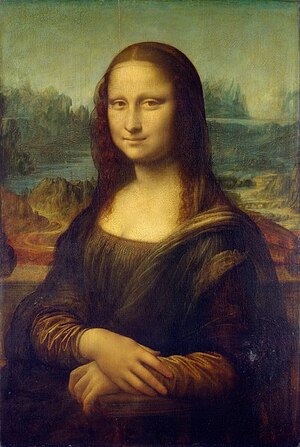
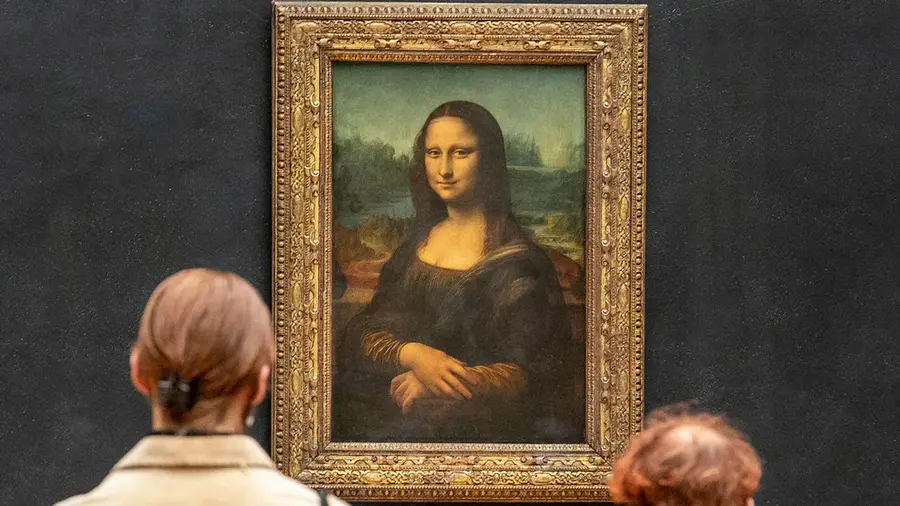
Leonardo da Vinci. «Mona Lisa, ” circa 1503–1519