Sections
- Concept
- Selection of Films for Review
- Spatial Depth and Construction
- Cinematography and Framing
- Lighting Work
- Conclusion
Concept
During the 1910s and 1920s, American cinema experienced a period of intense development and the establishment of a classic narrative system. Running times gradually increased, dramatic structure grew more complex, and production capabilities expanded. Directors and cinematographers mastered new ways to utilize cinematic expressive means, including lighting, angles, shot size, and spatial composition. These changes were interconnected: a more complex plot demanded a more flexible frame organization, and the growth in production capabilities allowed experimentation with optics, light, and editing, which gradually transformed composition from a supplementary device into an independent tool of storytelling.
The growth in the scale of film production and the viewing audience was accompanied by increased competition among studios and the search for new artistic solutions. These processes contributed to the development and changes in the visual organization of films. Consequently, this period presents a special interest for studying the formation and evolution of cinematic language.
The technical and artistic innovations inevitably touched upon the issue of depth and spatial composition within the frame.
Composition is a crucial element not only of a film’s visual language but also of its narrative structure. As cinema has developed, this component has been actively transformed, driven by a combination of artistic and technical factors: advancements in cinematography and editing, directorial methods, technologies, set design, and narrative principles.
During the time frame under consideration, melodrama was developing. In early American cinema, emotional experiences were conveyed through external action and theatrical acting, but gradually, the visual techniques of shot composition became the dominant means of communicating the characters' psychological states.Melodramas from the 1910s and 1920s were often structured around gender and class conflicts—such as love stories between members of different social strata—and these conflicts necessitate visual reinforcement through frame composition. For instance, in scenes of dates or lovers' separations, the characters' placement in the frame, the direction of their gaze, and the distance between them become tools for conveying emotional intimacy or alienation. It is the significance of such conflict within the narrative that makes the genre interesting to study: comparing films from different years allows one to trace how the methods of employing these techniques and their role in the visual storytelling of American silent cinema during that period evolved.
Filmography
— «The Mender of Nets» (dir. D. U. Griffith, 1912)— «The Cheat» (dir. Cecil B. DeMille, 1915)— «True Heart Susie» (dir. D. U. Griffith, 1919)— «Flesh and the Devil» (dir. Clarence Brown, 1926)— «Sunrise» (dir. F. W. Murnau, 1927)
The selected films are united by the presence of melodramatic elements—emotional conflicts, character suffering, and moral contradictions. At the same time, the works cover different stages of the development of American silent cinema, which allows for a comparison of visual composition features and tracking changes in the use of expressive devices.
The analytical section of the research is based on examining specific scenes from selected films where the features of compositional organization are most clearly evident. Comparing scenes from films of different years allows us to trace changes in the use of techniques, identify the specifics of their application, and examine how the visual organization of the frame interacts with the dramaturgy.
Depth and Spatial Composition
Like many films from the 1910s, the «Repairing Network» is characterized by medium shots and a static, unmoving camera. Despite the receding landscapes in the background and the fact that in some scenes the characters pass through background objects and only minimally interact with their surroundings, the image appears flat.
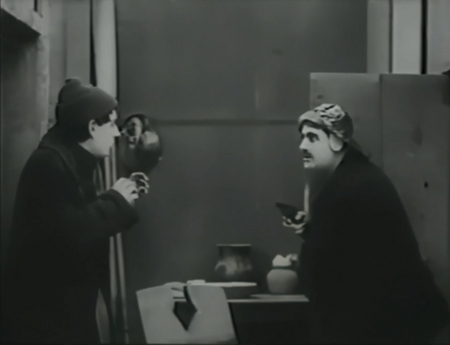
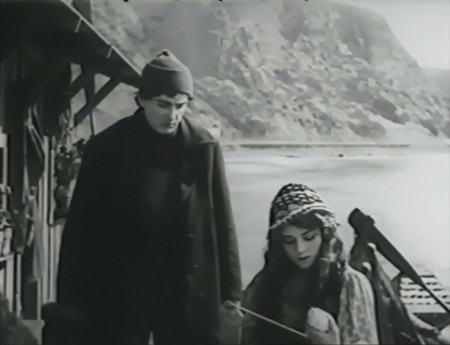
Stills from the film «The Mender of Nets» (Dir. D. U. Griffith, 1912)
The characters and sets are predominantly arranged frontally, the heroes are of uniform size in every scene, and there is almost no interaction between the planes. This element is emphasized by a static camera filming the characters from the side—like a theatrical production where the audience remains a detached observer. Only about two planes are used: the foreground features the main characters, and the background serves as the set. There is no crowd in the background, and the frame includes only the characters necessary for the plot. Due to these factors, the image looks more like artificial scenery than an actual fishing village that could exist in reality.
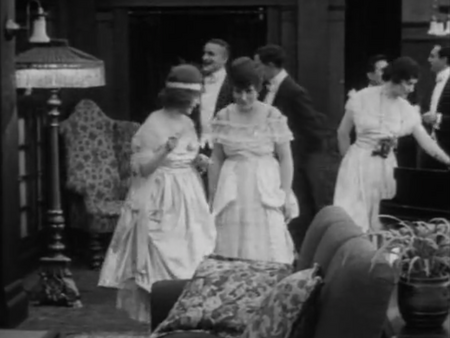
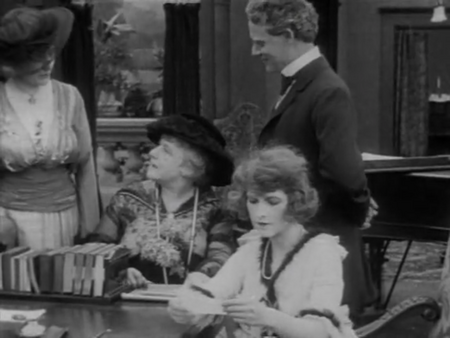
Stills from the film «The Cheat» (directed by Cecil B. DeMille, 1915)
In the «Deception» camera, which remains largely static in most scenes, the image gains greater depth due to the increased number of shots and set pieces. The interior architecture is one of the painting’s most notable features. The abundance of objects—pillows, books, the piano, doorways, and others—placed at varying distances from one another establishes volume.
Stills from the film «The Cheat» (directed by Cecil B. DeMille, 1915)
Montage editing is used to ensure continuous action. A man knocks on a door, and the cut transitions to the next frame where the same door is broken. This grounds the composition and creates a link between various locations, helping the viewer perceive the interior as an interconnected space. It also makes the character’s interaction with the environment more convincing, because the protagonist doesn’t just appear from the edge of the frame, but moves more fluidly within the surrounding setting.
Stills from the film «The Cheat» (dir. Cecil B. DeMille, 1915)
A living crowd appears, which the characters interact with and which moves freely throughout the frame’s space. This is another distinguishing feature compared to the previous film, which provides greater naturalism to the proceedings.
«Susie’s True Heart» offers the viewer a great variety of locations and their believability: the setting of the village where the main character lives recreates a remarkably realistic atmosphere through the presence of everyday objects and household items, which fills the space and adds depth to the frame through its multi-layered nature. Thanks to the variety of scenes and the extremely dynamic editing, the lack of a moving camera does not hinder the viewer’s perception of depth.
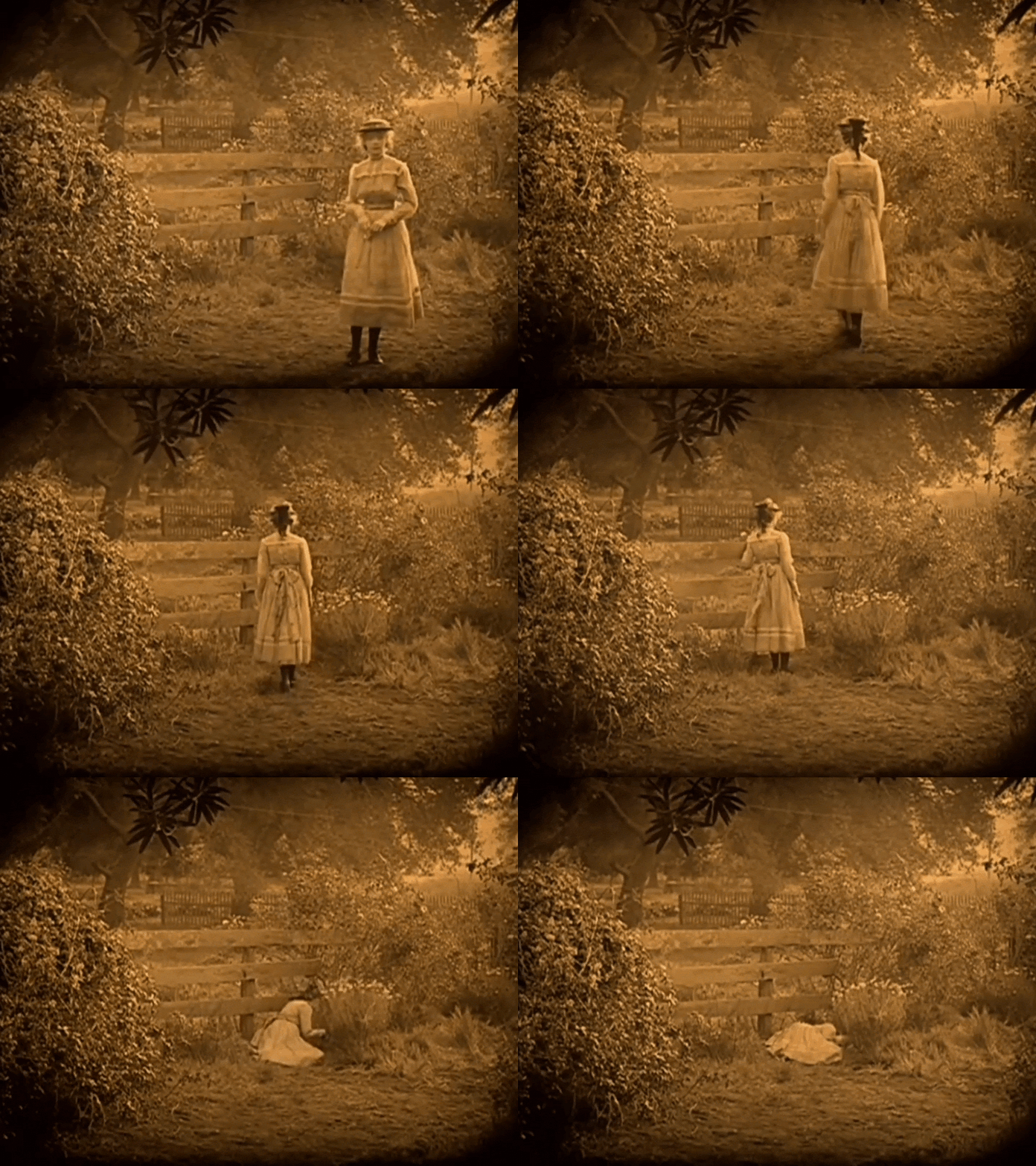
Stills from the film «True Heart Susie» (Dir. D. U. Griffith, 1919)
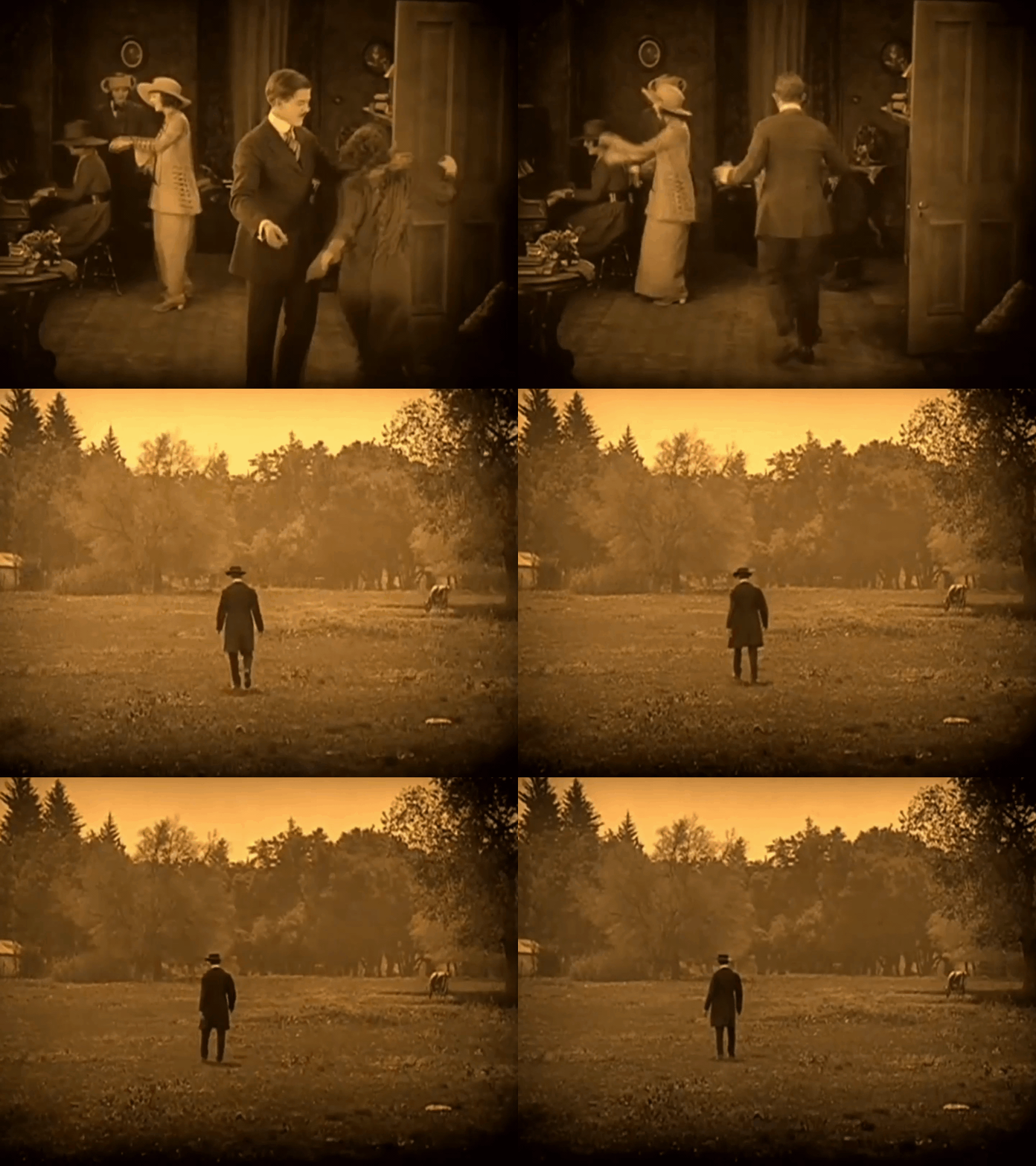
A form of visual psychologism emerges—as seen in the provided fragments, where the characters are depicted in a moment of emotional crisis: they are represented as small figures against a vast, empty space, appearing small and vulnerable set against an open landscape. In one case, the spatial composition is built on contrast: on one side, a noisy party with an interior packed with characters and objects, and on the other, a solitary person against a forest clearing.
Stills from the film «Flesh and the Devil» (directed by Clarence Brown, 1926)
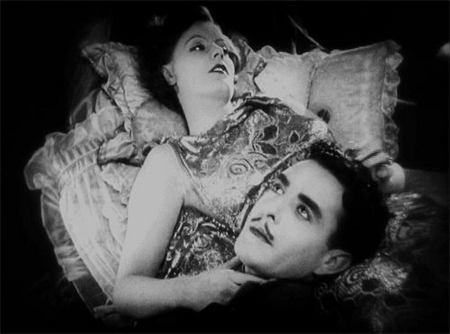
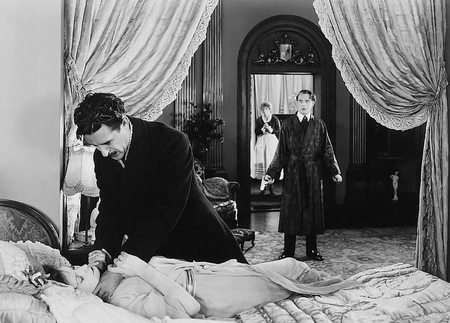
«Flesh and the Devil» continues the tradition of scenes and compositions rich in objects and details. The interior arrangements have become more multilayered than those in «Deception». Background elements and interiors shape the atmosphere of the scene and intensify its mood—for instance, the bedroom conveys intimacy and secrecy, emphasizing the private nature of the characters' relationship.
Stills from the film «Flesh and the Devil» (Dir. Clarence Brown, 1926)
Camera movement is used not only to showcase the surrounding environment but also to sequentially shift the audience’s attention from one character to another. The camera moves from the man to the mother, allowing us to see her reaction to the events unfolding. Furthermore, this mirrors the direction of the sister’s gaze: as she turns her head to the right, the camera moves to the left. This technique connects the characters' actions within a single episode, helps trace emotional responses, and creates a more cohesive narrative.
Stills from the film «Sunrise» (dir. F. W. Murnau, 1927)
The narrative of «Sunrise» is a more intimate story, unfolding over a single day and centered around three main characters. Unlike the previous film, the storytelling here focuses more heavily on the characters' relationships, yet this does not limit the visual diversity of the work. Particular attention is deserved for the active use of the moving camera, which follows the protagonists, accompanying their movement through space.
The transition to the next scene is depicted through the camera moving through tree foliage. This lends a unique tactility to the image, creating the sensation that the viewer is moving through the surrounding space alongside the protagonist.