Стремление к эстетике несовершенства
Concept
How do perceived flaws transform into alternative beauty?
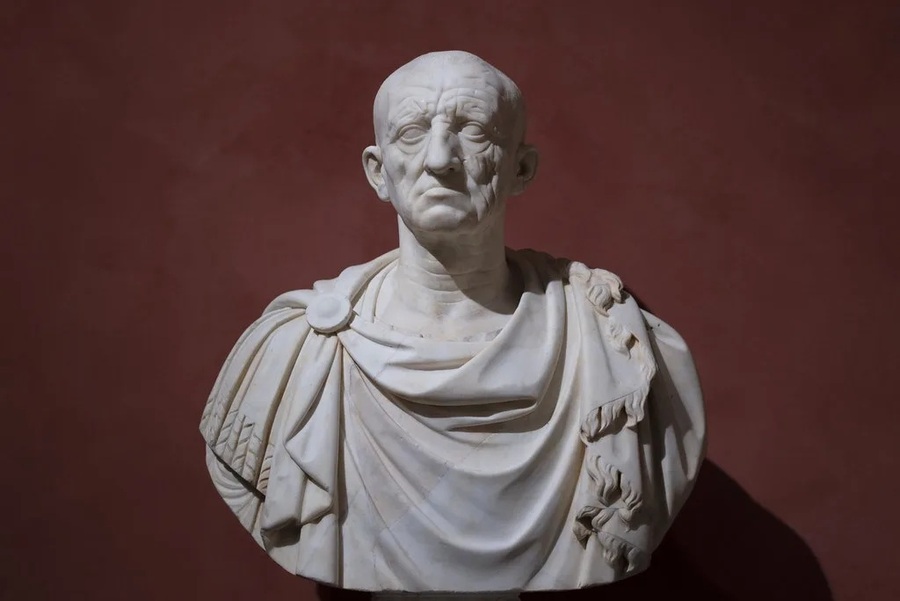
Ancient Greek classical and Hellenistic traditions represented an ideal of beauty through idealized forms, characterized by circular and smooth shapes, for a long period. Marble masters strove to create something impossibly beautiful, often at the cost of distorting reality, by eliminating the flaws of the human body from their works. Roman culture, having adopted much from the Greek masters, eventually moved away from the impulse toward idealization. Sculptors of the Republican period presented the human figure complete with all its expressive features and imperfections. This accurate depiction of features did not result in an ugly imprint of forms that evoked rejection, but rather served to emphasize the specific characteristics of a real person and demonstrate an alternative understanding of beauty. Roman veristic sculpture focused on the individual traits of a person, boldly asserting the value of naturalism and imperfection. Thus, it became a tool for expressing the character and history of a specific individual.
The objective of this visual study is to re-examine the concept of beauty through an analysis of visual series ranging from Hellenistic and Classical to Veristic portrait sculptures.
The transition from a generalized ideal to individual character.
Hellenistic and Classical Sculptures
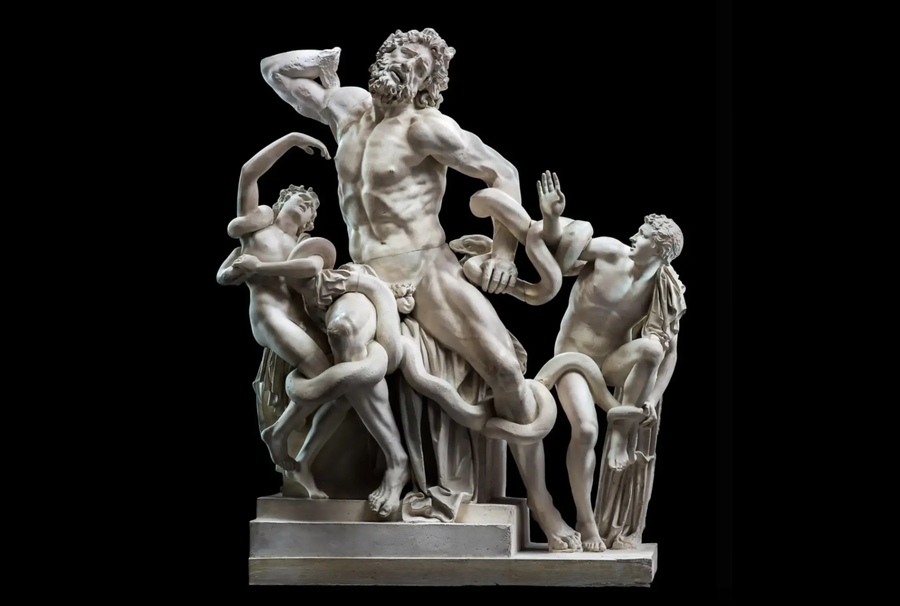
«Laocoön and His Sons» (1st century BCE)
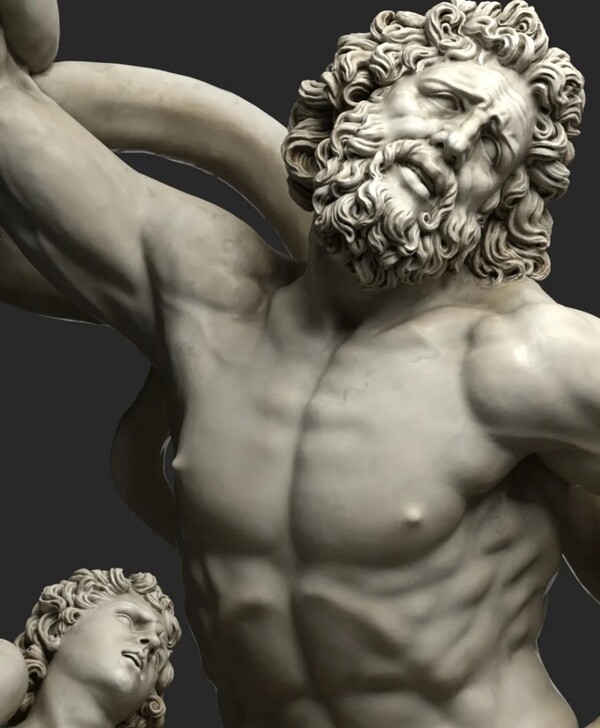
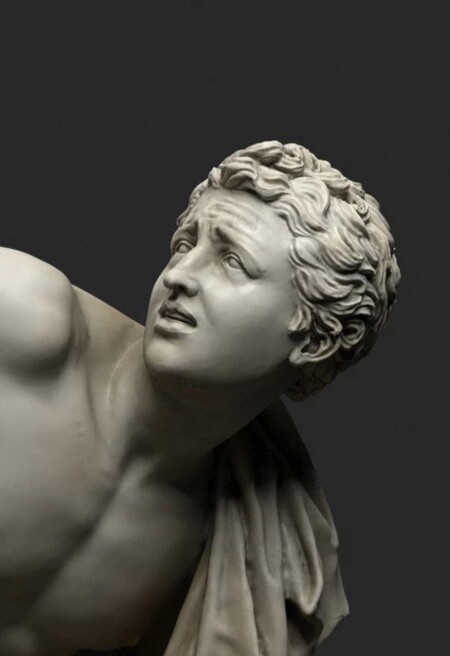
We are presented with a tragic plot from an ancient Greek myth. The beautiful faces of the sculptures are distorted by terror and suffering; the figures freeze in a moment of desperate resistance against fate, even as they foreshadow their demise. Their perfect bodies at this moment assume theatrical poses—drama is evident everywhere.
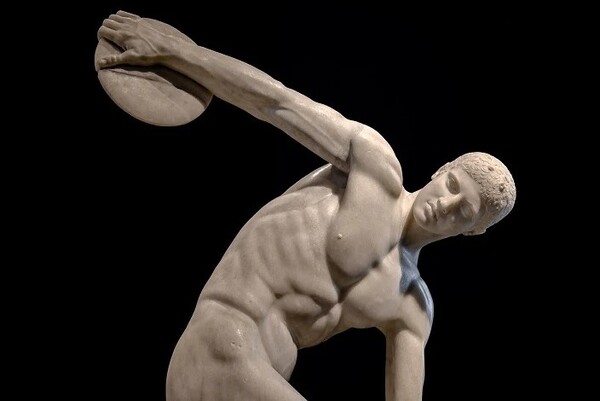
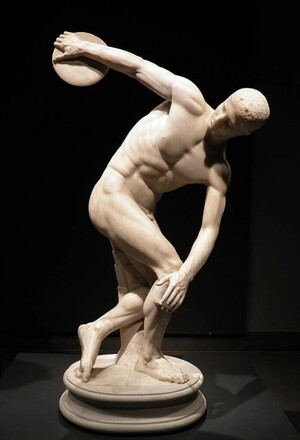
«Discobolus», Myron (5th century BCE)
Before us is the ideal of a harmonious and physically perfect human body. The sculptor exquisitely renders the tension in the athlete’s muscles at the moment of preparing to throw the discus: the statue’s torso is turned at an awkward angle, which is the price paid for the aesthetically beautiful pose of the youth.
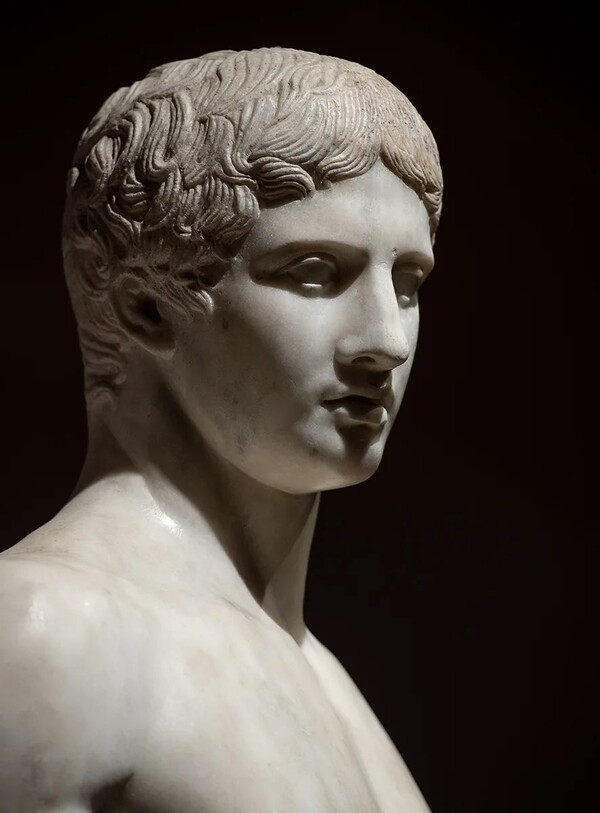
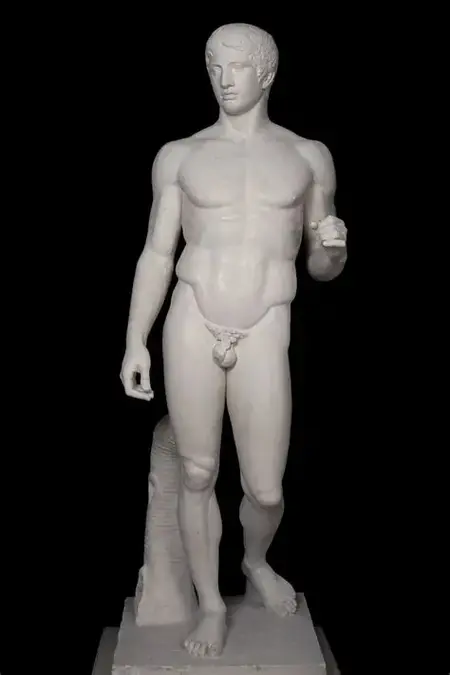
«Spear Bearer» Dorphoros, Polykleitos (c. 450–440 BCE)
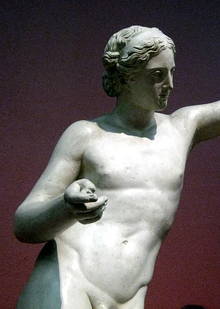
We are presented with a nude spearmen whose physique reflects harmony in proportion and symmetry. His toned body and idealized anatomy create the image of the perfect human. On the young man’s delicate face, the stillness of calm is imprinted; it mirrors the generalized ideal of beauty.
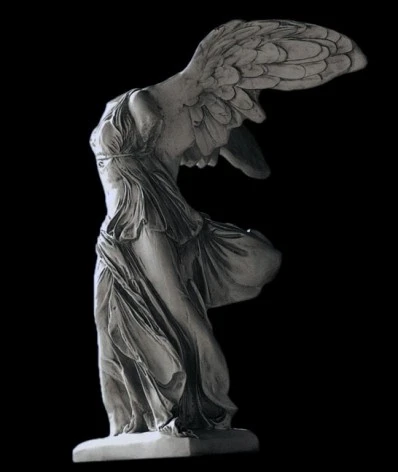
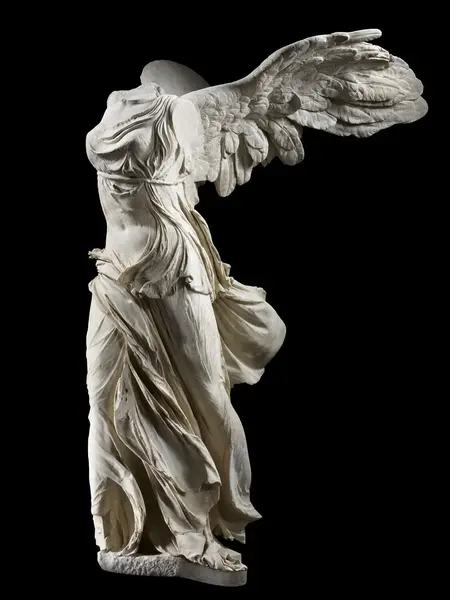
«Nika Samothrace» (200–190 BCE)
One of the most valuable masterpieces of Hellenistic sculpture, reflecting the triumph of victory. An unknown master conveys his vision of the goddess Nike as beautiful in the plasticity of her drapery and the expressiveness of the maiden’s form. Viewing this work of art creates the sensation that the fabric is saturated with seawater, through which a beautiful female body can be discerned.
Hellenistic and Classical Busts
«Apollo» (5th–4th centuries BCE)
The bust of the patron of the arts is itself a work of art: the correct and harmonious proportions of the face, the balanced features reflecting classicism. Collectively, this deprives the image of rich individual characteristics.
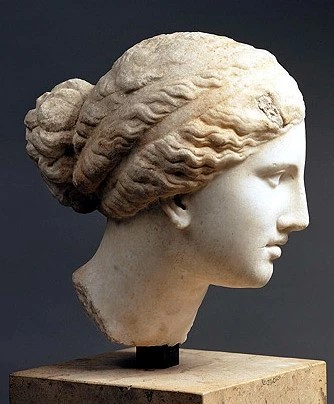
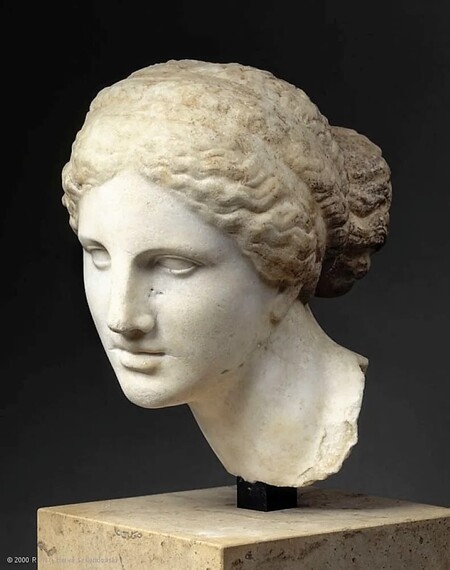
Aphrodite Knidskaya (4th Century BCE)
The bust of Aphrodite is beautiful in its grace: the circular forms of the face, symmetry, and proportionality make the goddess’s countenance ideal. Her head is distinguished by its smooth contours and its silhouette creates an image of lightness and perfection.
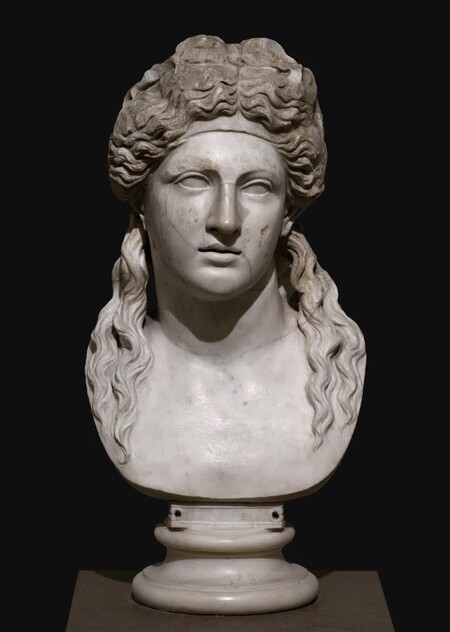
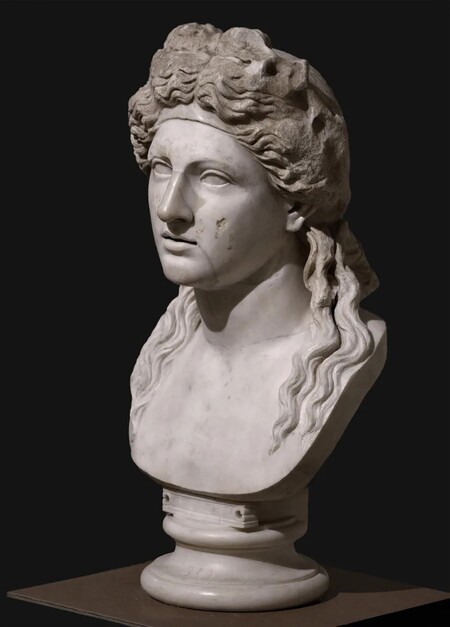
«Dionysus» (4th century BCE)
Before us is a bust of a festival deity. It is characterized by soft, harmonious facial features, an oval head shape with smooth transitions, and an idealized appearance. Its hair falls in waves over the shoulders and is tied with a ribbon, which gives the figure a unique characteristic.
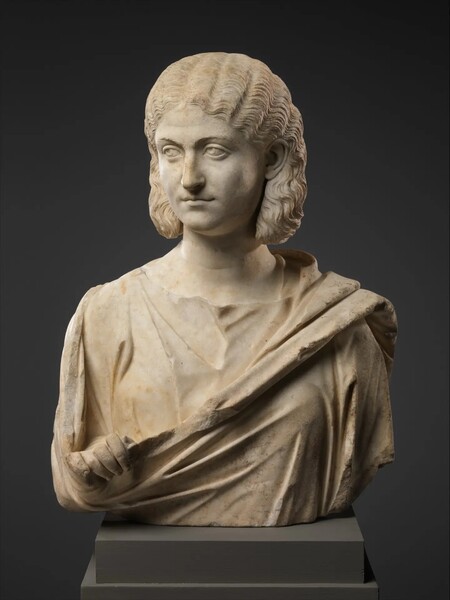
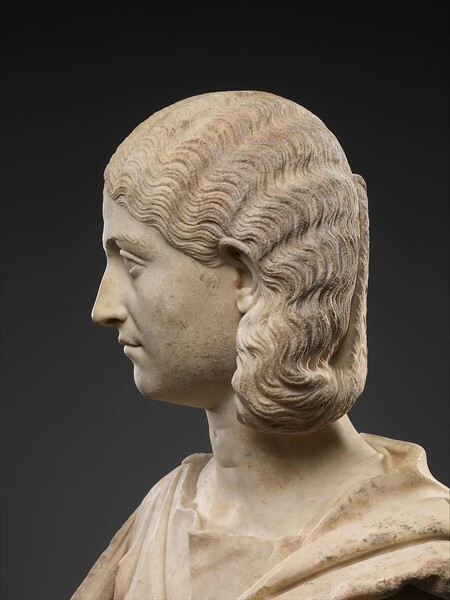
«Marble Bust of a Woman» (2nd Century AD)
We see the bust of a woman exhibiting the symmetry of the face and harmony characteristic of Hellenism. Her hair is neatly styled, yet her face is no longer so idealized; it carries a distinct character and a grounding realism in its depiction of appearance.
Statues
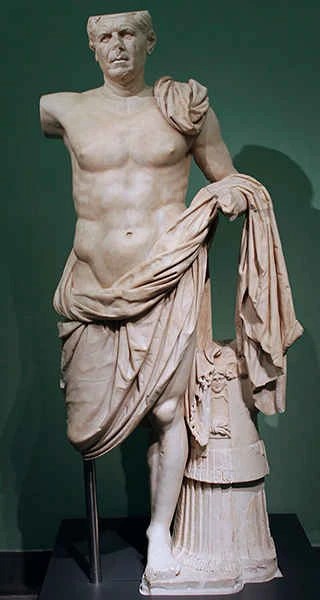
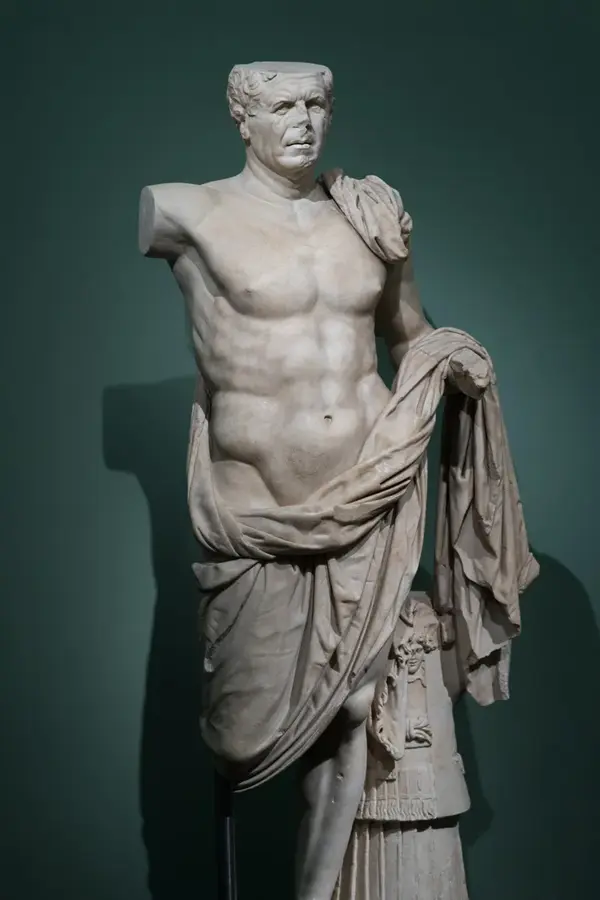
«General from Tivoli» (80–60 BCE)
Presented before us is a fragment of a statue, which traces the symbiosis of two currents: verism and Hellenism. The sculptor was strikingly faithful in depicting the general’s face: he captured the fatty deposits, the pronounced wrinkles on the forehead and between the brows, which lends the profile texture and character. However, the body itself significantly differs from the face: we see an idealized, athletic torso covered by flowing folds of drapery. This creates a sense of imbalance, as if these body parts were torn from their original context—a sensation not far from the truth.
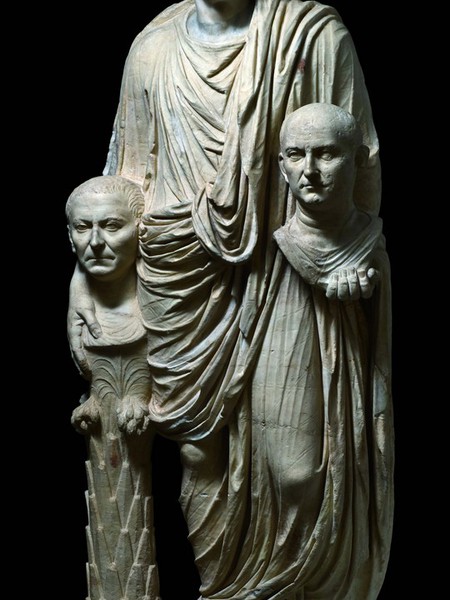
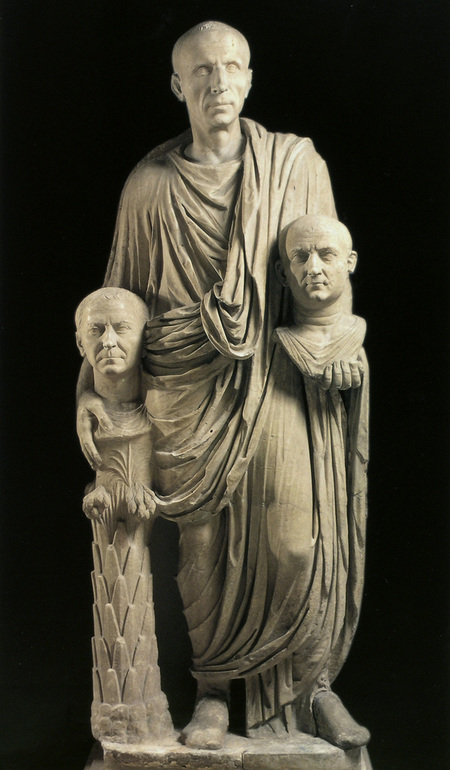
Togatus Barbari (late 1st century BCE — early 1st century CE)
We see a lean man with sharp features and a bald head, dressed in a traditional Roman toga. The Roman holds two portraits of his ancestors, and each of these busts possesses its own individuality and character.